
 Summer Camp
 Reading Writing
 Book Club
 Calligraphy
 Creative Writing
 English Speaking
 Handwriting
 Library
 Phonics
 Story Telling
 Art and Craft
 Clay Moulding
 Drawing
 Painting
 Pottery
 Sketching
 Drama Theatre
 Public Speaking
 Languages
 Arabic
 Chinese
 French
 German
.png) Hindi
Hindi Italian
 Japanese
.png) Korean
Korean Mandarin
 Persian
 Portuguese
.png) Punjabi
Punjabi Russian
 Spanish
 Turkish
 Urdu
Urdu Uzbek
Uzbek Sports and Fitness
 Aerobics
 Athletics
 Badminton
 Basket Ball
 Chess
Chess Cricket
 Football
 Golf
Golf Gymnastics
 Hulahoop
 Karate
 Martial Arts
 Rugby
Rugby Skating
 Swimming
 Taekwondo
 Tennis
 Volleyball
 Yoga
Yoga Zumba
Zumba Tuition Classes
 Accounts
 Biology
 Business Studies
 CBSE
CBSE Chemistry
 Commerce
 Economics
 Homework Classes
 IB Board
 IGCSE
IGCSE Mathematics
 Physics
 Psychology
 Science
 Social Studies
 Vedic Maths
 Dance and Music
 Ballet
 Bhangra
 Bharatnatyam
 Bollywood Dance
 Casio
Casio Dandiya and Garba
 Drums
Drums Flute
Flute Guitar
 Harmonium
 Hip Hop
 Jazz
Jazz Kathak
 Keyboard
 Piano
Piano Salsa
Salsa Shlokas
 Sitar
Sitar Tabla
Tabla Ukulele
 Violin
 Vocal
Vocal PlaySchools
 Preschool
 STEM
STEM
 Abacus
 App Development
 Artificial intelligence
 Basic Computer Courses
 Coding
 Graphic Design
 Lego
Lego Python
 Robotics
 Rubiks Cube
 Scrabble
 Website Development
 Winter Camp
 Workshops
 Diwali Workshop
 Easter
 Ganesh Mahotsav
 Guru Nanak Jayanti Workshop
 Holi
Holi Janmashtami Workshop
 Navratri Workshops
 Raksha Bandhan workshop
 Ramayana Workshop
 Spring Camp
 Valentines Day Workshops
 Festive
 Daycare
 Cooking and Food
 Contests and Competitions
 Republic Day Workshops
 Mela
Mela
 Mother-Toddler Program
.png?width=400&height=68&name=Banner%20(1).png "Banner icon")
PlaySchools classes for Kids - 255 classes found
Play schools for children aged 1 to 5 provide a nurturing en... Read more
-1.jpeg?width=400&height=300&name=WhatsApp%20Image%202025-10-28%20at%2010.35.30%20AM%20(3)-1.jpeg "Happy Feet Play School-Busy Baby Program 2025")


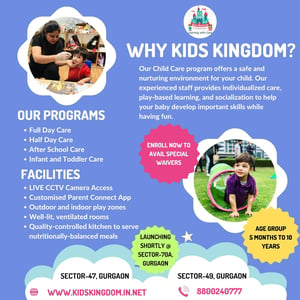
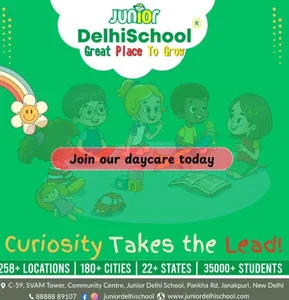
.jpeg?width=400&height=300&name=WhatsApp%20Image%202026-02-13%20at%209.44.18%20AM%20(1).jpeg "Happy Feet Play School-Admissions Open 2026-27")
.jpg?width=400&height=300&name=KLAYPlaySchool%20(1).jpg "KLAY Play School( DLF Cybercity 10B, Gurgaon)")


.jpeg?width=400&height=300&name=WhatsApp%20Image%202025-11-17%20at%2011.47.28%20AM%20(1).jpeg "Gyan Valley The Global School-Admissions Open 2025-26")
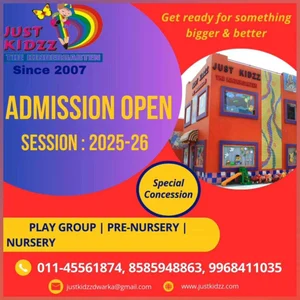
-1.jpeg?width=400&height=300&name=WhatsApp%20Image%202025-11-06%20at%2011.34.08%20AM%20(1)-1.jpeg "Just Kidzz-Admissions Open 2025")
.jpeg?width=400&height=300&name=WhatsApp%20Image%202025-12-15%20at%2011.04.49%20AM%20(2).jpeg "KinderNest Play School-Bridge Course Admissions Open 2026-27")
.jpeg?width=400&height=300&name=WhatsApp%20Image%202025-11-08%20at%201.13.01%20PM%20(2).jpeg "Kids House Play School-Admissions Open")
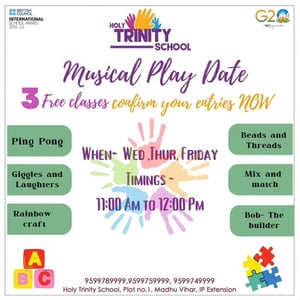
.jpeg?width=400&height=300&name=WhatsApp%20Image%202025-10-15%20at%2011.11.56%20AM%20(2).jpeg "KinderNest Play School- Mid-term admissions")
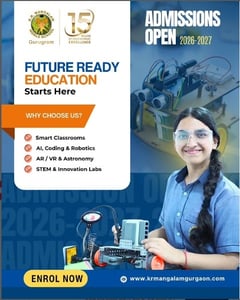
Why Are PlaySchools Important for Early Childhood Development?
PlaySchools provide a nurturing and stimulating environment where young children aged 2 to 5 begin their learning journey. These early learning centers focus on play-based education that supports emotional, social, cognitive, and physical development. This informative guide is featured on BeeBuddy to help parents explore trusted PlaySchools and make the best choice for their child’s early education.
PlaySchools introduce children to structured routines, interactive activities, storytelling, music, art, and basic literacy and numeracy concepts. Through guided play and hands-on experiences, children develop curiosity, independence, and foundational skills that prepare them for formal schooling. Parents can explore a variety of PlaySchools on BeeBuddy to compare facilities, teaching methods, and programs.
Advantages of PlaySchools for Kids
- Encourages Social Development: Children learn to share, communicate, and interact with peers.
- Builds Emotional Confidence: A supportive environment helps kids adapt away from home.
- Develops Early Learning Skills: Introduces basic literacy, numeracy, and language skills.
- Improves Communication: Storytelling and group activities enhance speaking skills.
- Enhances Motor Skills: Activities like drawing, puzzles, and outdoor play strengthen coordination.
- Promotes Creativity: Art, music, and imaginative play stimulate innovation.
- Establishes Routine and Discipline: Structured schedules teach time management from an early age.
- Encourages Independence: Children learn self-care and decision-making skills.
- Prepares for Formal Schooling: Builds readiness for kindergarten and primary education.
FAQs
- At what age should a child start PlaySchool?
Most children can begin PlaySchool between 2 to 3 years of age. - What is the difference between PlaySchool and Preschool?
PlaySchools focus more on play-based learning, while preschools gradually introduce structured academics. - Are PlaySchools safe for toddlers?
Yes, reputable PlaySchools provide a safe, supervised, and child-friendly environment. - How many hours do children spend in PlaySchool?
Programs usually range from 2 to 4 hours per day depending on the curriculum. - Where can parents find the best PlaySchools near them?
Parents can explore BeeBuddy to discover and compare trusted PlaySchools in their area.
Conclusion
PlaySchools play a crucial role in shaping a child’s early development by combining fun, learning, and social interaction. They build confidence, curiosity, and essential foundational skills that prepare children for future academic success. BeeBuddy helps parents easily find reliable PlaySchools that offer a safe and enriching start to their child’s educational journey.