
 Summer Camp
 Reading Writing
 Book Club
 Calligraphy
 Creative Writing
 English Speaking
 Handwriting
 Library
 Phonics
 Story Telling
 Art and Craft
 Clay Moulding
 Drawing
 Painting
 Pottery
 Sketching
 Drama Theatre
 Personality Development
 Public Speaking
 Languages
 Arabic
 Chinese
 French
 German
 Hindi
Hindi Italian
 Japanese
 Korean
 Persian
 Portuguese
 Russian
 Spanish
 Turkish
 Uzbek
Uzbek Sports and Fitness
 Aerobics
 Athletics
 Badminton
 Basket Ball
 Chess
Chess Cricket
 Football
 Golf
Golf Gymnastics
 Hulahoop
 Karate
 Martial Arts
 Pickleball
 Rugby
Rugby Skating
 Swimming
 Taekwondo
 Tennis
 Volleyball
 Yoga
Yoga Zumba
Zumba Tuition Classes
 Accounts
 Biology
 Business Studies
 CBSE
CBSE Chemistry
 Commerce
 Economics
 Homework Classes
 IB Board
 IGCSE
IGCSE Mathematics
 Physics
 Psychology
 Science
 Social Studies
 Vedic Maths
 Dance and Music
 Ballet
 Bhangra
 Bharatnatyam
 Bollywood Dance
 Casio
Casio Dandiya and Garba
 Drums
Drums Flute
Flute Guitar
 Harmonium
 Hip Hop
 Jazz
Jazz Kathak
 Keyboard
 Piano
Piano Salsa
Salsa Shlokas
 Sitar
Sitar Tabla
Tabla Ukulele
 Violin
 Vocal
Vocal Play School
 STEM
STEM
 Abacus
 App Development
 Artificial intelligence
 Basic Computer Courses
 Canva
Canva Coding
 Graphic Design
 Lego
Lego Python
 Robotics
 Rubiks Cube
 Scrabble
 Scratch
 Website Development
 Winter Camp
 Workshops
 Diwali Workshop
 Easter
 Ganesh Mahotsav
 Guru Nanak Jayanti Workshop
 Holi
Holi Independence day workshop
 Janmashtami Workshop
 Mothers day
 Navratri Workshops
 Raksha Bandhan workshop
 Ramayana Workshop
 Spring Camp
 Valentines Day Workshops
 Festive
 Daycare
 Cooking and Food
 Spring Camp
 Contests and Competitions
 Special abled
 Republic Day Workshops
 Mela
Mela
 Mela
Mela Cognitive Development
 Mother-Toddler Program
-Jul-03-2026-06-59-25-1926-AM.webp?width=30&height=30&name=Smart_20Skills_20(2)-Jul-03-2026-06-59-25-1926-AM.webp) Smart Skills
Smart Skills
 Financial Literacy
 Mental Wellbeing
 Meditation
 Reiki
Reiki




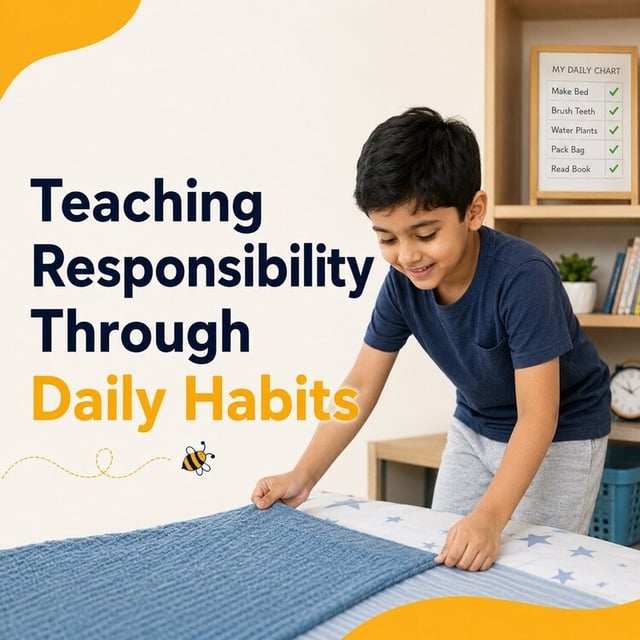
Responsibility is built through consistent, genuine ownership of specific things over time — not through occasional lessons, but through the accumulated experience of things depending on the child's follow-through.
Responsibility as a character trait develops through repeated, genuine experience of ownership — something depending on the child, followed through consistently, over enough time that the pattern becomes internalised rather than externally enforced.
Building responsibility through consistent daily structures
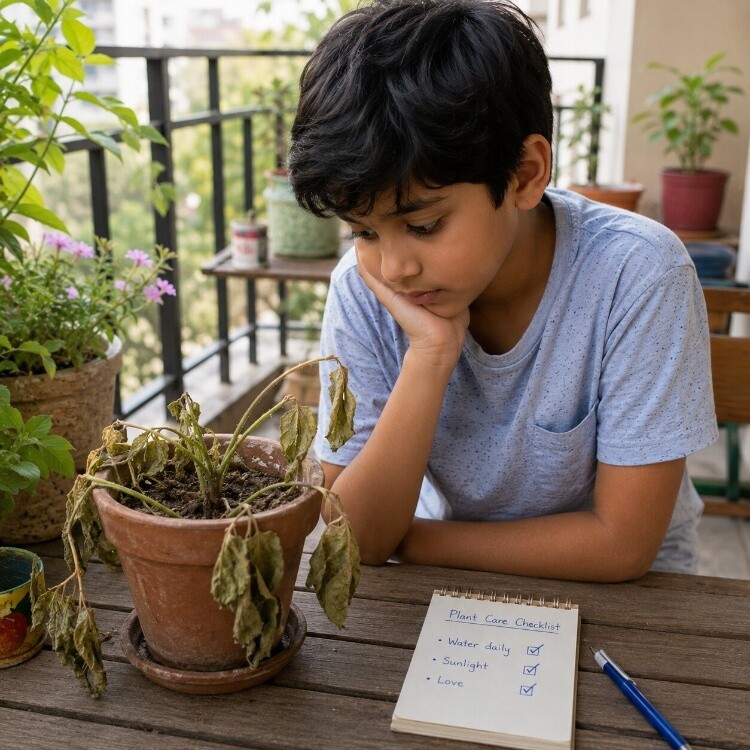
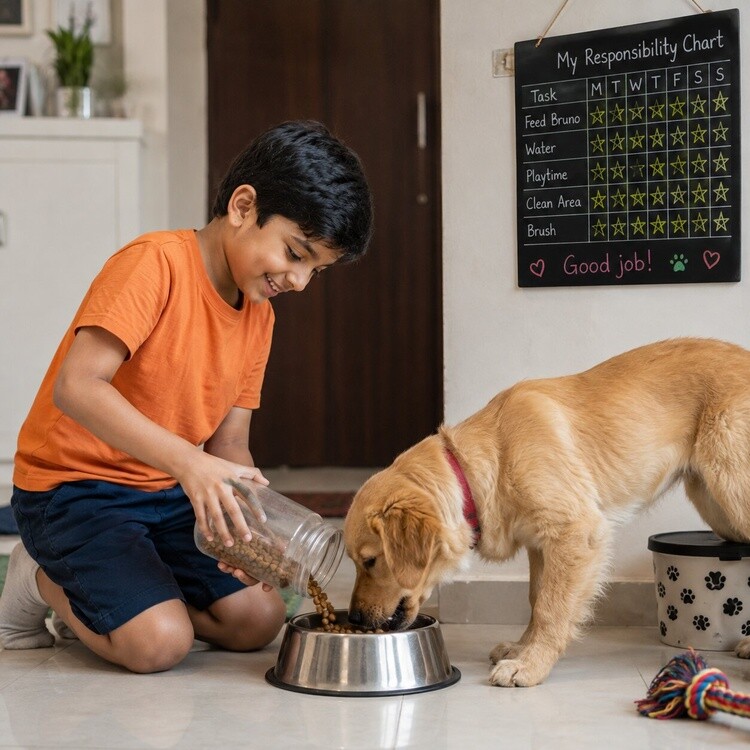
A genuinely owned daily task — not a rotating, easily-forgotten chore, but one specific thing that's consistently theirs (feeding a pet, watering a particular plant, packing their own bag) — consistency matters more than the specific task's difficulty.
Natural consequences allowed to occur — the forgotten packed lunch means a slightly hungry afternoon (arranged safely, not genuinely harmful); the unwatered plant wilts visibly — natural, non-parent-manufactured consequences teach more durably than imposed punishments.
Follow-through expectations held consistently — a responsibility, once given, maintained even when the child's initial enthusiasm fades, rather than quietly taken back by a parent when it becomes inconvenient or imperfectly executed.
Genuine trust extended incrementally — responsibilities expanding as smaller ones are consistently handled, building a track record the child experiences directly rather than being told about abstractly.
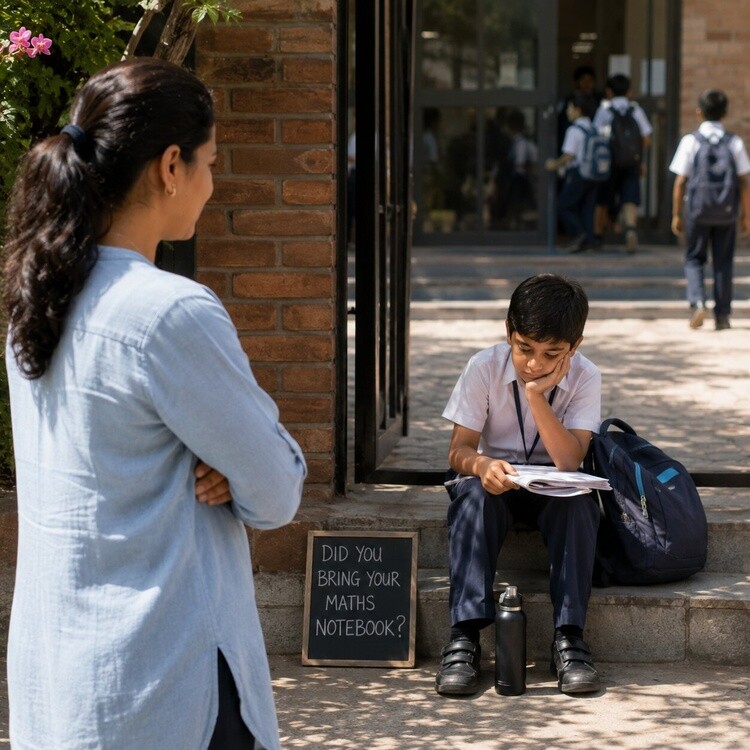
The daily habits that specifically build responsibility
Morning self-management — an age-appropriate degree of managing their own morning routine, building daily ownership of their own basic functioning.
Homework and school material ownership — tracking their own assignments and materials (with appropriate scaffolding by age) rather than parents managing this entirely.
Pet or plant care — a living thing depending on consistent care teaches responsibility with genuine emotional stakes and visible consequences.
Basic self-care routines — hygiene, appropriate dressing for weather, managing their own basic needs — foundational responsibility for one's own person before extending to others or objects.
Household contribution — the age-appropriate chores covered elsewhere in this series, held consistently rather than only when convenient.
Responsibility versus rescue: the core tension
Nearly every responsibility-teaching failure traces to the same pattern — a parent, uncomfortable with the child's natural consequence (a forgotten item, an unwatered dying plant, a late assignment), intervening to fix or prevent it. This protects the child from short-term discomfort while directly undermining the long-term responsibility-building the situation could have provided.
Age-appropriate consequence severity
The consequences allowed to naturally occur should be genuinely bounded and safe — a wilted plant or a slightly less convenient afternoon, not anything with lasting harm or genuine danger. Calibrating this — real enough to teach, bounded enough to be safe — is the core parental judgment call underlying responsibility education.
Responsibility as identity, not just behaviour
Over years of consistent, genuine ownership experiences, children tend to internalise "I am someone who follows through on things" as a genuine self-concept, which then generalises beyond the specific original tasks into broader reliability across school, friendships, and eventually work — the deepest goal beneath any single responsibility-teaching activity.