
 Summer Camp
 Reading Writing
 Book Club
 Calligraphy
 Creative Writing
 English Speaking
 Handwriting
 Library
 Phonics
 Story Telling
 Art and Craft
 Clay Moulding
 Drawing
 Painting
 Pottery
 Sketching
 Drama Theatre
 Personality Development
 Public Speaking
 Languages
 Arabic
 Chinese
 French
 German
 Hindi
Hindi Italian
 Japanese
 Korean
 Persian
 Portuguese
 Russian
 Spanish
 Turkish
 Uzbek
Uzbek Sports and Fitness
 Aerobics
 Athletics
 Badminton
 Basket Ball
 Chess
Chess Cricket
 Football
 Golf
Golf Gymnastics
 Hulahoop
 Karate
 Martial Arts
 Pickleball
 Rugby
Rugby Skating
 Swimming
 Taekwondo
 Tennis
 Volleyball
 Yoga
Yoga Zumba
Zumba Tuition Classes
 Accounts
 Biology
 Business Studies
 CBSE
CBSE Chemistry
 Commerce
 Economics
 Homework Classes
 IB Board
 IGCSE
IGCSE Mathematics
 Physics
 Psychology
 Science
 Social Studies
 Vedic Maths
 Dance and Music
 Ballet
 Bhangra
 Bharatnatyam
 Bollywood Dance
 Casio
Casio Dandiya and Garba
 Drums
Drums Flute
Flute Guitar
 Harmonium
 Hip Hop
 Jazz
Jazz Kathak
 Keyboard
 Piano
Piano Salsa
Salsa Shlokas
 Sitar
Sitar Tabla
Tabla Ukulele
 Violin
 Vocal
Vocal Play School
 STEM
STEM
 Abacus
 App Development
 Artificial intelligence
 Basic Computer Courses
 Canva
Canva Coding
 Graphic Design
 Lego
Lego Python
 Robotics
 Rubiks Cube
 Scrabble
 Scratch
 Website Development
 Winter Camp
 Workshops
 Diwali Workshop
 Easter
 Ganesh Mahotsav
 Guru Nanak Jayanti Workshop
 Holi
Holi Independence day workshop
 Janmashtami Workshop
 Mothers day
 Navratri Workshops
 Raksha Bandhan workshop
 Ramayana Workshop
 Spring Camp
 Valentines Day Workshops
 Festive
 Daycare
 Cooking and Food
 Spring Camp
 Contests and Competitions
 Special abled
 Republic Day Workshops
 Mela
Mela
 Mela
Mela Cognitive Development
 Mother-Toddler Program
-Jul-03-2026-06-59-25-1926-AM.webp?width=30&height=30&name=Smart_20Skills_20(2)-Jul-03-2026-06-59-25-1926-AM.webp) Smart Skills
Smart Skills
 Financial Literacy
 Mental Wellbeing
 Meditation
 Reiki
Reiki




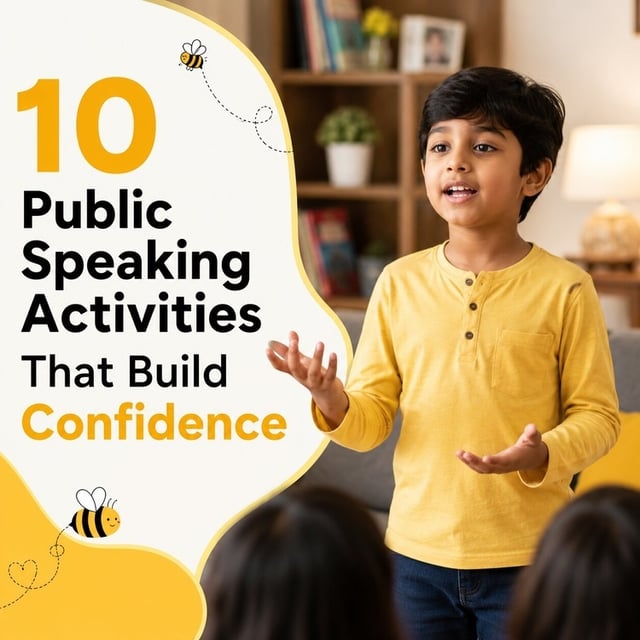
Public speaking anxiety often starts early, but small, low-stakes speaking opportunities built into regular family life can prevent it from becoming a lasting fear. These 10 activities build genuine comfort with speaking in front of others.
Nearly every Indian school day involves some form of public speaking — morning assembly announcements, class presentations, elocution competitions — yet formal speaking instruction is often minimal until it's suddenly expected. Building comfort gradually, through low-stakes practice, tends to work far better than addressing anxiety only once it's already established.
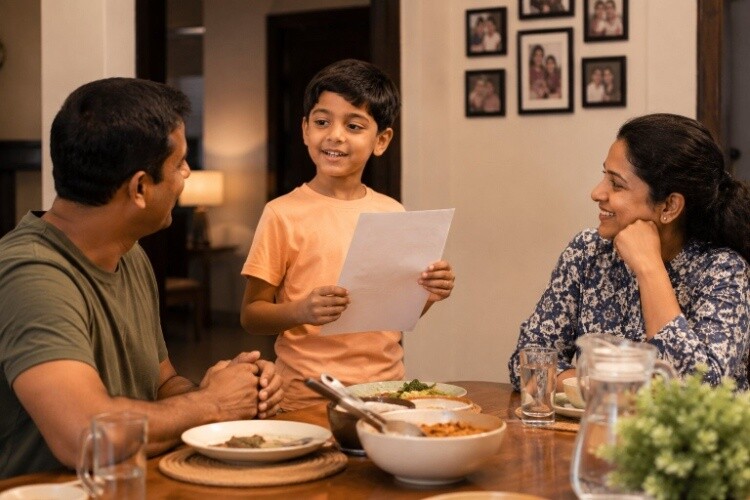
Practice "news reporting" at family dinner
Have your child "report" one interesting thing that happened during their day as if presenting news — builds structured, confident speaking in a low-stakes, familiar setting.
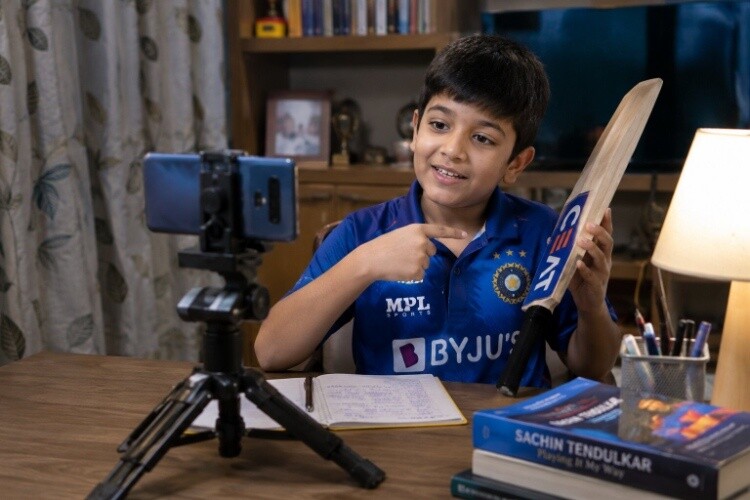
Record short videos explaining a favourite topic
Recording a child explaining something they're genuinely enthusiastic about (a favourite game, a cricket player) on a phone builds comfort with being watched and heard, without a live audience's immediate pressure.
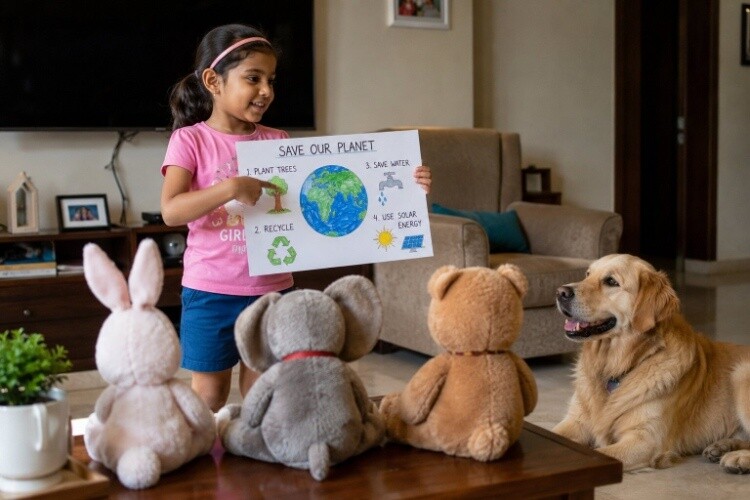
Practice presentations in front of stuffed toys or family pets first
Before presenting to actual people, a "practice audience" of toys or a pet reduces the initial anxiety of an audience while still building the habit of speaking aloud to something.
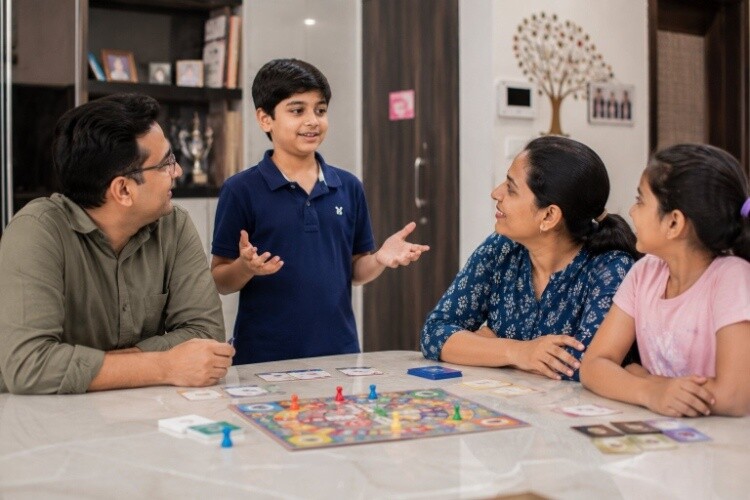
Take turns leading a family activity explanation
Having a child explain the rules of a game before playing, to the whole family, builds structured explanatory speaking in a genuinely useful, low-pressure context.
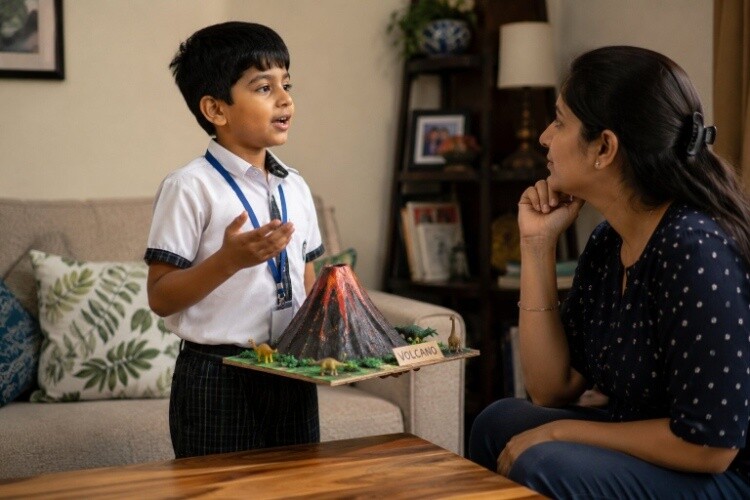
Practice show-and-tell at home before school
If school has show-and-tell or similar activities, rehearsing at home first — even just once, to a parent — significantly reduces the anxiety of the actual moment.
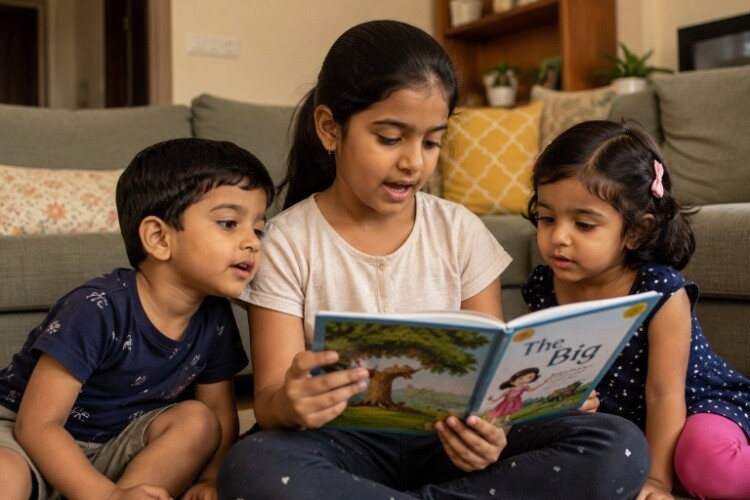
Read aloud to younger siblings or cousins regularly
Reading aloud to a younger audience builds vocal projection and expression skills without the intimidation of a same-age or older audience.
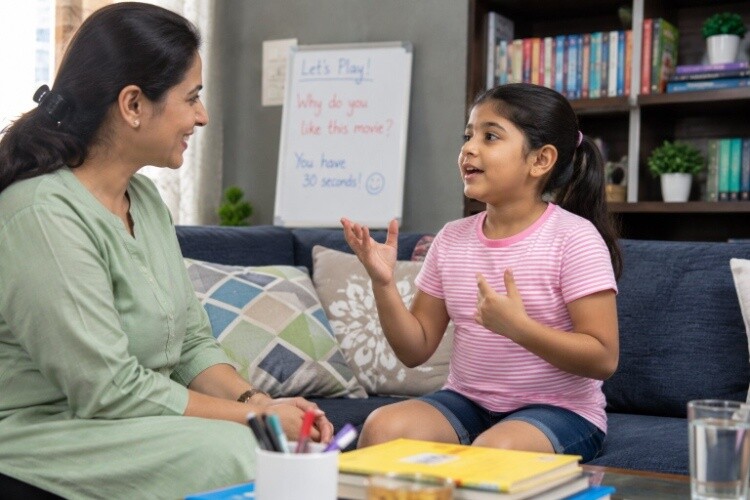
Practice answering "why" questions on the spot
A simple game asking a child to explain their opinion on something ("why do you like this movie?") for 30 seconds builds spontaneous speaking confidence.
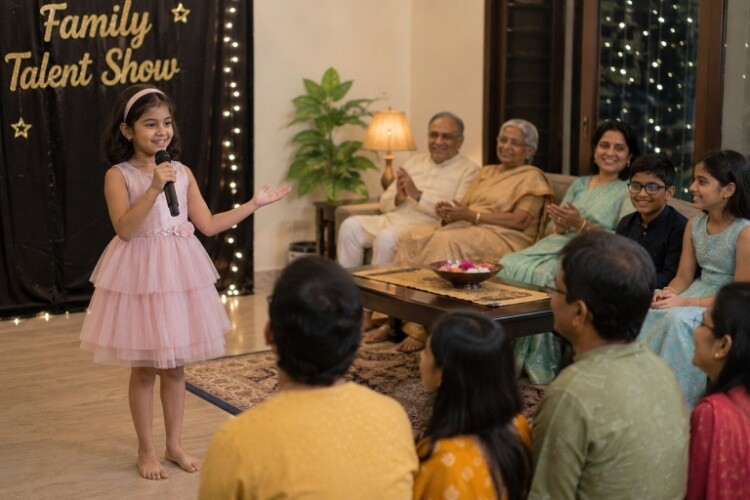
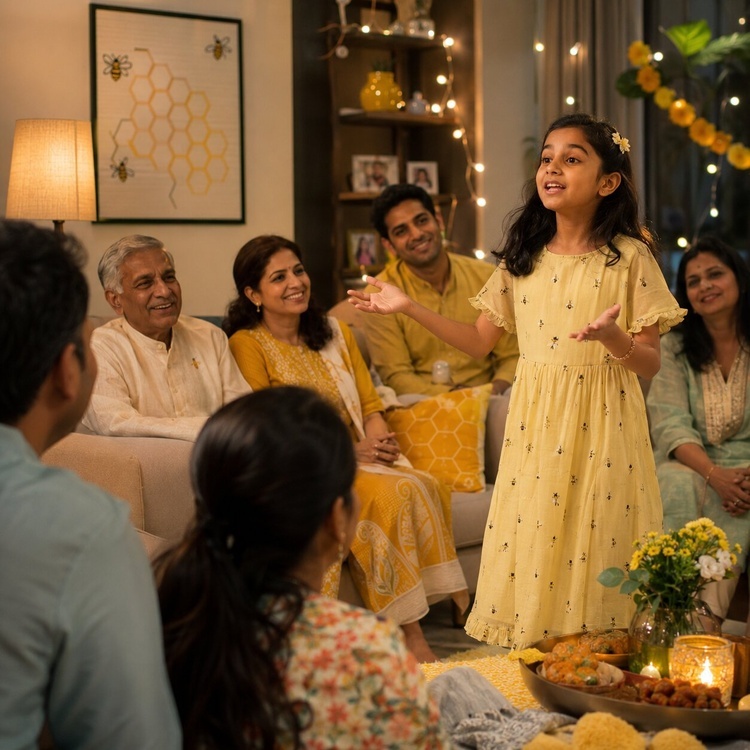
Join a family "talent show" tradition during festivals or gatherings
Family gatherings offer genuinely low-stakes opportunities for a child to perform, recite, or speak in front of a supportive, familiar audience.
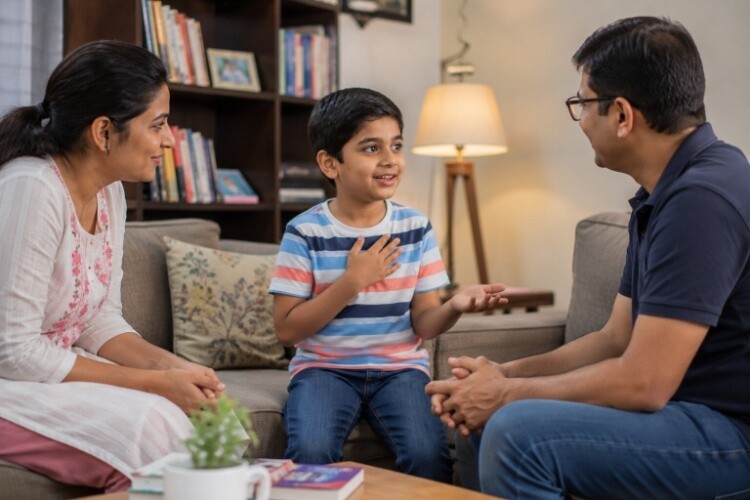
Practice introducing themselves in different ways
A simple game of introducing themselves as if meeting different people (a new friend, a teacher, a distant relative) builds adaptable, confident self-presentation.
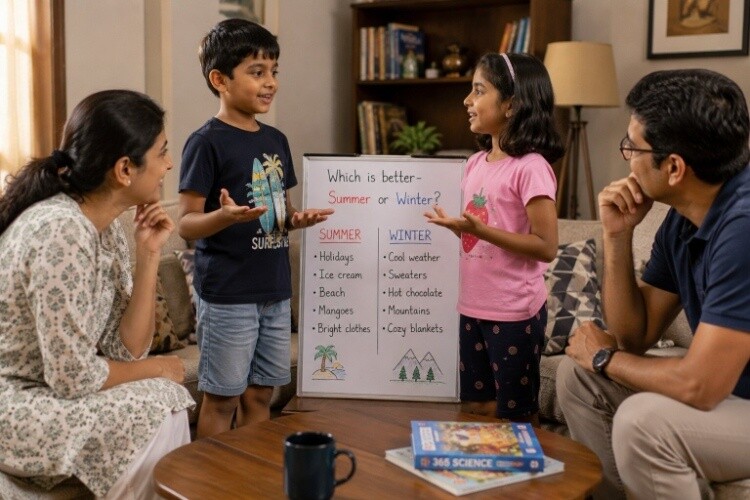
Debate simple, fun topics at home
"Which is better, summer or winter?" style light debates build the ability to organise thoughts and speak persuasively, in a genuinely playful format.
Why gradual exposure works better than a single big push
Public speaking confidence, like most skills, builds through repeated low-stakes practice rather than a single high-pressure event. A child who's had dozens of small, comfortable speaking moments handles a school presentation far more calmly than one whose first real speaking experience is the presentation itself.
Recognising genuine anxiety versus normal nervousness
Some nervousness before speaking publicly is completely normal, even for confident adults. What's worth extra support: a child who avoids all speaking opportunities entirely, experiences physical distress (nausea, inability to speak at all) before speaking tasks, or whose anxiety seems to be worsening rather than improving with gentle, repeated low-stakes exposure.
Building this alongside school and structured activities
Many drama and theatre classes across Delhi NCR specifically build public speaking and performance confidence in a structured, supportive group setting — a genuinely valuable complement to the informal home practice above, especially for children who benefit from peer modelling and a more formal setting.