
 Summer Camp
 Reading Writing
 Book Club
 Calligraphy
 Creative Writing
 English Speaking
 Handwriting
 Library
 Phonics
 Story Telling
 Art and Craft
 Clay Moulding
 Drawing
 Painting
 Pottery
 Sketching
 Drama Theatre
 Personality Development
 Public Speaking
 Languages
 Arabic
 Chinese
 French
 German
 Hindi
Hindi Italian
 Japanese
 Korean
 Persian
 Portuguese
 Russian
 Spanish
 Turkish
 Uzbek
Uzbek Sports and Fitness
 Aerobics
 Athletics
 Badminton
 Basket Ball
 Chess
Chess Cricket
 Football
 Golf
Golf Gymnastics
 Hulahoop
 Karate
 Martial Arts
 Pickleball
 Rugby
Rugby Skating
 Swimming
 Taekwondo
 Tennis
 Volleyball
 Yoga
Yoga Zumba
Zumba Tuition Classes
 Accounts
 Biology
 Business Studies
 CBSE
CBSE Chemistry
 Commerce
 Economics
 Homework Classes
 IB Board
 IGCSE
IGCSE Mathematics
 Physics
 Psychology
 Science
 Social Studies
 Vedic Maths
 Dance and Music
 Ballet
 Bhangra
 Bharatnatyam
 Bollywood Dance
 Casio
Casio Dandiya and Garba
 Drums
Drums Flute
Flute Guitar
 Harmonium
 Hip Hop
 Jazz
Jazz Kathak
 Keyboard
 Piano
Piano Salsa
Salsa Shlokas
 Sitar
Sitar Tabla
Tabla Ukulele
 Violin
 Vocal
Vocal Play School
 STEM
STEM
 Abacus
 App Development
 Artificial intelligence
 Basic Computer Courses
 Canva
Canva Coding
 Graphic Design
 Lego
Lego Python
 Robotics
 Rubiks Cube
 Scrabble
 Scratch
 Website Development
 Winter Camp
 Workshops
 Diwali Workshop
 Easter
 Ganesh Mahotsav
 Guru Nanak Jayanti Workshop
 Holi
Holi Independence day workshop
 Janmashtami Workshop
 Mothers day
 Navratri Workshops
 Raksha Bandhan workshop
 Ramayana Workshop
 Spring Camp
 Valentines Day Workshops
 Festive
 Daycare
 Cooking and Food
 Spring Camp
 Contests and Competitions
 Special abled
 Republic Day Workshops
 Mela
Mela
 Mela
Mela Cognitive Development
 Mother-Toddler Program
-Jul-03-2026-06-59-25-1926-AM.webp?width=30&height=30&name=Smart_20Skills_20(2)-Jul-03-2026-06-59-25-1926-AM.webp) Smart Skills
Smart Skills
 Financial Literacy
 Mental Wellbeing
 Meditation
 Reiki
Reiki





Spoken English fluency develops differently from reading and writing skill, and many bilingual Indian children need specific, judgement-free practice to build genuine conversational confidence. These 12 approaches focus on fluency and comfort, not perfect grammar.
In many urban Indian homes, English is spoken alongside Hindi or another regional language, sometimes inconsistently, which means a child's spoken English fluency doesn't always match their reading or writing ability. Building genuine conversational comfort needs its own dedicated, judgement-free approach.
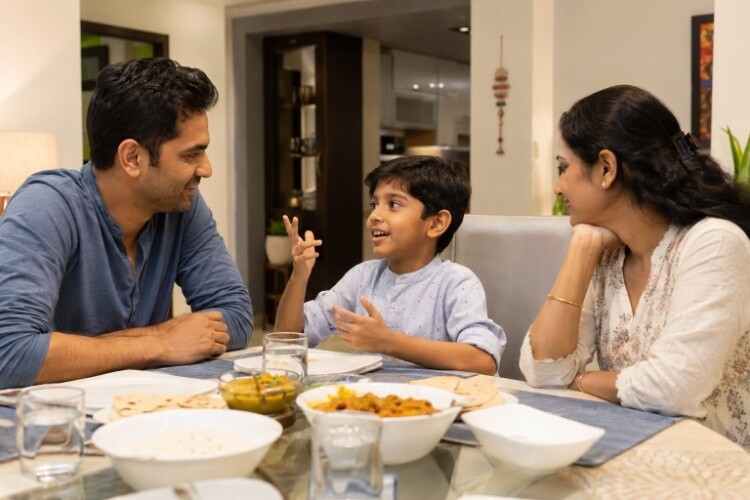
Create English-only conversation windows, without pressure
Rather than mandating English at all times (which can create anxiety), try a specific, low-stakes window — dinner time, or a car ride — as a genuinely comfortable practice space.

Narrate everyday activities in English together
Simply describing what you're doing together ("now we're cutting the vegetables, now we're adding salt") builds functional vocabulary naturally, without formal lesson structure.
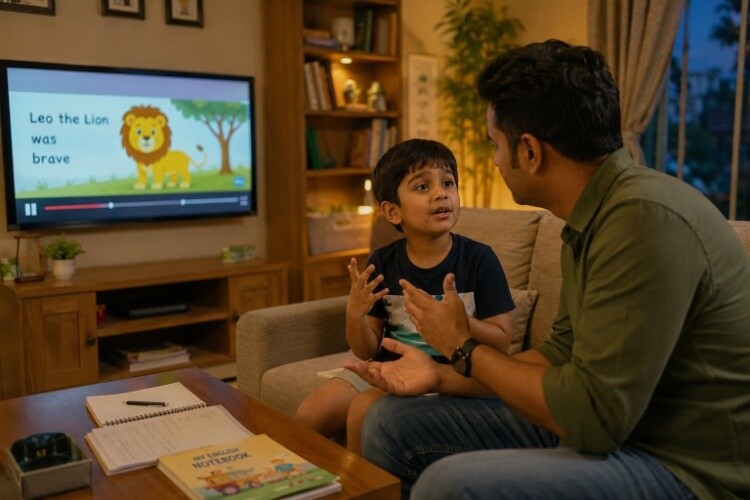
Watch English content and discuss it afterward
Rather than passive viewing, briefly discussing what happened in a show afterward, in English, reinforces vocabulary and structure through genuine conversation.
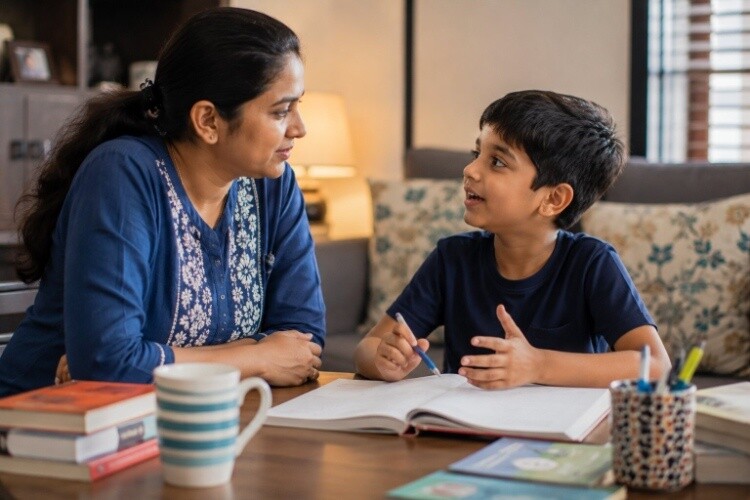
Avoid correcting every grammatical mistake mid-sentence
Constant interruption for correction makes many children self-conscious and less willing to attempt speaking at all — let the sentence finish, then gently model the correct version afterward if needed.
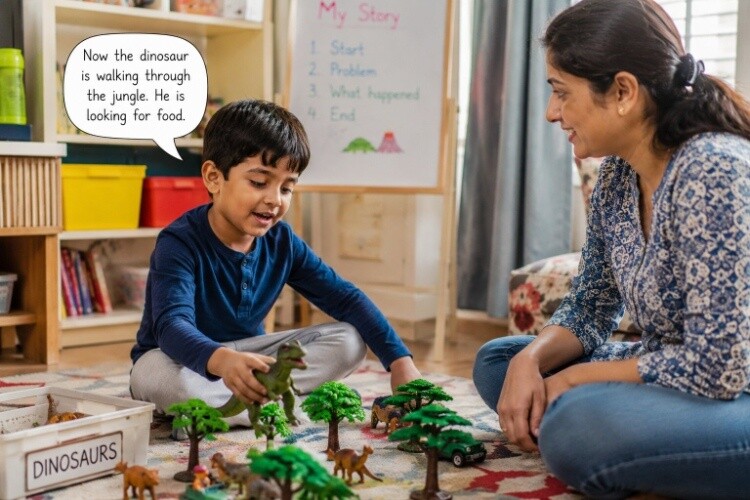
Encourage "thinking aloud" in English during play
Play-based narration (a child talking through what their toys are doing) in English builds fluency in a genuinely low-pressure, enjoyable context.
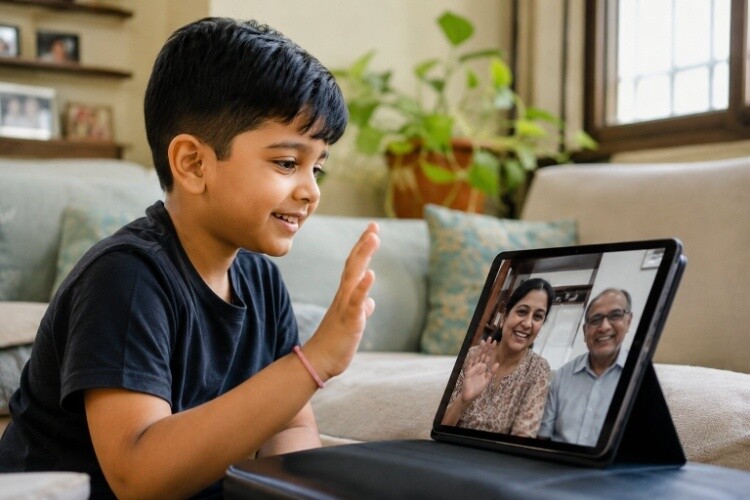
Practice phone or video calls with English-speaking relatives
If there are relatives more comfortable in English, regular calls provide genuine motivation and real conversational practice.

Read aloud together, alternating sentences
Beyond reading skill benefits, reading aloud together builds pronunciation and natural sentence rhythm through direct modelling.
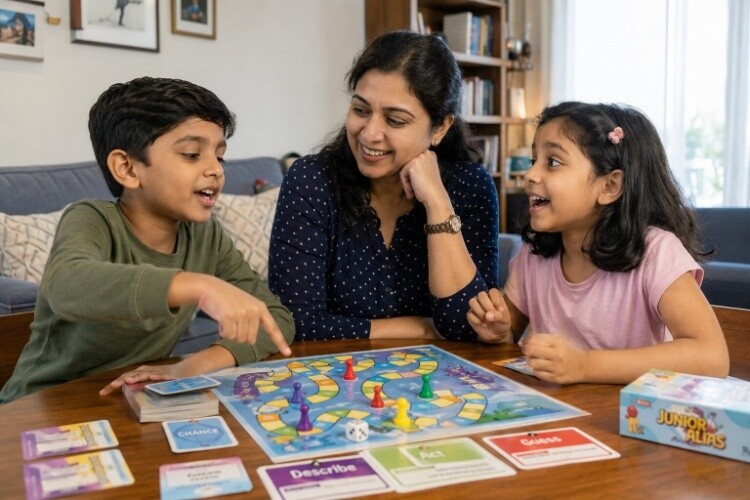
Use English during specific games and activities
Board games or card games played specifically "in English" (narrating moves, negotiating rules) build functional, contextual fluency.

Build confidence before focusing on accent
Many parents worry excessively about accent, when fluency and confidence matter far more for genuine communication — a clear, confident Indian English accent is not something that needs "fixing."

Encourage storytelling in English, imperfect grammar and all
Letting a child tell a story in English with imperfect grammar, without correction mid-story, builds far more fluency than a grammatically perfect but hesitant, over-corrected sentence.
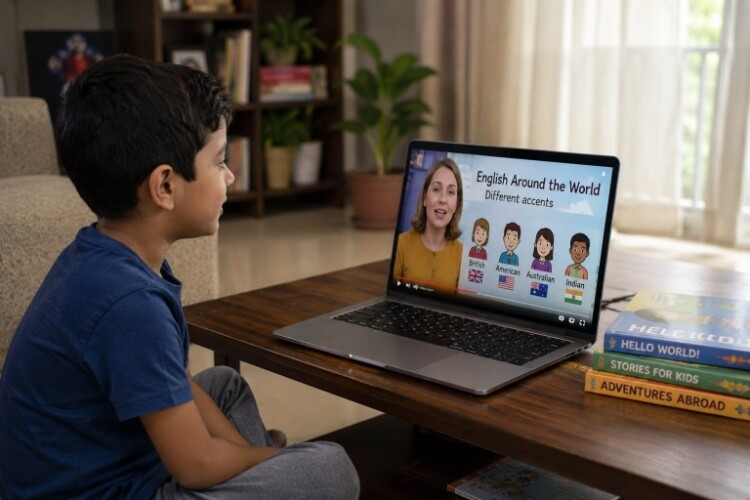
Expose your child to a range of English speakers and accents
Audiobooks, shows, and content featuring different English accents and speaking styles build broader listening comprehension and reduce anxiety about "sounding right" in any one specific way.

Celebrate attempts, not just correct outcomes
Positive reinforcement for simply attempting to express something in English, regardless of grammatical accuracy, keeps motivation high during the crucial early fluency-building period.
Why fluency-first beats grammar-first for spoken English
Written grammar accuracy and spoken fluency develop somewhat independently — a child overly focused on grammatical correctness while speaking often becomes hesitant and slow, while one encouraged to speak freely (with occasional gentle correction) typically develops both fluency and eventual grammatical accuracy together, over time.
Addressing the specific anxiety many bilingual children feel
Some children, especially those who feel their spoken English lags behind classmates, develop genuine reluctance to speak up in class or social situations. Building confidence at home, in a judgement-free environment, directly addresses this before it becomes a bigger confidence issue at school.
A realistic long-term view
Spoken English fluency, like any language skill, builds gradually through consistent, low-pressure exposure and practice — not through intensive short-term correction. Patience and genuine conversational engagement, sustained over months and years, produces far more lasting confidence than any quick-fix approach.