
 Summer Camp
 Reading Writing
 Book Club
 Calligraphy
 Creative Writing
 English Speaking
 Handwriting
 Library
 Phonics
 Story Telling
 Art and Craft
 Clay Moulding
 Drawing
 Painting
 Pottery
 Sketching
 Drama Theatre
 Personality Development
 Public Speaking
 Languages
 Arabic
 Chinese
 French
 German
 Hindi
Hindi Italian
 Japanese
 Korean
 Persian
 Portuguese
 Russian
 Spanish
 Turkish
 Uzbek
Uzbek Sports and Fitness
 Aerobics
 Athletics
 Badminton
 Basket Ball
 Chess
Chess Cricket
 Football
 Golf
Golf Gymnastics
 Hulahoop
 Karate
 Martial Arts
 Pickleball
 Rugby
Rugby Skating
 Swimming
 Taekwondo
 Tennis
 Volleyball
 Yoga
Yoga Zumba
Zumba Tuition Classes
 Accounts
 Biology
 Business Studies
 CBSE
CBSE Chemistry
 Commerce
 Economics
 Homework Classes
 IB Board
 IGCSE
IGCSE Mathematics
 Physics
 Psychology
 Science
 Social Studies
 Vedic Maths
 Dance and Music
 Ballet
 Bhangra
 Bharatnatyam
 Bollywood Dance
 Casio
Casio Dandiya and Garba
 Drums
Drums Flute
Flute Guitar
 Harmonium
 Hip Hop
 Jazz
Jazz Kathak
 Keyboard
 Piano
Piano Salsa
Salsa Shlokas
 Sitar
Sitar Tabla
Tabla Ukulele
 Violin
 Vocal
Vocal Play School
 STEM
STEM
 Abacus
 App Development
 Artificial intelligence
 Basic Computer Courses
 Canva
Canva Coding
 Graphic Design
 Lego
Lego Python
 Robotics
 Rubiks Cube
 Scrabble
 Scratch
 Website Development
 Winter Camp
 Workshops
 Diwali Workshop
 Easter
 Ganesh Mahotsav
 Guru Nanak Jayanti Workshop
 Holi
Holi Independence day workshop
 Janmashtami Workshop
 Mothers day
 Navratri Workshops
 Raksha Bandhan workshop
 Ramayana Workshop
 Spring Camp
 Valentines Day Workshops
 Festive
 Daycare
 Cooking and Food
 Spring Camp
 Contests and Competitions
 Special abled
 Republic Day Workshops
 Mela
Mela
 Mela
Mela Cognitive Development
 Mother-Toddler Program
-Jul-03-2026-06-59-25-1926-AM.webp?width=30&height=30&name=Smart_20Skills_20(2)-Jul-03-2026-06-59-25-1926-AM.webp) Smart Skills
Smart Skills
 Financial Literacy
 Mental Wellbeing
 Meditation
 Reiki
Reiki




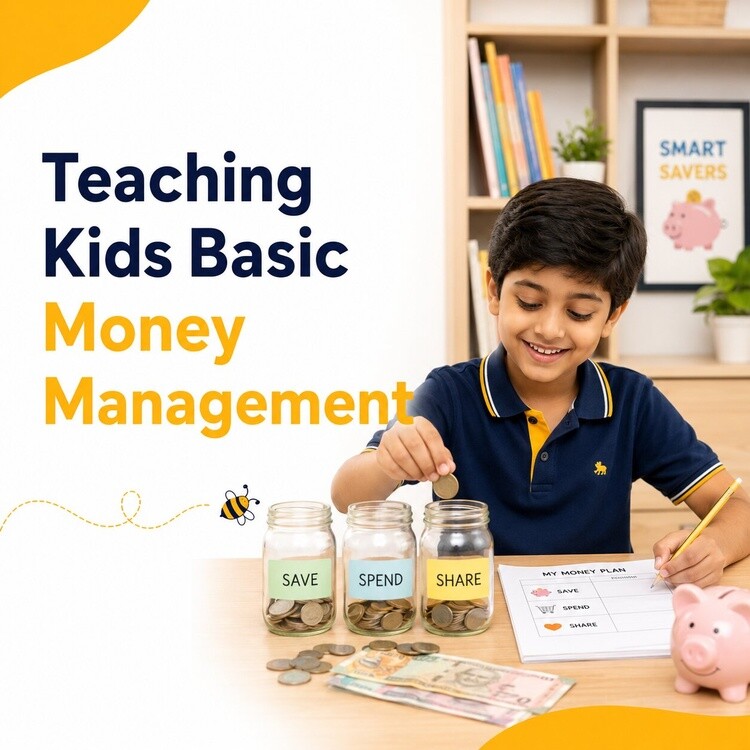
Real money skills come from real money experience — earning, saving, spending, and occasionally losing — more than from lectures. Here's how to structure genuine financial practice at home.
Children learn money management primarily through hands-on experience with real (if small) stakes, not through abstract lessons — the structure of that experience matters more than any single conversation about saving.
Age-appropriate starting points
Ages 5-7 — basic concepts through pretend play (the shop game), simple counting with real coins, and the earliest saving concept (a piggy bank with a visible goal).
Ages 7-9 — regular small pocket money with genuine spend-or-save choice, first simple budgeting (dividing money into spend/save categories), and basic understanding of prices and value.
Ages 9-12 — larger, more regular pocket money, genuine saving goals requiring patience (saving toward something specific over weeks or months), basic understanding of needs versus wants, and introduction to the concept of earning beyond fixed allowance (small additional tasks for additional money, thoughtfully structured).
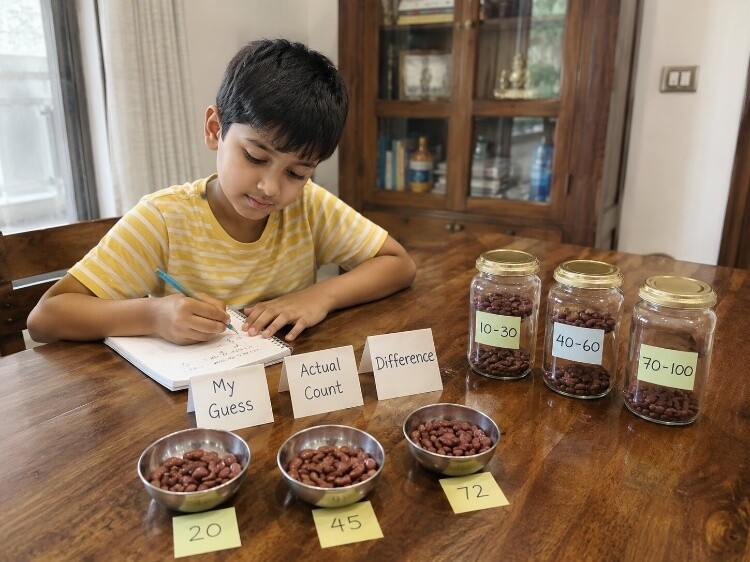
The allowance structure that teaches most
A consistent, predictable amount (rather than ad hoc giving) that's genuinely theirs to allocate, without constant parental override of "bad" choices (within reasonable limits) — the sting of a poor spending choice followed by regret is itself valuable financial education, more effective than being prevented from ever making one.
Introducing the three-way split
Many financial educators recommend a simple spend/save/give framework — dividing money into categories for immediate spending, longer-term saving, and (age-appropriately) sharing or charitable giving — building balanced financial habits from an early structure.
Making saving concrete and motivating
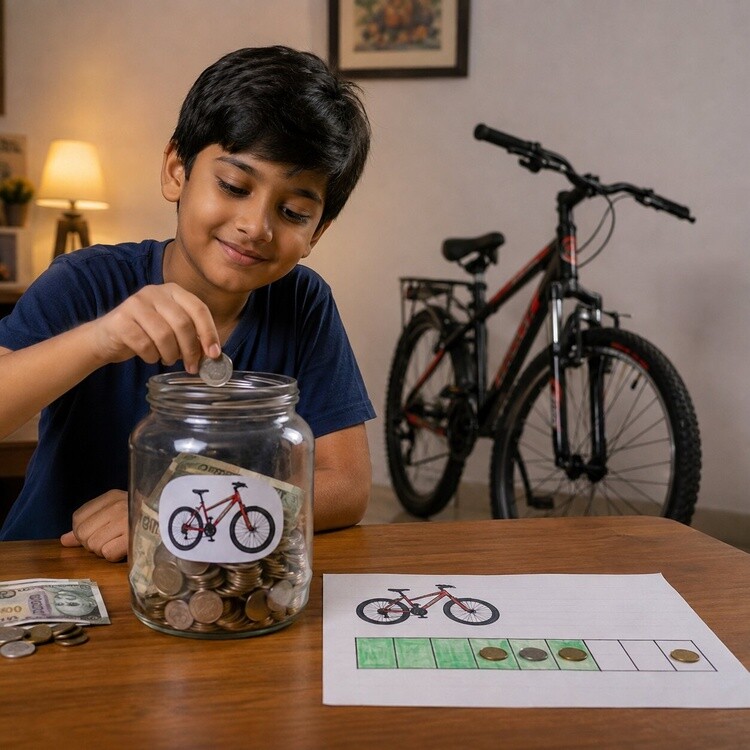
Abstract "save for the future" rarely motivates children; a specific, visible goal (a toy, an experience, a gift for someone) that requires weeks of saving builds the patience and delayed-gratification muscle much more effectively.
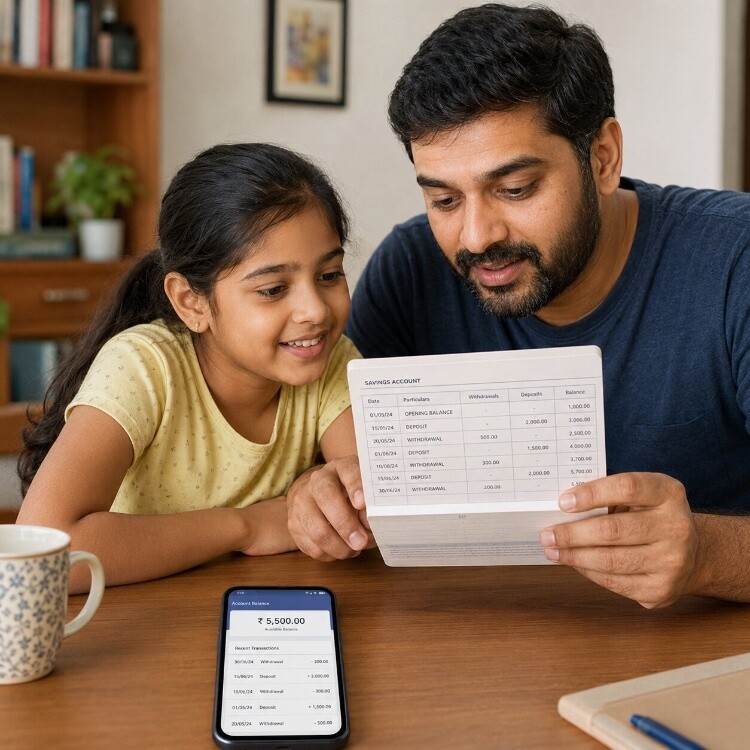
The bank account and digital money question
Introducing a basic savings account around age 8-10 (many Indian banks offer minor accounts) helps bridge from physical coins to the digital money concept increasingly relevant as cashless transactions dominate — with parental oversight but growing genuine access as trust builds.
Talking about family finances, appropriately
While detailed family financial specifics aren't necessary for children, age-appropriate honesty about trade-offs ("we're choosing this because we're saving for X") teaches financial reasoning far better than either complete secrecy or inappropriate full disclosure of adult financial stress.
The mistakes-as-teacher principle
A child who spends their entire allowance immediately and then wants something later, with money unavailable, learns a lesson no lecture replicates — provided parents resist the urge to rescue every financial misstep, within reasonable safety limits.