
 Summer Camp
 Reading Writing
 Book Club
 Calligraphy
 Creative Writing
 English Speaking
 Handwriting
 Library
 Phonics
 Story Telling
 Art and Craft
 Clay Moulding
 Drawing
 Painting
 Pottery
 Sketching
 Drama Theatre
 Personality Development
 Public Speaking
 Languages
 Arabic
 Chinese
 French
 German
 Hindi
Hindi Italian
 Japanese
 Korean
 Persian
 Portuguese
 Russian
 Spanish
 Turkish
 Uzbek
Uzbek Sports and Fitness
 Aerobics
 Athletics
 Badminton
 Basket Ball
 Chess
Chess Cricket
 Football
 Golf
Golf Gymnastics
 Hulahoop
 Karate
 Martial Arts
 Pickleball
 Rugby
Rugby Skating
 Swimming
 Taekwondo
 Tennis
 Volleyball
 Yoga
Yoga Zumba
Zumba Tuition Classes
 Accounts
 Biology
 Business Studies
 CBSE
CBSE Chemistry
 Commerce
 Economics
 Homework Classes
 IB Board
 IGCSE
IGCSE Mathematics
 Physics
 Psychology
 Science
 Social Studies
 Vedic Maths
 Dance and Music
 Ballet
 Bhangra
 Bharatnatyam
 Bollywood Dance
 Casio
Casio Dandiya and Garba
 Drums
Drums Flute
Flute Guitar
 Harmonium
 Hip Hop
 Jazz
Jazz Kathak
 Keyboard
 Piano
Piano Salsa
Salsa Shlokas
 Sitar
Sitar Tabla
Tabla Ukulele
 Violin
 Vocal
Vocal Play School
 STEM
STEM
 Abacus
 App Development
 Artificial intelligence
 Basic Computer Courses
 Canva
Canva Coding
 Graphic Design
 Lego
Lego Python
 Robotics
 Rubiks Cube
 Scrabble
 Scratch
 Website Development
 Winter Camp
 Workshops
 Diwali Workshop
 Easter
 Ganesh Mahotsav
 Guru Nanak Jayanti Workshop
 Holi
Holi Independence day workshop
 Janmashtami Workshop
 Mothers day
 Navratri Workshops
 Raksha Bandhan workshop
 Ramayana Workshop
 Spring Camp
 Valentines Day Workshops
 Festive
 Daycare
 Cooking and Food
 Spring Camp
 Contests and Competitions
 Special abled
 Republic Day Workshops
 Mela
Mela
 Mela
Mela Cognitive Development
 Mother-Toddler Program
-Jul-03-2026-06-59-25-1926-AM.webp?width=30&height=30&name=Smart_20Skills_20(2)-Jul-03-2026-06-59-25-1926-AM.webp) Smart Skills
Smart Skills
 Financial Literacy
 Mental Wellbeing
 Meditation
 Reiki
Reiki




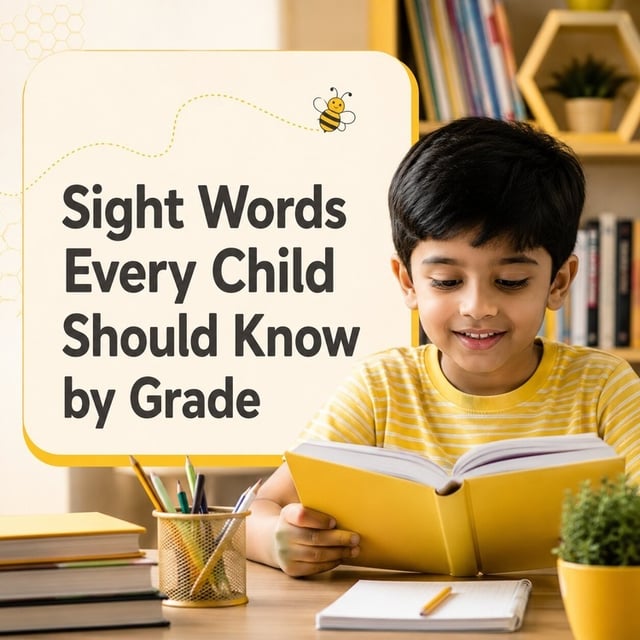
Sight words — common words that don't follow regular phonics rules — need to be memorised by recognition rather than sounded out. Here's a grade-wise reference so you know roughly what's expected, and how to practice without turning it into rote drilling.
Words like "the," "was," and "said" don't follow predictable phonics rules, which means children need to memorise them by sight rather than sound them out letter by letter. Schools typically introduce these in structured lists by grade, and having a rough sense of expectations helps you support practice at home effectively.
Pre-primary / Grade 1 foundational sight words - Basic, extremely high-frequency words: the, a, is, it, and, to, in, was, you, I. These typically make up a large percentage of any early reading text, so mastering even this small foundational list unlocks significant reading independence.
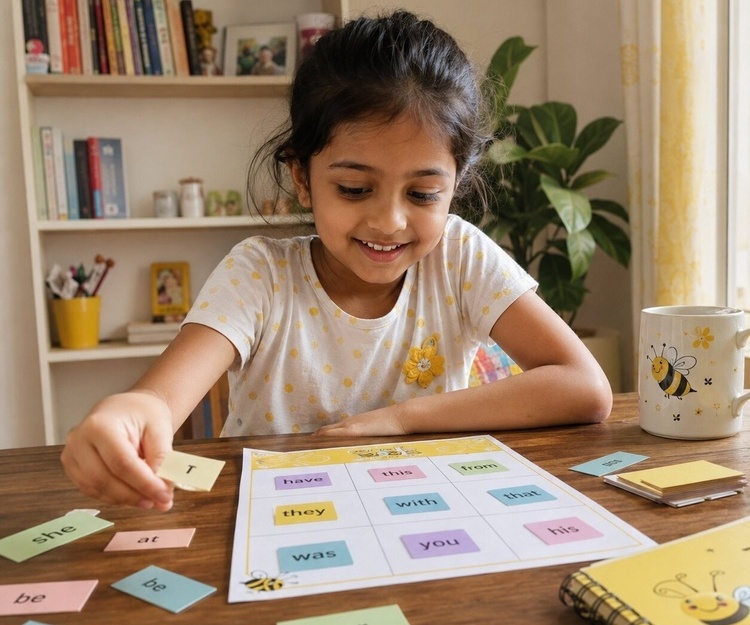
Grade 1 expanded list - Words like: said, they, have, from, were, what, when, there, could, would. These start appearing regularly in early chapter books and simple stories.
Grade 2 list - More complex sight words: through, thought, should, does, other, another, because, before, though, enough. Several of these introduce irregular spelling patterns that genuinely benefit from repeated visual exposure rather than phonics-based sounding out.
Grade 3 and beyond - By this stage, sight word lists typically merge into general vocabulary building rather than a separate distinct category, though some genuinely tricky irregular words (like "colonel" or "yacht") continue to need direct memorisation regardless of grade.
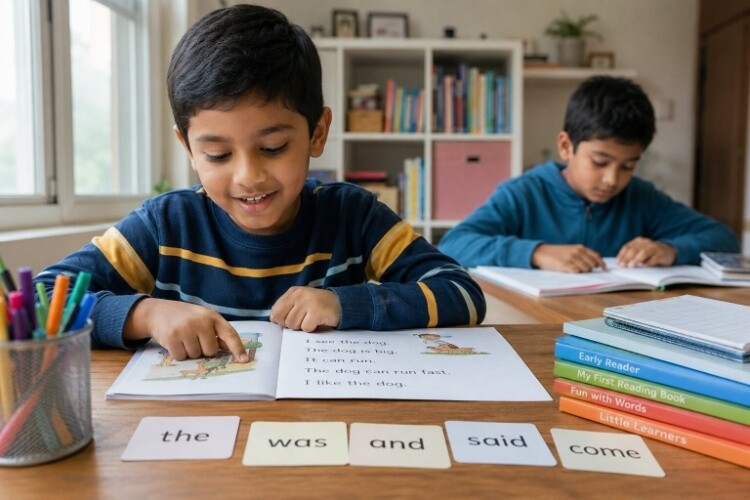
Why sight words matter for overall reading fluency
A child who has to sound out every single "the" and "was" in a sentence reads painfully slowly and loses track of overall meaning. Automatic sight word recognition frees up mental effort for actual comprehension — this is often the single biggest factor separating a halting reader from a fluent one at the same phonics skill level.
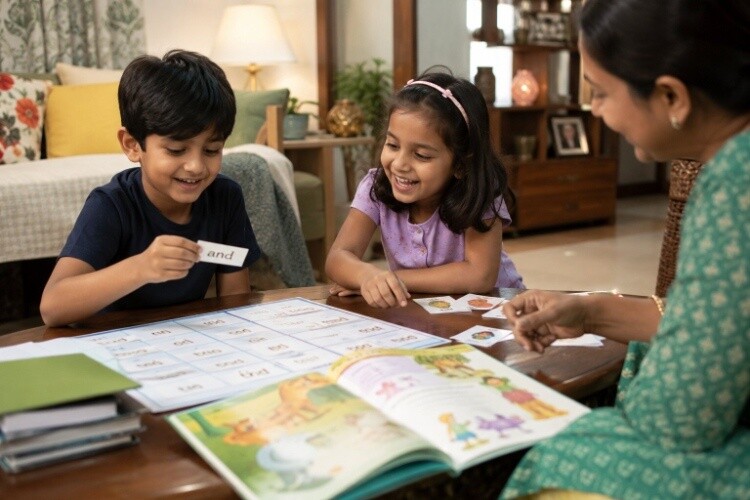
How to practice without making it feel like rote memorisation
Flashcard drilling works for some children but bores or frustrates others — mixing in games (sight word bingo, matching games, "find the word" scavenger hunts through a book) tends to produce better long-term retention with less resistance.
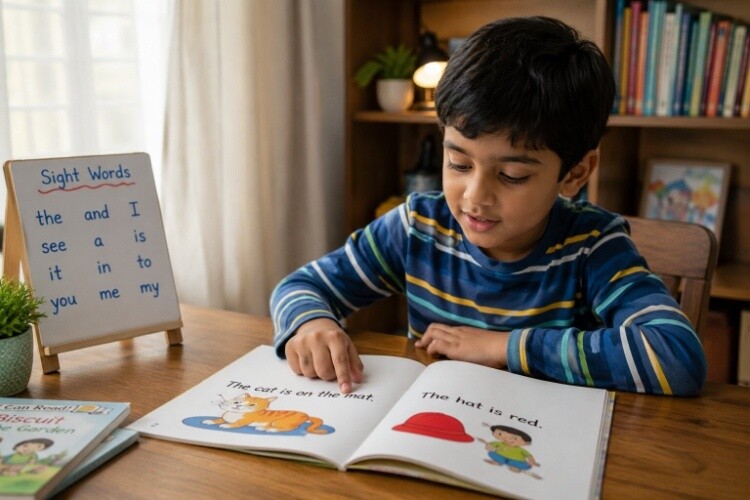
Using sight words in genuine reading, not isolation
Practicing sight words purely as an isolated list has limited transfer value — the real skill-building happens when a child recognises these words automatically while reading connected, meaningful text, so pairing flashcard practice with actual reading time matters significantly.
A realistic pace to expect
Most children need repeated exposure — seeing a sight word correctly 10-15+ times across different contexts — before true automatic recognition develops. A word missed today isn't a sign of failure; it typically just needs a few more exposures.
When sight word struggles might need extra attention
If a child is significantly behind grade-level sight word lists despite consistent practice over several months, or shows particular difficulty with sight words compared to phonics-based decoding generally, it's worth mentioning to the school — sometimes this points to a specific area needing more targeted support.