
 Summer Camp
 Reading Writing
 Book Club
 Calligraphy
 Creative Writing
 English Speaking
 Handwriting
 Library
 Phonics
 Story Telling
 Art and Craft
 Clay Moulding
 Drawing
 Painting
 Pottery
 Sketching
 Drama Theatre
 Personality Development
 Public Speaking
 Languages
 Arabic
 Chinese
 French
 German
 Hindi
Hindi Italian
 Japanese
 Korean
 Persian
 Portuguese
 Russian
 Spanish
 Turkish
 Uzbek
Uzbek Sports and Fitness
 Aerobics
 Athletics
 Badminton
 Basket Ball
 Chess
Chess Cricket
 Football
 Golf
Golf Gymnastics
 Hulahoop
 Karate
 Martial Arts
 Pickleball
 Rugby
Rugby Skating
 Swimming
 Taekwondo
 Tennis
 Volleyball
 Yoga
Yoga Zumba
Zumba Tuition Classes
 Accounts
 Biology
 Business Studies
 CBSE
CBSE Chemistry
 Commerce
 Economics
 Homework Classes
 IB Board
 IGCSE
IGCSE Mathematics
 Physics
 Psychology
 Science
 Social Studies
 Vedic Maths
 Dance and Music
 Ballet
 Bhangra
 Bharatnatyam
 Bollywood Dance
 Casio
Casio Dandiya and Garba
 Drums
Drums Flute
Flute Guitar
 Harmonium
 Hip Hop
 Jazz
Jazz Kathak
 Keyboard
 Piano
Piano Salsa
Salsa Shlokas
 Sitar
Sitar Tabla
Tabla Ukulele
 Violin
 Vocal
Vocal Play School
 STEM
STEM
 Abacus
 App Development
 Artificial intelligence
 Basic Computer Courses
 Canva
Canva Coding
 Graphic Design
 Lego
Lego Python
 Robotics
 Rubiks Cube
 Scrabble
 Scratch
 Website Development
 Winter Camp
 Workshops
 Diwali Workshop
 Easter
 Ganesh Mahotsav
 Guru Nanak Jayanti Workshop
 Holi
Holi Independence day workshop
 Janmashtami Workshop
 Mothers day
 Navratri Workshops
 Raksha Bandhan workshop
 Ramayana Workshop
 Spring Camp
 Valentines Day Workshops
 Festive
 Daycare
 Cooking and Food
 Spring Camp
 Contests and Competitions
 Special abled
 Republic Day Workshops
 Mela
Mela
 Mela
Mela Cognitive Development
 Mother-Toddler Program
-Jul-03-2026-06-59-25-1926-AM.webp?width=30&height=30&name=Smart_20Skills_20(2)-Jul-03-2026-06-59-25-1926-AM.webp) Smart Skills
Smart Skills
 Financial Literacy
 Mental Wellbeing
 Meditation
 Reiki
Reiki



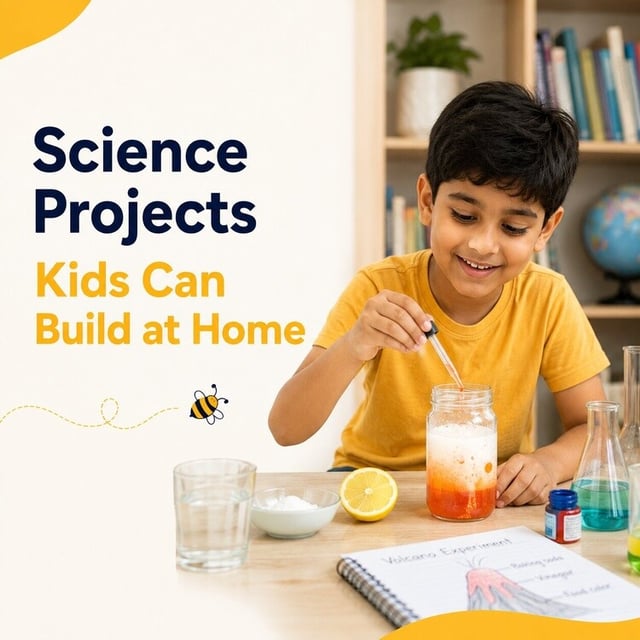
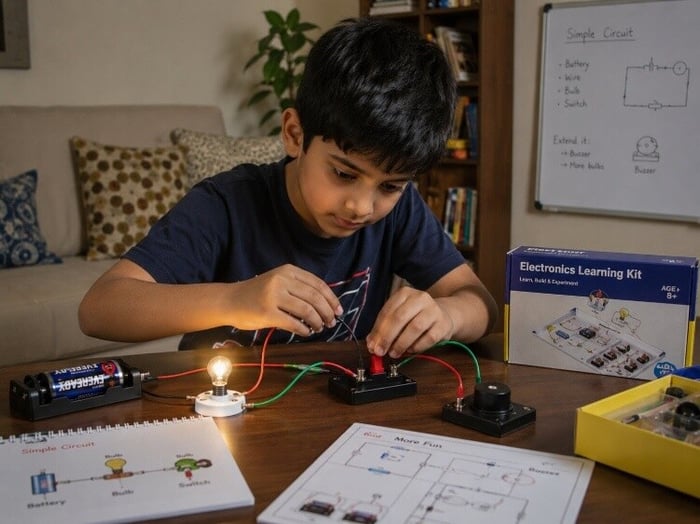
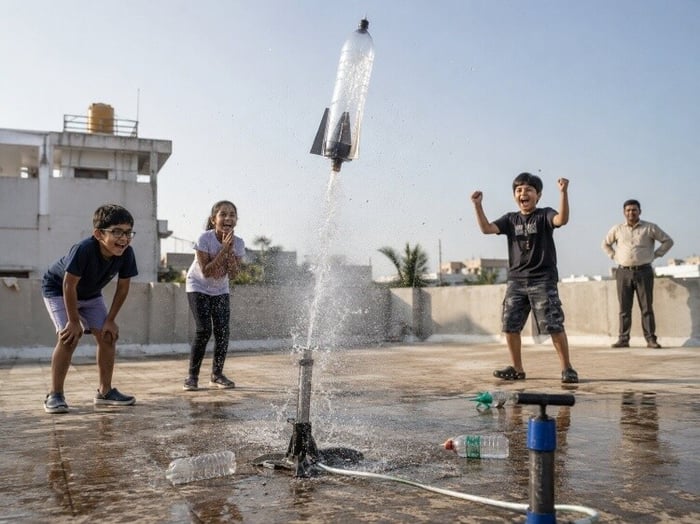
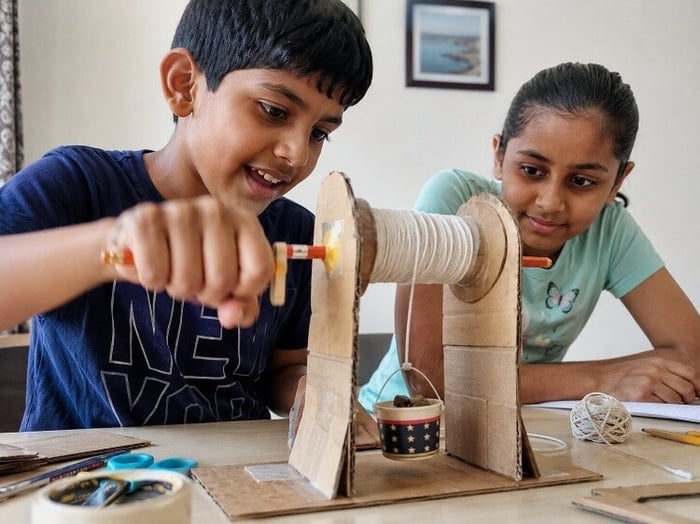
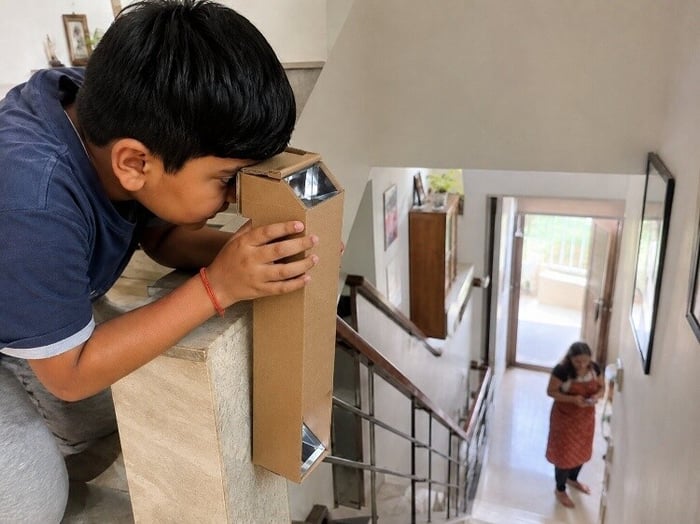
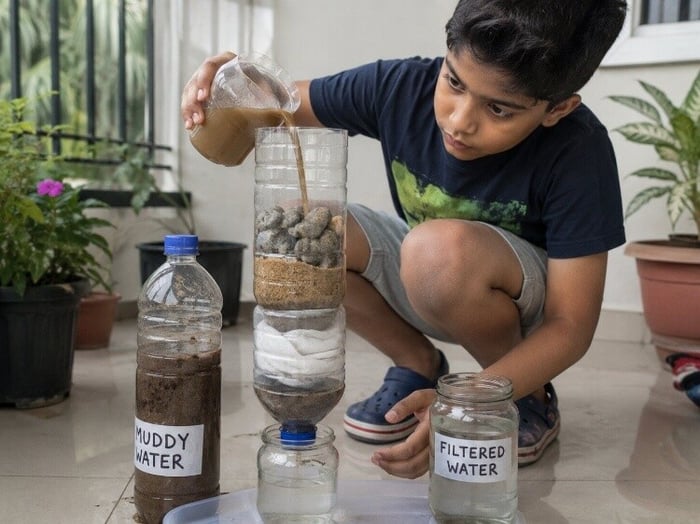
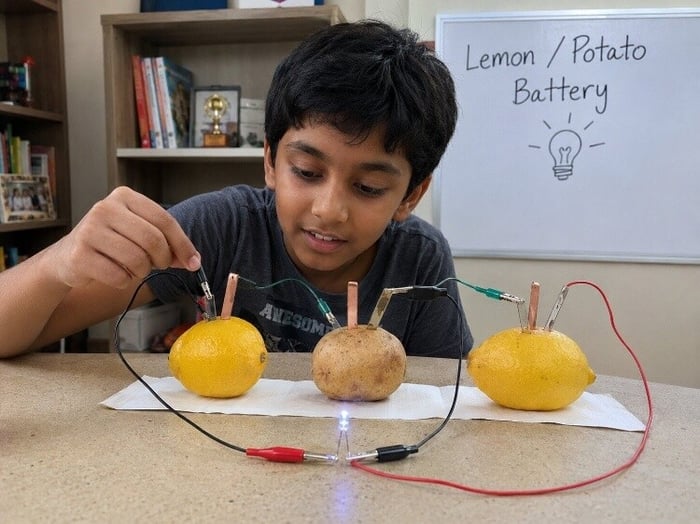
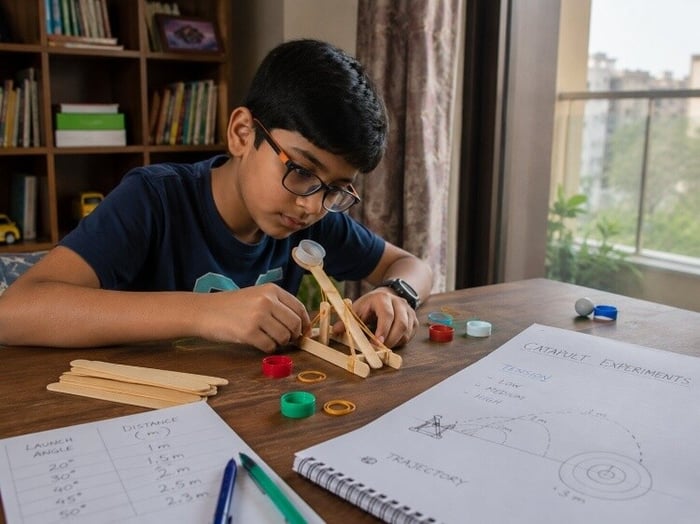
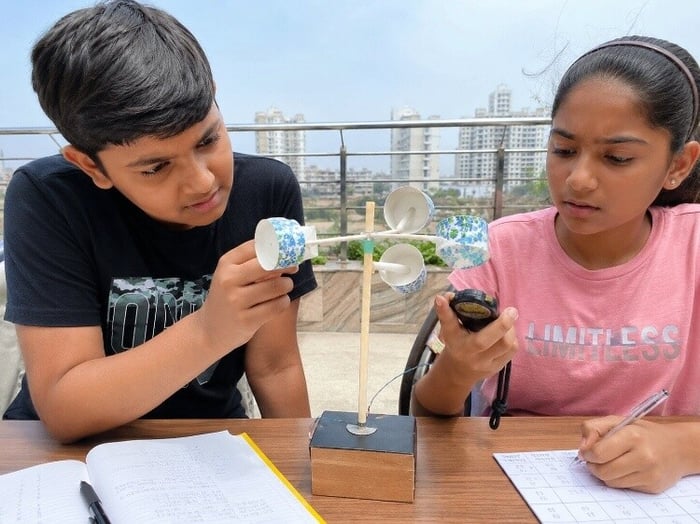
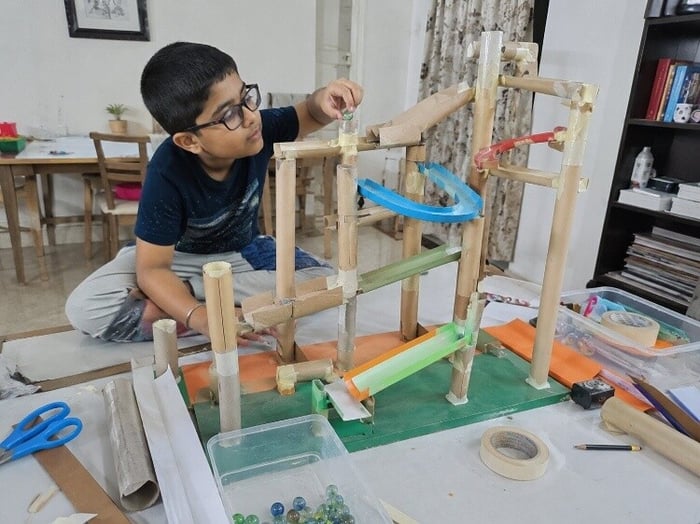
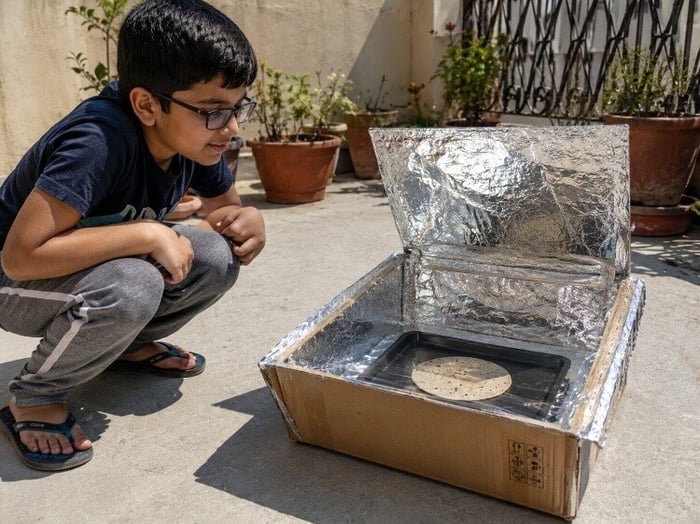
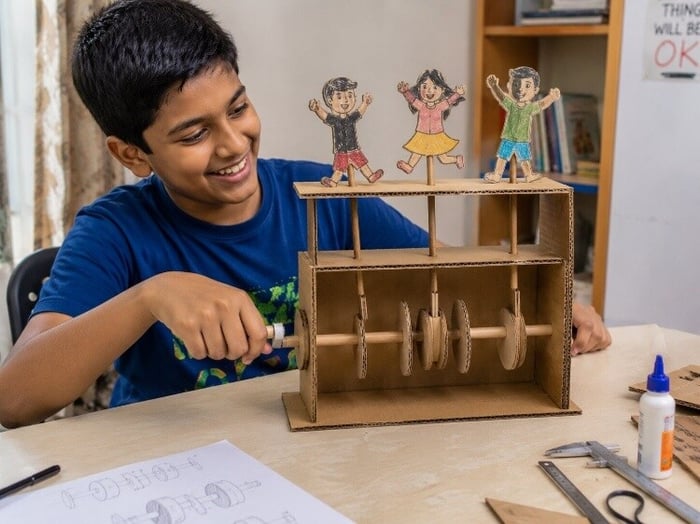
Build-projects teach science through construction — machines, circuits, and models that work. These home builds suit 6-8+ with household-plus-minimal-purchase materials and genuine mechanism learning inside.
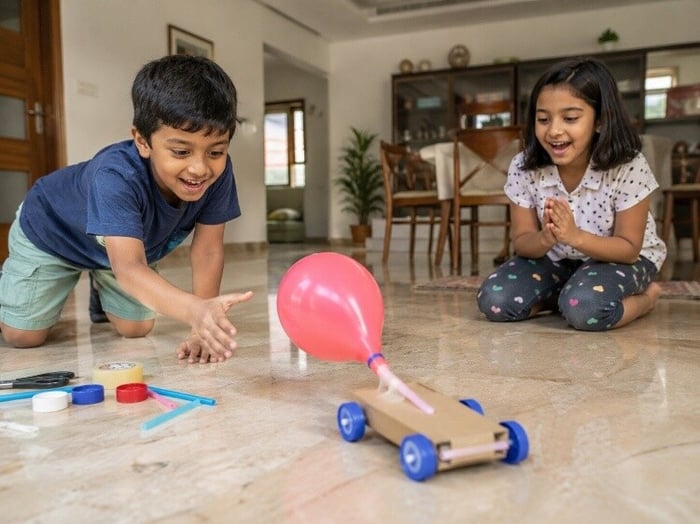
Building beats demonstrating for retention: the child who constructs the machine owns the concept. These projects deliver mechanisms through making.
The build-cycle pedagogy
Each project runs the engineering loop: build → test → fail somewhere → diagnose → adjust → retest — and the loop is the lesson. Adult restraint at the failure points remains the technique: the diagnosis belongs to the builder, with questions ("what's slipping? where's it losing?") as the permitted help.
Documentation upgrading
The science notebook matures: labelled diagrams, test results, version notes ("v2: bigger wheels — faster") — the maker's log as thinking-made-visible, and as the artifact school science fairs later reward.
Sourcing notes for Indian homes
The recycling stash covers most builds; the small purchases (wire, bulbs, batteries, magnets, mirrors) assemble a home science kit for a few hundred rupees from local electrical and stationery shops — no branded kit required, though the branded kits have their convenience case for gifting occasions.
Where building appetite points
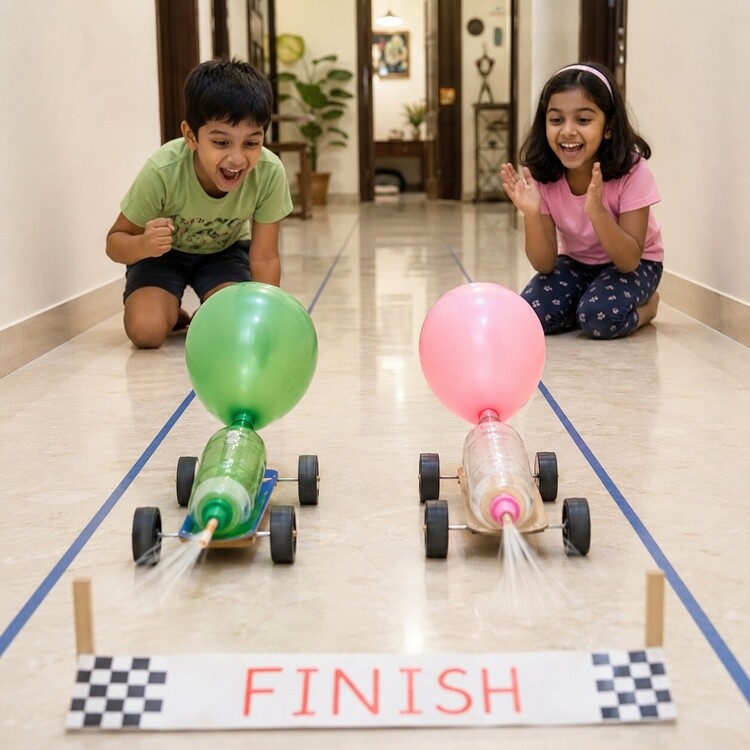
The child who lives in the build loop is signalling toward the structured maker lane — robotics clubs, electronics programs, and maker spaces for 7-8+ across Delhi NCR extend exactly this appetite with real components and peer builders.