
 Summer Camp
 Reading Writing
 Book Club
 Calligraphy
 Creative Writing
 English Speaking
 Handwriting
 Library
 Phonics
 Story Telling
 Art and Craft
 Clay Moulding
 Drawing
 Painting
 Pottery
 Sketching
 Drama Theatre
 Personality Development
 Public Speaking
 Languages
 Arabic
 Chinese
 French
 German
 Hindi
Hindi Italian
 Japanese
 Korean
 Persian
 Portuguese
 Russian
 Spanish
 Turkish
 Uzbek
Uzbek Sports and Fitness
 Aerobics
 Athletics
 Badminton
 Basket Ball
 Chess
Chess Cricket
 Football
 Golf
Golf Gymnastics
 Hulahoop
 Karate
 Martial Arts
 Pickleball
 Rugby
Rugby Skating
 Swimming
 Taekwondo
 Tennis
 Volleyball
 Yoga
Yoga Zumba
Zumba Tuition Classes
 Accounts
 Biology
 Business Studies
 CBSE
CBSE Chemistry
 Commerce
 Economics
 Homework Classes
 IB Board
 IGCSE
IGCSE Mathematics
 Physics
 Psychology
 Science
 Social Studies
 Vedic Maths
 Dance and Music
 Ballet
 Bhangra
 Bharatnatyam
 Bollywood Dance
 Casio
Casio Dandiya and Garba
 Drums
Drums Flute
Flute Guitar
 Harmonium
 Hip Hop
 Jazz
Jazz Kathak
 Keyboard
 Piano
Piano Salsa
Salsa Shlokas
 Sitar
Sitar Tabla
Tabla Ukulele
 Violin
 Vocal
Vocal Play School
 STEM
STEM
 Abacus
 App Development
 Artificial intelligence
 Basic Computer Courses
 Canva
Canva Coding
 Graphic Design
 Lego
Lego Python
 Robotics
 Rubiks Cube
 Scrabble
 Scratch
 Website Development
 Winter Camp
 Workshops
 Diwali Workshop
 Easter
 Ganesh Mahotsav
 Guru Nanak Jayanti Workshop
 Holi
Holi Independence day workshop
 Janmashtami Workshop
 Mothers day
 Navratri Workshops
 Raksha Bandhan workshop
 Ramayana Workshop
 Spring Camp
 Valentines Day Workshops
 Festive
 Daycare
 Cooking and Food
 Spring Camp
 Contests and Competitions
 Special abled
 Republic Day Workshops
 Mela
Mela
 Mela
Mela Cognitive Development
 Mother-Toddler Program
-Jul-03-2026-06-59-25-1926-AM.webp?width=30&height=30&name=Smart_20Skills_20(2)-Jul-03-2026-06-59-25-1926-AM.webp) Smart Skills
Smart Skills
 Financial Literacy
 Mental Wellbeing
 Meditation
 Reiki
Reiki




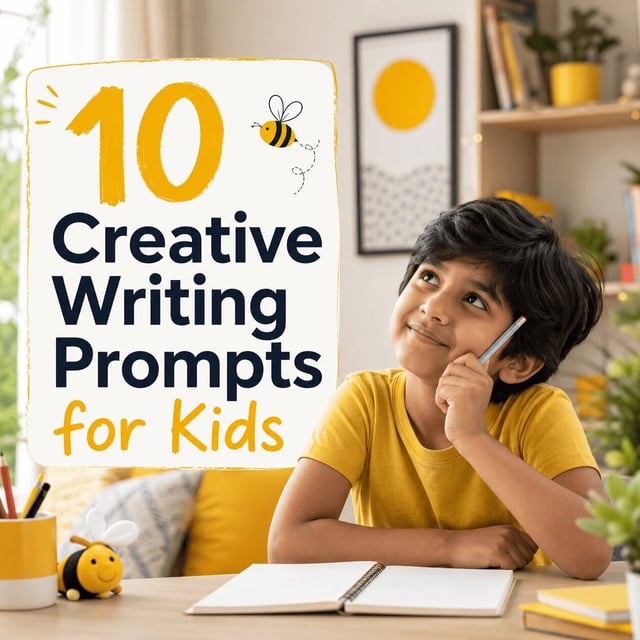
Creative writing helps kids process language beyond grammar drills, but a blank page ("write a story") often causes more freeze-up than inspiration. These 10 prompts are specific enough to spark ideas immediately, rooted in everyday Indian family life.
"Write a story" is one of the most common — and most paralysing — instructions a child can be given. Without a starting point, even imaginative kids often stare blankly at the page. Specific, familiar prompts work far better than open-ended ones, especially for reluctant writers.
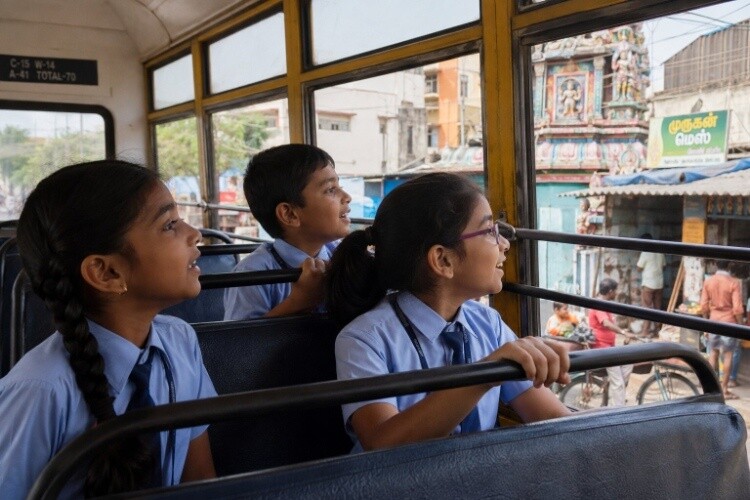
The day the school bus took a different route
A simple twist on a completely familiar daily experience — kids can imagine what might be different without needing an entirely invented world.
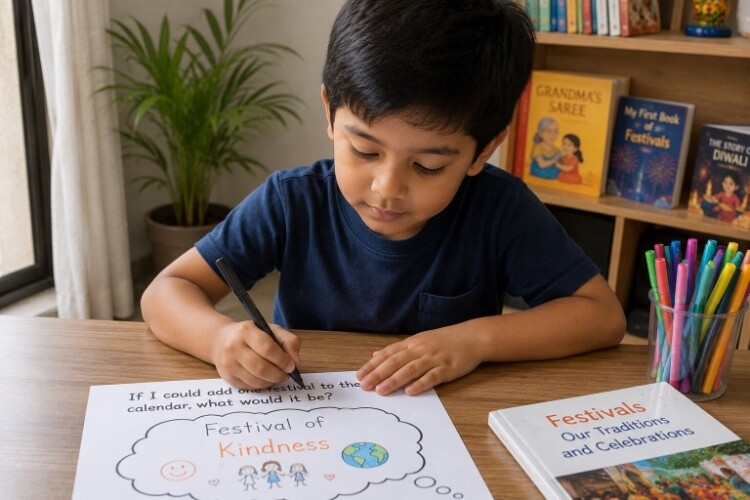
If I could add one festival to the calendar, what would it be?
Connects to something kids already know and love, while requiring genuine creative thinking about traditions and celebrations.
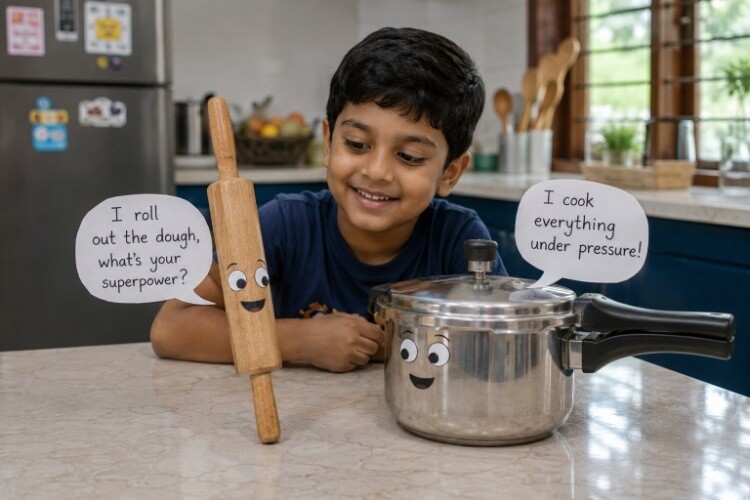
A conversation between two things in the kitchen
Personifying a rolling pin and a pressure cooker, for instance — silly, low-stakes, and surprisingly good at building descriptive vocabulary.
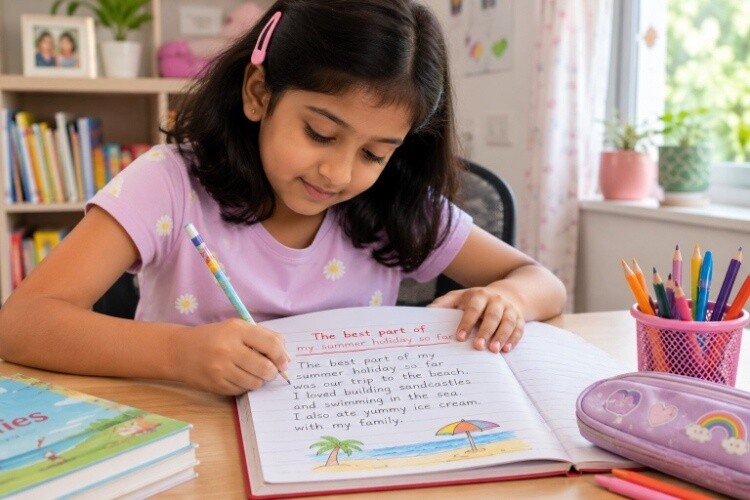
The best part of my summer holiday so far
Grounded in real, recent memory — easier to start writing about something that actually happened than something entirely imagined.
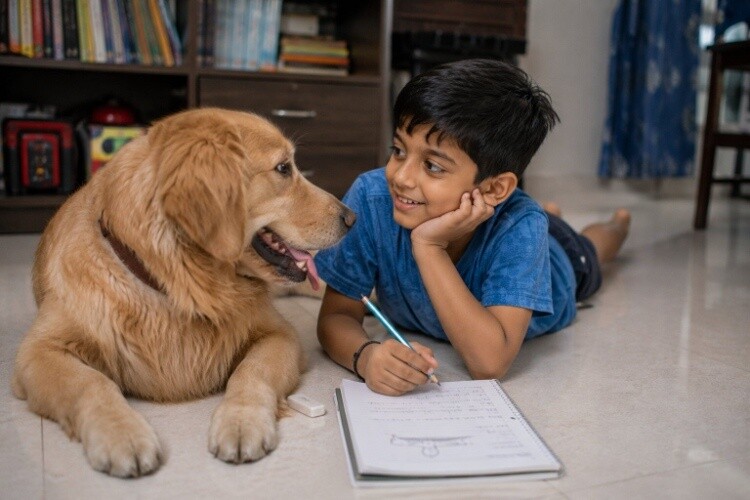
If my pet (or a pet I wish I had) could talk for one day
A near-universal favourite prompt across age groups; even children without pets enjoy imagining one.
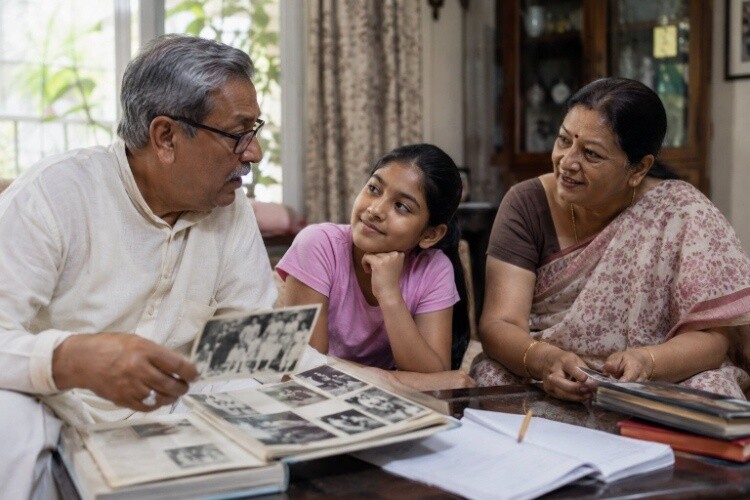
What my grandparents' childhood might have looked like
Encourages a conversation with grandparents first (genuinely valuable in joint family settings), then writing based on what they learn.
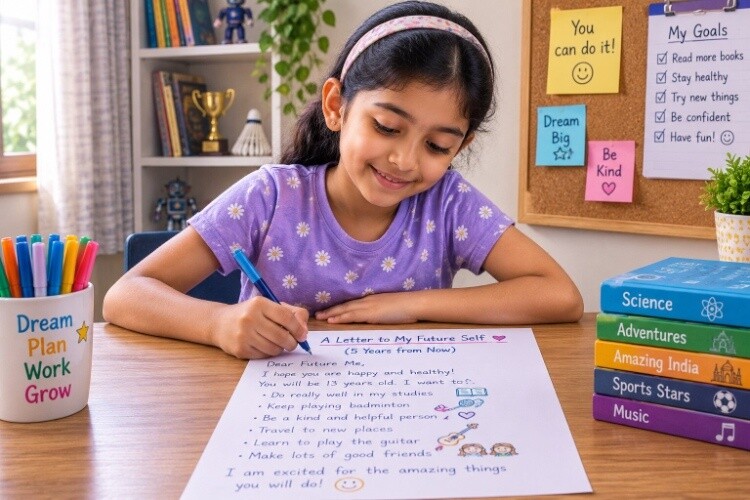
A letter to my future self, five years from now
Works well for slightly older kids (8+) and builds reflective thinking alongside writing skill.
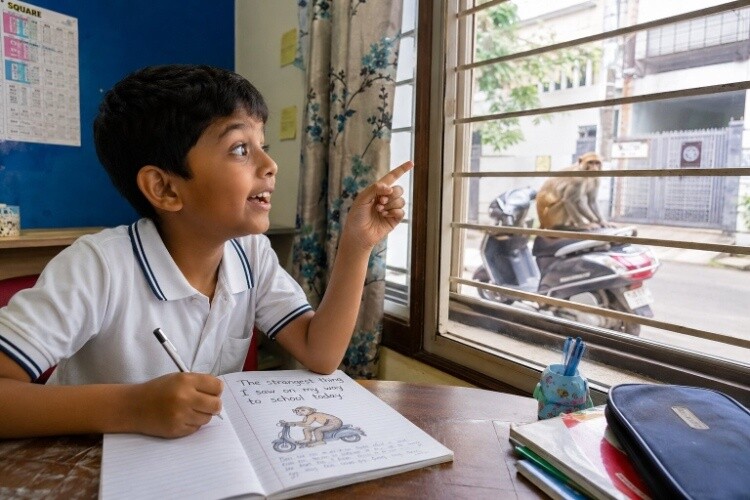
The strangest thing I saw on my way to school today
Even on an uneventful day, this prompt pushes observational thinking and descriptive detail.
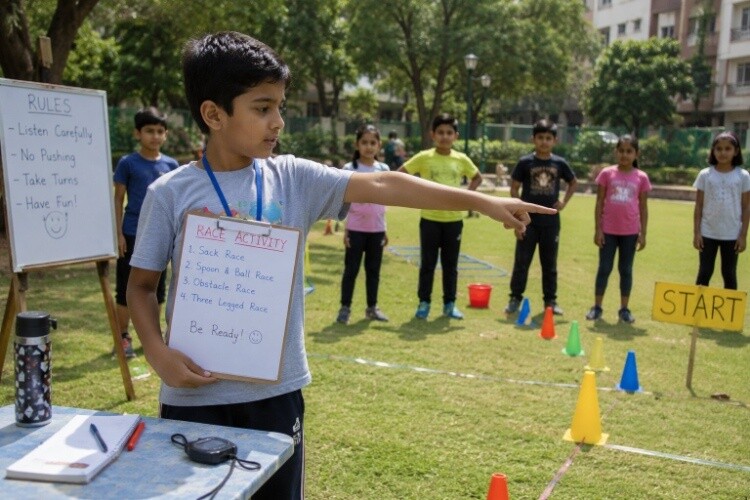
If I ran my society's/colony's park for a day, what would I change?
Rooted in a space kids know intimately, and often produces genuinely thoughtful, specific ideas.
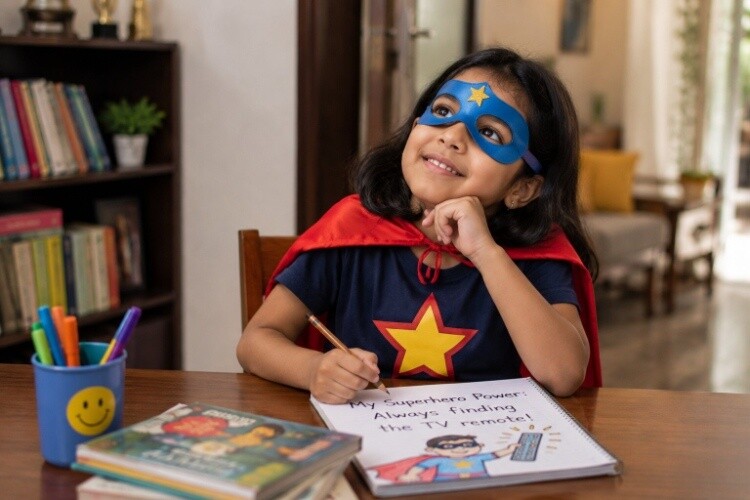
A superhero whose power is something completely ordinary
A superhero whose power is "always finding the TV remote" or "never losing at antakshari" — playful, funny, and easier to sustain than a grand adventure plot.
Why specific prompts work better than open-ended ones
Open prompts require a child to first invent a world and then write within it — two hard tasks stacked together. Specific, familiar prompts remove the first task, so the child can focus entirely on the writing itself. This is especially useful for kids who find writing intimidating due to handwriting struggles or academic pressure elsewhere.
Making it a regular habit without pressure
A once-a-week "story time" using one of these prompts, with zero grading or correction, builds comfort with writing far more effectively than daily forced writing homework. Let spelling and grammar mistakes slide during creative writing time — the goal here is fluency of ideas, not accuracy; that comes separately through school and other structured practice.