
 Summer Camp
 Reading Writing
 Book Club
 Calligraphy
 Creative Writing
 English Speaking
 Handwriting
 Library
 Phonics
 Story Telling
 Art and Craft
 Clay Moulding
 Drawing
 Painting
 Pottery
 Sketching
 Drama Theatre
 Personality Development
 Public Speaking
 Languages
 Arabic
 Chinese
 French
 German
 Hindi
Hindi Italian
 Japanese
 Korean
 Persian
 Portuguese
 Russian
 Spanish
 Turkish
 Uzbek
Uzbek Sports and Fitness
 Aerobics
 Athletics
 Badminton
 Basket Ball
 Chess
Chess Cricket
 Football
 Golf
Golf Gymnastics
 Hulahoop
 Karate
 Martial Arts
 Pickleball
 Rugby
Rugby Skating
 Swimming
 Taekwondo
 Tennis
 Volleyball
 Yoga
Yoga Zumba
Zumba Tuition Classes
 Accounts
 Biology
 Business Studies
 CBSE
CBSE Chemistry
 Commerce
 Economics
 Homework Classes
 IB Board
 IGCSE
IGCSE Mathematics
 Physics
 Psychology
 Science
 Social Studies
 Vedic Maths
 Dance and Music
 Ballet
 Bhangra
 Bharatnatyam
 Bollywood Dance
 Casio
Casio Dandiya and Garba
 Drums
Drums Flute
Flute Guitar
 Harmonium
 Hip Hop
 Jazz
Jazz Kathak
 Keyboard
 Piano
Piano Salsa
Salsa Shlokas
 Sitar
Sitar Tabla
Tabla Ukulele
 Violin
 Vocal
Vocal Play School
 STEM
STEM
 Abacus
 App Development
 Artificial intelligence
 Basic Computer Courses
 Canva
Canva Coding
 Graphic Design
 Lego
Lego Python
 Robotics
 Rubiks Cube
 Scrabble
 Scratch
 Website Development
 Winter Camp
 Workshops
 Diwali Workshop
 Easter
 Ganesh Mahotsav
 Guru Nanak Jayanti Workshop
 Holi
Holi Independence day workshop
 Janmashtami Workshop
 Mothers day
 Navratri Workshops
 Raksha Bandhan workshop
 Ramayana Workshop
 Spring Camp
 Valentines Day Workshops
 Festive
 Daycare
 Cooking and Food
 Spring Camp
 Contests and Competitions
 Special abled
 Republic Day Workshops
 Mela
Mela
 Mela
Mela Cognitive Development
 Mother-Toddler Program
-Jul-03-2026-06-59-25-1926-AM.webp?width=30&height=30&name=Smart_20Skills_20(2)-Jul-03-2026-06-59-25-1926-AM.webp) Smart Skills
Smart Skills
 Financial Literacy
 Mental Wellbeing
 Meditation
 Reiki
Reiki



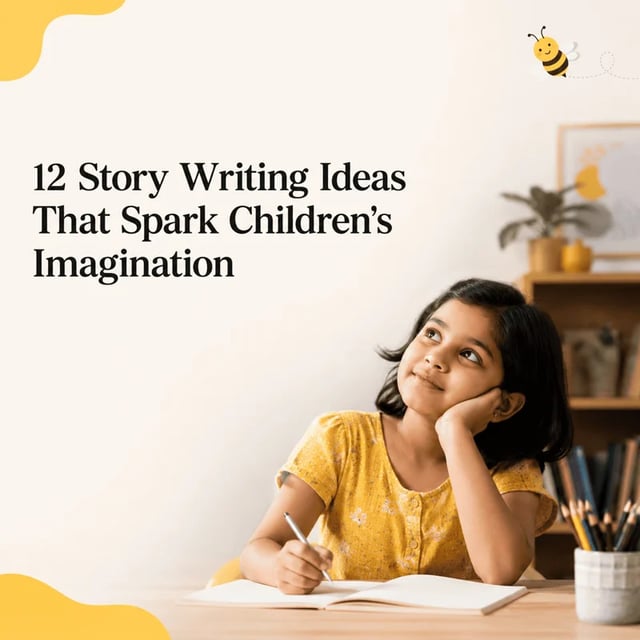
Beyond single prompts, longer story-writing benefits from structural scaffolding — a beginning, a problem, and an ending framework. These 12 story starters, many inspired by Indian folktale traditions, give kids a launching point for a complete story rather than a single paragraph.
Writing one paragraph from a prompt is one skill; sustaining an entire story with a beginning, middle, and end is a bigger leap. These story ideas are built with enough structure that a child can complete a full narrative, not just a few sentences before running out of ideas.
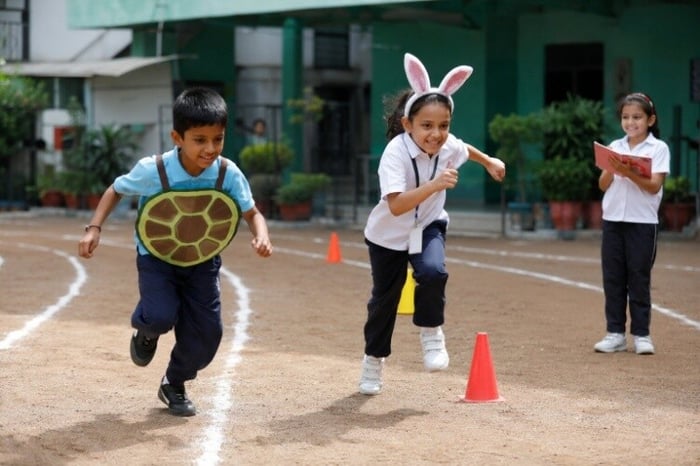
Reimagining a familiar Panchatantra-style fable in a new context (a cricket match, a school race) teaches story structure through a scaffold kids already intuitively understand.
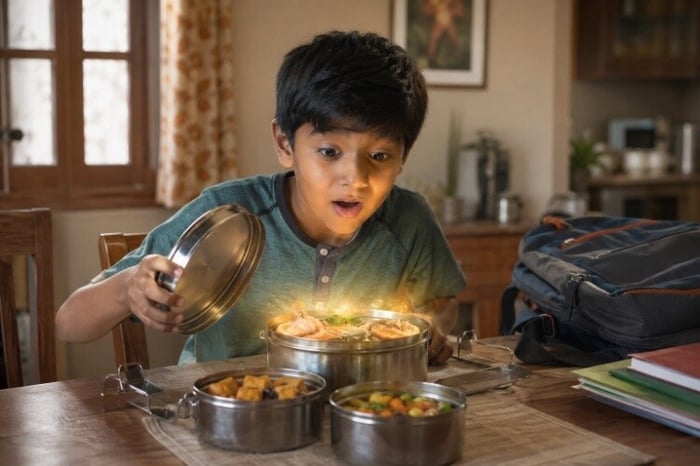
A tiffin box that refills with any food you wish for, or an umbrella that changes the weather — grounding fantasy in something completely ordinary and familiar.

Builds anticipation and problem-solving into the plot structure naturally.
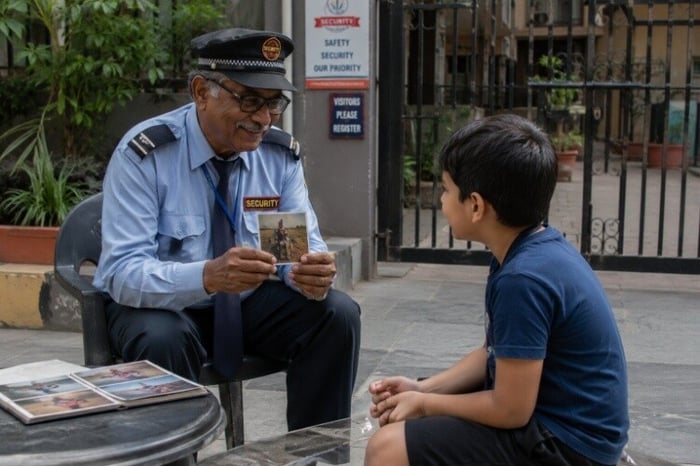
Combines a familiar figure with mystery — genuinely engaging for kids who know a real security guard or watchman.
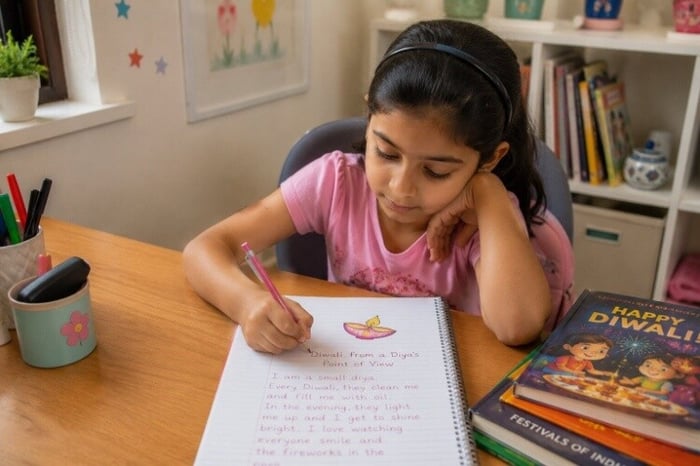
Writing Diwali from a diya's perspective, or Holi from a water balloon's perspective — playful personification that builds descriptive skill.
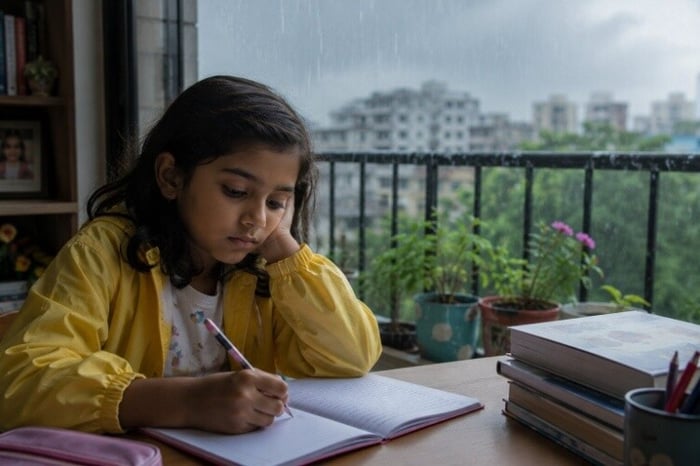
Given how central monsoon season is to Indian childhood, giving rain a character (mischievous, generous, moody) is an easy, relatable creative leap.
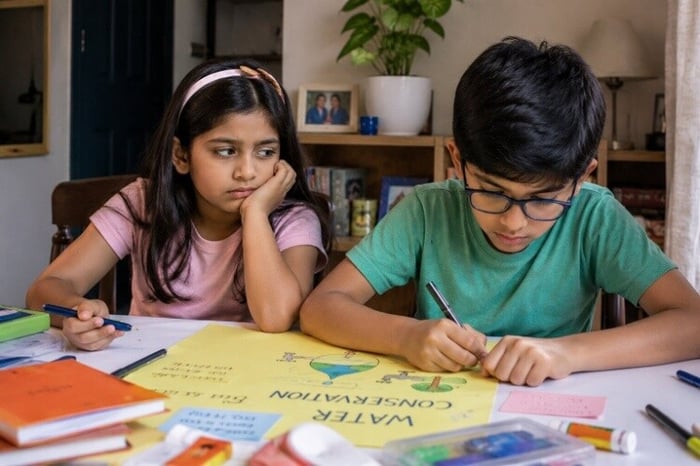
A near-universal Indian family dynamic (cousins during summer holidays) as the foundation for a buddy story.
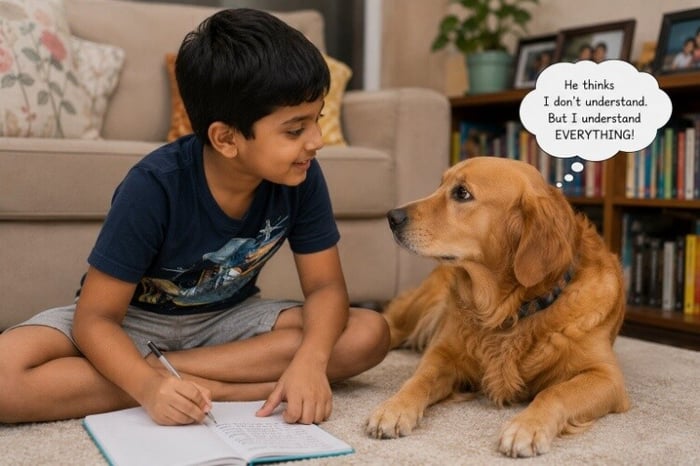
Nearly every child has wondered this about their own pet — an easy, motivating premise to build a full story around.
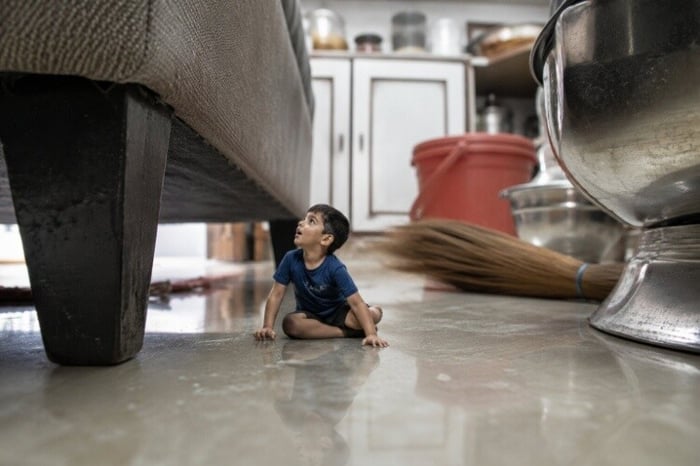
Classic size-change premise, but grounding it in a familiar Indian home (under the sofa, inside the kitchen shelf) makes the descriptive writing more vivid and specific.
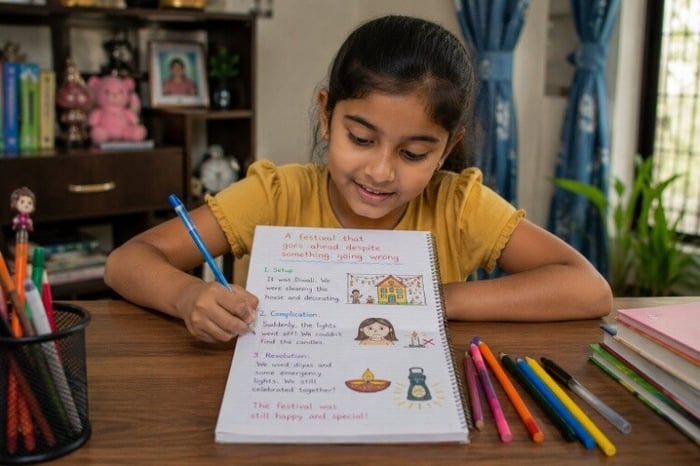
Builds problem-solving structure (setup, complication, resolution) using a celebration kids are emotionally invested in.
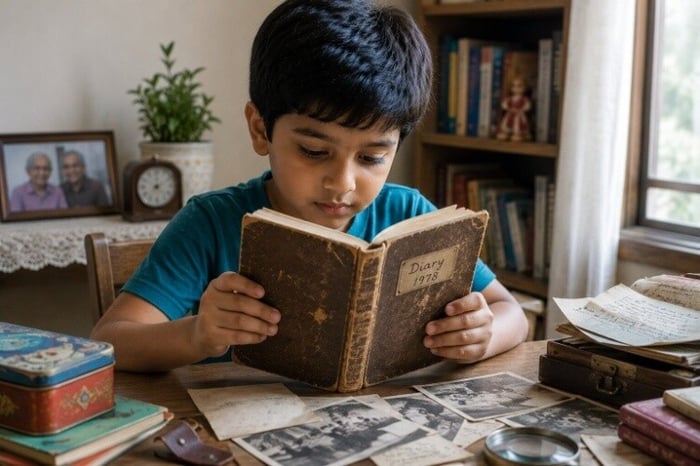
Connects storytelling to family history, and can genuinely prompt real conversations with grandparents afterward.
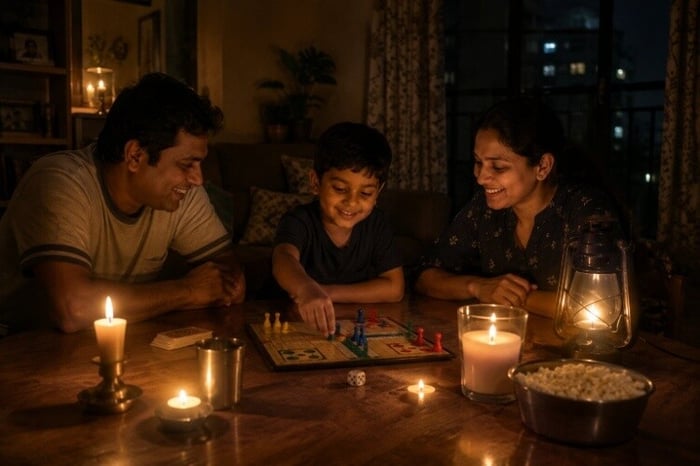
An extremely relatable Indian household experience — the story can explore what the family did instead, told through a child's imaginative lens.
Helping without taking over
The temptation as a parent is to help too much — suggesting what happens next, correcting the plot logic, tidying the ending. Resist this where possible. A messy, slightly illogical story a child wrote entirely themselves builds far more genuine writing confidence than a polished one that's really half yours.
A simple structure to teach alongside these prompts
If your child gets stuck partway through, a simple three-part reminder helps: something happens (the beginning), something goes wrong or gets complicated (the middle), and it gets solved or changes somehow (the ending). This light scaffolding, taught once and referenced gently, helps far more than detailed plotting rules.