
 Summer Camp
 Reading Writing
 Book Club
 Calligraphy
 Creative Writing
 English Speaking
 Handwriting
 Library
 Phonics
 Story Telling
 Art and Craft
 Clay Moulding
 Drawing
 Painting
 Pottery
 Sketching
 Drama Theatre
 Personality Development
 Public Speaking
 Languages
 Arabic
 Chinese
 French
 German
 Hindi
Hindi Italian
 Japanese
 Korean
 Persian
 Portuguese
 Russian
 Spanish
 Turkish
 Uzbek
Uzbek Sports and Fitness
 Aerobics
 Athletics
 Badminton
 Basket Ball
 Chess
Chess Cricket
 Football
 Golf
Golf Gymnastics
 Hulahoop
 Karate
 Martial Arts
 Pickleball
 Rugby
Rugby Skating
 Swimming
 Taekwondo
 Tennis
 Volleyball
 Yoga
Yoga Zumba
Zumba Tuition Classes
 Accounts
 Biology
 Business Studies
 CBSE
CBSE Chemistry
 Commerce
 Economics
 Homework Classes
 IB Board
 IGCSE
IGCSE Mathematics
 Physics
 Psychology
 Science
 Social Studies
 Vedic Maths
 Dance and Music
 Ballet
 Bhangra
 Bharatnatyam
 Bollywood Dance
 Casio
Casio Dandiya and Garba
 Drums
Drums Flute
Flute Guitar
 Harmonium
 Hip Hop
 Jazz
Jazz Kathak
 Keyboard
 Piano
Piano Salsa
Salsa Shlokas
 Sitar
Sitar Tabla
Tabla Ukulele
 Violin
 Vocal
Vocal Play School
 STEM
STEM
 Abacus
 App Development
 Artificial intelligence
 Basic Computer Courses
 Canva
Canva Coding
 Graphic Design
 Lego
Lego Python
 Robotics
 Rubiks Cube
 Scrabble
 Scratch
 Website Development
 Winter Camp
 Workshops
 Diwali Workshop
 Easter
 Ganesh Mahotsav
 Guru Nanak Jayanti Workshop
 Holi
Holi Independence day workshop
 Janmashtami Workshop
 Mothers day
 Navratri Workshops
 Raksha Bandhan workshop
 Ramayana Workshop
 Spring Camp
 Valentines Day Workshops
 Festive
 Daycare
 Cooking and Food
 Spring Camp
 Contests and Competitions
 Special abled
 Republic Day Workshops
 Mela
Mela
 Mela
Mela Cognitive Development
 Mother-Toddler Program
-Jul-03-2026-06-59-25-1926-AM.webp?width=30&height=30&name=Smart_20Skills_20(2)-Jul-03-2026-06-59-25-1926-AM.webp) Smart Skills
Smart Skills
 Financial Literacy
 Mental Wellbeing
 Meditation
 Reiki
Reiki




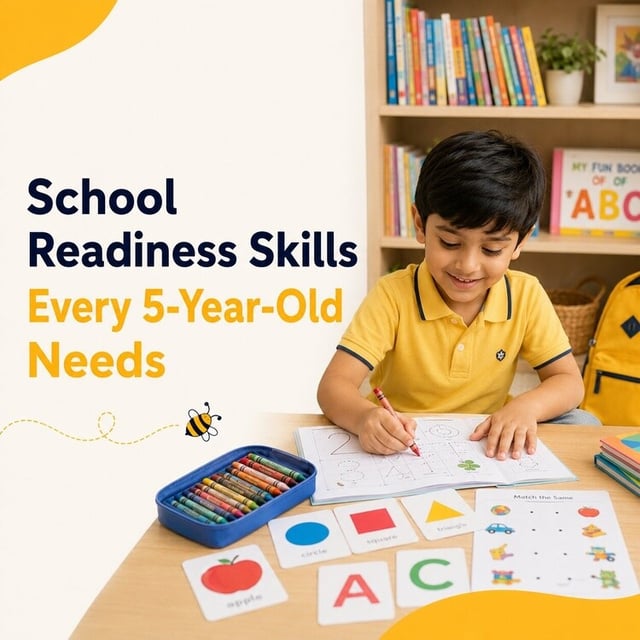
Big-school readiness at 5 is a bundle — self-management, attention, social capability, and communication — with academics the smallest piece. Here's the honest bundle and how to build the thin spots.
The Class 1 transition asks more of a five-year-old than any curriculum: a longer day, one teacher across thirty-plus children, self-managed belongings, and playground society. The readiness that matters is the bundle behind the academics.
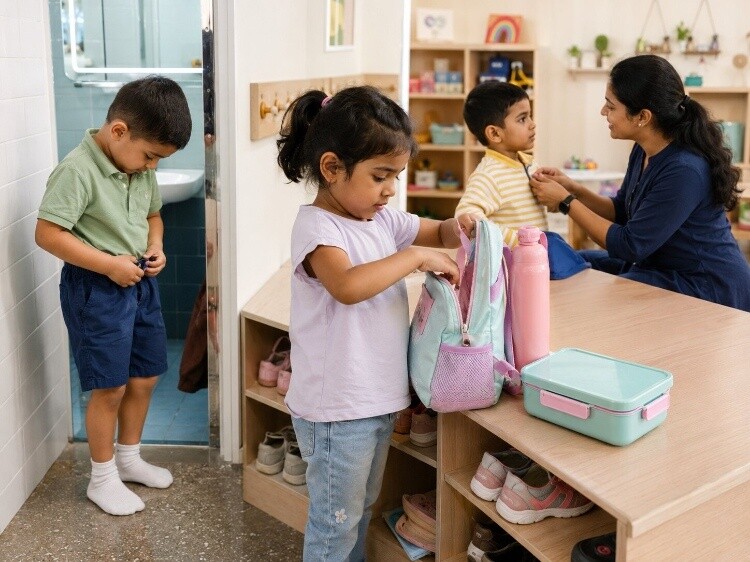
Self-management skills
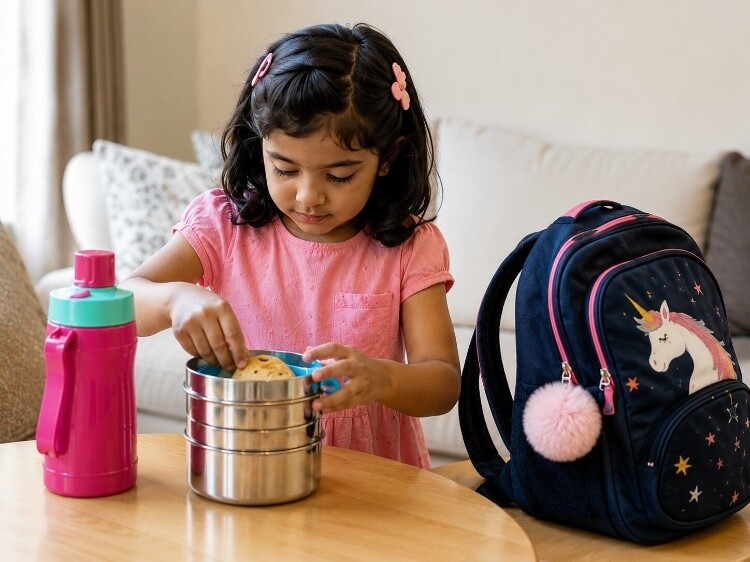
Managing their own tiffin, water bottle, and bag; toileting fully independently including fastenings; keeping track of belongings (the water bottle attrition rate is a universal constant, but the tracking habit matters); asking an adult for help when genuinely stuck.
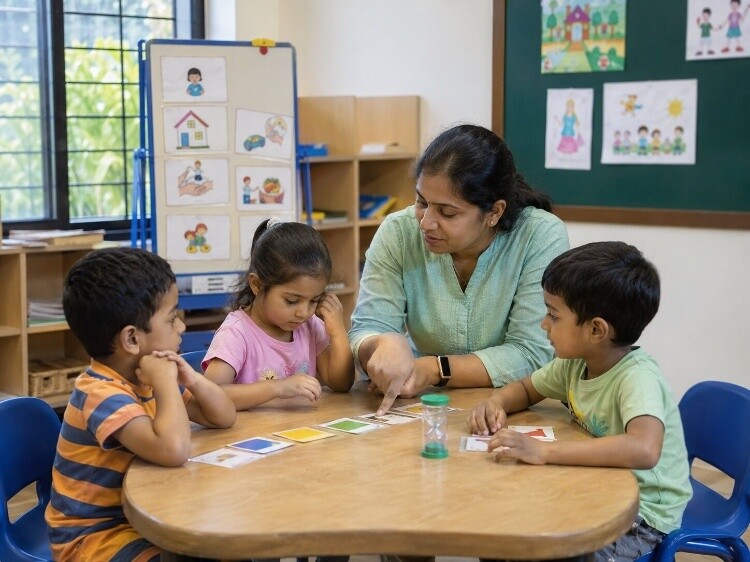
Attention and instruction skills
Following two-to-three step instructions; sustaining a task 10-15 minutes; transitioning between activities on external schedule rather than internal preference; sitting through group instruction stretches (with the fidgeting that remains normal at five).
Social capability
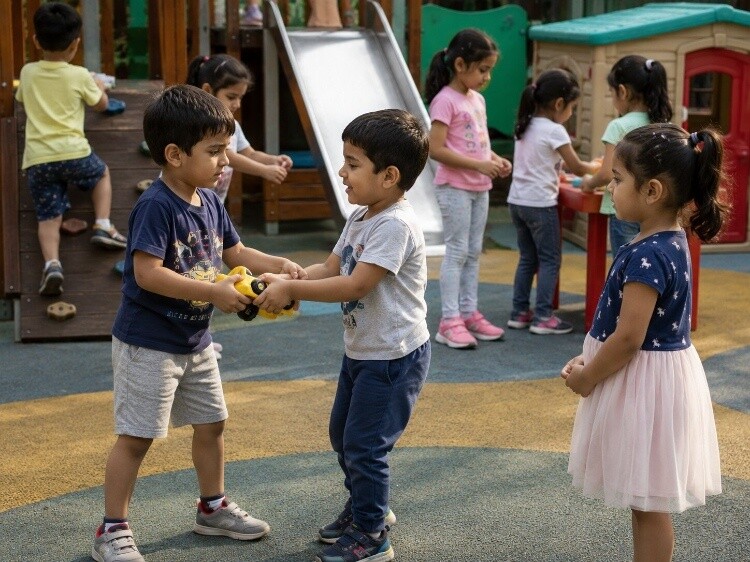
Entering group play and managing playground society without adult mediation; handling conflict with words more than hands, mostly; waiting turns in a thirty-child economy of scarce teacher attention; recovering from disappointment without extended derailment.
Communication readiness
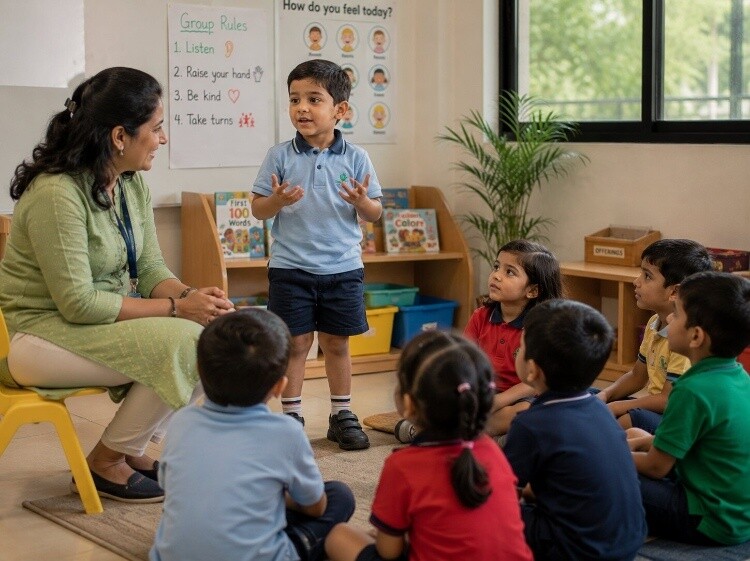
Expressing needs clearly to non-family adults; narrating simple events comprehensibly ("what happened at lunch?"); understanding and responding within group instruction.
The academic minimum, honestly sized
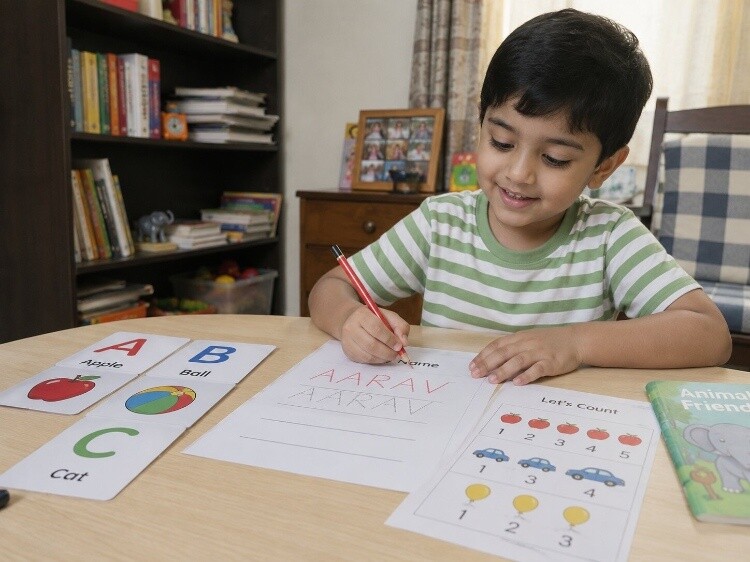
Name recognition and attempted writing, casual counting, letter familiarity, book comfort — the genuine academic entry bar is modest, and Class 1 exists to teach the rest. A child strong on the bundle above with light academics adjusts better than a reading child who can't manage a tiffin or a turn.
Building the thin spots in the months before
Self-management: real practice with the actual school equipment — the tiffin, the bottle, the bag packed by them. Attention: board games, chore chains, and audio stories stretching the sustained-focus muscle. Social: park time and playdates with joining-in coaching. Communication: the daily narrate-your-day habit with genuine listening.
The adjustment horizon
Even ready children take a term to fully land in big school — tiredness, after-school meltdowns (the composure spent all day arrives home as its opposite — a sign of successful public self-management, oddly), and appetite shifts are standard transition physics. The home response: earlier bedtimes, decompression space before questions, and patience with the temporary regression.