
 Summer Camp
 Reading Writing
 Book Club
 Calligraphy
 Creative Writing
 English Speaking
 Handwriting
 Library
 Phonics
 Story Telling
 Art and Craft
 Clay Moulding
 Drawing
 Painting
 Pottery
 Sketching
 Drama Theatre
 Personality Development
 Public Speaking
 Languages
 Arabic
 Chinese
 French
 German
 Hindi
Hindi Italian
 Japanese
 Korean
 Persian
 Portuguese
 Russian
 Spanish
 Turkish
 Uzbek
Uzbek Sports and Fitness
 Aerobics
 Athletics
 Badminton
 Basket Ball
 Chess
Chess Cricket
 Football
 Golf
Golf Gymnastics
 Hulahoop
 Karate
 Martial Arts
 Pickleball
 Rugby
Rugby Skating
 Swimming
 Taekwondo
 Tennis
 Volleyball
 Yoga
Yoga Zumba
Zumba Tuition Classes
 Accounts
 Biology
 Business Studies
 CBSE
CBSE Chemistry
 Commerce
 Economics
 Homework Classes
 IB Board
 IGCSE
IGCSE Mathematics
 Physics
 Psychology
 Science
 Social Studies
 Vedic Maths
 Dance and Music
 Ballet
 Bhangra
 Bharatnatyam
 Bollywood Dance
 Casio
Casio Dandiya and Garba
 Drums
Drums Flute
Flute Guitar
 Harmonium
 Hip Hop
 Jazz
Jazz Kathak
 Keyboard
 Piano
Piano Salsa
Salsa Shlokas
 Sitar
Sitar Tabla
Tabla Ukulele
 Violin
 Vocal
Vocal Play School
 STEM
STEM
 Abacus
 App Development
 Artificial intelligence
 Basic Computer Courses
 Canva
Canva Coding
 Graphic Design
 Lego
Lego Python
 Robotics
 Rubiks Cube
 Scrabble
 Scratch
 Website Development
 Winter Camp
 Workshops
 Diwali Workshop
 Easter
 Ganesh Mahotsav
 Guru Nanak Jayanti Workshop
 Holi
Holi Independence day workshop
 Janmashtami Workshop
 Mothers day
 Navratri Workshops
 Raksha Bandhan workshop
 Ramayana Workshop
 Spring Camp
 Valentines Day Workshops
 Festive
 Daycare
 Cooking and Food
 Spring Camp
 Contests and Competitions
 Special abled
 Republic Day Workshops
 Mela
Mela
 Mela
Mela Cognitive Development
 Mother-Toddler Program
-Jul-03-2026-06-59-25-1926-AM.webp?width=30&height=30&name=Smart_20Skills_20(2)-Jul-03-2026-06-59-25-1926-AM.webp) Smart Skills
Smart Skills
 Financial Literacy
 Mental Wellbeing
 Meditation
 Reiki
Reiki




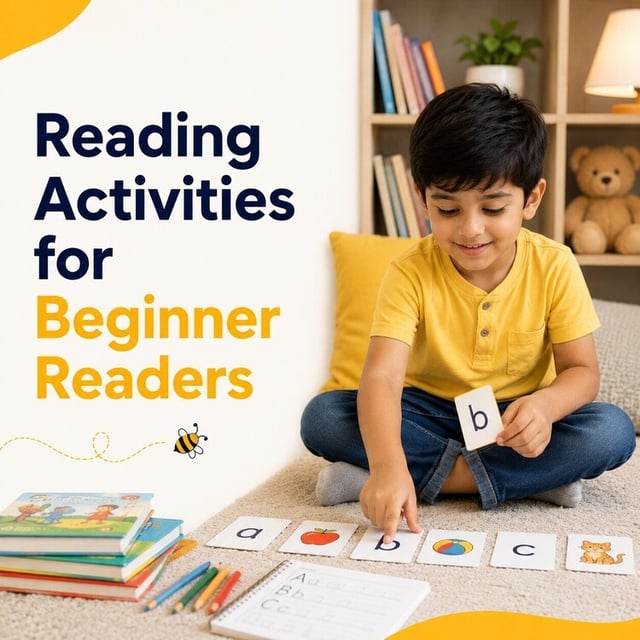
Beginner readers need success density — short winnable texts, familiar words, and celebration of every decoded win — while read-alouds keep feeding comprehension above their decoding level.
The beginner-reader months are delicate: effort is high, fluency is low, and the experience design determines whether reading becomes identity or aversion.
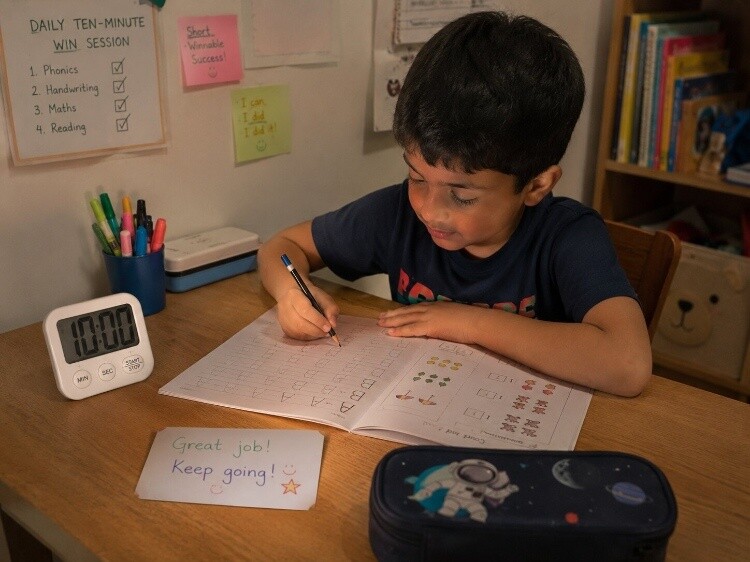
The daily ten-minute win session
Short, winnable practice at their exact level — ending on success, always.
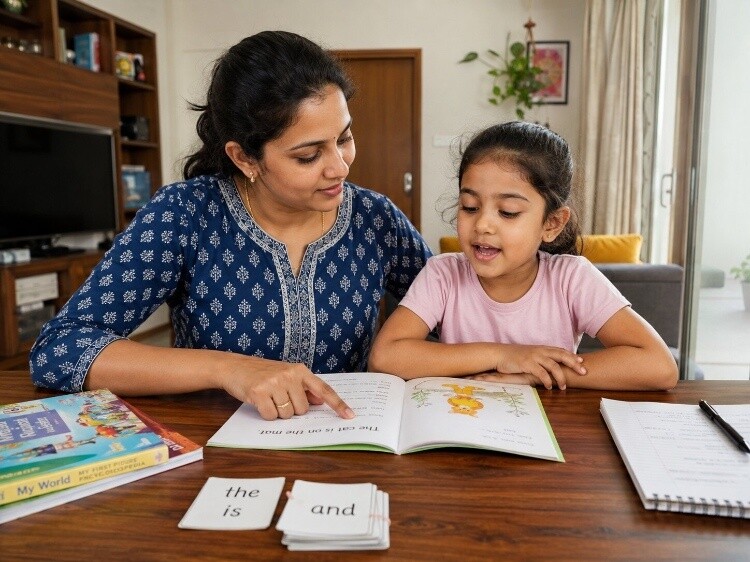
Echo reading
You read a line, they echo it — fluency and expression modelled directly.
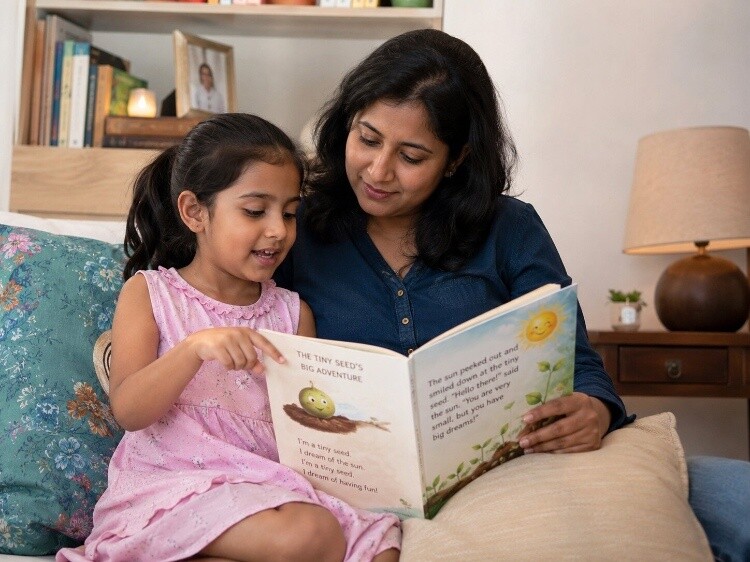
Alternating reading
Their page (short), your page (long) — shared load, sustained story.
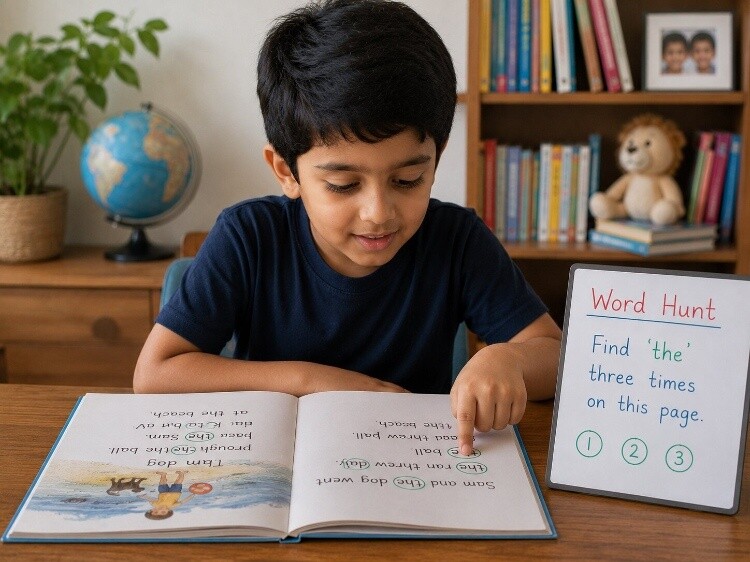
Word hunts in familiar books
"Find 'the' three times on this page" — sight-word reps inside real text.
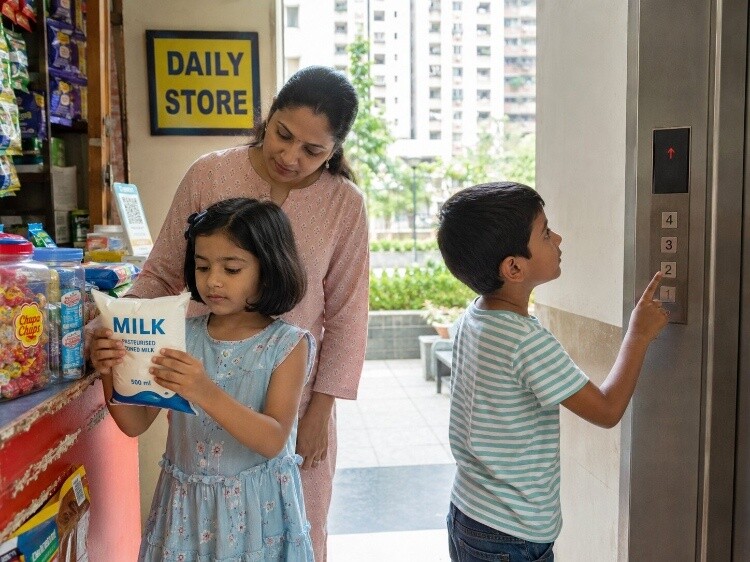
Environmental reading missions
The milk packet, the lift buttons, the shop board — reading deployed in the wild.
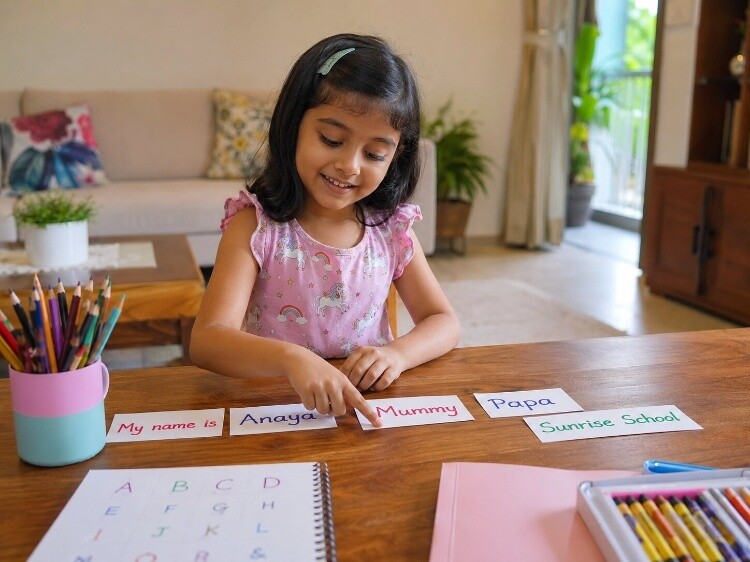
Their own name and family words first
Names, "mummy," "papa," their school's name — high-meaning words as anchor vocabulary.
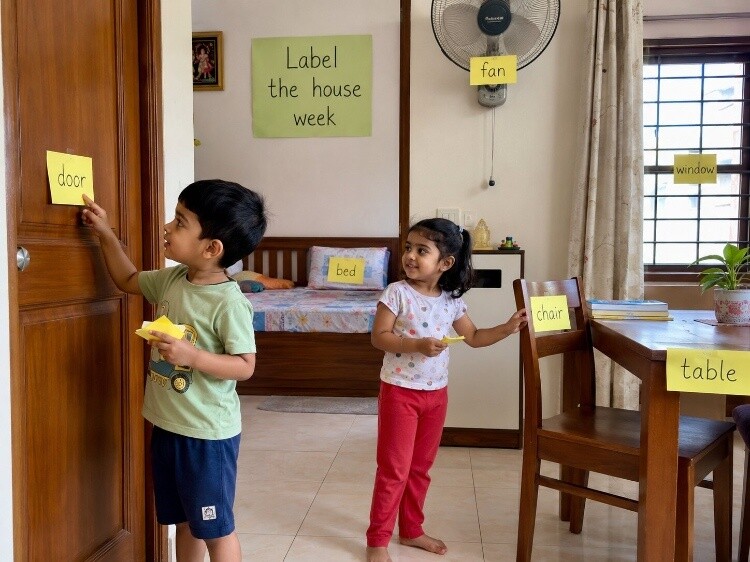
Label the house week
Sticky labels on door, fan, bed — the home as walk-through reader.
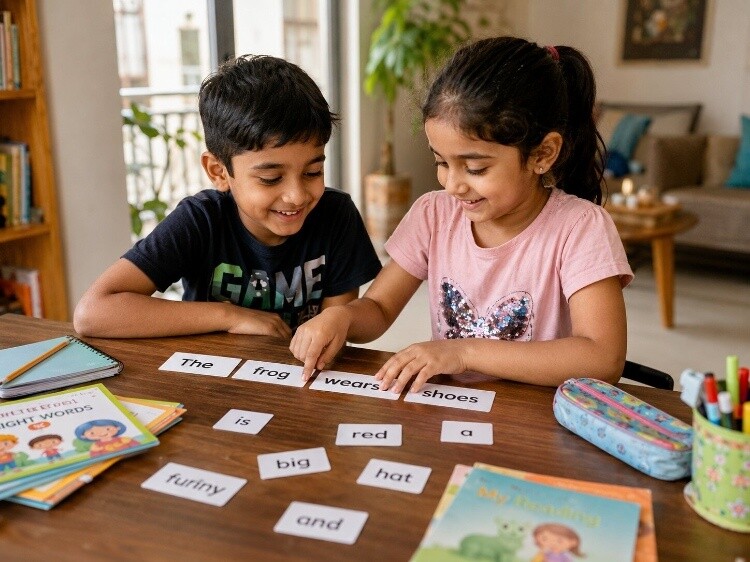
Sentence building with word cards
Known words physically arranged into silly sentences — reading meets construction play.
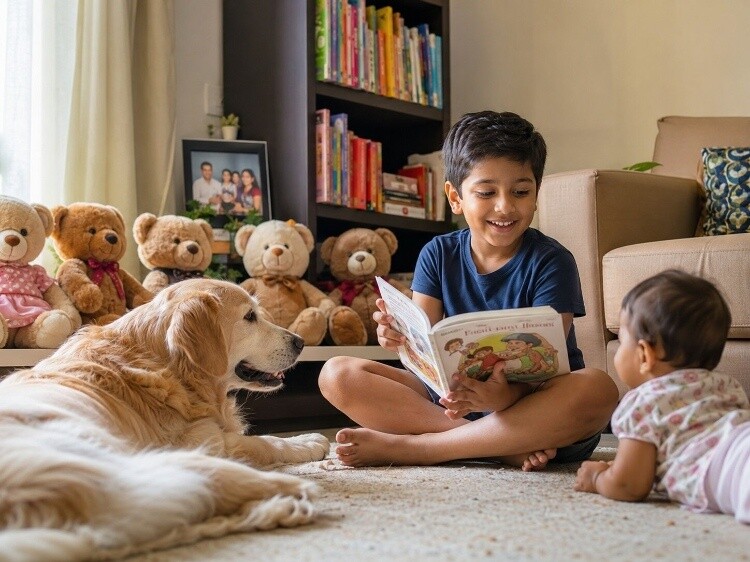
Reading to the audience that can't judge
The dog, the teddy row, the baby sibling — fluency practice without evaluation anxiety.
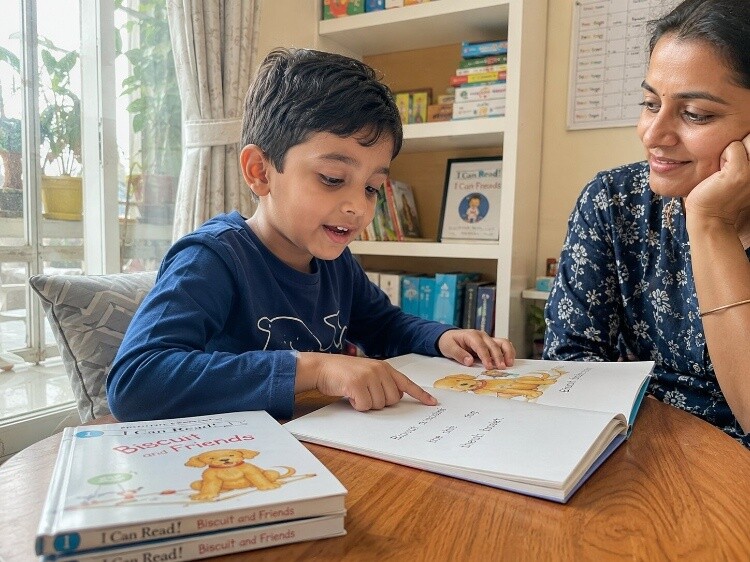
The re-read privilege
The same easy book repeatedly is fluency training, not stagnation — familiar text is where expression and speed grow.
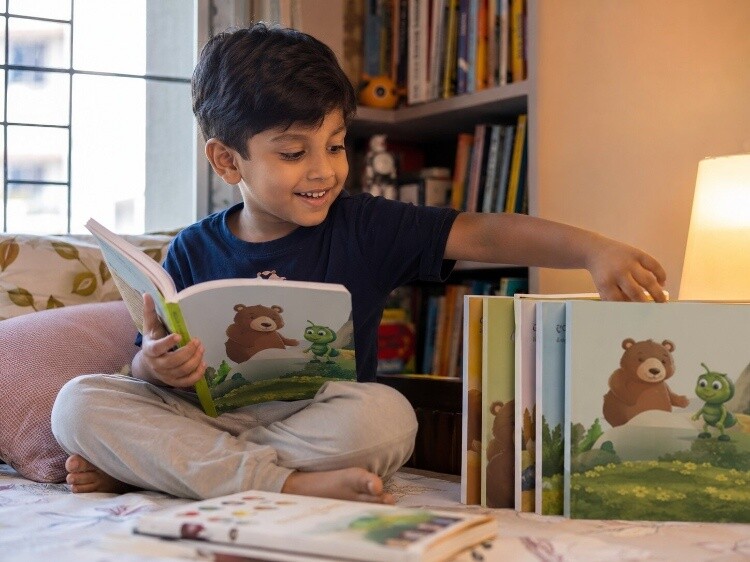
Series hooking
First simple series (same characters, predictable structures) — the "next one" pull is the reading habit forming.
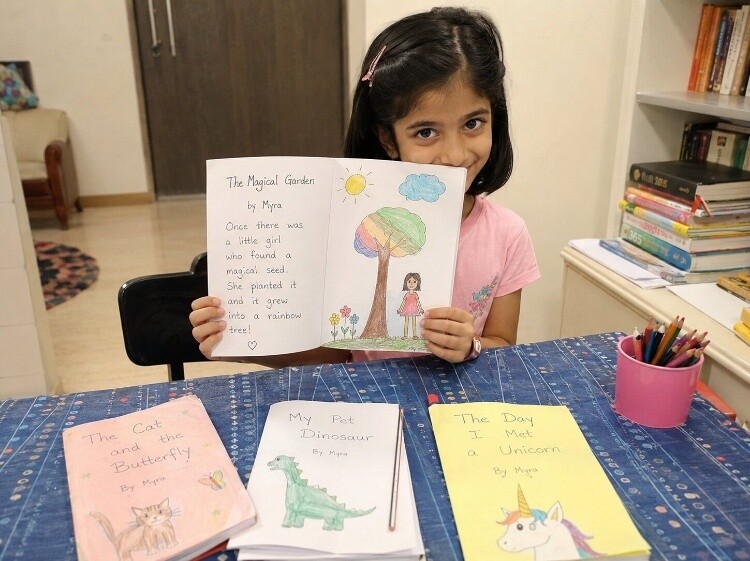
Their dictated books
Stories they author, you transcribe, they illustrate and read — the most motivating text is their own.
The comprehension track stays open
Read-alouds above their level continue through the beginner phase — the listening diet feeds vocabulary and story-sense that their decoding will grow into. Bedtime remains listening territory; practice lives elsewhere in the day.
Struggle signals and their meanings
Guessing from pictures, memorising over decoding, and avoidance are normal beginner behaviours in moderation — persistent distress, letter-sound confusion resisting practice, or a widening gap against classmates by 6½-7 merit a teacher conversation and possibly assessment. Between normal wobble and genuine difficulty, the teacher's classroom view is the best early triangulation.
The comparison quarantine
Beginner reading paces vary enormously and predict little — the school WhatsApp group's reading-level updates are noise. The child's own trajectory — more words than last month, more willingness than last term — is the only meaningful chart.