
 Summer Camp
 Reading Writing
 Book Club
 Calligraphy
 Creative Writing
 English Speaking
 Handwriting
 Library
 Phonics
 Story Telling
 Art and Craft
 Clay Moulding
 Drawing
 Painting
 Pottery
 Sketching
 Drama Theatre
 Personality Development
 Public Speaking
 Languages
 Arabic
 Chinese
 French
 German
 Hindi
Hindi Italian
 Japanese
 Korean
 Persian
 Portuguese
 Russian
 Spanish
 Turkish
 Uzbek
Uzbek Sports and Fitness
 Aerobics
 Athletics
 Badminton
 Basket Ball
 Chess
Chess Cricket
 Football
 Golf
Golf Gymnastics
 Hulahoop
 Karate
 Martial Arts
 Pickleball
 Rugby
Rugby Skating
 Swimming
 Taekwondo
 Tennis
 Volleyball
 Yoga
Yoga Zumba
Zumba Tuition Classes
 Accounts
 Biology
 Business Studies
 CBSE
CBSE Chemistry
 Commerce
 Economics
 Homework Classes
 IB Board
 IGCSE
IGCSE Mathematics
 Physics
 Psychology
 Science
 Social Studies
 Vedic Maths
 Dance and Music
 Ballet
 Bhangra
 Bharatnatyam
 Bollywood Dance
 Casio
Casio Dandiya and Garba
 Drums
Drums Flute
Flute Guitar
 Harmonium
 Hip Hop
 Jazz
Jazz Kathak
 Keyboard
 Piano
Piano Salsa
Salsa Shlokas
 Sitar
Sitar Tabla
Tabla Ukulele
 Violin
 Vocal
Vocal Play School
 STEM
STEM
 Abacus
 App Development
 Artificial intelligence
 Basic Computer Courses
 Canva
Canva Coding
 Graphic Design
 Lego
Lego Python
 Robotics
 Rubiks Cube
 Scrabble
 Scratch
 Website Development
 Winter Camp
 Workshops
 Diwali Workshop
 Easter
 Ganesh Mahotsav
 Guru Nanak Jayanti Workshop
 Holi
Holi Independence day workshop
 Janmashtami Workshop
 Mothers day
 Navratri Workshops
 Raksha Bandhan workshop
 Ramayana Workshop
 Spring Camp
 Valentines Day Workshops
 Festive
 Daycare
 Cooking and Food
 Spring Camp
 Contests and Competitions
 Special abled
 Republic Day Workshops
 Mela
Mela
 Mela
Mela Cognitive Development
 Mother-Toddler Program
-Jul-03-2026-06-59-25-1926-AM.webp?width=30&height=30&name=Smart_20Skills_20(2)-Jul-03-2026-06-59-25-1926-AM.webp) Smart Skills
Smart Skills
 Financial Literacy
 Mental Wellbeing
 Meditation
 Reiki
Reiki




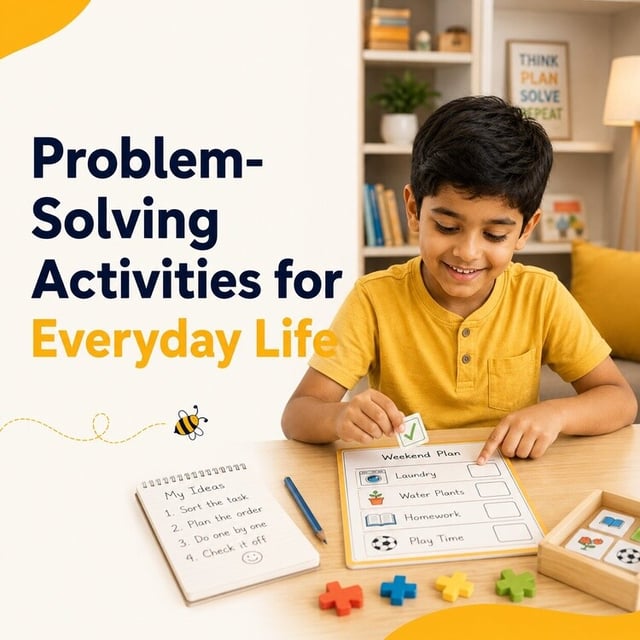
Everyday problem-solving skill builds through genuine struggle with real problems — not puzzle worksheets alone, but household glitches, social friction, and practical dilemmas encountered and worked through.
The richest problem-solving practice available to children isn't found in worksheets — it's in the genuine small problems everyday life presents, worked through with support rather than immediate rescue.
Everyday problem categories that build real skill
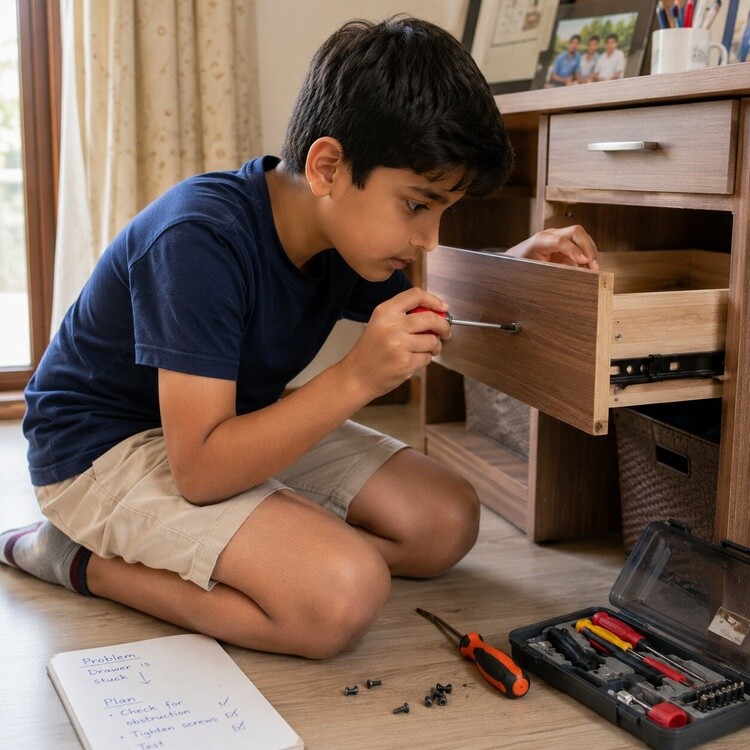
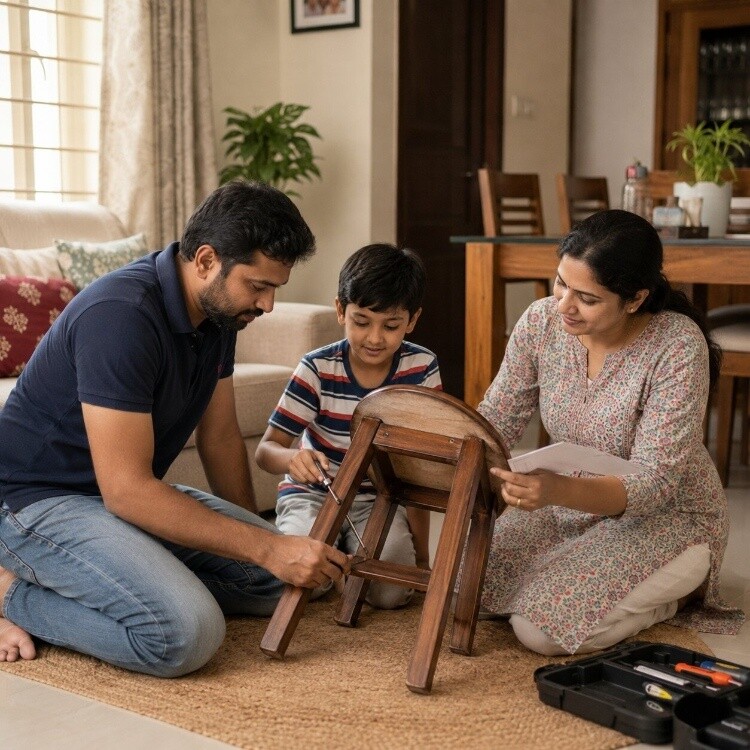
Practical household glitches — a stuck drawer, a tangled charging cable, a jammed toy — small mechanical problems inviting hands-on troubleshooting.
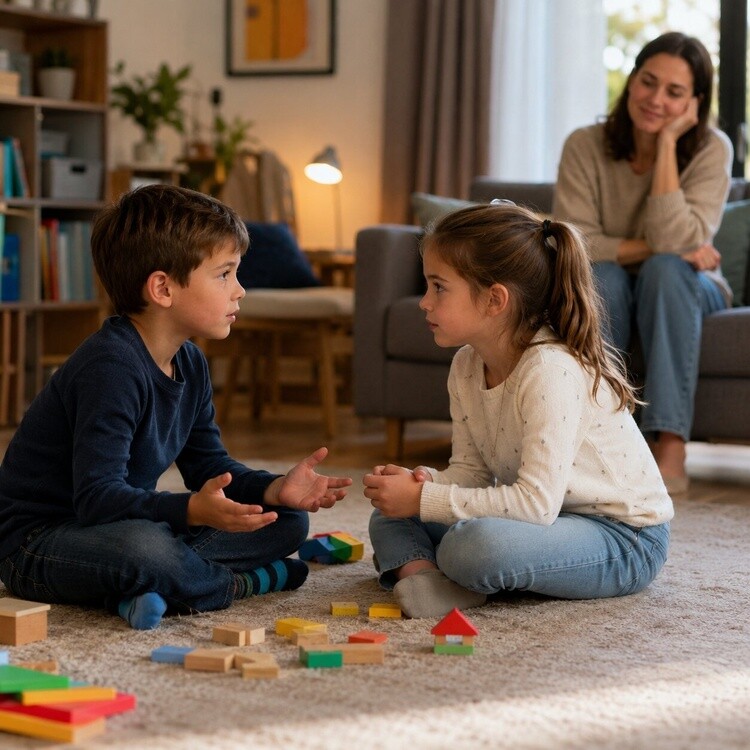
Social friction — a disagreement with a friend, feeling left out of a game, a sibling conflict — genuine interpersonal problem-solving with real emotional stakes.
Logistics and planning problems — figuring out how to fit several activities into a limited time, working out a fair way to share something limited, planning a route somewhere.
Resource constraints — making something work with limited materials, figuring out an alternative when the first plan doesn't work, adapting when something's unavailable.
Genuine mistakes and their fixes — a spilled drink, a broken toy, a forgotten responsibility — problems of the child's own making, requiring them to work out the fix.
The problem-solving conversation structure that helps
"What's the problem, exactly?" (clarifying, since children often jump to solutions before clearly defining the actual issue) → "What have you tried, or what could you try?" (generating options rather than being handed one) → "What happened when you tried that?" (evaluating and iterating if the first attempt doesn't work).
Resisting the rescue reflex, specifically
The single most common obstacle to children's problem-solving development is adults solving problems before children have a genuine chance to attempt them — the stuck drawer fixed instantly, the friend conflict resolved by parental intervention rather than the children working it out. A brief, deliberate pause before helping — watching what a child attempts first — builds far more capability than immediate rescue, even when the adult solution would arrive faster.
When to actually intervene
Genuine safety issues, situations clearly beyond a child's developmental capability, or protracted struggle producing genuine distress rather than productive effort all warrant intervention — the skill is distinguishing productive struggle (worth protecting) from genuinely unproductive distress (worth addressing).
Building a "figure it out" household culture
Families where "let's figure this out" is the default response to small problems (rather than immediate parental fixing) tend to raise children who approach problems with more confidence and less learned helplessness — the culture, built through hundreds of small everyday moments, matters more than any single lesson or activity.
Connecting to formal STEM and academic problem-solving
The everyday problem-solving habits built through household glitches and social friction transfer genuinely to academic and STEM problem-solving — a child practiced at "what's the actual problem, what have I tried, what happened" approaches a difficult math problem or science experiment with the same productive mental framework.