
 Summer Camp
 Reading Writing
 Book Club
 Calligraphy
 Creative Writing
 English Speaking
 Handwriting
 Library
 Phonics
 Story Telling
 Art and Craft
 Clay Moulding
 Drawing
 Painting
 Pottery
 Sketching
 Drama Theatre
 Personality Development
 Public Speaking
 Languages
 Arabic
 Chinese
 French
 German
 Hindi
Hindi Italian
 Japanese
 Korean
 Persian
 Portuguese
 Russian
 Spanish
 Turkish
 Uzbek
Uzbek Sports and Fitness
 Aerobics
 Athletics
 Badminton
 Basket Ball
 Chess
Chess Cricket
 Football
 Golf
Golf Gymnastics
 Hulahoop
 Karate
 Martial Arts
 Pickleball
 Rugby
Rugby Skating
 Swimming
 Taekwondo
 Tennis
 Volleyball
 Yoga
Yoga Zumba
Zumba Tuition Classes
 Accounts
 Biology
 Business Studies
 CBSE
CBSE Chemistry
 Commerce
 Economics
 Homework Classes
 IB Board
 IGCSE
IGCSE Mathematics
 Physics
 Psychology
 Science
 Social Studies
 Vedic Maths
 Dance and Music
 Ballet
 Bhangra
 Bharatnatyam
 Bollywood Dance
 Casio
Casio Dandiya and Garba
 Drums
Drums Flute
Flute Guitar
 Harmonium
 Hip Hop
 Jazz
Jazz Kathak
 Keyboard
 Piano
Piano Salsa
Salsa Shlokas
 Sitar
Sitar Tabla
Tabla Ukulele
 Violin
 Vocal
Vocal Play School
 STEM
STEM
 Abacus
 App Development
 Artificial intelligence
 Basic Computer Courses
 Canva
Canva Coding
 Graphic Design
 Lego
Lego Python
 Robotics
 Rubiks Cube
 Scrabble
 Scratch
 Website Development
 Winter Camp
 Workshops
 Diwali Workshop
 Easter
 Ganesh Mahotsav
 Guru Nanak Jayanti Workshop
 Holi
Holi Independence day workshop
 Janmashtami Workshop
 Mothers day
 Navratri Workshops
 Raksha Bandhan workshop
 Ramayana Workshop
 Spring Camp
 Valentines Day Workshops
 Festive
 Daycare
 Cooking and Food
 Spring Camp
 Contests and Competitions
 Special abled
 Republic Day Workshops
 Mela
Mela
 Mela
Mela Cognitive Development
 Mother-Toddler Program
-Jul-03-2026-06-59-25-1926-AM.webp?width=30&height=30&name=Smart_20Skills_20(2)-Jul-03-2026-06-59-25-1926-AM.webp) Smart Skills
Smart Skills
 Financial Literacy
 Mental Wellbeing
 Meditation
 Reiki
Reiki




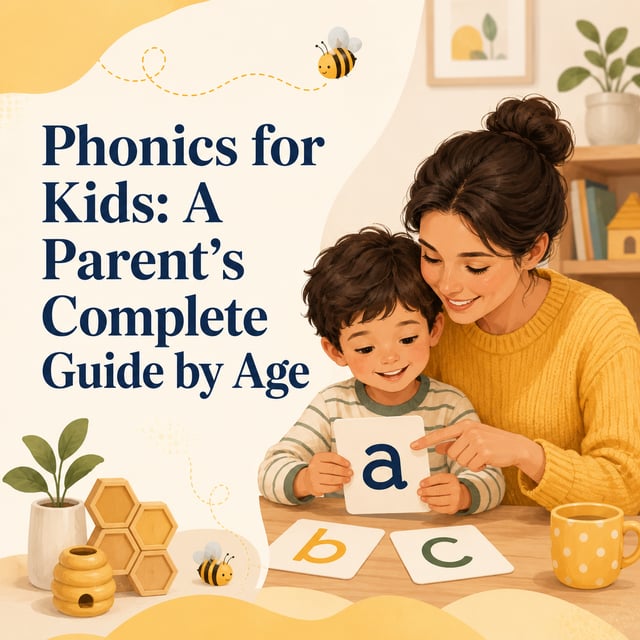
Phonics — teaching kids to connect letter sounds to reading — usually starts around age 3-4 and builds through age 7. Indian schools (CBSE and ICSE) introduce it early, often faster than home practice can keep up. Here's what to expect by age and how to support it without turning it into pressure.
If your child's school has started sending home phonics worksheets and you're not entirely sure what "blending" or "segmenting" means, you're in good company. Phonics has become a bigger part of early schooling in India over the last decade, and the terminology can feel unfamiliar even to parents who read constantly themselves.
What phonics actually is
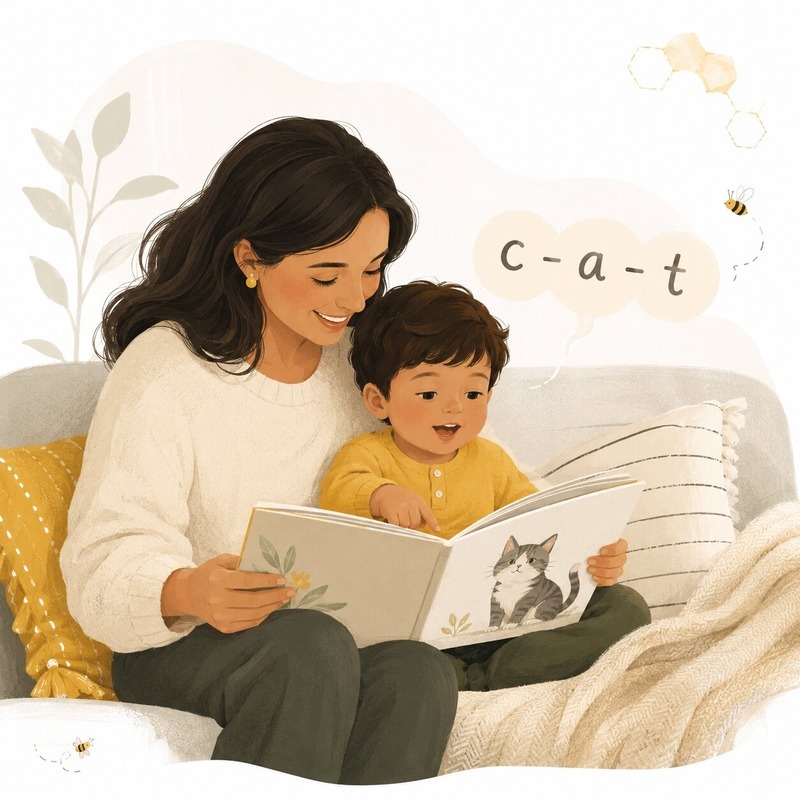
Phonics is the method of teaching children to connect individual letter sounds (not letter names) to reading. A child learning phonics learns that "c," "a," "t" each make a sound, and that blending those sounds together makes the word "cat." This is different from simply memorising whole words by sight, and it's what allows a child to eventually sound out words they've never seen before.
By age 3: sound awareness begins
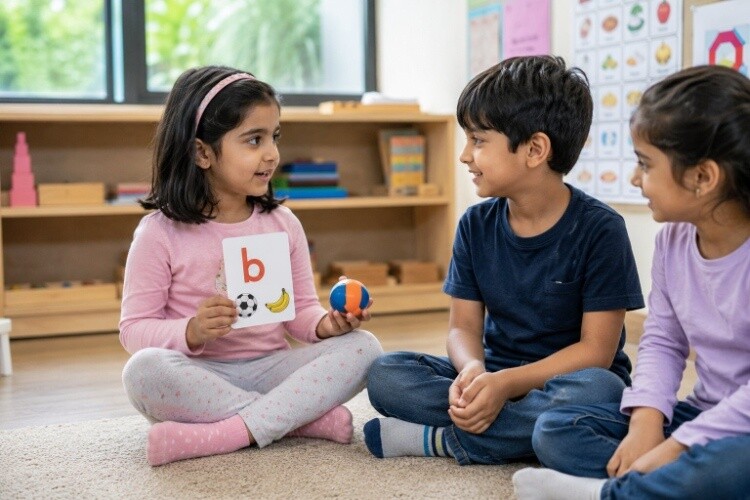
At this stage, it's mostly about rhyming, songs, and noticing that words start with the same sound — "ball" and "banana" both start with "b." No reading expected yet. This is playful, not academic.
By age 4-5: letter-sound matching
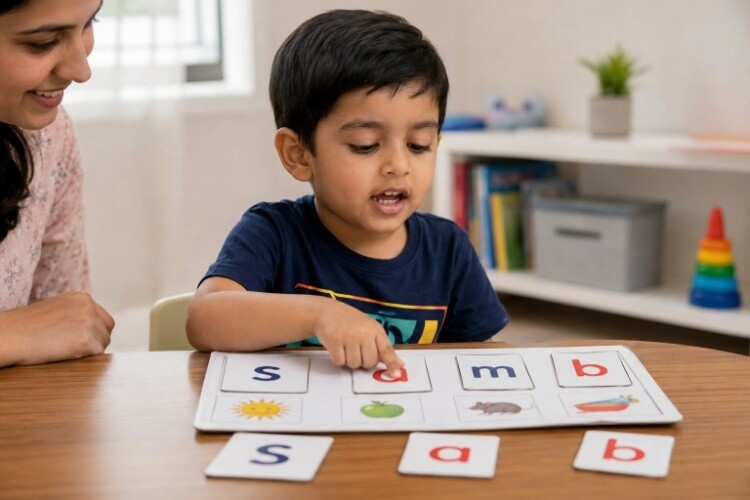
Most CBSE and ICSE nursery and LKG programs introduce individual letter sounds around this age — not "A for Apple" as a name, but the actual sound the letter makes. This is usually where formal phonics worksheets begin appearing from school.
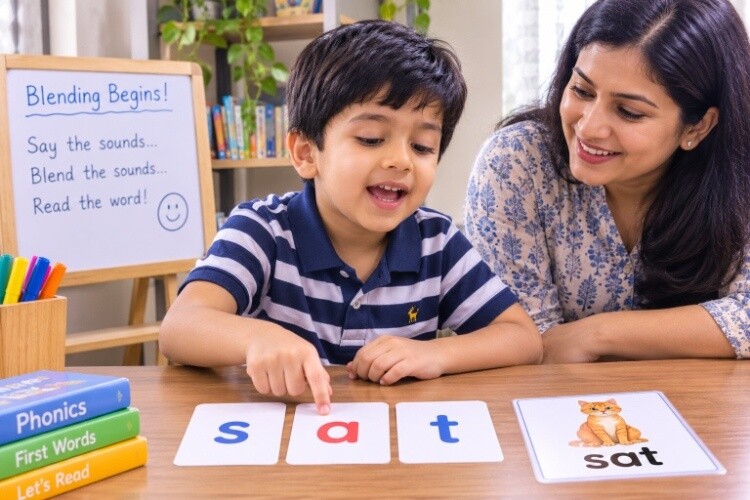
By age 5-6: blending begins
This is often the hardest jump for kids — going from knowing individual sounds to blending them into a whole word. A child might know "s," "a," "t" individually but struggle to say "sat" smoothly. This is completely normal and usually resolves with repeated practice over months, not days.
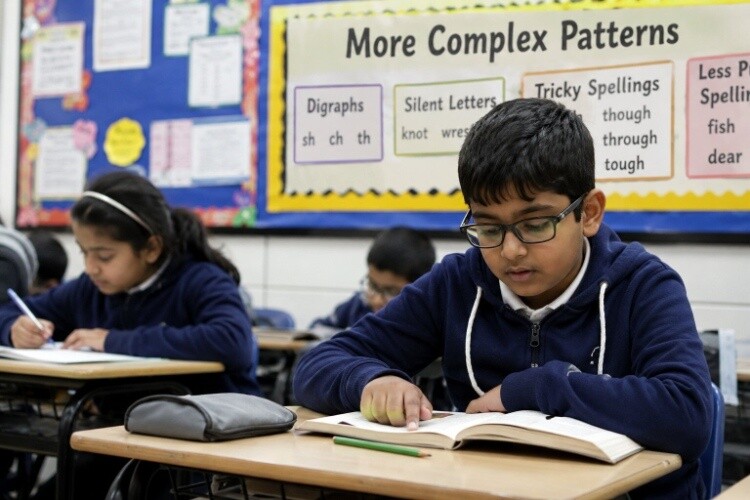
By age 6-7: more complex patterns
Digraphs (two letters making one sound, like "sh" or "ch"), silent letters, and less predictable spelling patterns get introduced. English is notoriously inconsistent here — "though," "through," and "tough" all end in the same letters but sound completely different, which genuinely trips up kids at this stage.
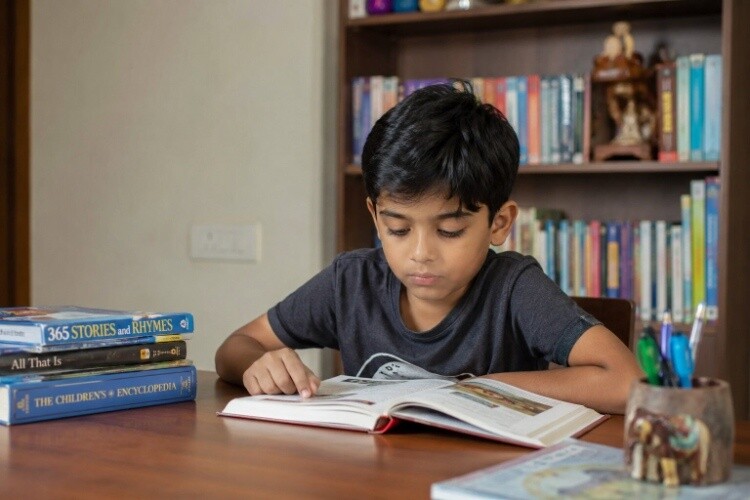
By age 7 and beyond: fluency over phonics
Once basic decoding is solid, the focus shifts from sounding out every word to reading fluently and for comprehension. Some children will still sound out unfamiliar words occasionally well into age 8-9, which is fine.
A specific challenge for Indian households: bilingual sound systems
Many Indian children are learning English phonics while also speaking Hindi or another language at home, sometimes with different sound systems. A child might apply Hindi pronunciation patterns to English sounds initially — this isn't a delay, it's a completely normal part of bilingual development, and it typically self-corrects with exposure.
How to support phonics at home without pressure
Keep it playful and short — 10 minutes of sound games is more effective than a 30-minute forced worksheet session. Read aloud daily, even after your child can read independently, since hearing fluent reading models pronunciation and rhythm. Avoid correcting every mistake mid-sentence; let your child finish the word or sentence, then gently model the correct sound afterward.
When to actually be concerned
If a child hasn't started connecting any letter sounds by age 5-6, or shows no interest in books or sounds at all, it's worth mentioning to the school or a paediatrician — not because something is necessarily wrong, but because early support makes a bigger difference than waiting.
Building the habit beyond worksheets
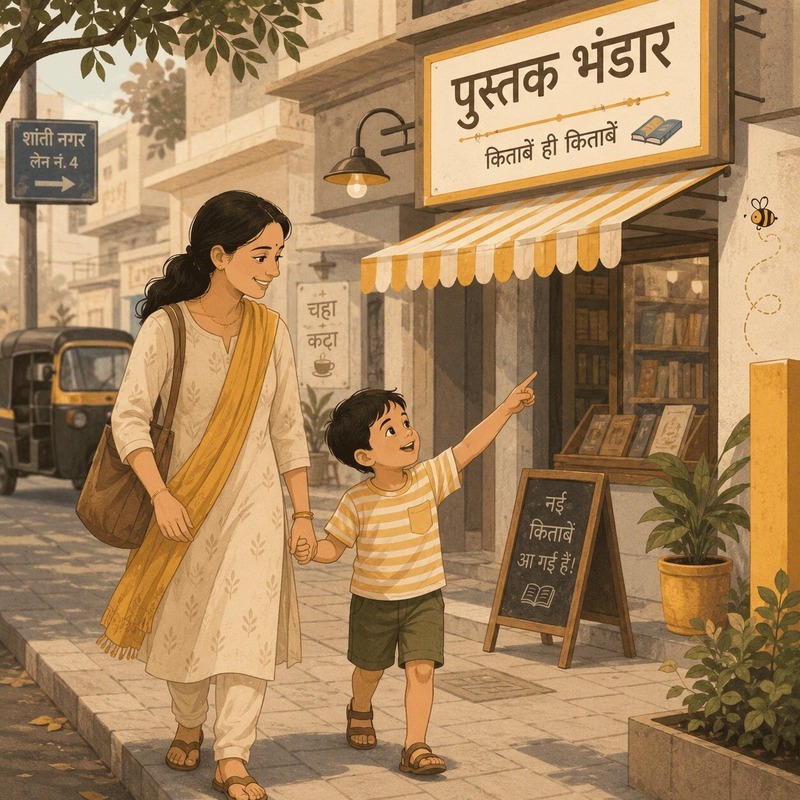
Phonics work is most effective when it's woven into everyday moments rather than confined to homework time — reading cereal boxes together, sounding out shop signs on a walk, or noticing rhyming words during a car ride. These small, low-pressure moments often do more than structured practice sessions, and they don't feel like "another class" to a child who may already be juggling school and tuition.