
 Summer Camp
 Reading Writing
 Book Club
 Calligraphy
 Creative Writing
 English Speaking
 Handwriting
 Library
 Phonics
 Story Telling
 Art and Craft
 Clay Moulding
 Drawing
 Painting
 Pottery
 Sketching
 Drama Theatre
 Personality Development
 Public Speaking
 Languages
 Arabic
 Chinese
 French
 German
 Hindi
Hindi Italian
 Japanese
 Korean
 Persian
 Portuguese
 Russian
 Spanish
 Turkish
 Uzbek
Uzbek Sports and Fitness
 Aerobics
 Athletics
 Badminton
 Basket Ball
 Chess
Chess Cricket
 Football
 Golf
Golf Gymnastics
 Hulahoop
 Karate
 Martial Arts
 Pickleball
 Rugby
Rugby Skating
 Swimming
 Taekwondo
 Tennis
 Volleyball
 Yoga
Yoga Zumba
Zumba Tuition Classes
 Accounts
 Biology
 Business Studies
 CBSE
CBSE Chemistry
 Commerce
 Economics
 Homework Classes
 IB Board
 IGCSE
IGCSE Mathematics
 Physics
 Psychology
 Science
 Social Studies
 Vedic Maths
 Dance and Music
 Ballet
 Bhangra
 Bharatnatyam
 Bollywood Dance
 Casio
Casio Dandiya and Garba
 Drums
Drums Flute
Flute Guitar
 Harmonium
 Hip Hop
 Jazz
Jazz Kathak
 Keyboard
 Piano
Piano Salsa
Salsa Shlokas
 Sitar
Sitar Tabla
Tabla Ukulele
 Violin
 Vocal
Vocal PlaySchools
 Preschool
 STEM
STEM
 Abacus
 App Development
 Artificial intelligence
 Basic Computer Courses
 Canva
Canva Coding
 Graphic Design
 Lego
Lego Python
 Robotics
 Rubiks Cube
 Scrabble
 Scratch
 Website Development
 Winter Camp
 Workshops
 Diwali Workshop
 Easter
 Ganesh Mahotsav
 Guru Nanak Jayanti Workshop
 Holi
Holi Independence day workshop
 Janmashtami Workshop
 Mothers day
 Navratri Workshops
 Raksha Bandhan workshop
 Ramayana Workshop
 Spring Camp
 Valentines Day Workshops
 Festive
 Daycare
 Cooking and Food
 Spring Camp
 Contests and Competitions
 Special abled
 Republic Day Workshops
 Mela
Mela
 Mela
Mela Cognitive Development
 Mother-Toddler Program
-Jul-03-2026-06-59-25-1926-AM.webp?width=30&height=30&name=Smart_20Skills_20(2)-Jul-03-2026-06-59-25-1926-AM.webp) Smart Skills
Smart Skills
 Financial Literacy




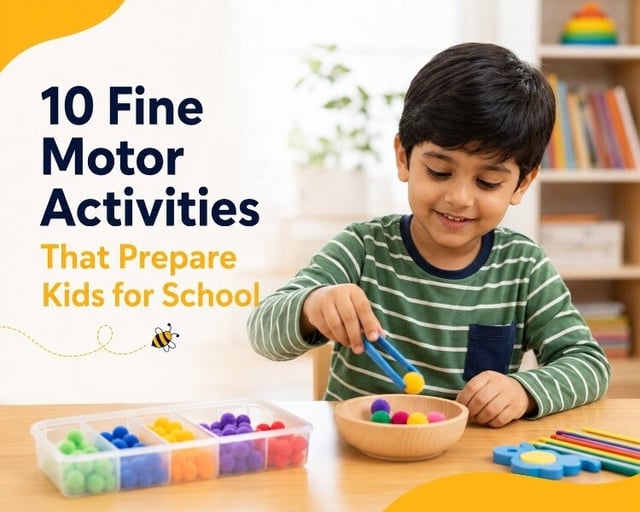
Fine motor skills — the small hand and finger movements behind writing, buttoning, and using scissors — develop through repeated hands-on practice, much of which can happen through everyday Indian household tasks rather than dedicated exercises.
School readiness involves far more than academic knowledge — a significant, often overlooked component is fine motor development, the small hand and finger coordination behind holding a pencil, using scissors, and managing buttons or zippers independently.
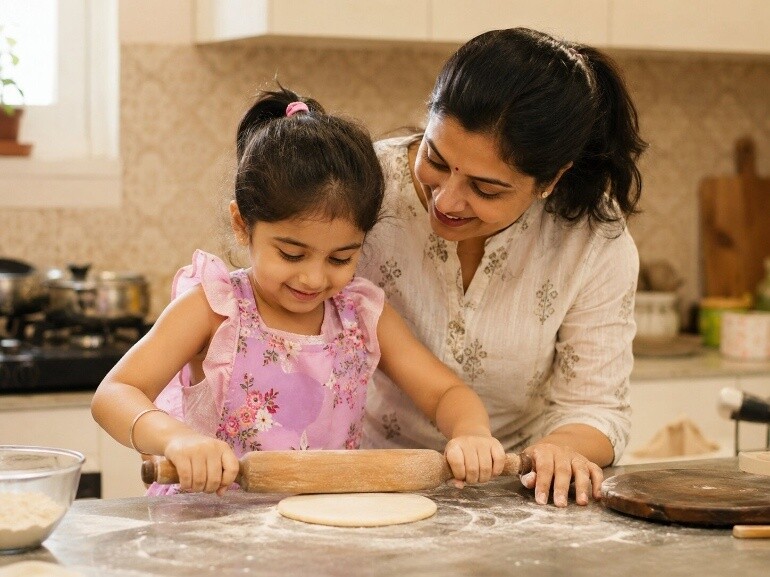
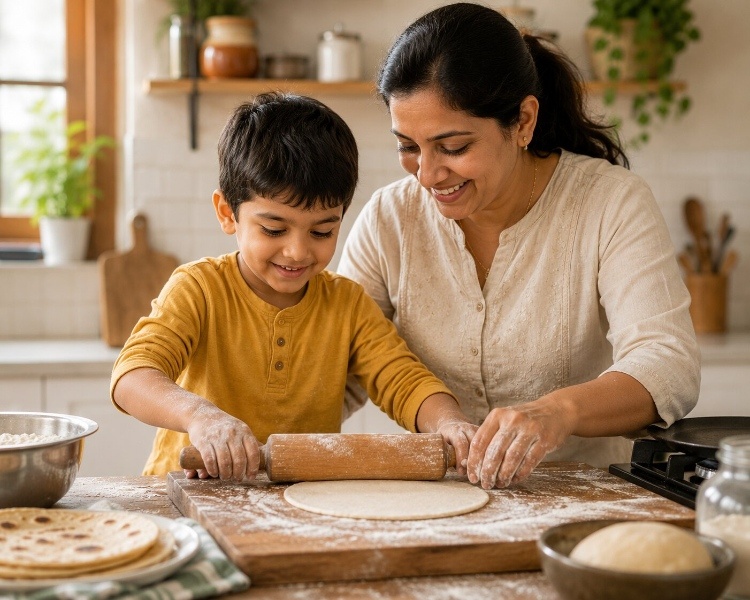
Rolling roti or chapati dough
A genuinely excellent, naturally occurring fine motor activity — the rolling, shaping, and pressing motions build exactly the hand strength and coordination writing later requires.
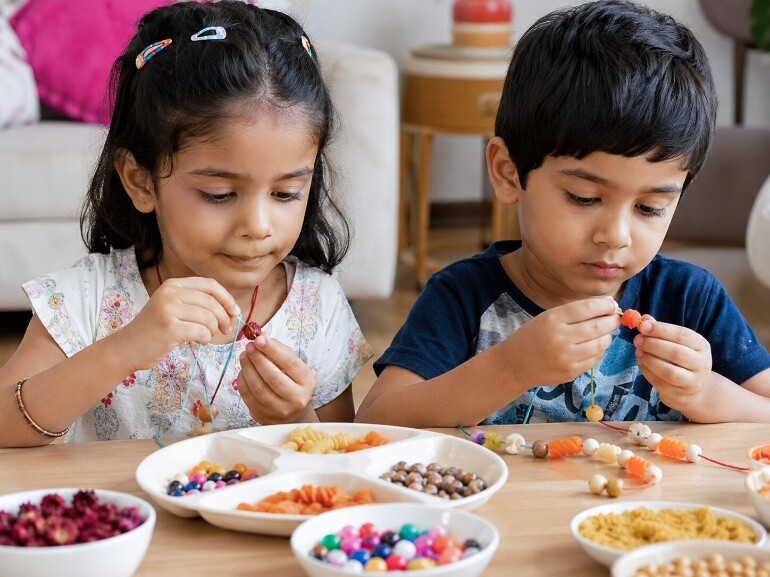
Threading beads, pasta, or dried flowers
Simple, inexpensive threading activities build the precise finger control needed for buttoning and eventually handwriting.
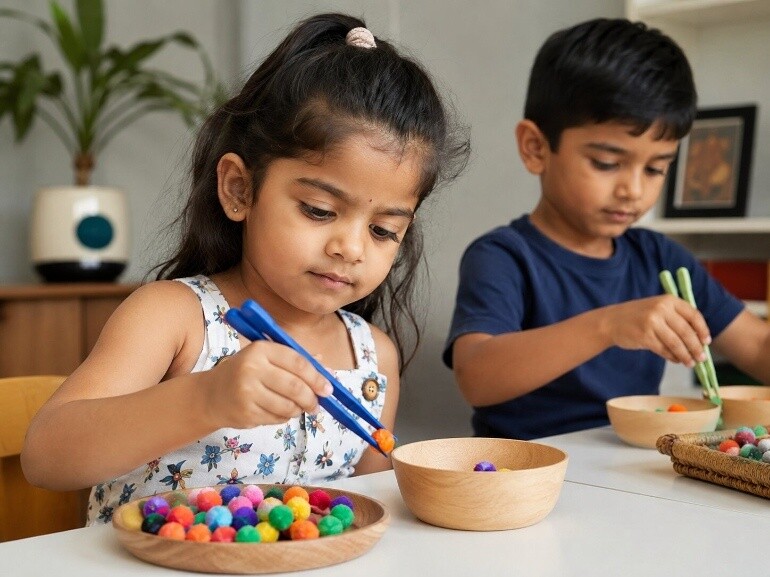
Using tongs or chopsticks to transfer small objects
Transferring dried chickpeas or small pom-poms between bowls using tongs builds hand strength and precision in a genuinely engaging format.
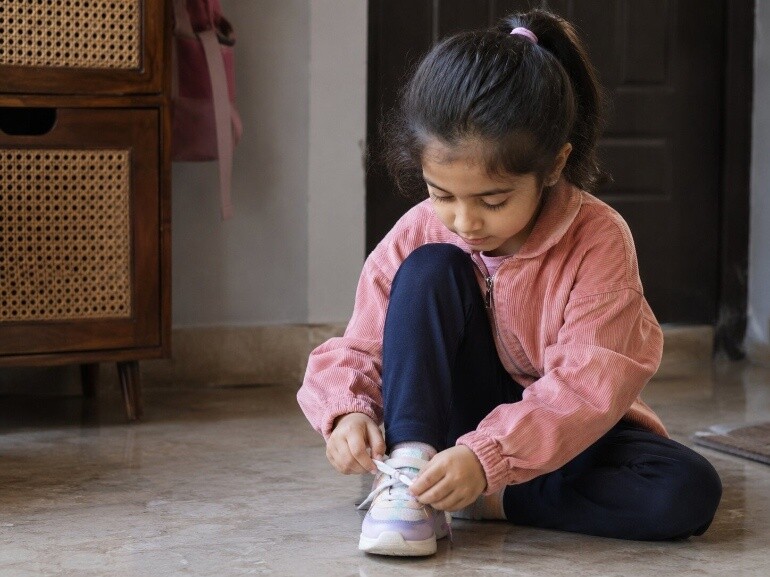
Practicing buttons, zips, and shoelaces independently
Beyond the practical self-care value, these daily tasks are genuinely significant fine motor builders that are easy to overlook as "developmental practice."
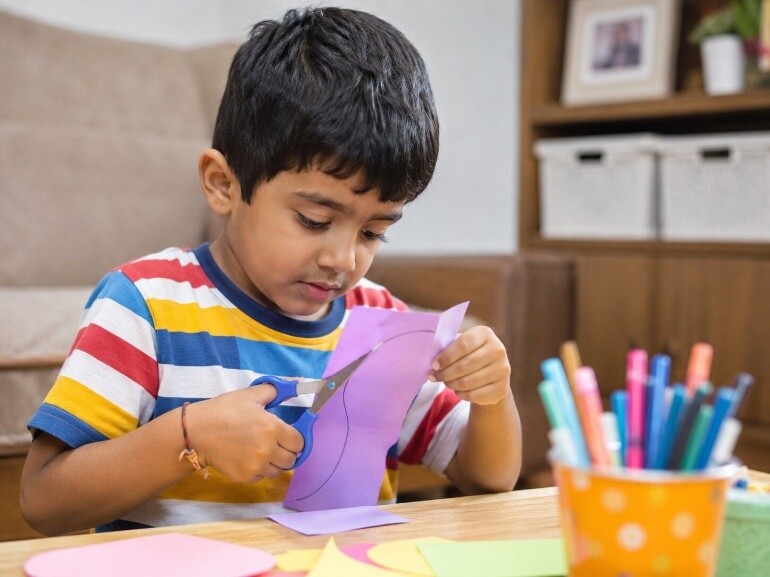
Cutting with child-safe scissors
Simple cutting practice — even just cutting along drawn lines on scrap paper — builds the specific hand strength and coordination scissors require, which many children haven't developed enough by school entry.
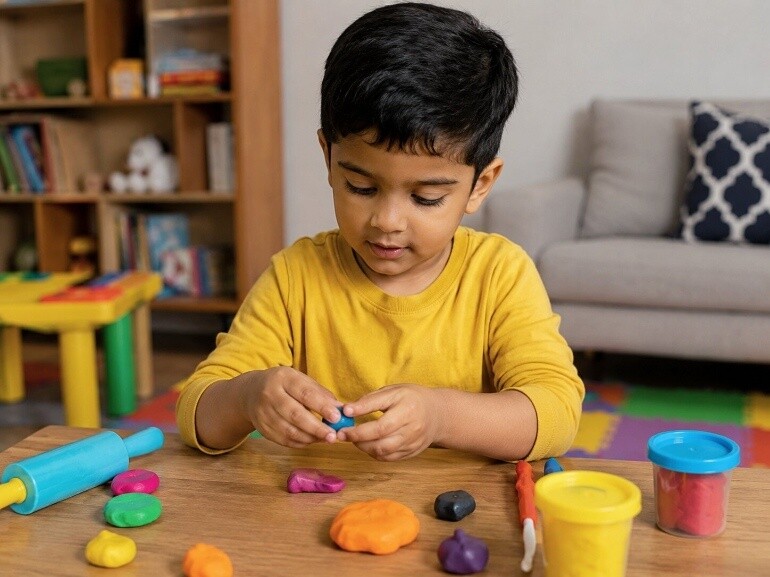
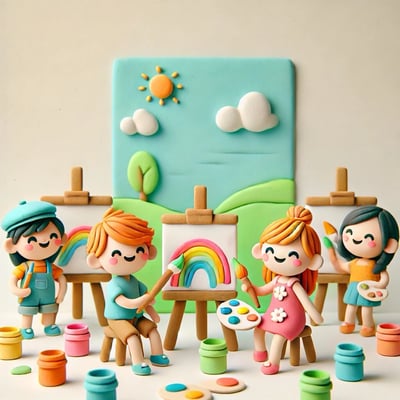
Playdough and clay shaping
Rolling, pinching, and flattening playdough builds broad hand strength that supports nearly every other fine motor skill.
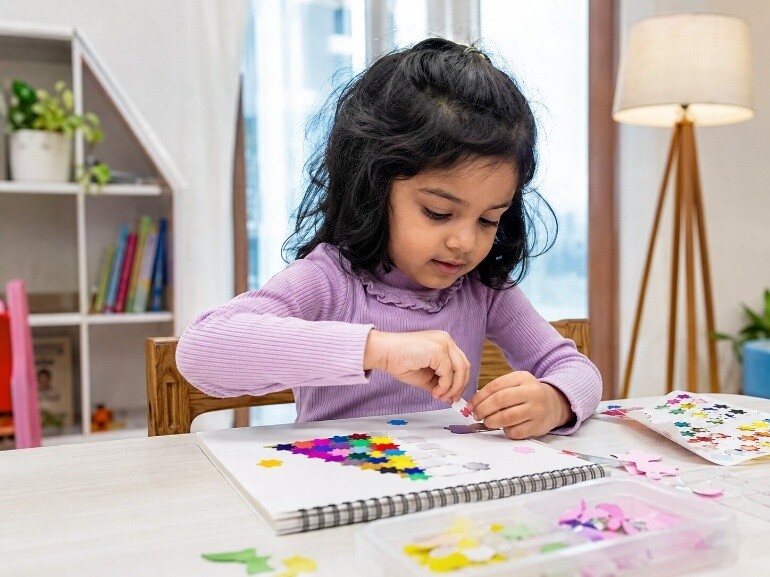
Peeling stickers and applying them precisely
A genuinely fun activity that builds precise finger control, especially useful for children who resist more "practice-like" activities.
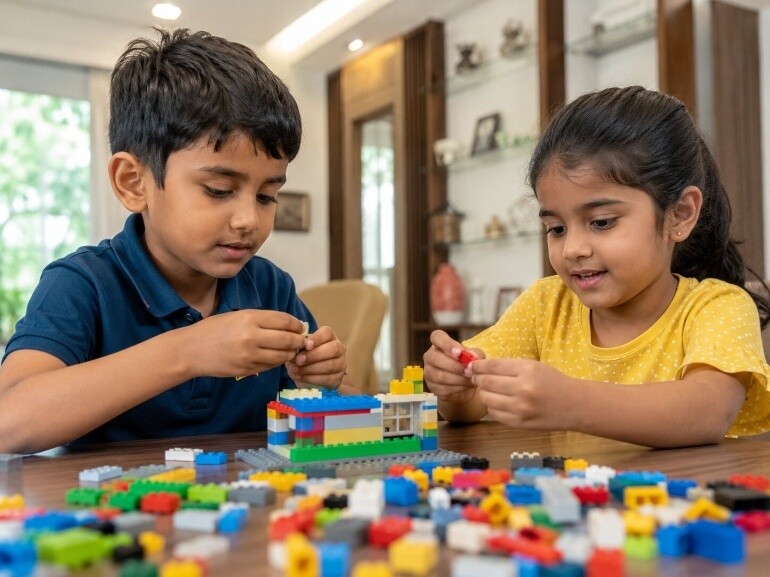
Building with small blocks or Lego
Manipulating small building pieces builds precision grip and hand-eye coordination in a format most children find inherently enjoyable.
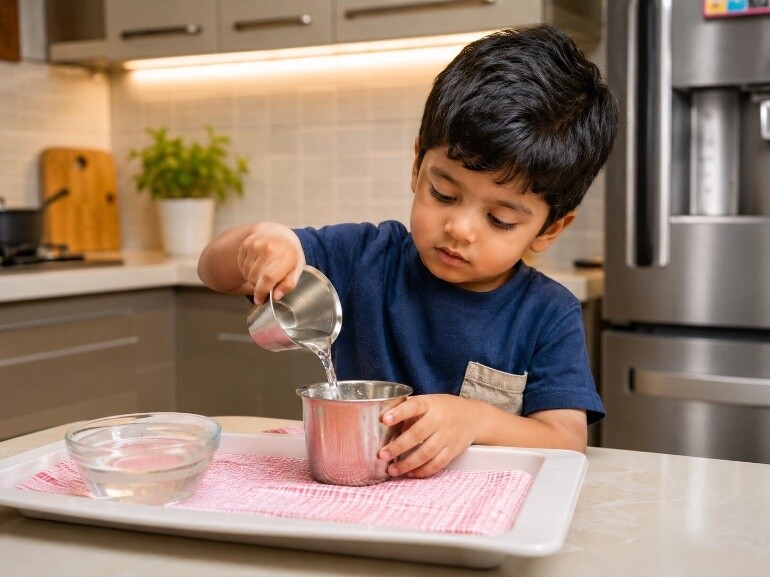
Practicing pouring water between containers
A simple kitchen-based activity — pouring water (or dry rice, for a lower-mess version) between cups — builds hand control and coordination.
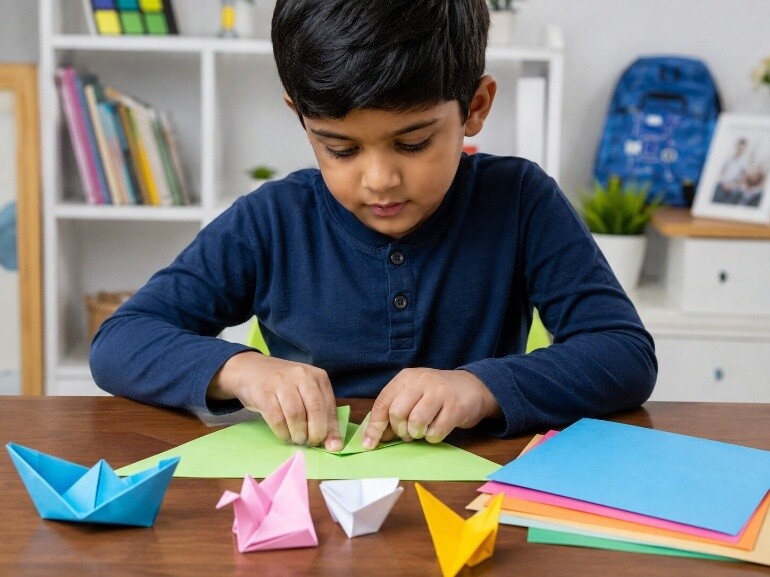
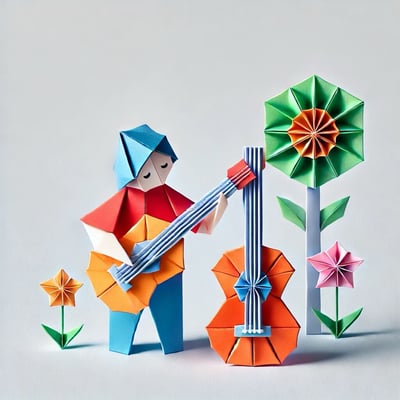
Folding paper for simple origami shapes
Basic paper folding builds precise finger manipulation and following sequential instructions simultaneously.
Why fine motor readiness matters for the transition to formal schooling
A child who hasn't developed adequate fine motor control often struggles disproportionately with early writing tasks, not due to any cognitive gap, but simply because the physical mechanics haven't caught up yet — this can create unnecessary frustration and even reluctance toward school tasks if not addressed early.
Building this into daily household routines naturally
Many of the strongest fine motor activities are ones already happening in Indian households daily — helping in the kitchen, dressing independently, simple craft activities — meaning genuine skill-building doesn't necessarily require separate dedicated practice time, just intentional inclusion of children in these existing tasks.
A realistic timeline
Fine motor skills develop gradually over the preschool years, with significant individual variation — a child who seems behind at age 3 often catches up entirely by age 5 with consistent, varied practice, and comparison to peers at any single point in time is rarely a useful indicator of long-term outcome.