
 Summer Camp
 Reading Writing
 Book Club
 Calligraphy
 Creative Writing
 English Speaking
 Handwriting
 Library
 Phonics
 Story Telling
 Art and Craft
 Clay Moulding
 Drawing
 Painting
 Pottery
 Sketching
 Drama Theatre
 Personality Development
 Public Speaking
 Languages
 Arabic
 Chinese
 French
 German
 Hindi
Hindi Italian
 Japanese
 Korean
 Persian
 Portuguese
 Russian
 Spanish
 Turkish
 Uzbek
Uzbek Sports and Fitness
 Aerobics
 Athletics
 Badminton
 Basket Ball
 Chess
Chess Cricket
 Football
 Golf
Golf Gymnastics
 Hulahoop
 Karate
 Martial Arts
 Pickleball
 Rugby
Rugby Skating
 Swimming
 Taekwondo
 Tennis
 Volleyball
 Yoga
Yoga Zumba
Zumba Tuition Classes
 Accounts
 Biology
 Business Studies
 CBSE
CBSE Chemistry
 Commerce
 Economics
 Homework Classes
 IB Board
 IGCSE
IGCSE Mathematics
 Physics
 Psychology
 Science
 Social Studies
 Vedic Maths
 Dance and Music
 Ballet
 Bhangra
 Bharatnatyam
 Bollywood Dance
 Casio
Casio Dandiya and Garba
 Drums
Drums Flute
Flute Guitar
 Harmonium
 Hip Hop
 Jazz
Jazz Kathak
 Keyboard
 Piano
Piano Salsa
Salsa Shlokas
 Sitar
Sitar Tabla
Tabla Ukulele
 Violin
 Vocal
Vocal Play School
 STEM
STEM
 Abacus
 App Development
 Artificial intelligence
 Basic Computer Courses
 Canva
Canva Coding
 Graphic Design
 Lego
Lego Python
 Robotics
 Rubiks Cube
 Scrabble
 Scratch
 Website Development
 Winter Camp
 Workshops
 Diwali Workshop
 Easter
 Ganesh Mahotsav
 Guru Nanak Jayanti Workshop
 Holi
Holi Independence day workshop
 Janmashtami Workshop
 Mothers day
 Navratri Workshops
 Raksha Bandhan workshop
 Ramayana Workshop
 Spring Camp
 Valentines Day Workshops
 Festive
 Daycare
 Cooking and Food
 Spring Camp
 Contests and Competitions
 Special abled
 Republic Day Workshops
 Mela
Mela
 Mela
Mela Cognitive Development
 Mother-Toddler Program
-Jul-03-2026-06-59-25-1926-AM.webp?width=30&height=30&name=Smart_20Skills_20(2)-Jul-03-2026-06-59-25-1926-AM.webp) Smart Skills
Smart Skills
 Financial Literacy
 Mental Wellbeing
 Meditation
 Reiki
Reiki




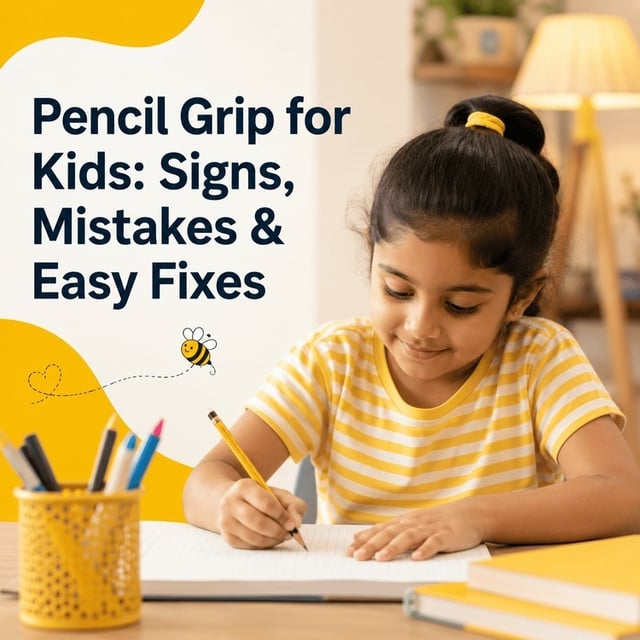
An awkward pencil grip is extremely common and usually not urgent — but persistent grip issues can lead to hand fatigue and messy handwriting over time. Here's how to spot genuine concerns versus normal developmental variation, and simple ways to help.
Pencil grip is one of those things that seems small until it isn't — a child who holds a pencil awkwardly at age 4 is completely normal, but the same grip persisting unaddressed at age 8, causing hand pain and illegible writing, is worth actively working on.
What a "correct" grip actually looks like
The most commonly taught grip (the dynamic tripod grip) involves the pencil resting between the thumb and index finger, supported by the middle finger, with the ring and little fingers curled into the palm. This isn't the only functional grip, but it's generally the most efficient for sustained writing without fatigue.
Common grip patterns and what they mean
The fist grip (whole hand wrapped around the pencil) is normal and expected under age 3-4, but should typically evolve past this by age 5.
The thumb-wrap grip (thumb crossed over the fingers) often persists longer and can cause fatigue, but isn't necessarily harmful if writing speed and legibility are fine.
The four-finger grip (pencil held with all four fingers, no pinky curled in) is common and usually just needs gentle redirection rather than concern.
Why grip matters beyond just "looking correct"
An inefficient grip isn't wrong for its own sake — the real issue is fatigue and control. A child gripping too tightly or with an inefficient hand position tires faster during longer writing tasks (exams, in particular), which can affect both handwriting quality and endurance during tests.
Simple, low-pressure ways to help
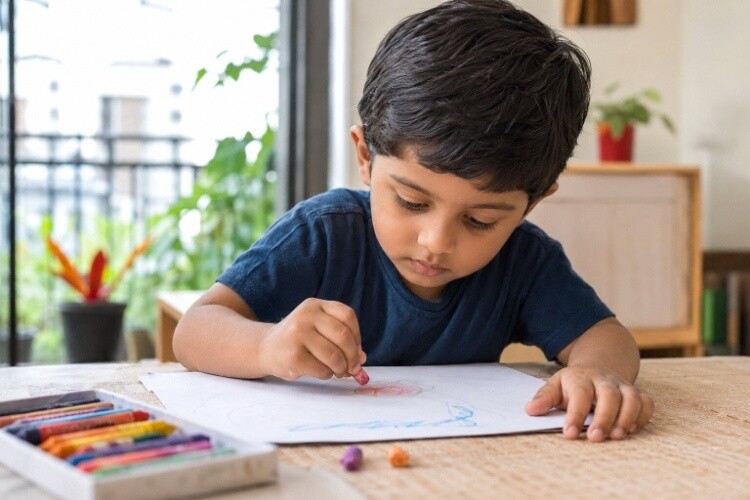
Break small pieces of chalk or crayon (about an inch long) for early practice — a tiny writing tool naturally encourages a tripod-style grip because a fist grip becomes physically awkward with such a small object.

Use triangular grip pencils or add a soft pencil grip attachment — inexpensive and widely available, these gently guide finger placement without forcing correction.
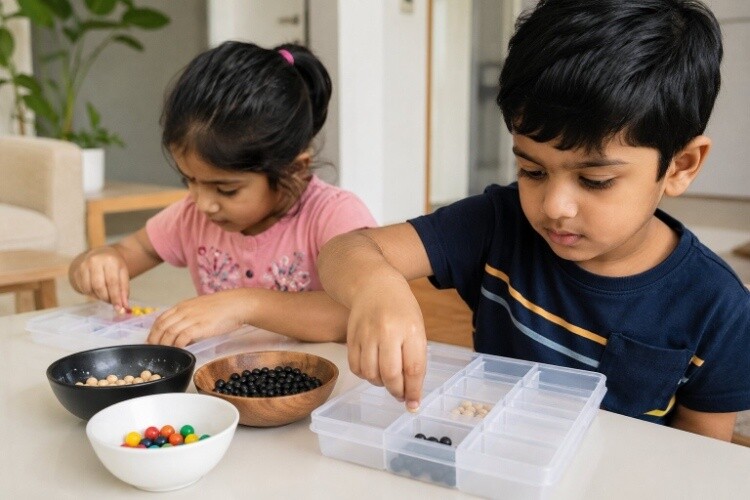
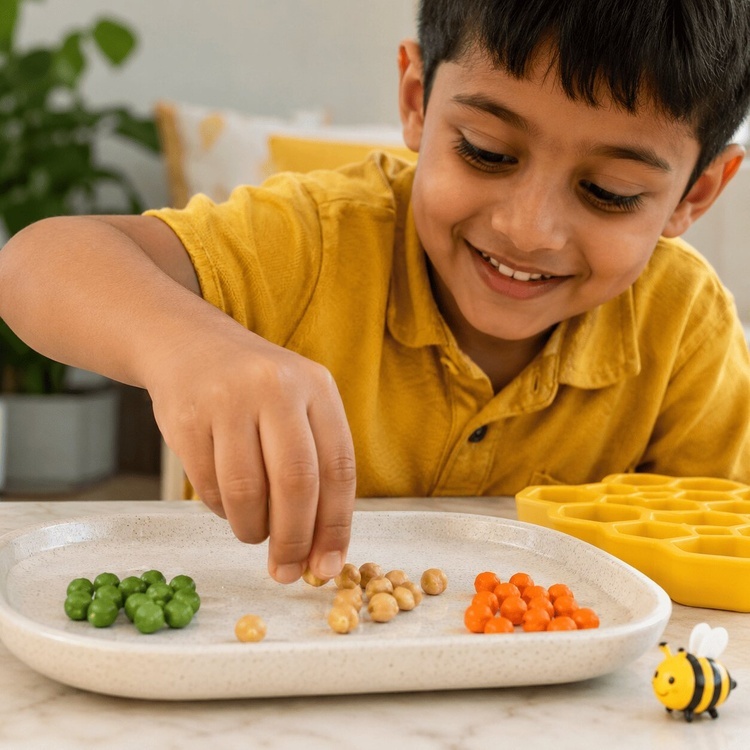
Practice "pinching" games unrelated to writing — picking up small objects (buttons, beads, chickpeas) with just thumb and index finger builds the same muscle pattern needed for a good pencil grip.

Avoid constant verbal correction during actual writing or homework time — this adds pressure and rarely produces lasting change; grip-building exercises work far better done separately, during playtime.