
 Summer Camp
 Reading Writing
 Book Club
 Calligraphy
 Creative Writing
 English Speaking
 Handwriting
 Library
 Phonics
 Story Telling
 Art and Craft
 Clay Moulding
 Drawing
 Painting
 Pottery
 Sketching
 Drama Theatre
 Personality Development
 Public Speaking
 Languages
 Arabic
 Chinese
 French
 German
 Hindi
Hindi Italian
 Japanese
 Korean
 Persian
 Portuguese
 Russian
 Spanish
 Turkish
 Uzbek
Uzbek Sports and Fitness
 Aerobics
 Athletics
 Badminton
 Basket Ball
 Chess
Chess Cricket
 Football
 Golf
Golf Gymnastics
 Hulahoop
 Karate
 Martial Arts
 Pickleball
 Rugby
Rugby Skating
 Swimming
 Taekwondo
 Tennis
 Volleyball
 Yoga
Yoga Zumba
Zumba Tuition Classes
 Accounts
 Biology
 Business Studies
 CBSE
CBSE Chemistry
 Commerce
 Economics
 Homework Classes
 IB Board
 IGCSE
IGCSE Mathematics
 Physics
 Psychology
 Science
 Social Studies
 Vedic Maths
 Dance and Music
 Ballet
 Bhangra
 Bharatnatyam
 Bollywood Dance
 Casio
Casio Dandiya and Garba
 Drums
Drums Flute
Flute Guitar
 Harmonium
 Hip Hop
 Jazz
Jazz Kathak
 Keyboard
 Piano
Piano Salsa
Salsa Shlokas
 Sitar
Sitar Tabla
Tabla Ukulele
 Violin
 Vocal
Vocal Play School
 STEM
STEM
 Abacus
 App Development
 Artificial intelligence
 Basic Computer Courses
 Canva
Canva Coding
 Graphic Design
 Lego
Lego Python
 Robotics
 Rubiks Cube
 Scrabble
 Scratch
 Website Development
 Winter Camp
 Workshops
 Diwali Workshop
 Easter
 Ganesh Mahotsav
 Guru Nanak Jayanti Workshop
 Holi
Holi Independence day workshop
 Janmashtami Workshop
 Mothers day
 Navratri Workshops
 Raksha Bandhan workshop
 Ramayana Workshop
 Spring Camp
 Valentines Day Workshops
 Festive
 Daycare
 Cooking and Food
 Spring Camp
 Contests and Competitions
 Special abled
 Republic Day Workshops
 Mela
Mela
 Mela
Mela Cognitive Development
 Mother-Toddler Program
-Jul-03-2026-06-59-25-1926-AM.webp?width=30&height=30&name=Smart_20Skills_20(2)-Jul-03-2026-06-59-25-1926-AM.webp) Smart Skills
Smart Skills
 Financial Literacy
 Mental Wellbeing
 Meditation
 Reiki
Reiki


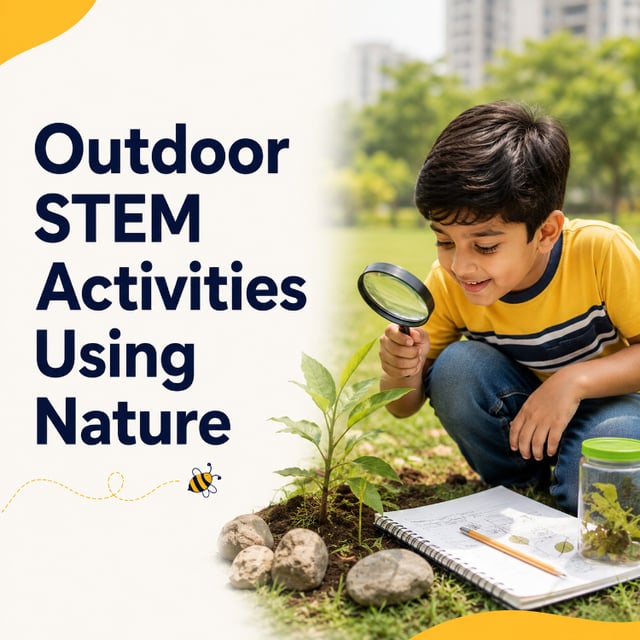
Nature provides some of the richest STEM teaching material available — genuine biology, physics, and math concepts explorable through simple outdoor observation and activity, connecting this series' STEM and nature threads directly.
Outdoor nature settings offer STEM learning opportunities arguably richer than many indoor, equipment-based activities — genuine biology, physics, chemistry, and math concepts embedded in ordinary park and garden observation.
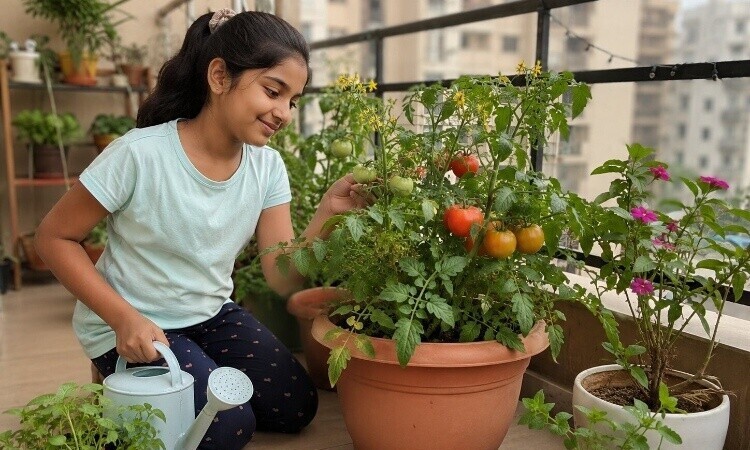
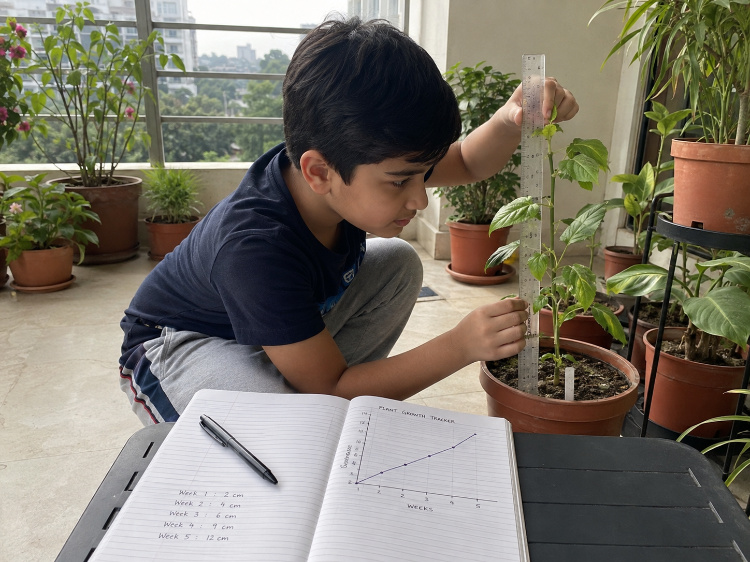
Plant growth measurement and graphing
Tracking a plant's height over weeks with simple measurement and graphing — combining biology observation with genuine data science practice.
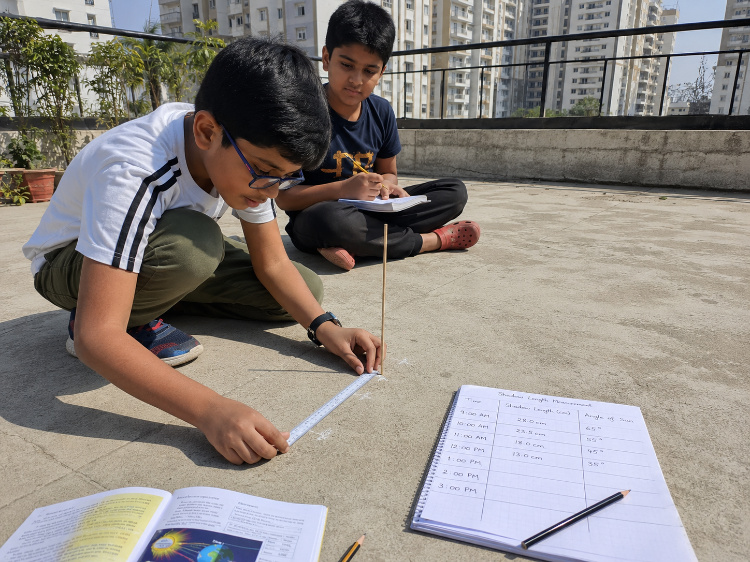
Shadow length and angle tracking
Measuring and recording shadow length at different times of day, building understanding of earth's rotation and basic astronomy through simple outdoor measurement.
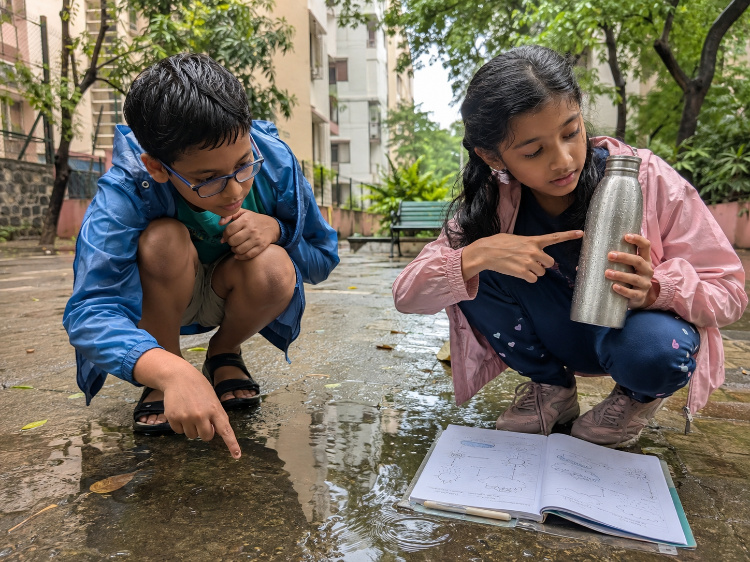
Water cycle observation
Observing puddles forming and evaporating, condensation on cool surfaces, and monsoon rain patterns — the water cycle made concrete through direct, ongoing observation.
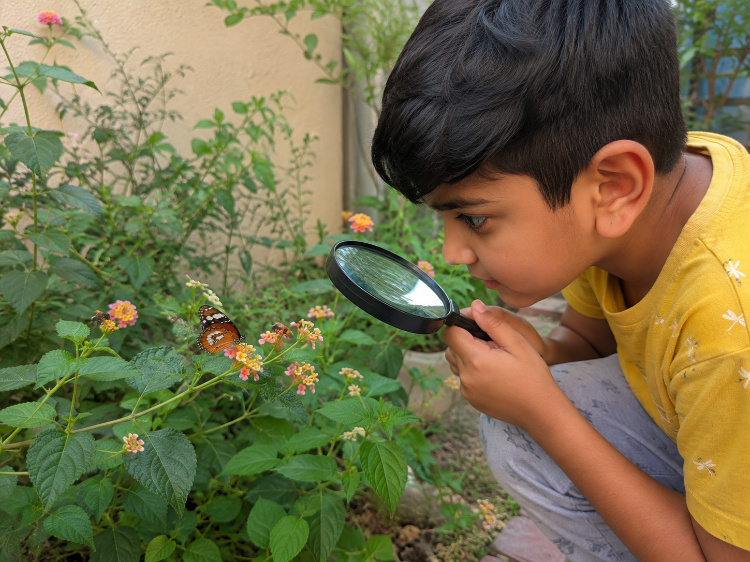
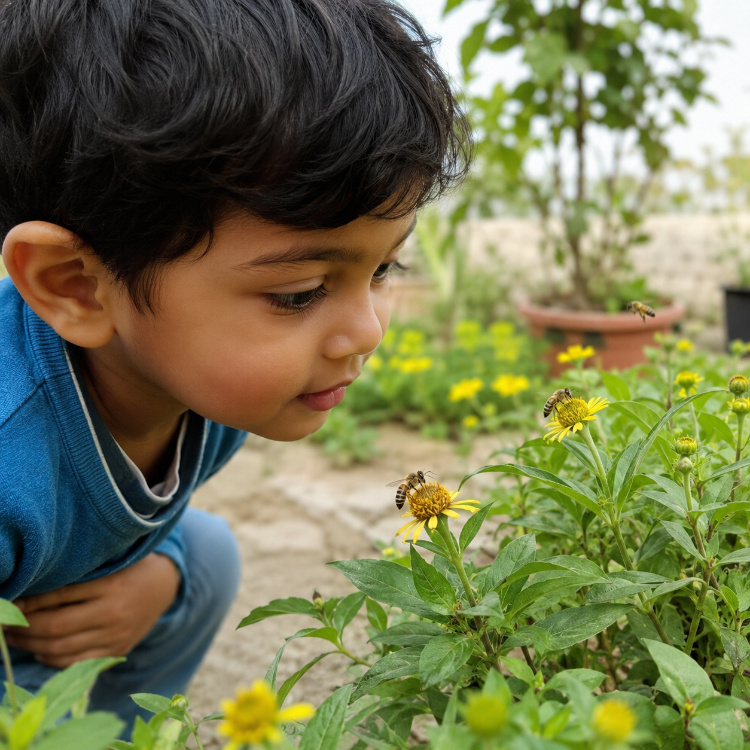
Insect and pollinator observation
Watching bees, butterflies, and other pollinators at flowers, building genuine ecosystem and food-chain understanding through direct observation rather than textbook diagrams.
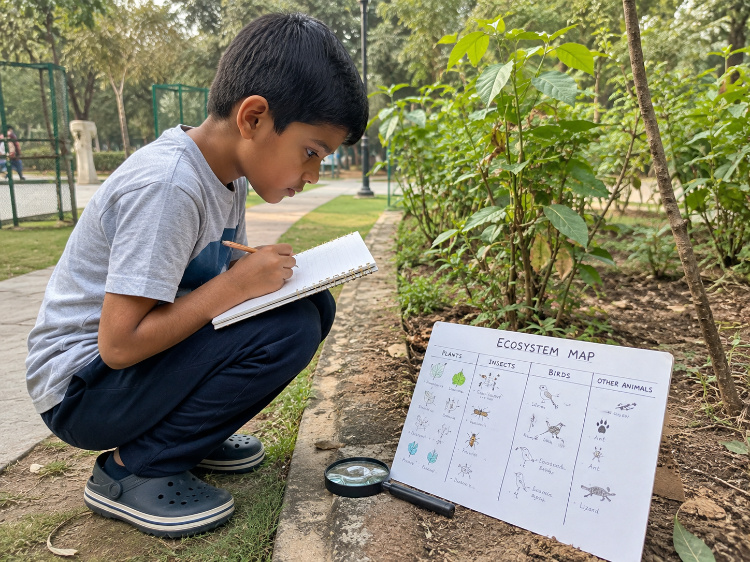
Simple ecosystem mapping
Documenting what lives in a specific small area (a particular garden bed, a patch of park) over repeated visits, building basic ecological survey skills.
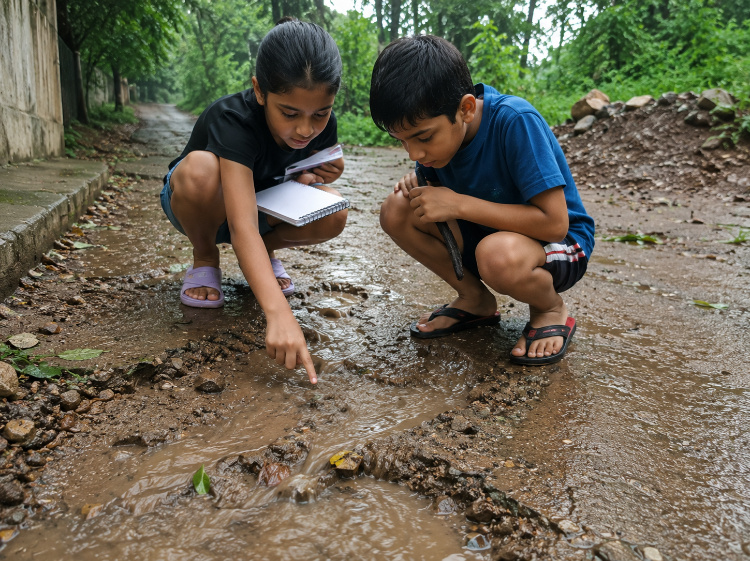
Erosion and water flow observation
After rain, observing how water flows and what it moves (soil, small stones) — basic earth science made visible through monsoon-season opportunity.
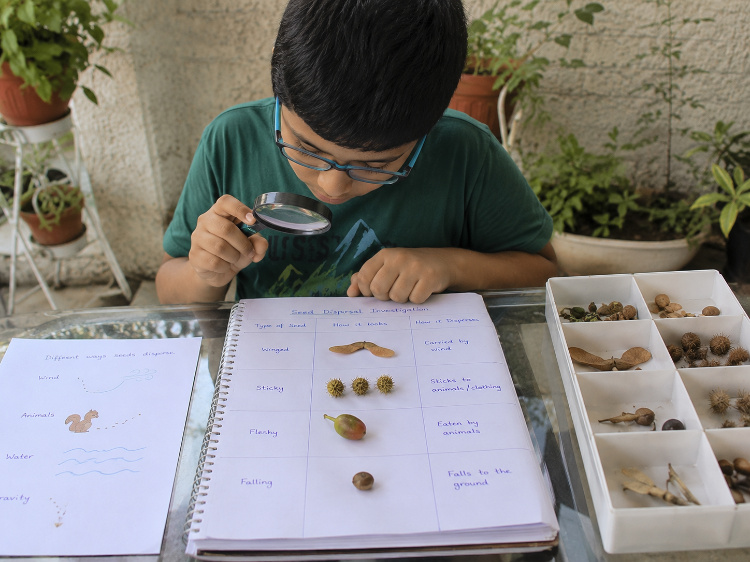
Seed dispersal investigation
Examining different seed types (some with "wings," some sticky, some simply falling) and discussing how each disperses — genuine botanical mechanism study through simple observation.
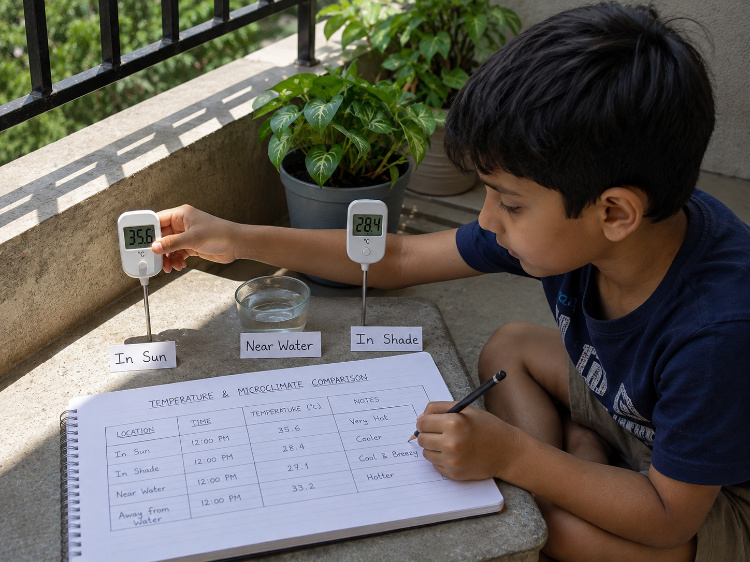
Temperature and microclimate comparison
Comparing temperature in sun versus shade, near water versus away from it, using a simple thermometer — building measurement skill and basic climate science concepts.
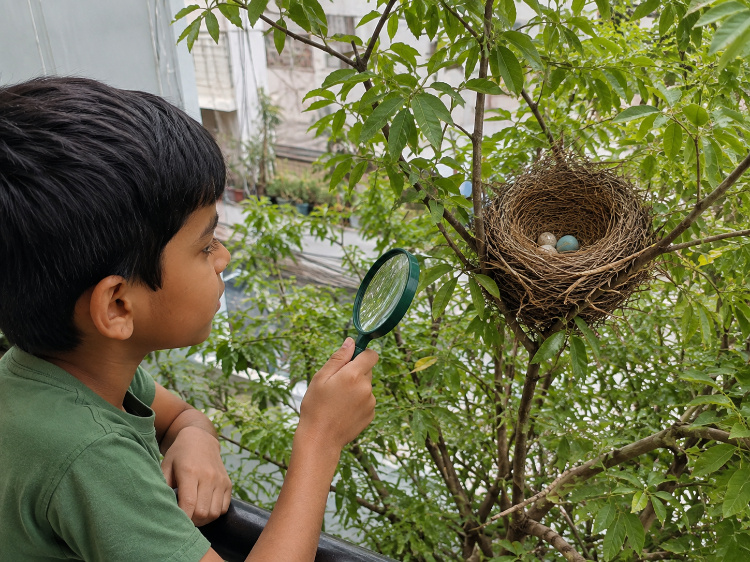
Bird nest and structure observation (without disturbing)
Observing (from appropriate distance) bird nests or insect structures, discussing engineering principles evident in natural construction.
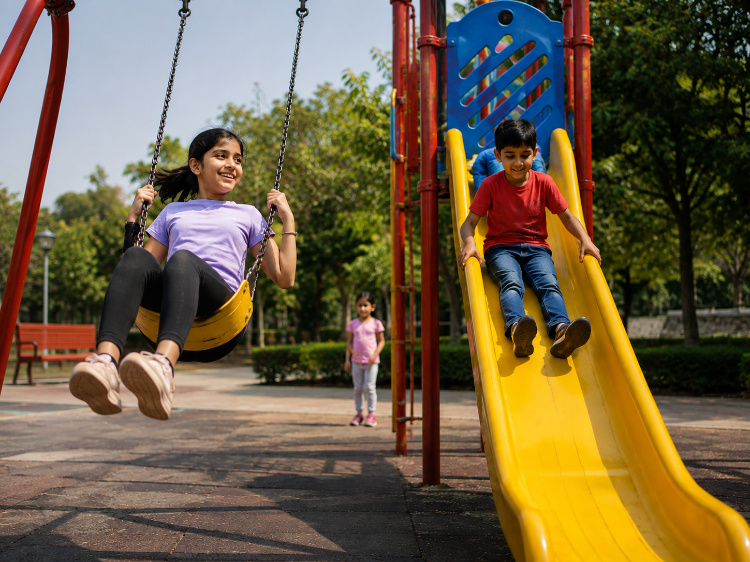
Simple outdoor physics through play equipment
Swings and slides offer genuine, felt physics lessons (pendulum motion, friction, gravity) when explicitly discussed alongside the play itself.
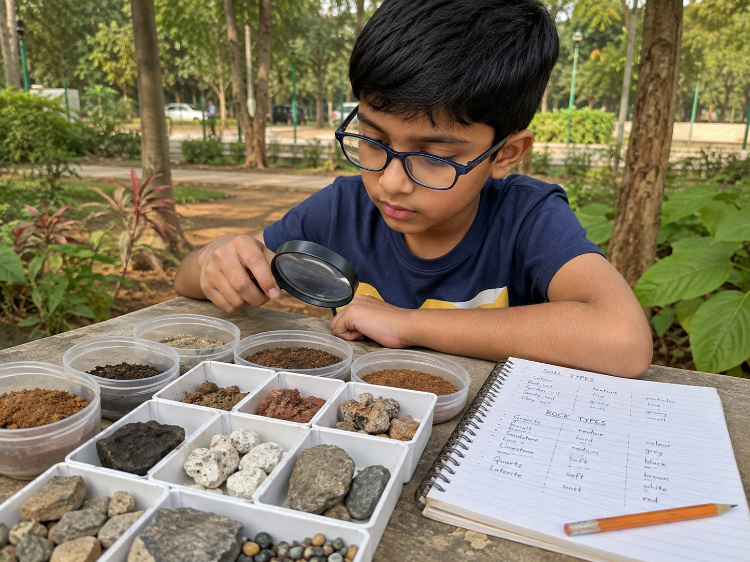
Rock and soil type comparison
Comparing different soil and rock samples found across a park or garden — basic geology through hands-on comparison.
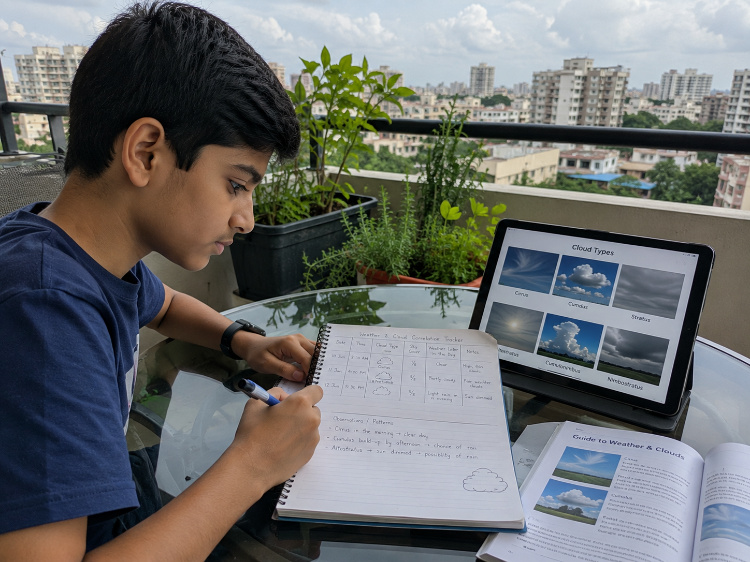
Weather pattern and cloud correlation tracking
Building on the cloud-watching activities covered separately, specifically correlating observed cloud types with subsequent weather over repeated observations — genuine predictive science practice.
Why outdoor STEM particularly benefits from the "why" conversation
Nature offers endless naturally occurring "why does that happen?" moments — the parental role is less about having all the answers and more about genuine co-investigation ("I'm not sure — what do you think? Should we look it up together?") modelling scientific curiosity as an ongoing practice rather than a fixed body of adult knowledge to be transmitted.
Connecting this directly to the series' broader STEM content
The kitchen-science, home-experiment, and build-project activities covered elsewhere in this content series find their most natural, ongoing extension in outdoor nature observation — indoor STEM activities teach discrete concepts in controlled settings; outdoor nature STEM teaches the same underlying scientific thinking applied to messier, more genuine, ongoing real-world systems.
The long-term habit this builds
Children who regularly engage in outdoor observation and simple nature-based investigation tend to carry a more genuinely curious, observation-oriented relationship with the physical world into later, more formal science education — the habit of noticing, questioning, and investigating built through nature engagement transfers directly into how a child approaches structured science learning years later.