
 Summer Camp
 Reading Writing
 Book Club
 Calligraphy
 Creative Writing
 English Speaking
 Handwriting
 Library
 Phonics
 Story Telling
 Art and Craft
 Clay Moulding
 Drawing
 Painting
 Pottery
 Sketching
 Drama Theatre
 Personality Development
 Public Speaking
 Languages
 Arabic
 Chinese
 French
 German
 Hindi
Hindi Italian
 Japanese
 Korean
 Persian
 Portuguese
 Russian
 Spanish
 Turkish
 Uzbek
Uzbek Sports and Fitness
 Aerobics
 Athletics
 Badminton
 Basket Ball
 Chess
Chess Cricket
 Football
 Golf
Golf Gymnastics
 Hulahoop
 Karate
 Martial Arts
 Pickleball
 Rugby
Rugby Skating
 Swimming
 Taekwondo
 Tennis
 Volleyball
 Yoga
Yoga Zumba
Zumba Tuition Classes
 Accounts
 Biology
 Business Studies
 CBSE
CBSE Chemistry
 Commerce
 Economics
 Homework Classes
 IB Board
 IGCSE
IGCSE Mathematics
 Physics
 Psychology
 Science
 Social Studies
 Vedic Maths
 Dance and Music
 Ballet
 Bhangra
 Bharatnatyam
 Bollywood Dance
 Casio
Casio Dandiya and Garba
 Drums
Drums Flute
Flute Guitar
 Harmonium
 Hip Hop
 Jazz
Jazz Kathak
 Keyboard
 Piano
Piano Salsa
Salsa Shlokas
 Sitar
Sitar Tabla
Tabla Ukulele
 Violin
 Vocal
Vocal Play School
 STEM
STEM
 Abacus
 App Development
 Artificial intelligence
 Basic Computer Courses
 Canva
Canva Coding
 Graphic Design
 Lego
Lego Python
 Robotics
 Rubiks Cube
 Scrabble
 Scratch
 Website Development
 Winter Camp
 Workshops
 Diwali Workshop
 Easter
 Ganesh Mahotsav
 Guru Nanak Jayanti Workshop
 Holi
Holi Independence day workshop
 Janmashtami Workshop
 Mothers day
 Navratri Workshops
 Raksha Bandhan workshop
 Ramayana Workshop
 Spring Camp
 Valentines Day Workshops
 Festive
 Daycare
 Cooking and Food
 Spring Camp
 Contests and Competitions
 Special abled
 Republic Day Workshops
 Mela
Mela
 Mela
Mela Cognitive Development
 Mother-Toddler Program
-Jul-03-2026-06-59-25-1926-AM.webp?width=30&height=30&name=Smart_20Skills_20(2)-Jul-03-2026-06-59-25-1926-AM.webp) Smart Skills
Smart Skills
 Financial Literacy
 Mental Wellbeing
 Meditation
 Reiki
Reiki




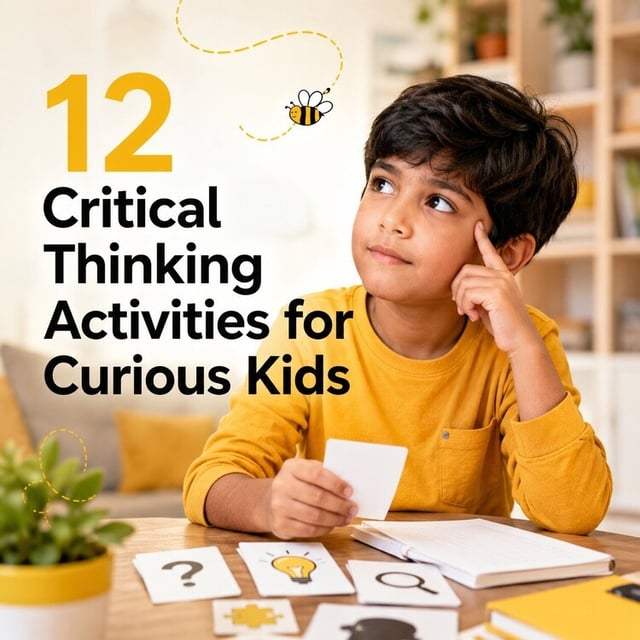
Critical thinking — questioning, reasoning, and evaluating rather than simply accepting information — is a skill that can be actively built through specific activities, not just something a child either has or doesn't have.
Critical thinking sometimes gets treated as an innate trait some kids have and others don't, but it's genuinely a buildable skill, developed through repeated practice in questioning, comparing, and reasoning through problems. These activities are chosen for being genuinely engaging, not academic drilling in disguise.
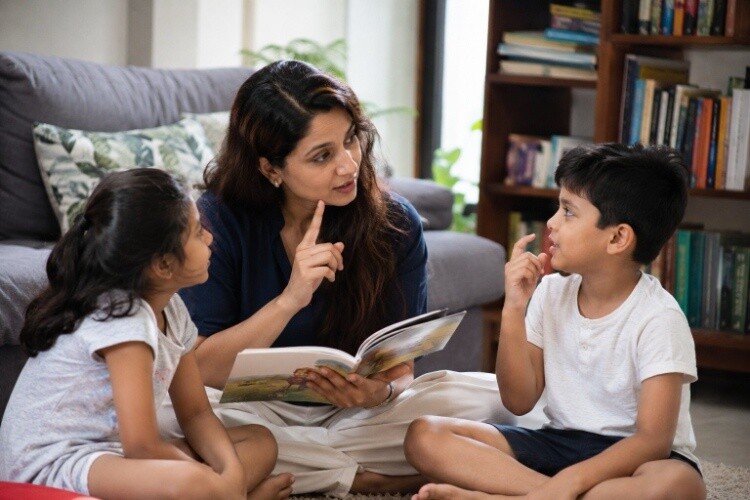
"Why do you think that happened?" during stories
Pausing during a story (book, movie, or real event) to ask why a character made a particular choice builds causal reasoning naturally.

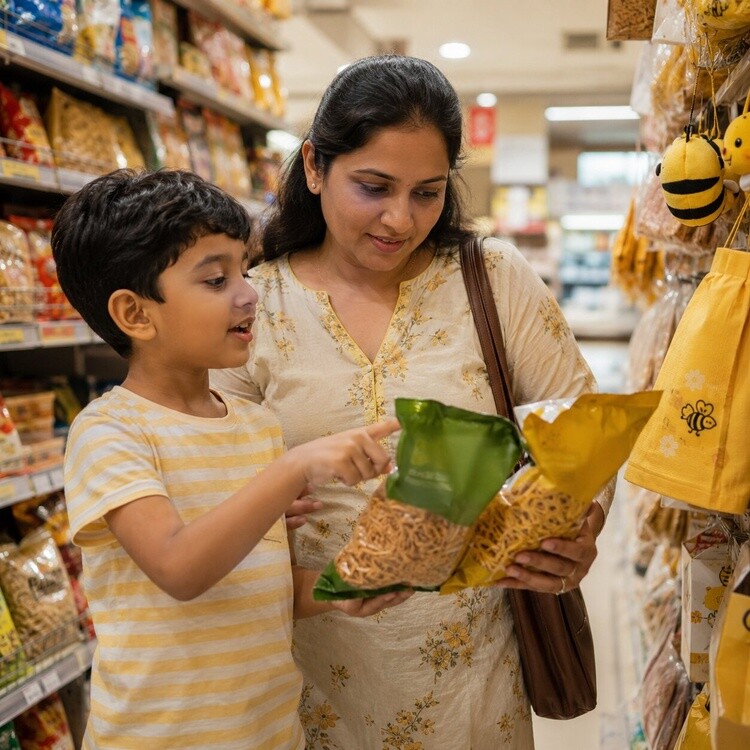
Comparing two similar products at a shop
Asking a child to help decide between two similar snack options based on price, quantity, or ingredients builds comparative evaluation skills.
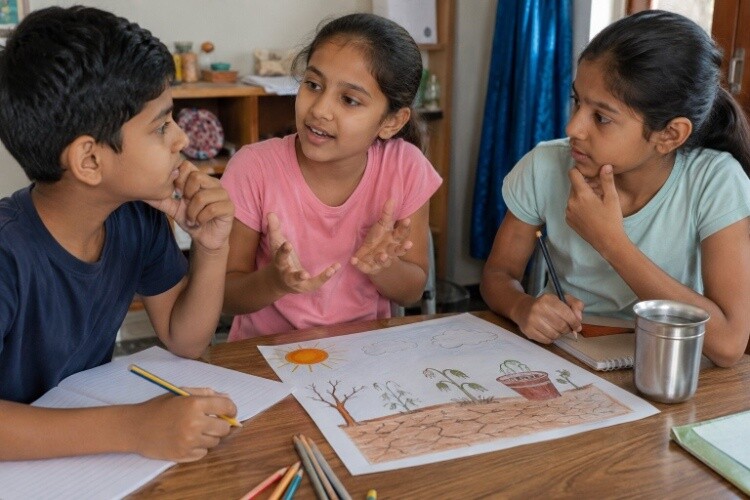
"What would happen if...?" hypothetical questions
Simple prompts like "what would happen if it never rained?" build imaginative and consequential reasoning.
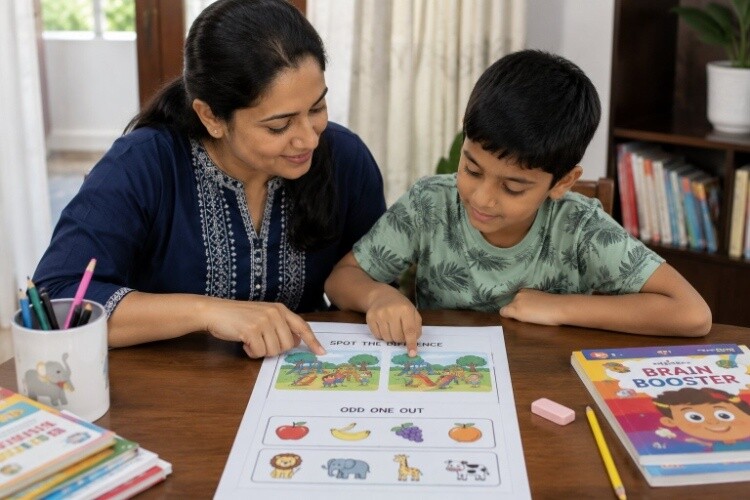
Spot-the-difference and odd-one-out puzzles
Beyond simple entertainment, these build genuine observational and categorisation reasoning.
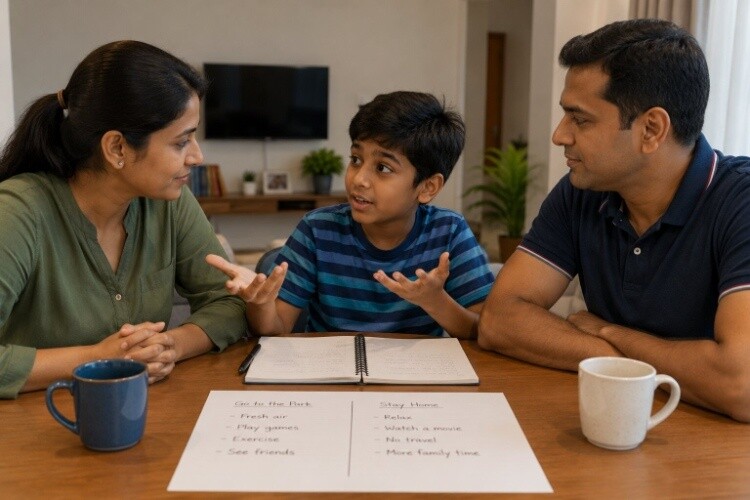
Debating both sides of a simple family decision
Letting a child argue for and against a simple choice (should we go to the park or stay home?) builds perspective-taking and reasoning skills.
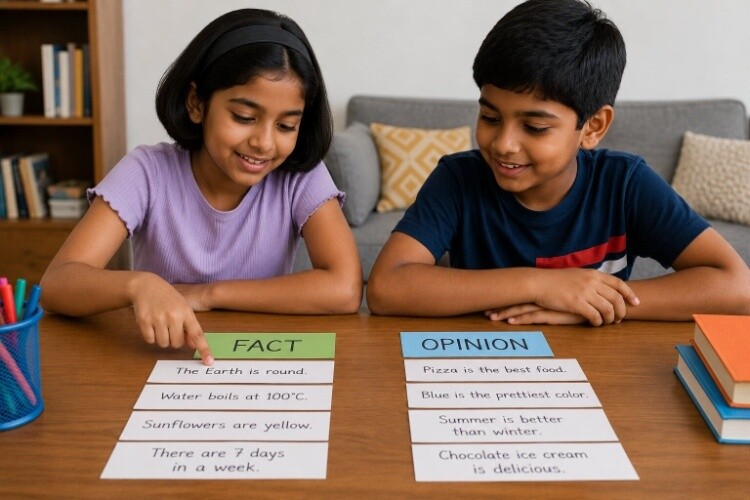
Fact versus opinion sorting games
Presenting simple statements and asking a child to sort them into "fact" or "opinion" builds an early foundation for media literacy.
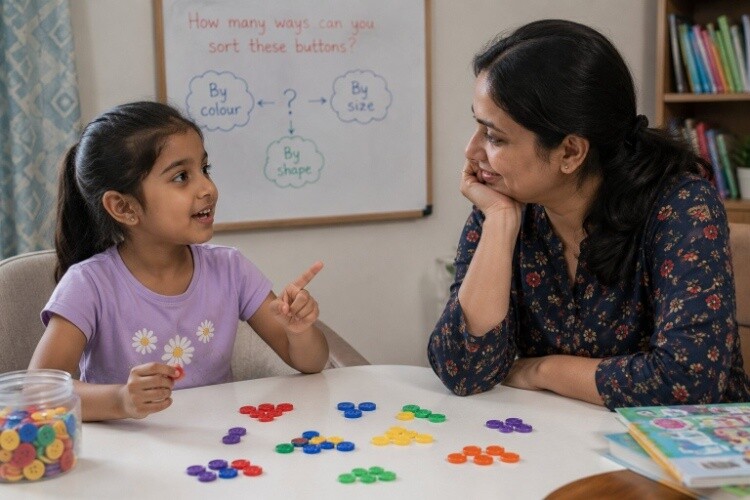
"How many ways can you..." open-ended challenges
Asking how many different ways a child can sort a set of objects, or solve a simple puzzle, builds flexible thinking beyond a single "correct" approach.
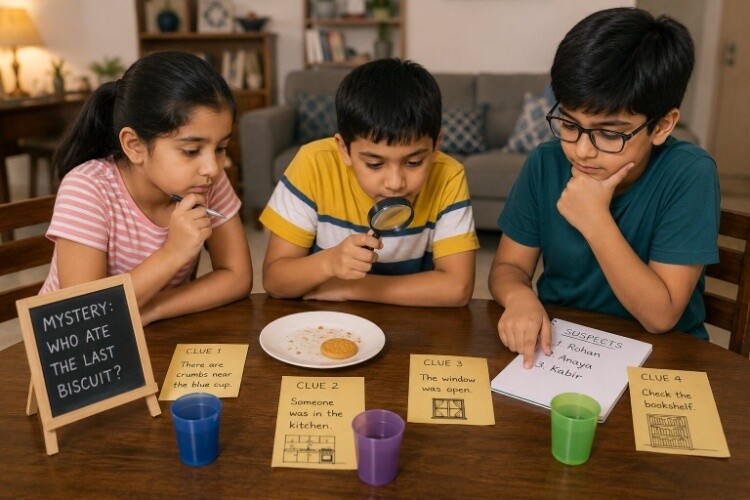
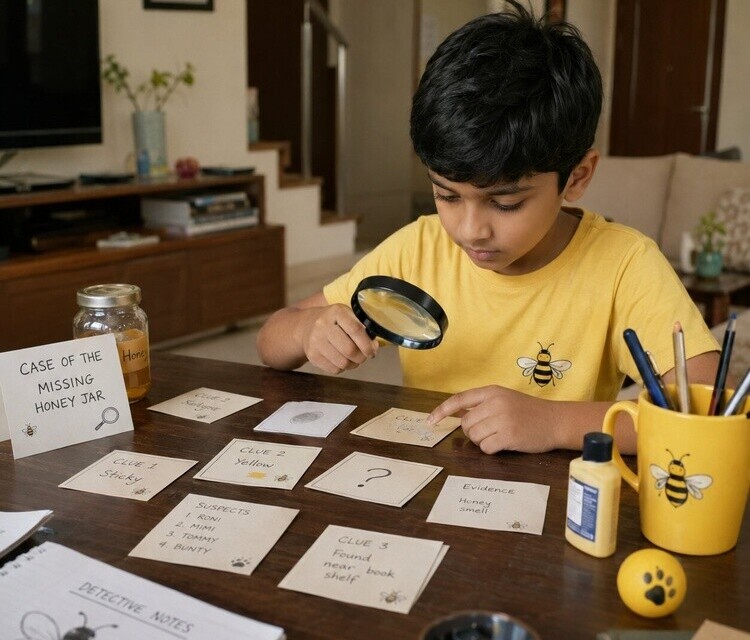
Mystery-solving games
Simple detective-style games, even homemade ones (who ate the last biscuit, based on planted clues) build deductive reasoning in a genuinely fun format.
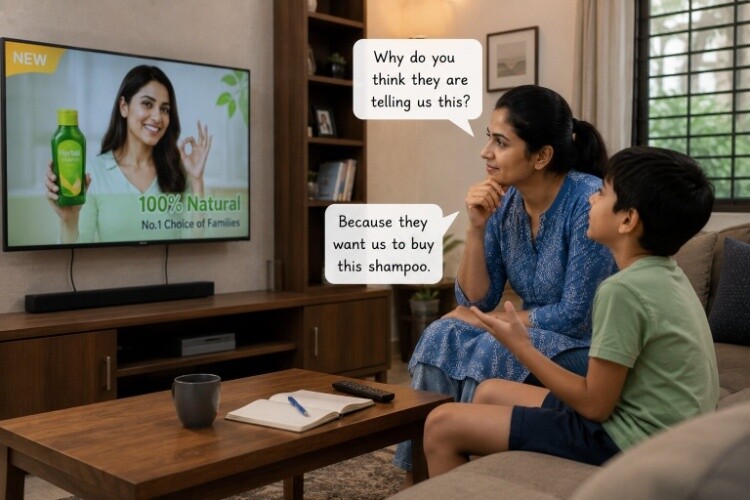
Questioning advertisements together
Watching an ad and asking "why do you think they're telling us this?" builds early critical media awareness in an age-appropriate way.
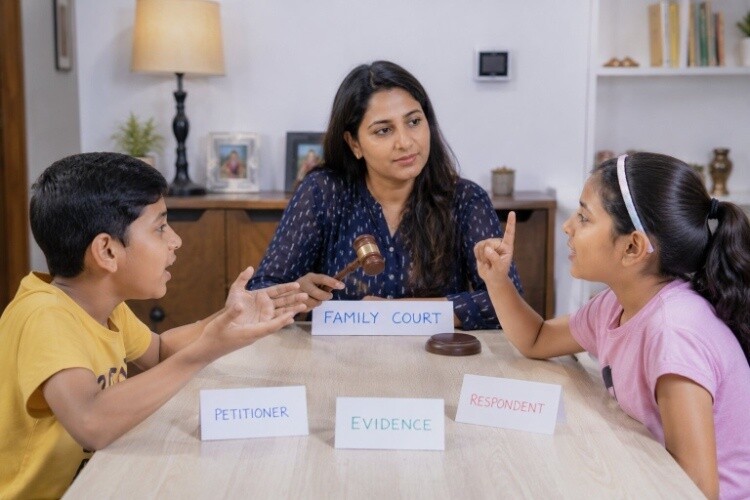
Building arguments for a "family court" on small disputes
For sibling disagreements, having each child present their side before a decision builds reasoning and articulation skills, alongside conflict resolution.
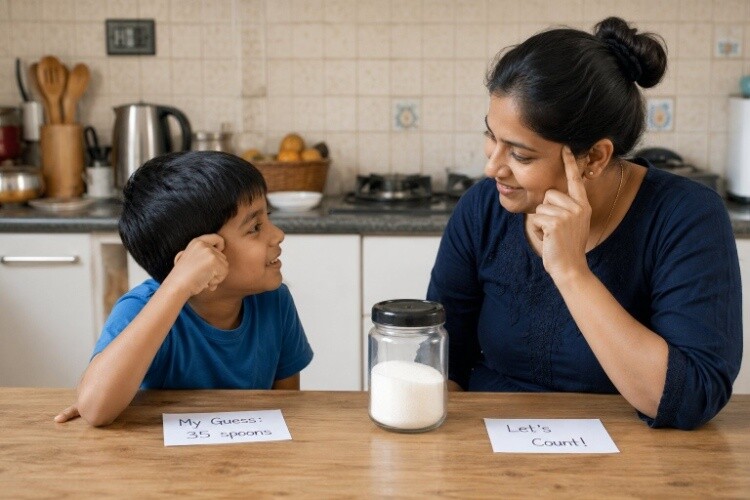
Estimating and then verifying
Asking a child to guess how many steps to the gate, or how many spoons of sugar are in a jar, then counting to check — builds a healthy habit of estimating before assuming.
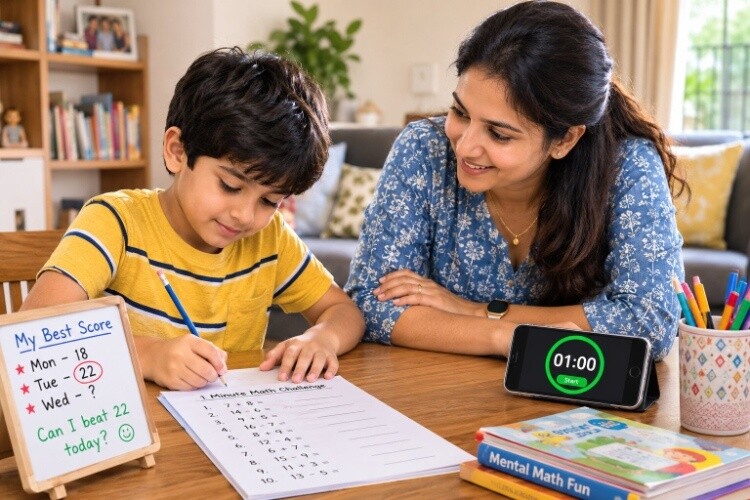
"What's a different way to solve this?" after homework
Once a math problem is solved correctly, asking if there's another way to reach the same answer builds flexible, non-rote thinking.
Why this matters beyond academics
Children who develop strong critical thinking early tend to navigate misinformation, peer pressure, and complex decisions more capably as they grow older — a skill that matters well beyond any specific school subject.
Building this into daily conversation, not separate sessions
None of these activities need a dedicated time slot — they work best woven into conversations already happening during meals, commutes, and daily household moments, simply by asking one extra "why" or "what if" question.
Balancing curiosity with patience
A child developing critical thinking will naturally start questioning more — including household rules and decisions. This can be genuinely tiring for parents, but it's usually a sign the skill is developing well, not a discipline problem to shut down.