
 Summer Camp
 Reading Writing
 Book Club
 Calligraphy
 Creative Writing
 English Speaking
 Handwriting
 Library
 Phonics
 Story Telling
 Art and Craft
 Clay Moulding
 Drawing
 Painting
 Pottery
 Sketching
 Drama Theatre
 Personality Development
 Public Speaking
 Languages
 Arabic
 Chinese
 French
 German
 Hindi
Hindi Italian
 Japanese
 Korean
 Persian
 Portuguese
 Russian
 Spanish
 Turkish
 Uzbek
Uzbek Sports and Fitness
 Aerobics
 Athletics
 Badminton
 Basket Ball
 Chess
Chess Cricket
 Football
 Golf
Golf Gymnastics
 Hulahoop
 Karate
 Martial Arts
 Pickleball
 Rugby
Rugby Skating
 Swimming
 Taekwondo
 Tennis
 Volleyball
 Yoga
Yoga Zumba
Zumba Tuition Classes
 Accounts
 Biology
 Business Studies
 CBSE
CBSE Chemistry
 Commerce
 Economics
 Homework Classes
 IB Board
 IGCSE
IGCSE Mathematics
 Physics
 Psychology
 Science
 Social Studies
 Vedic Maths
 Dance and Music
 Ballet
 Bhangra
 Bharatnatyam
 Bollywood Dance
 Casio
Casio Dandiya and Garba
 Drums
Drums Flute
Flute Guitar
 Harmonium
 Hip Hop
 Jazz
Jazz Kathak
 Keyboard
 Piano
Piano Salsa
Salsa Shlokas
 Sitar
Sitar Tabla
Tabla Ukulele
 Violin
 Vocal
Vocal Play School
 STEM
STEM
 Abacus
 App Development
 Artificial intelligence
 Basic Computer Courses
 Canva
Canva Coding
 Graphic Design
 Lego
Lego Python
 Robotics
 Rubiks Cube
 Scrabble
 Scratch
 Website Development
 Winter Camp
 Workshops
 Diwali Workshop
 Easter
 Ganesh Mahotsav
 Guru Nanak Jayanti Workshop
 Holi
Holi Independence day workshop
 Janmashtami Workshop
 Mothers day
 Navratri Workshops
 Raksha Bandhan workshop
 Ramayana Workshop
 Spring Camp
 Valentines Day Workshops
 Festive
 Daycare
 Cooking and Food
 Spring Camp
 Contests and Competitions
 Special abled
 Republic Day Workshops
 Mela
Mela
 Mela
Mela Cognitive Development
 Mother-Toddler Program
-Jul-03-2026-06-59-25-1926-AM.webp?width=30&height=30&name=Smart_20Skills_20(2)-Jul-03-2026-06-59-25-1926-AM.webp) Smart Skills
Smart Skills
 Financial Literacy
 Mental Wellbeing
 Meditation
 Reiki
Reiki

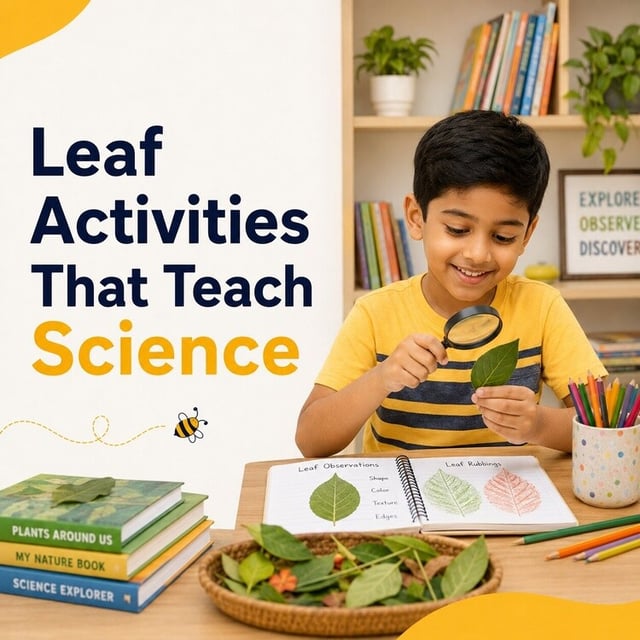
Leaves offer a remarkably rich, free science teaching material — structure, function, seasonal change, and classification — all explorable through simple collection and observation activities.
Leaves, freely available in any green space, offer surprisingly rich science content — structure and function, classification, seasonal biology, and even basic chemistry — accessible through simple collection and hands-on activities.
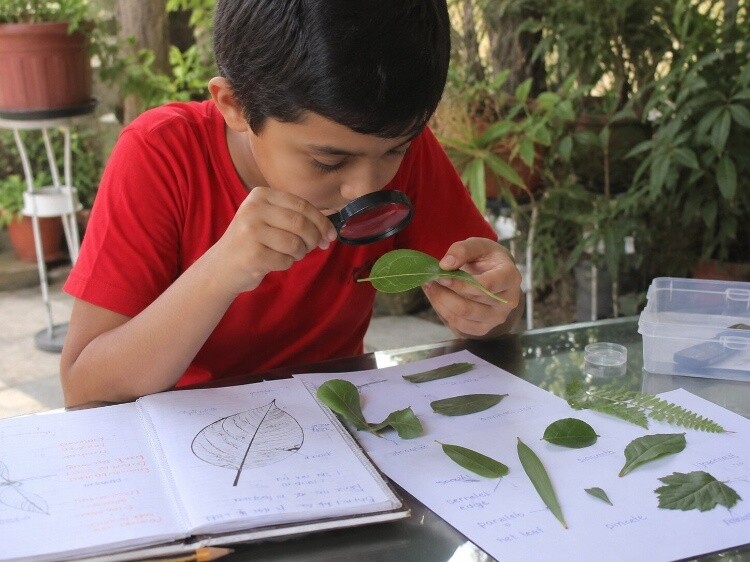
Leaf structure exploration
Examining veins, edges (smooth versus jagged), and shapes closely (a magnifying glass helps), introducing basic plant biology vocabulary and structure-function thinking (why might veins be arranged this way?).
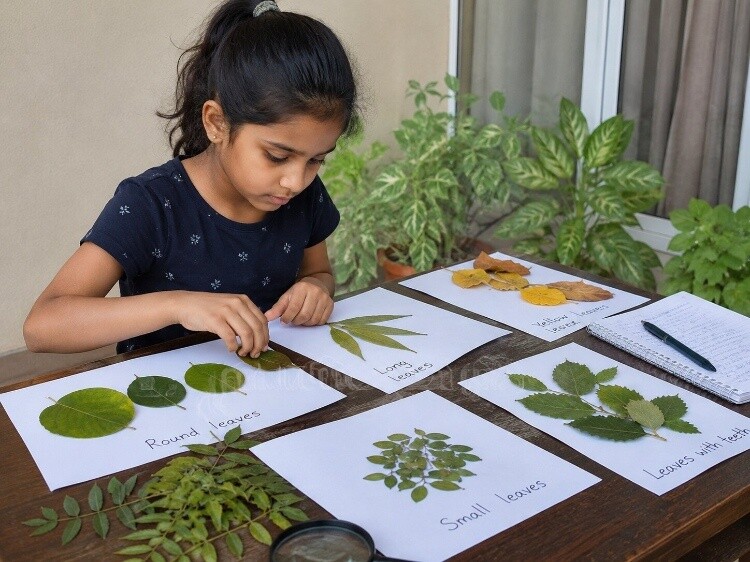
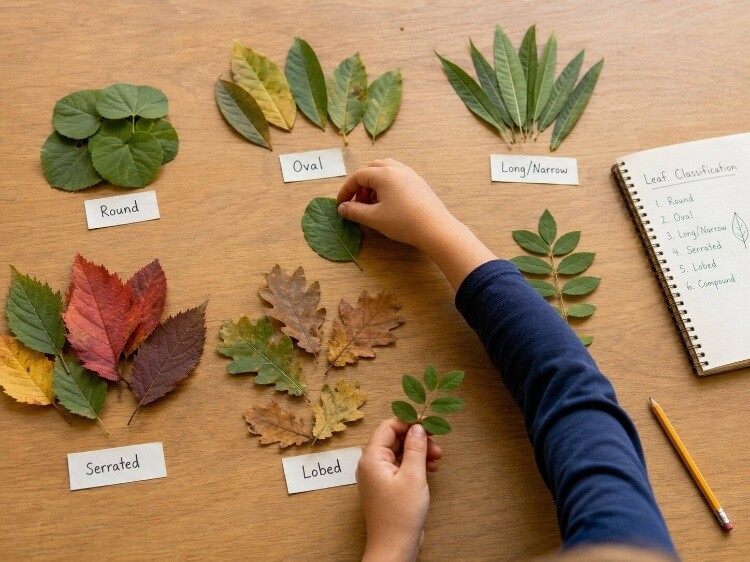
Leaf sorting and classification
Sorting a diverse collection by shape, size, edge type, or vein pattern — early taxonomic thinking through hands-on categorisation.
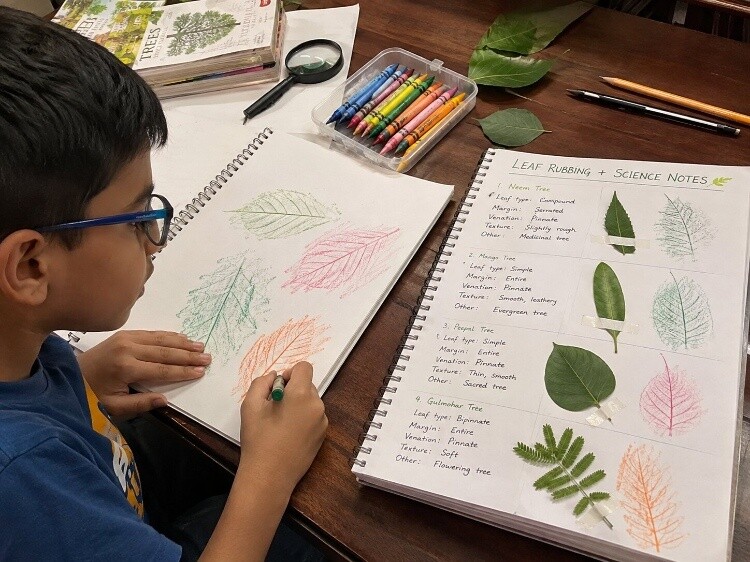
Leaf rubbing art with science notes
Beyond the simple art activity, adding labelled notes about which tree each leaf came from and its structural features combines creative and scientific engagement.
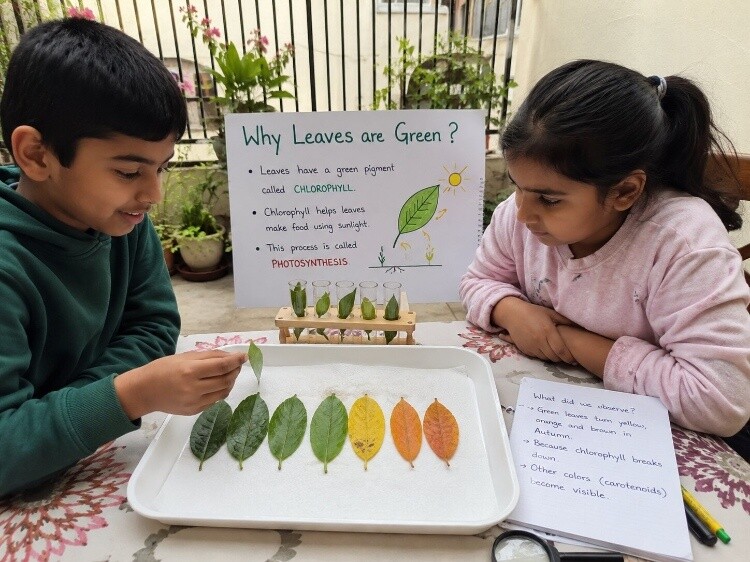
Photosynthesis demonstration through leaf color-change
Discussing why leaves are green (chlorophyll) and, where seasonally relevant, observing colour changes as a concrete entry into photosynthesis concepts.
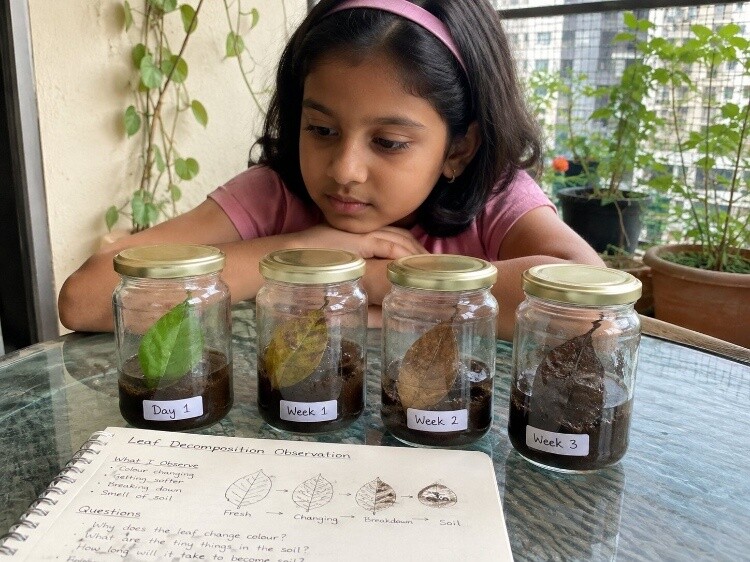
Leaf decomposition observation
Placing a leaf in a jar with some soil and water, observing gradual decomposition over weeks — a slow, genuine biology experiment building understanding of natural cycles.
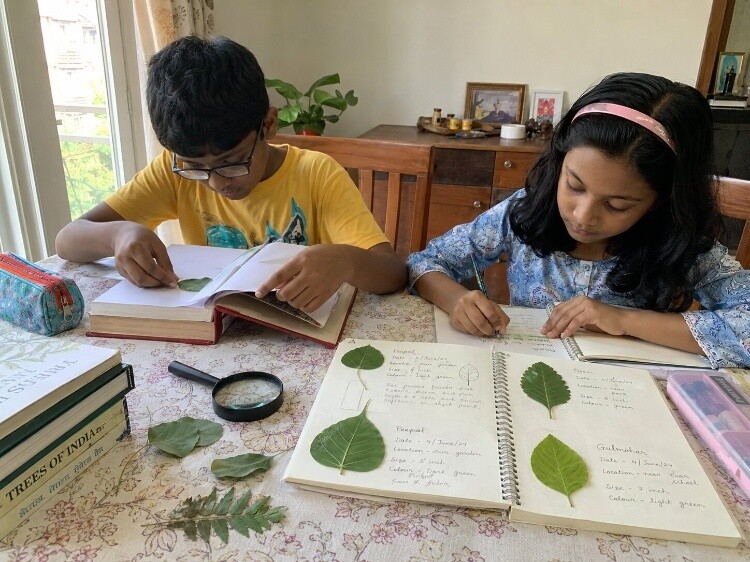
Pressed leaf preservation and journaling
Pressing leaves (between heavy books) and creating a labelled collection journal — building both a keepsake and observational documentation habit.
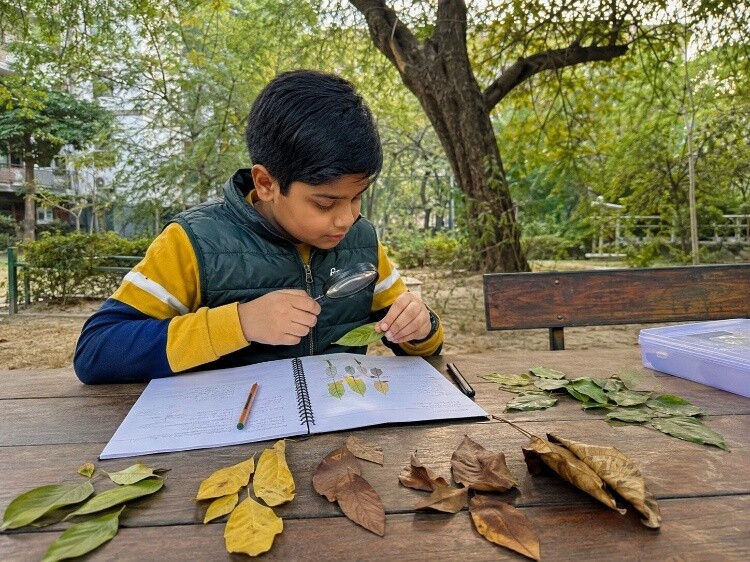
Comparing leaves across seasons
Collecting from the same tree species across different times of year, where Delhi's seasonal variety allows, building genuine longitudinal science observation.
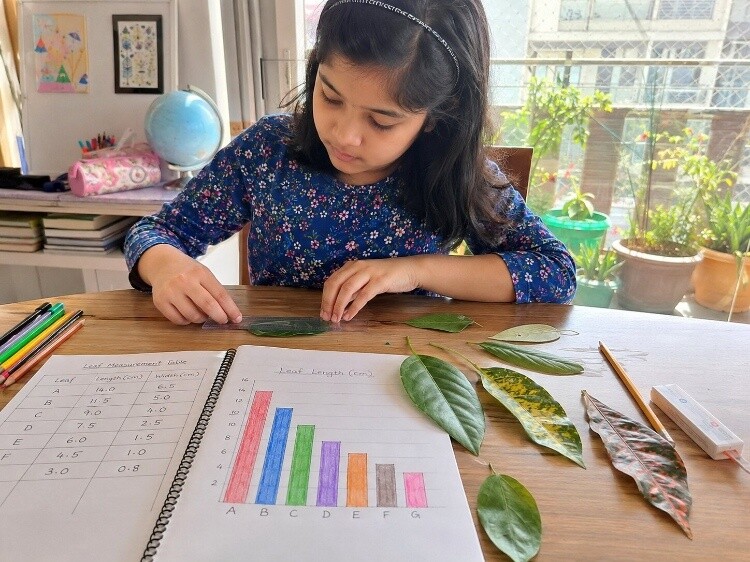
Leaf size measurement and data recording
Measuring collected leaves and creating simple charts or graphs of size variation — an accessible entry into basic data science and measurement skills.
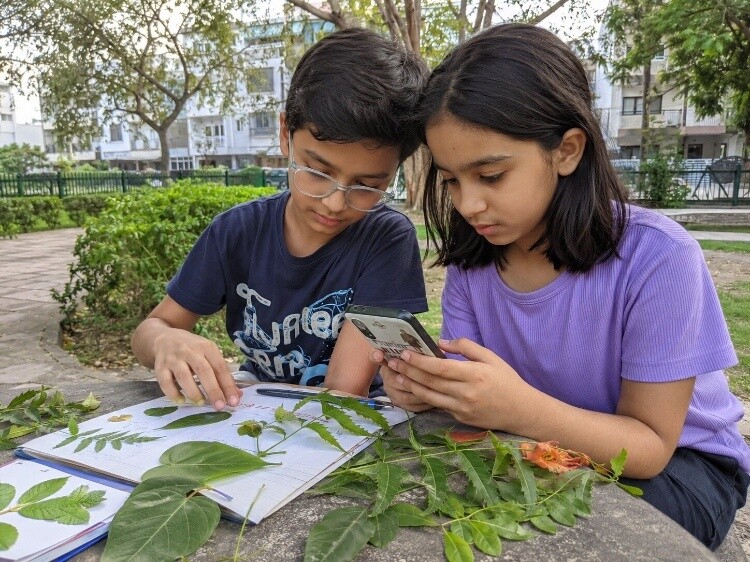
Identifying local tree species through their leaves
Using a simple guide or app to identify common Delhi NCR trees (neem, peepal, gulmohar, and others) by their leaves — building genuine local ecological literacy.
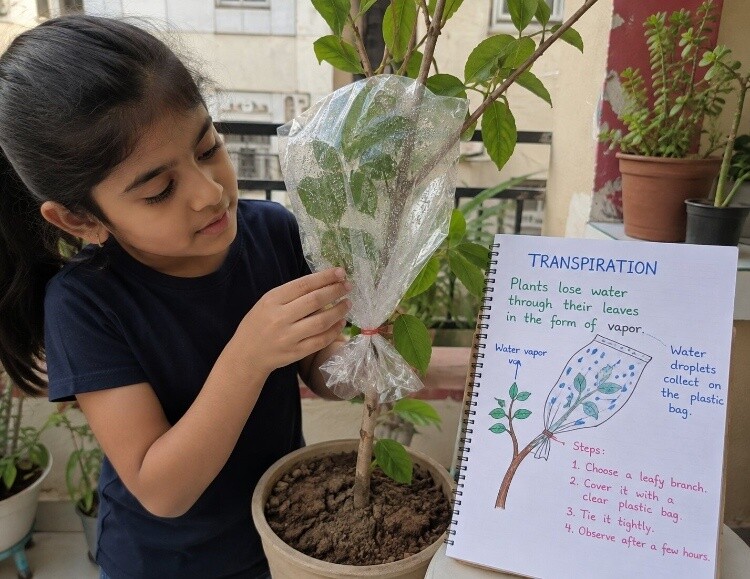
Leaf transpiration demonstration
Covering a leafy branch section with a clear plastic bag and observing condensation over a day — a simple, visible demonstration of transpiration.
Why leaves work exceptionally well as science teaching material
They're genuinely free and abundant, safe to handle, visually and texturally varied enough to sustain interest, and connect to genuinely substantial science concepts (biology, chemistry, ecology) despite their humble, everyday nature — making them one of the highest science-value-per-effort materials available to any family.
Building genuine scientific habits through simple activities
The observation, classification, measurement, and documentation habits built through leaf-based activities transfer directly to more formal science education later — a child comfortable with careful observation and simple data recording through leaf collection approaches structured school science with genuinely more foundational comfort.