
 Summer Camp
 Reading Writing
 Book Club
 Calligraphy
 Creative Writing
 English Speaking
 Handwriting
 Library
 Phonics
 Story Telling
 Art and Craft
 Clay Moulding
 Drawing
 Painting
 Pottery
 Sketching
 Drama Theatre
 Personality Development
 Public Speaking
 Languages
 Arabic
 Chinese
 French
 German
 Hindi
Hindi Italian
 Japanese
 Korean
 Persian
 Portuguese
 Russian
 Spanish
 Turkish
 Uzbek
Uzbek Sports and Fitness
 Aerobics
 Athletics
 Badminton
 Basket Ball
 Chess
Chess Cricket
 Football
 Golf
Golf Gymnastics
 Hulahoop
 Karate
 Martial Arts
 Pickleball
 Rugby
Rugby Skating
 Swimming
 Taekwondo
 Tennis
 Volleyball
 Yoga
Yoga Zumba
Zumba Tuition Classes
 Accounts
 Biology
 Business Studies
 CBSE
CBSE Chemistry
 Commerce
 Economics
 Homework Classes
 IB Board
 IGCSE
IGCSE Mathematics
 Physics
 Psychology
 Science
 Social Studies
 Vedic Maths
 Dance and Music
 Ballet
 Bhangra
 Bharatnatyam
 Bollywood Dance
 Casio
Casio Dandiya and Garba
 Drums
Drums Flute
Flute Guitar
 Harmonium
 Hip Hop
 Jazz
Jazz Kathak
 Keyboard
 Piano
Piano Salsa
Salsa Shlokas
 Sitar
Sitar Tabla
Tabla Ukulele
 Violin
 Vocal
Vocal Play School
 STEM
STEM
 Abacus
 App Development
 Artificial intelligence
 Basic Computer Courses
 Canva
Canva Coding
 Graphic Design
 Lego
Lego Python
 Robotics
 Rubiks Cube
 Scrabble
 Scratch
 Website Development
 Winter Camp
 Workshops
 Diwali Workshop
 Easter
 Ganesh Mahotsav
 Guru Nanak Jayanti Workshop
 Holi
Holi Independence day workshop
 Janmashtami Workshop
 Mothers day
 Navratri Workshops
 Raksha Bandhan workshop
 Ramayana Workshop
 Spring Camp
 Valentines Day Workshops
 Festive
 Daycare
 Cooking and Food
 Spring Camp
 Contests and Competitions
 Special abled
 Republic Day Workshops
 Mela
Mela
 Mela
Mela Cognitive Development
 Mother-Toddler Program
-Jul-03-2026-06-59-25-1926-AM.webp?width=30&height=30&name=Smart_20Skills_20(2)-Jul-03-2026-06-59-25-1926-AM.webp) Smart Skills
Smart Skills
 Financial Literacy
 Mental Wellbeing
 Meditation
 Reiki
Reiki



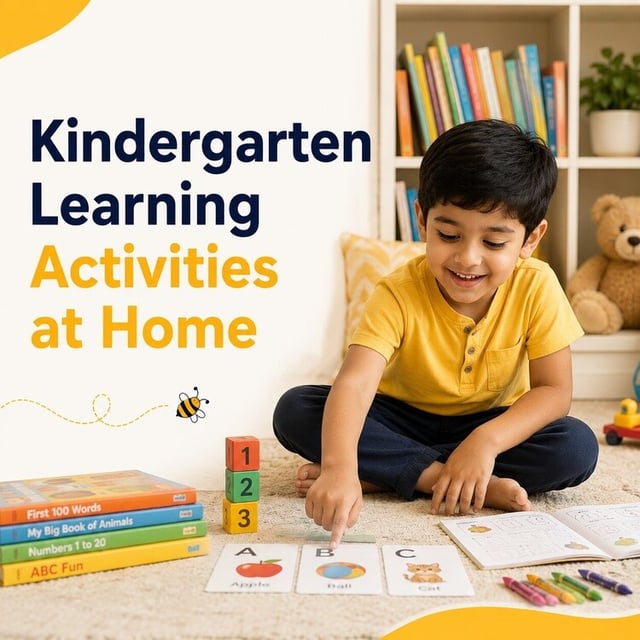
Kindergarten-age home learning works best as playful reinforcement, not a second school shift — 15-20 minutes of game-based practice supporting what school introduces.
With formal school begun, the home role shifts: not teaching the curriculum, but reinforcing it playfully and protecting the love of learning from early-academic pressure.
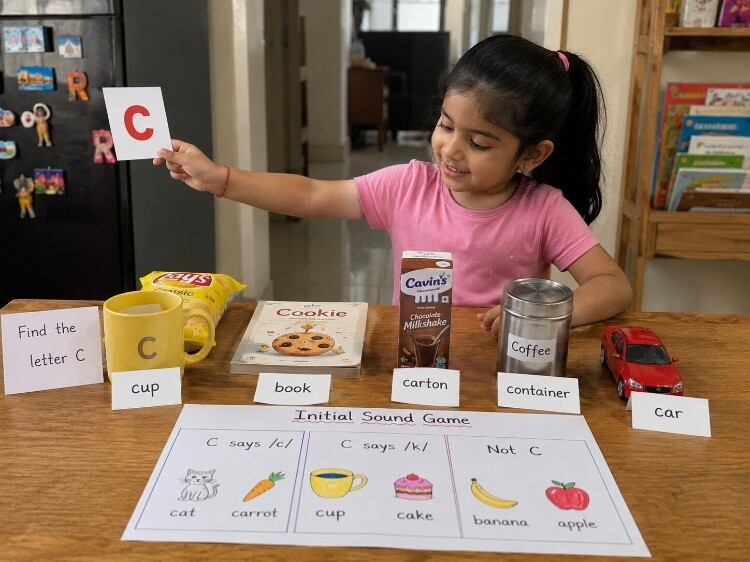
Letter hunts and sound games
Finding the day's letter on packets, signs, and books; initial-sound games continuing from the preschool years.
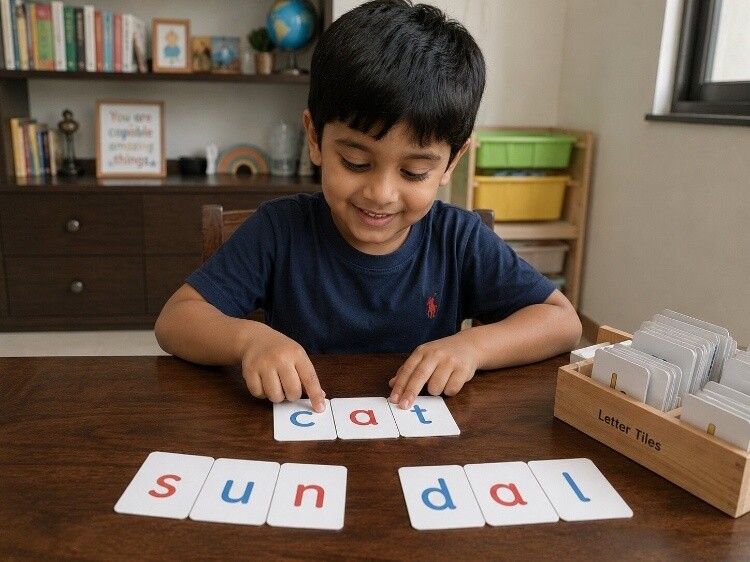
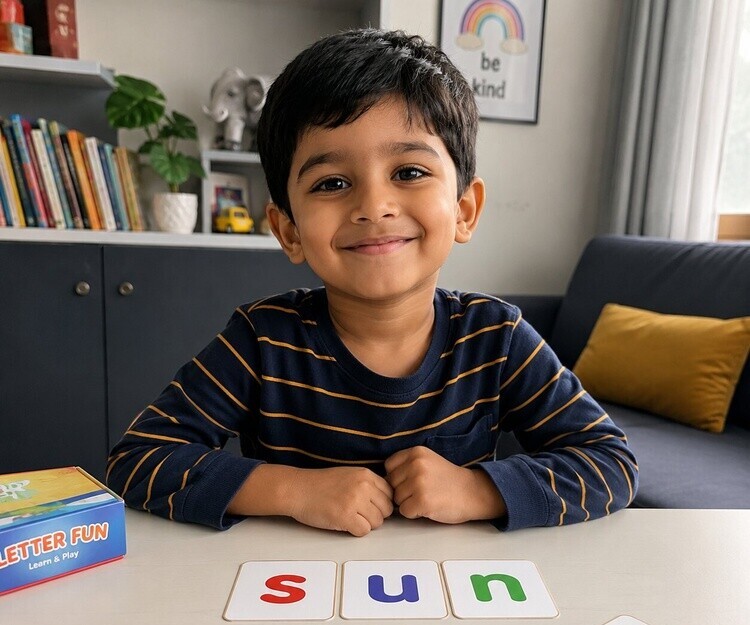
Word building with letter tiles or cards
Simple three-letter word construction (cat, sun, dal) as puzzle play.
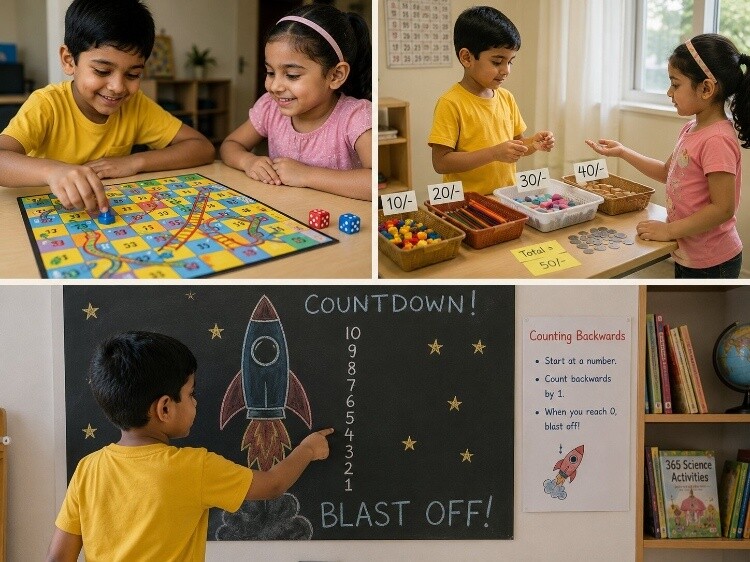
Counting and number games extended
Board games with two dice, simple shop math with real coins, counting backwards as a rocket-launch game.
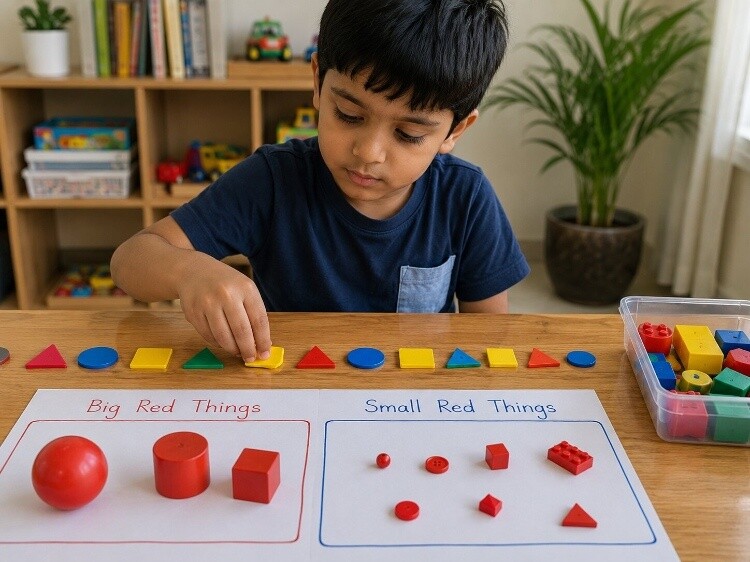
Pattern and sorting complexity
Longer patterns, sorting by two attributes (big red things versus small red things).
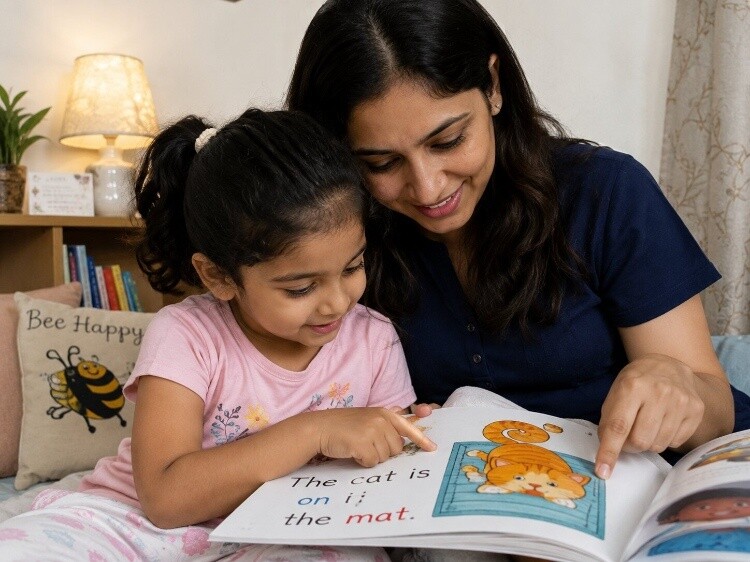
Reading together, roles evolving
They "read" familiar books and known sight words; you read the rest — shared reading as the bridge to independence.
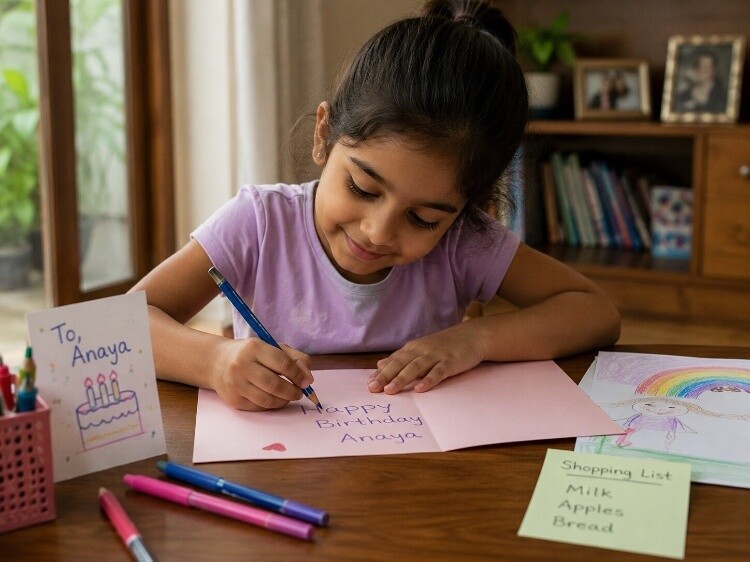
Writing with purpose
Their name on birthday cards, labels for their drawings, a shopping list item — writing as useful, not worksheet.
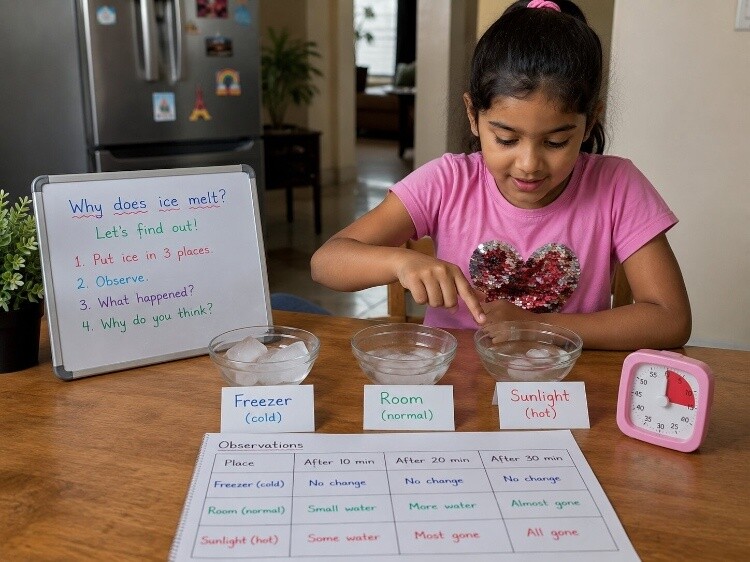
Science-question following
"Why does ice melt?" answered with the freezer experiment, not just words — the question-to-investigation habit.
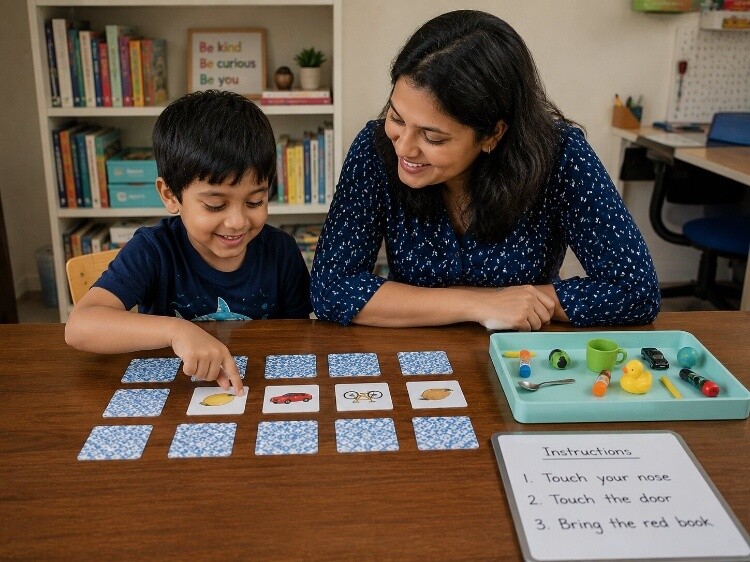
Memory and attention games
Card matching upgraded, "what's missing?" trays, instruction chains ("touch your nose, then the door, then bring the red book").
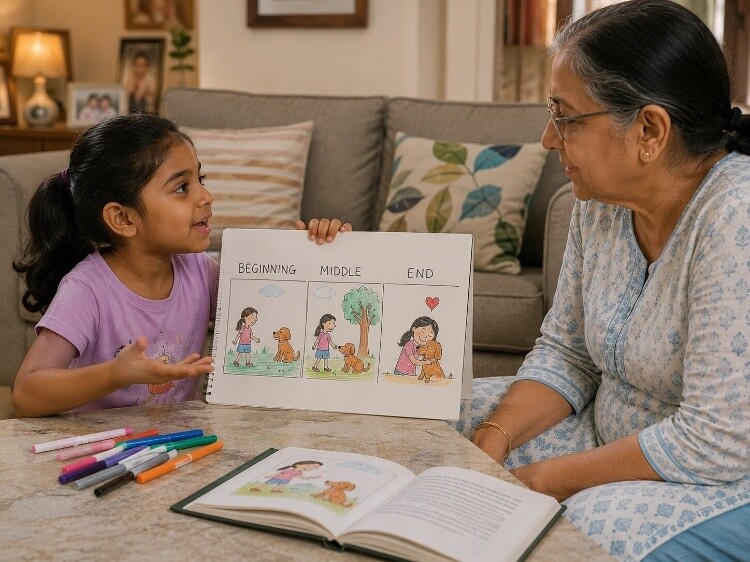
Story sequencing and retelling
Drawing the beginning-middle-end of a heard story; retelling to a grandparent.
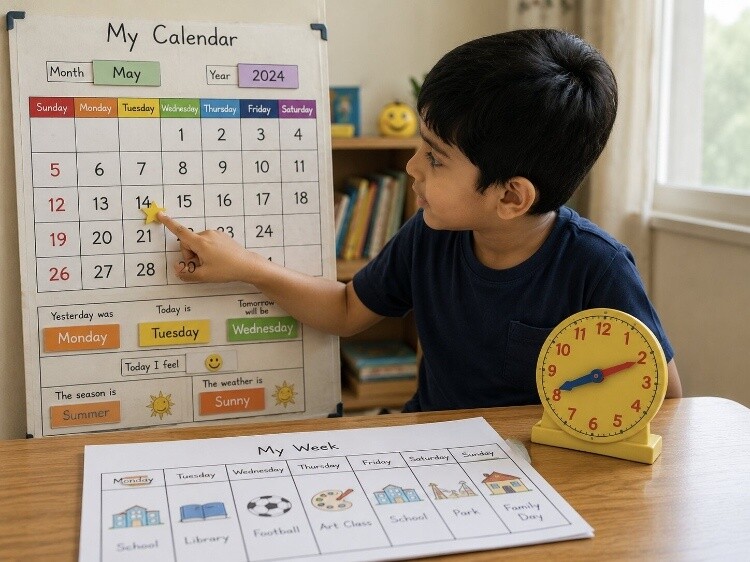
Calendar and time talk
Days of the week through the school rhythm, "yesterday/today/tomorrow" — time concepts via lived schedule.
The homework attitude foundation
Kindergarten homework, where it exists, is habit-building more than content: same time, same spot, parent nearby but not hovering, done-is-done. The tone set now — calm, brief, low-stakes — is the tone that either prevents or seeds the later homework battles.
Protecting play amid the academic ramp
Indian kindergartens vary enormously in academic push; where the school pushes hard, home balances with play, and where school is play-based, light home reinforcement suffices. The kindergartner's developmental needs — movement, pretend play, social time — didn't vanish when the uniform arrived; the afternoon should still look mostly like childhood.