
 Summer Camp
 Reading Writing
 Book Club
 Calligraphy
 Creative Writing
 English Speaking
 Handwriting
 Library
 Phonics
 Story Telling
 Art and Craft
 Clay Moulding
 Drawing
 Painting
 Pottery
 Sketching
 Drama Theatre
 Personality Development
 Public Speaking
 Languages
 Arabic
 Chinese
 French
 German
 Hindi
Hindi Italian
 Japanese
 Korean
 Persian
 Portuguese
 Russian
 Spanish
 Turkish
 Uzbek
Uzbek Sports and Fitness
 Aerobics
 Athletics
 Badminton
 Basket Ball
 Chess
Chess Cricket
 Football
 Golf
Golf Gymnastics
 Hulahoop
 Karate
 Martial Arts
 Pickleball
 Rugby
Rugby Skating
 Swimming
 Taekwondo
 Tennis
 Volleyball
 Yoga
Yoga Zumba
Zumba Tuition Classes
 Accounts
 Biology
 Business Studies
 CBSE
CBSE Chemistry
 Commerce
 Economics
 Homework Classes
 IB Board
 IGCSE
IGCSE Mathematics
 Physics
 Psychology
 Science
 Social Studies
 Vedic Maths
 Dance and Music
 Ballet
 Bhangra
 Bharatnatyam
 Bollywood Dance
 Casio
Casio Dandiya and Garba
 Drums
Drums Flute
Flute Guitar
 Harmonium
 Hip Hop
 Jazz
Jazz Kathak
 Keyboard
 Piano
Piano Salsa
Salsa Shlokas
 Sitar
Sitar Tabla
Tabla Ukulele
 Violin
 Vocal
Vocal Play School
 STEM
STEM
 Abacus
 App Development
 Artificial intelligence
 Basic Computer Courses
 Canva
Canva Coding
 Graphic Design
 Lego
Lego Python
 Robotics
 Rubiks Cube
 Scrabble
 Scratch
 Website Development
 Winter Camp
 Workshops
 Diwali Workshop
 Easter
 Ganesh Mahotsav
 Guru Nanak Jayanti Workshop
 Holi
Holi Independence day workshop
 Janmashtami Workshop
 Mothers day
 Navratri Workshops
 Raksha Bandhan workshop
 Ramayana Workshop
 Spring Camp
 Valentines Day Workshops
 Festive
 Daycare
 Cooking and Food
 Spring Camp
 Contests and Competitions
 Special abled
 Republic Day Workshops
 Mela
Mela
 Mela
Mela Cognitive Development
 Mother-Toddler Program
-Jul-03-2026-06-59-25-1926-AM.webp?width=30&height=30&name=Smart_20Skills_20(2)-Jul-03-2026-06-59-25-1926-AM.webp) Smart Skills
Smart Skills
 Financial Literacy
 Mental Wellbeing
 Meditation
 Reiki
Reiki





Toddler nutrition runs on variety offered calmly across the week, not perfection at any single meal. These Indian home-food meal ideas work with toddler appetites, family cooking, and the reality of refusal.
Toddler eating is erratic by design — growth slows after the first year, appetite follows, and the same child who devoured lunch yesterday rejects it today. Meal planning for this age is about calm, repeated offering of good options, trusting the week's average over any day's tally.
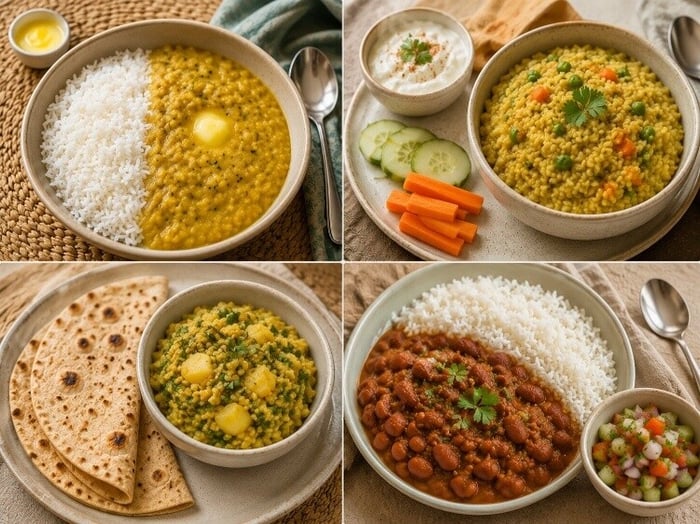
Lunch and dinner ideas
Dal-chawal with ghee — the toddler staple for good reason: complete protein, soft texture, familiar taste; khichdi in rotating variations (moong, vegetable, mild masala); soft roti torn into pieces with a mashable sabzi (lauki, pumpkin, aloo-methi with the methi finely chopped); curd rice with a gentle tempering; paneer bhurji or soft paneer cubes with roti; rajma or chole, slightly mashed, with rice — introducing the legume habit early.
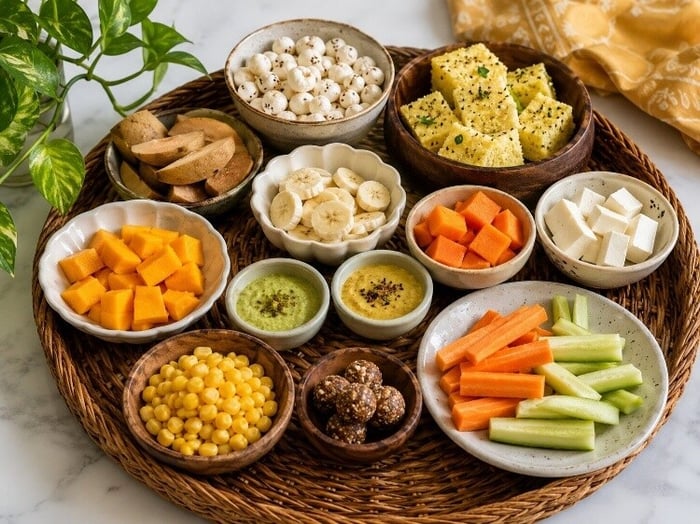
Snack ideas that aren't packets
Fruit pieces (the seasonal rotation — chikoo, banana, mango, papaya); roasted makhana; homemade dhokla; boiled sweet corn; cheese cubes; vegetable sticks (soft-steamed at this age) with dal-based dips; small ladoos of dates and nuts ground fine (whole nuts remain off-limits for choking risk).
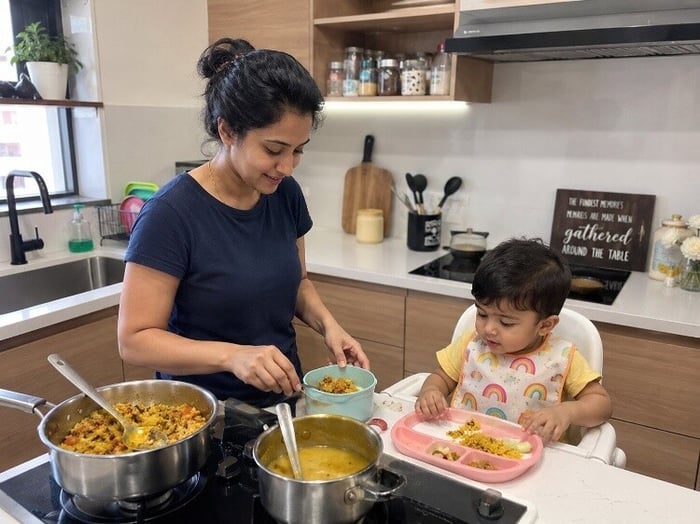
Making family food toddler-ready
The one-pot family principle: cook the family meal, pull the toddler's portion before final salt and chilli, mash or chop to safe texture. Separate toddler cooking exhausts parents and delays the child's integration into family eating — the goal is the family thali, adapted, not a parallel menu.
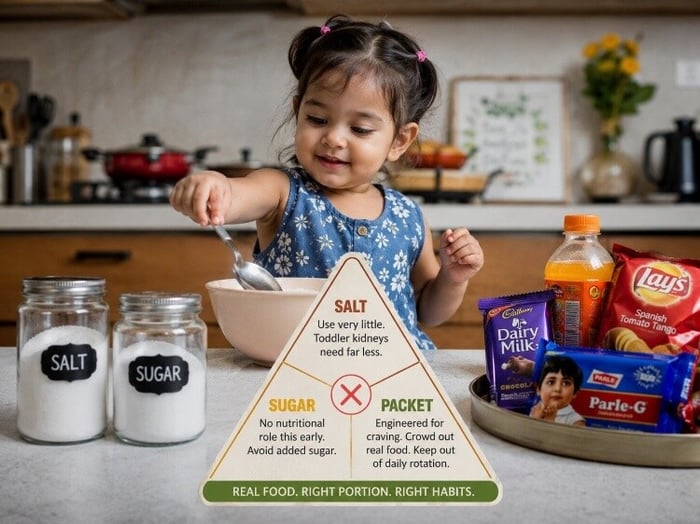
The salt, sugar, and packet triangle
Toddler kidneys want far less salt than Indian adult food carries — the pull-before-seasoning habit handles it. Added sugar has no nutritional role this early, and taste preferences set now persist. Packaged snacks engineered for craving (chips, biscuits, sugary drinks) crowd out real food fastest — the practical policy is absence from the daily rotation rather than contested rationing.
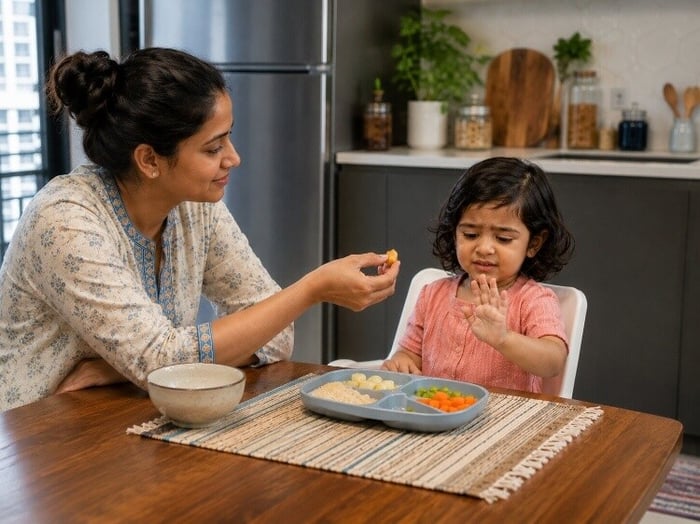
Refusal, growth, and the long game
A rejected food needs ten to fifteen calm re-offerings across weeks before acceptance — rejection is data collection, not verdict. Appetite swings with growth spurts, teething, and mysterious toddler weather. The division of responsibility holds: parents decide what and when; the toddler decides whether and how much. Held consistently, it prevents the feeding battles that pressure creates. Growth tracked at paediatric visits — not daily intake anxiety — is the real health signal.
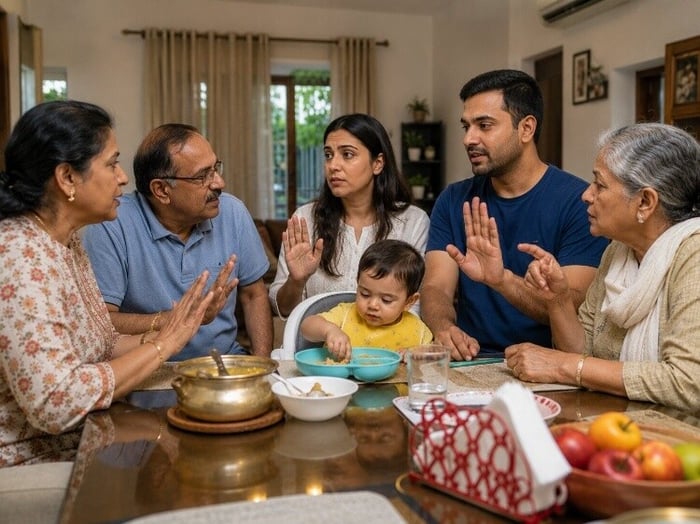
The joint-family food committee
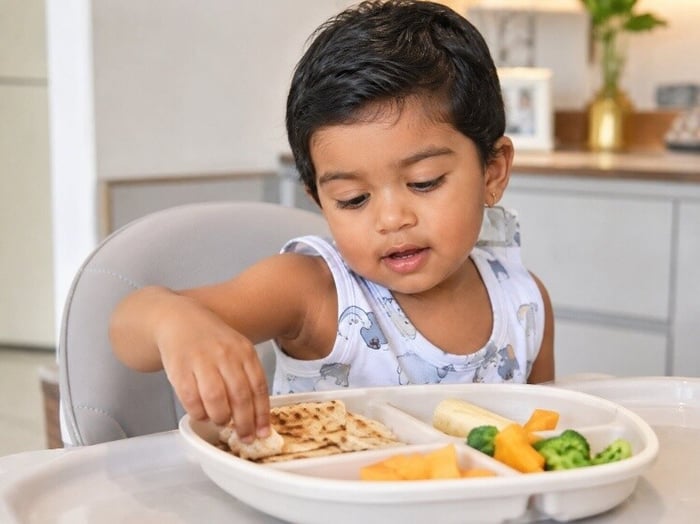
Toddler meals in extended families attract opinions: more ghee, more sugar, "he's too thin," spoon-feeding for speed. The two positions worth holding gently but firmly: self-feeding continues despite the mess (it's development, not indiscipline), and the low-salt-low-sugar line holds (it's medical guidance, not food criticism). Everything else can flex.