
 Reading Writing
 Book Club
 Calligraphy
 Creative Writing
 English Speaking
 Handwriting
 Library
 Phonics
 Story Telling
 Art and Craft
 Clay Moulding
 Drawing
 Painting
 Pottery
 Sketching
 Drama Theatre
 Personality Development
 Public Speaking
 Languages
 Arabic
 Chinese
 French
 German
 Hindi
Hindi Italian
 Japanese
 Korean
 Persian
 Portuguese
 Russian
 Spanish
 Turkish
 Uzbek
Uzbek Sports and Fitness
 Aerobics
 Athletics
 Badminton
 Basket Ball
 Chess
Chess Cricket
 Football
 Golf
Golf Gymnastics
 Hulahoop
 Karate
 Martial Arts
 Pickleball
 Rugby
Rugby Skating
 Swimming
 Taekwondo
 Tennis
 Volleyball
 Yoga
Yoga Zumba
Zumba Tuition Classes
 Accounts
 Biology
 Business Studies
 CBSE
CBSE Chemistry
 Commerce
 Economics
 Homework Classes
 IB Board
 IGCSE
IGCSE Mathematics
 Physics
 Psychology
 Science
 Social Studies
 Vedic Maths
 Dance and Music
 Ballet
 Bhangra
 Bharatnatyam
 Bollywood Dance
 Casio
Casio Dandiya and Garba
 Drums
Drums Flute
Flute Guitar
 Harmonium
 Hip Hop
 Jazz
Jazz Kathak
 Keyboard
 Piano
Piano Salsa
Salsa Shlokas
 Sitar
Sitar Tabla
Tabla Ukulele
 Violin
 Vocal
Vocal Play School
 STEM
STEM
 Abacus
 App Development
 Artificial intelligence
 Basic Computer Courses
 Canva
Canva Coding
 Graphic Design
 Lego
Lego Python
 Robotics
 Rubiks Cube
 Scrabble
 Scratch
 Website Development
 Workshops
 Diwali Workshops
 Guru Nanak Jayanti Workshop
 Halloween
 Independence day workshop
 Navratri Workshops
 Raksha Bandhan workshop
 Ramayana Workshop
 Spring Camp
 Valentines Day Workshops
 Festive
 Daycare
 Cooking and Food
 Spring Camp
 Contests and Competitions
 Special abled
 Republic Day Workshops
 Mela
Mela
 Mela
Mela Cognitive Development
 Mother-Toddler Program
 Music
Music
 Dance
Dance
-Jul-03-2026-06-59-25-1926-AM.webp?width=30&height=30&name=Smart_20Skills_20(2)-Jul-03-2026-06-59-25-1926-AM.webp) Smart Skills
Smart Skills
 Financial Literacy
 Mental Wellbeing
 Meditation
 Reiki
Reiki




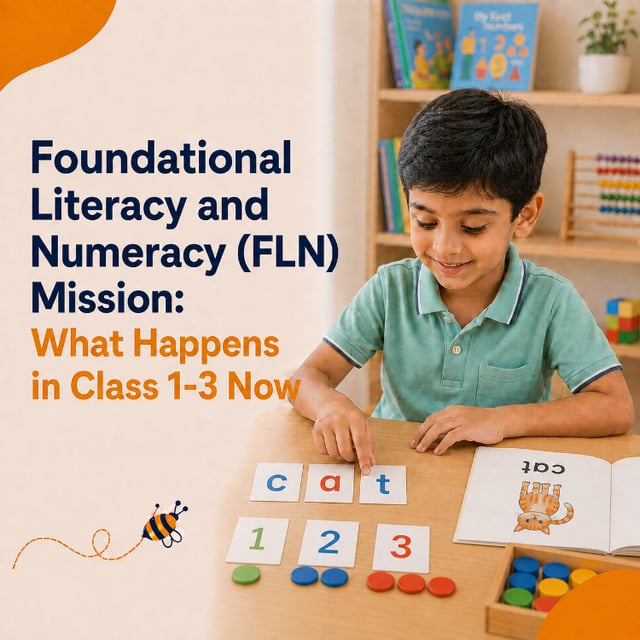
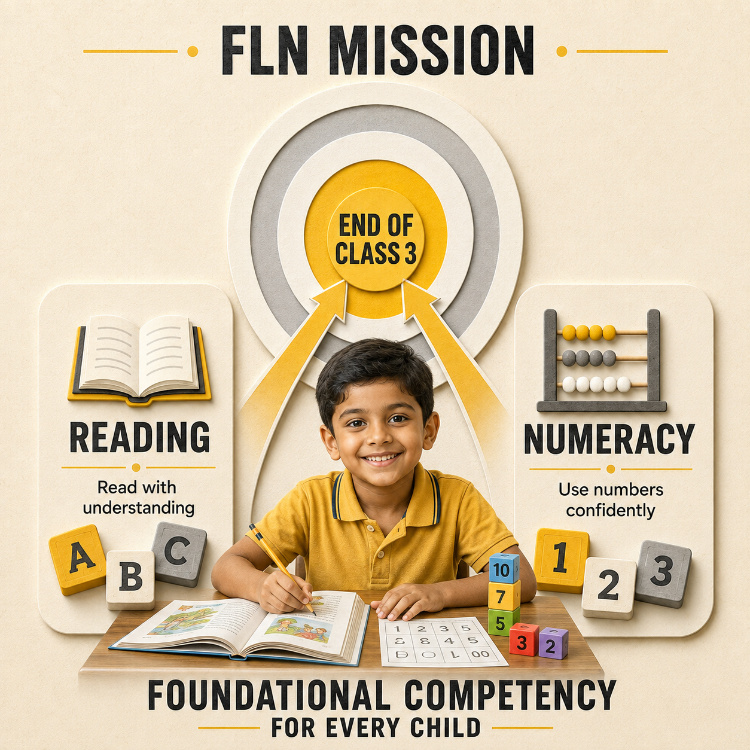
The FLN Mission (NIPUN Bharat) sets a national target for every child to achieve basic reading and math competency by end of Class 3. Here's what this genuinely well-designed initiative means for your child's classroom right now.
Among NEP's various initiatives, the Foundational Literacy and Numeracy Mission — implemented as NIPUN Bharat — is arguably the most directly consequential for a Class 1-3 parent, since it sets a specific, measurable target for exactly the skills your child is building right now.
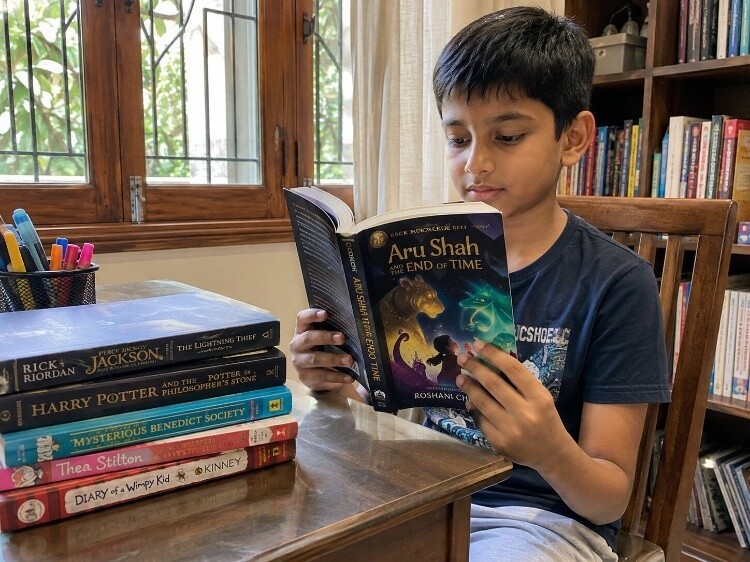
What FLN Mission / NIPUN Bharat actually targets
The stated national goal: every child achieves foundational literacy (basic reading fluency and comprehension) and numeracy (basic number sense and operations) by the end of Class 3, by 2026-27 — a specific, time-bound target rather than vague policy language, reflecting genuine concern about learning gaps that pre-date NEP but that the pandemic significantly worsened.
Why this specific target matters
Extensive research, including India-specific data (ASER survey findings among others), has consistently shown that a meaningful percentage of children in Indian schools reach Class 5 without basic Class 2-level reading or arithmetic competency — a foundational gap that compounds through later schooling, since every subsequent subject assumes reading fluency as a baseline tool. FLN Mission treats this specific gap as the highest-priority fixable problem in Indian primary education.
What this looks like in genuinely FLN-aligned classrooms
Structured, systematic phonics-based reading instruction (rather than assuming reading "just happens" through exposure), regular, low-stakes assessment specifically tracking reading and numeracy progress (distinct from broader subject exams), significant instructional time protected specifically for foundational skill-building rather than these skills competing with other subject content, and increasingly, specific teacher training focused on foundational-stage pedagogy rather than assuming any trained teacher can effectively teach early reading.
What parents can reasonably expect and ask about
Your Class 1-3 child's school should be able to articulate where your specific child stands on foundational reading and numeracy benchmarks, in concrete terms — this is a legitimate, specific question to raise at parent-teacher meetings, distinct from general "how is my child doing" conversations. If your child's school can't provide specific answers about foundational skill tracking, that's worth noting as a gap in their FLN alignment regardless of general reputation.
How this connects to what you can do at home
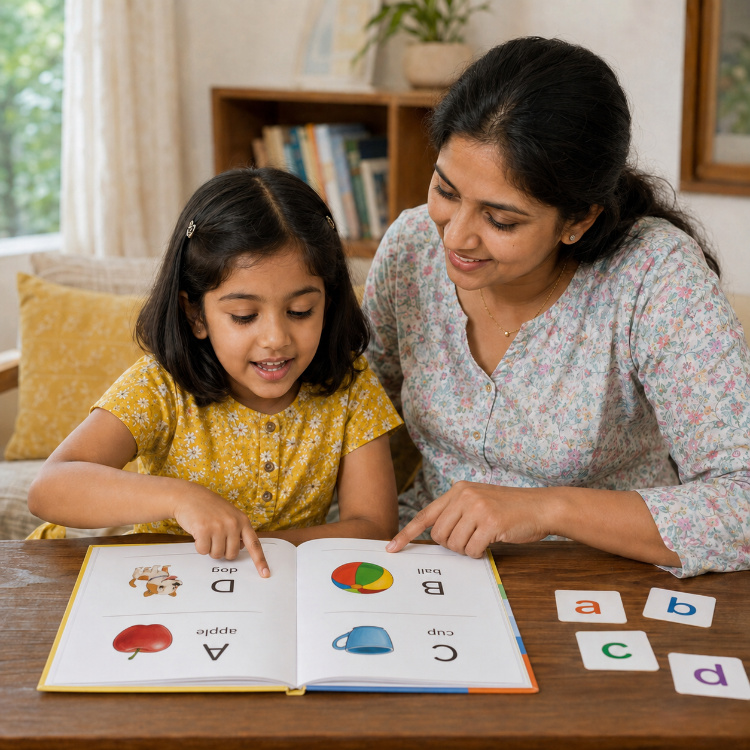
FLN Mission's core insight — that reading and basic numeracy are specific, buildable skills requiring structured practice, not simply outcomes of general "good schooling" — supports exactly the kind of deliberate home reading and math activities covered elsewhere in this content series. A child getting strong foundational support at school plus consistent, low-pressure reading and counting practice at home is genuinely well-positioned against this specific national benchmark, regardless of any individual school's implementation quality.
The reassurance for a child who's slightly behind benchmark
FLN targets are population-level national goals, not individual deadlines — a specific child progressing at their own pace, even if slightly behind a Class 3 benchmark, isn't failing a personal test; the mission's purpose is systemic improvement and early identification of children needing additional support, which is a genuinely positive development for catching gaps early rather than a source of individual pressure.