
 Summer Camp
 Reading Writing
 Book Club
 Calligraphy
 Creative Writing
 English Speaking
 Handwriting
 Library
 Phonics
 Story Telling
 Art and Craft
 Clay Moulding
 Drawing
 Painting
 Pottery
 Sketching
 Drama Theatre
 Personality Development
 Public Speaking
 Languages
 Arabic
 Chinese
 French
 German
 Hindi
Hindi Italian
 Japanese
 Korean
 Persian
 Portuguese
 Russian
 Spanish
 Turkish
 Uzbek
Uzbek Sports and Fitness
 Aerobics
 Athletics
 Badminton
 Basket Ball
 Chess
Chess Cricket
 Football
 Golf
Golf Gymnastics
 Hulahoop
 Karate
 Martial Arts
 Pickleball
 Rugby
Rugby Skating
 Swimming
 Taekwondo
 Tennis
 Volleyball
 Yoga
Yoga Zumba
Zumba Tuition Classes
 Accounts
 Biology
 Business Studies
 CBSE
CBSE Chemistry
 Commerce
 Economics
 Homework Classes
 IB Board
 IGCSE
IGCSE Mathematics
 Physics
 Psychology
 Science
 Social Studies
 Vedic Maths
 Dance and Music
 Ballet
 Bhangra
 Bharatnatyam
 Bollywood Dance
 Casio
Casio Dandiya and Garba
 Drums
Drums Flute
Flute Guitar
 Harmonium
 Hip Hop
 Jazz
Jazz Kathak
 Keyboard
 Piano
Piano Salsa
Salsa Shlokas
 Sitar
Sitar Tabla
Tabla Ukulele
 Violin
 Vocal
Vocal Play School
 STEM
STEM
 Abacus
 App Development
 Artificial intelligence
 Basic Computer Courses
 Canva
Canva Coding
 Graphic Design
 Lego
Lego Python
 Robotics
 Rubiks Cube
 Scrabble
 Scratch
 Website Development
 Winter Camp
 Workshops
 Diwali Workshop
 Easter
 Ganesh Mahotsav
 Guru Nanak Jayanti Workshop
 Holi
Holi Independence day workshop
 Janmashtami Workshop
 Mothers day
 Navratri Workshops
 Raksha Bandhan workshop
 Ramayana Workshop
 Spring Camp
 Valentines Day Workshops
 Festive
 Daycare
 Cooking and Food
 Spring Camp
 Contests and Competitions
 Special abled
 Republic Day Workshops
 Mela
Mela
 Mela
Mela Cognitive Development
 Mother-Toddler Program
-Jul-03-2026-06-59-25-1926-AM.webp?width=30&height=30&name=Smart_20Skills_20(2)-Jul-03-2026-06-59-25-1926-AM.webp) Smart Skills
Smart Skills
 Financial Literacy
 Mental Wellbeing
 Meditation
 Reiki
Reiki



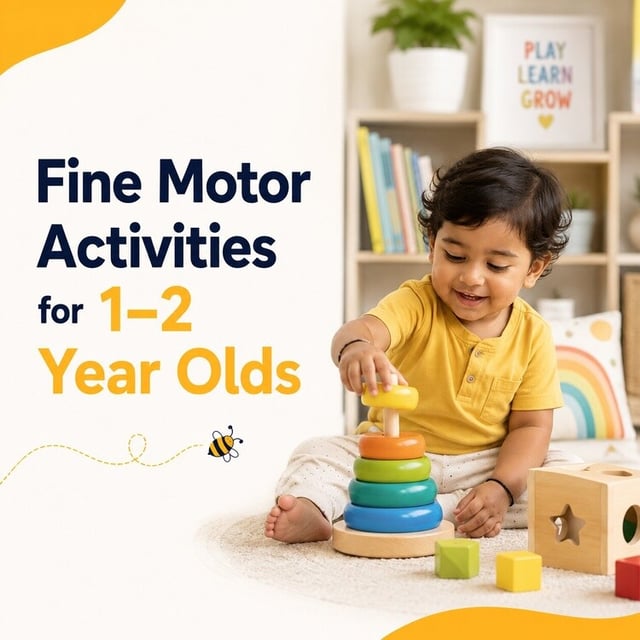
Between 1 and 2, hands transform from swiping tools into precise instruments — pincer grasp, deliberate release, early tool use. These activities support that transformation through everyday play.
The second year is when hand skills leap forward: the raking grab becomes a precise thumb-finger pincer, deliberate dropping becomes placing, and hands start working together. These activities meet that development where it is.
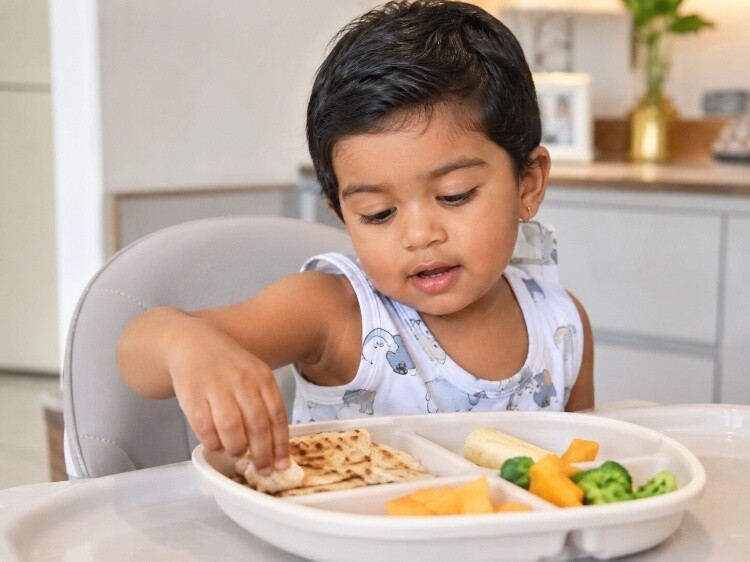
Finger foods at every meal
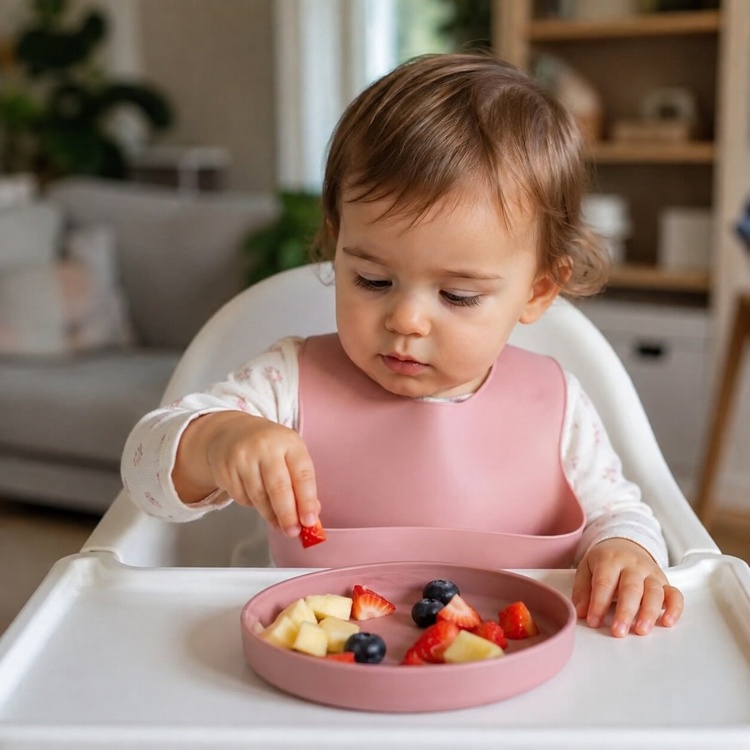
Self-feeding is the most frequent, motivated fine motor practice available. Small pieces of roti, cut fruit, steamed vegetables — every pincer pickup is a rep.
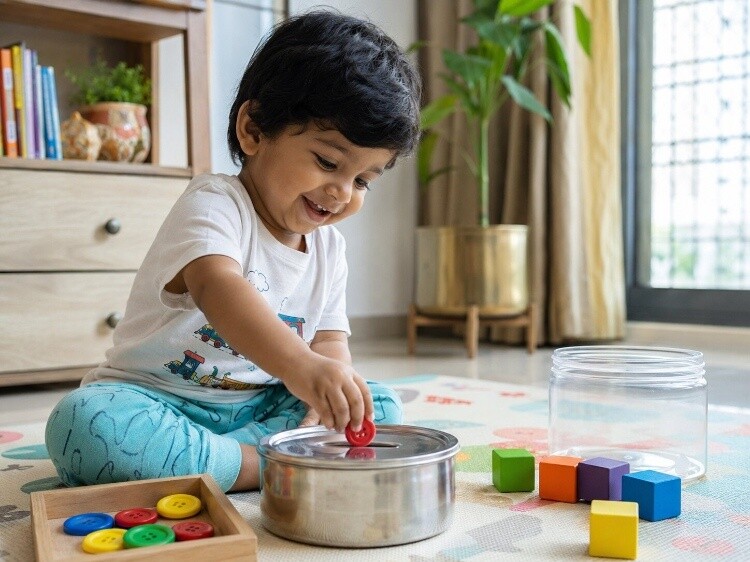
Posting games
Dropping large buttons into a dabba slot, or blocks into a wide-mouthed container. The satisfying "clink" makes this endlessly repeatable.
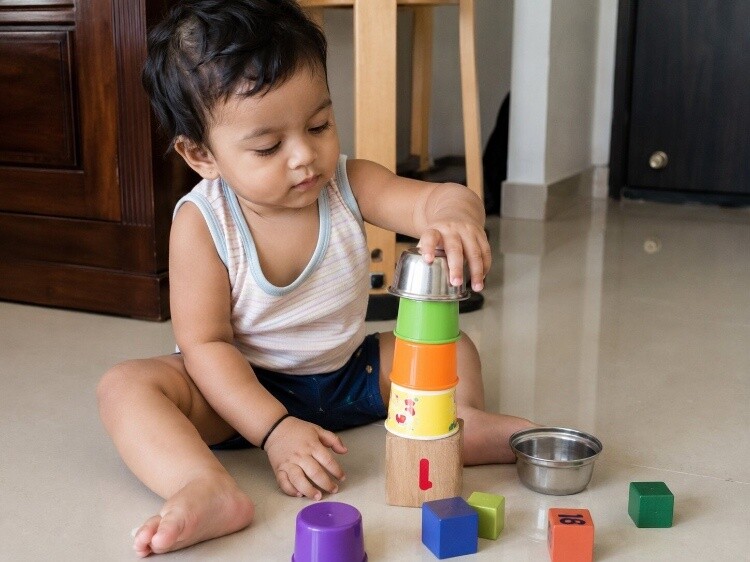
Stacking — cups, blocks, katoris
Placing one object on another requires controlled release, a genuinely difficult skill at this age.
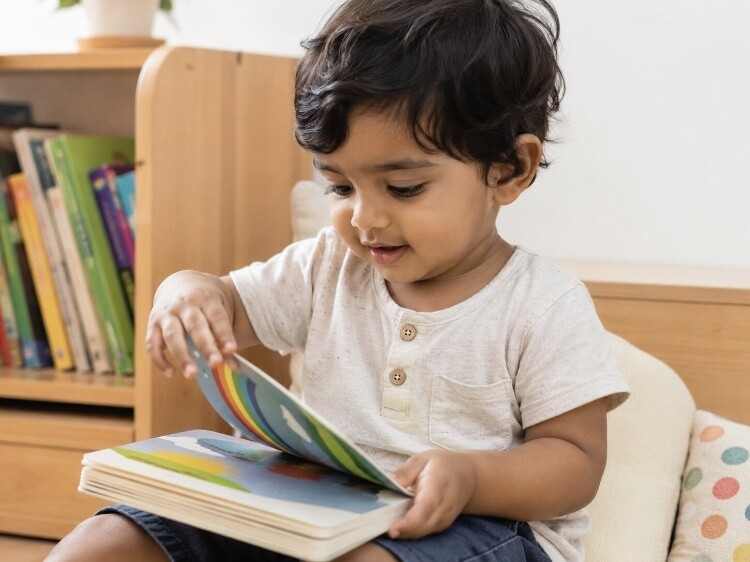
Page turning with board books
Thick pages designed for exactly this developing skill.
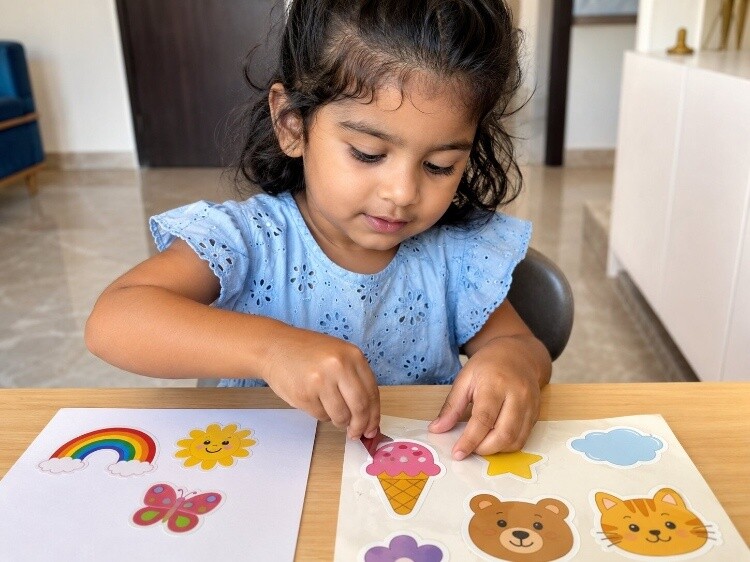
Sticker peeling (large stickers)
Genuinely challenging pincer work with high motivation.
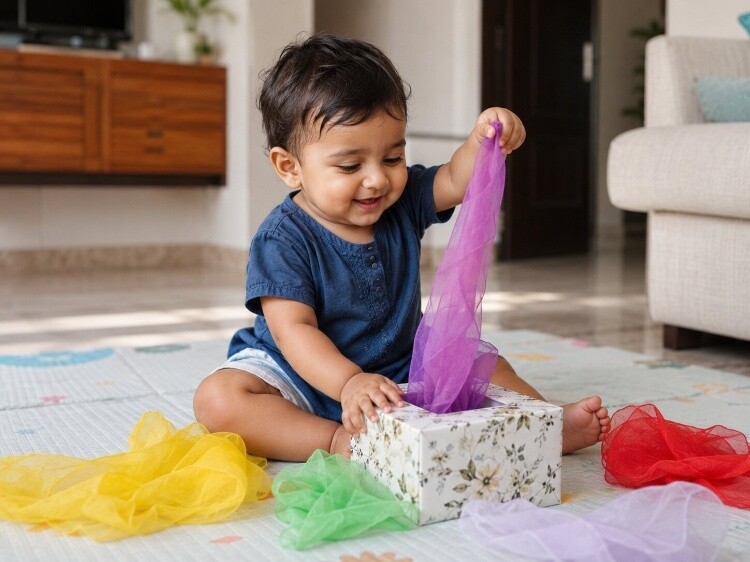
Pulling scarves from containers
The classic tissue-box game — repetitive pulling builds grip and bilateral coordination.
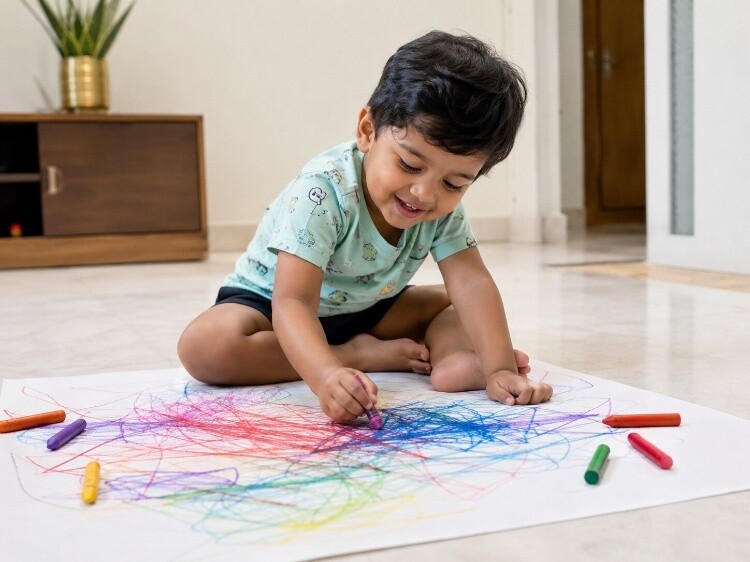
Large crayon scribbling
Chunky crayons on big paper; the scribble is the point, not any result.
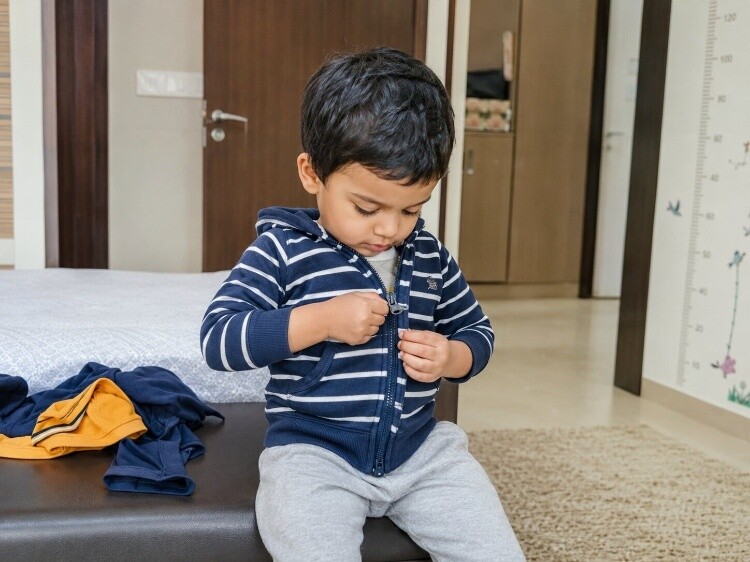
Velcro and zips on their own clothes
Early self-dressing attempts double as fine motor practice.
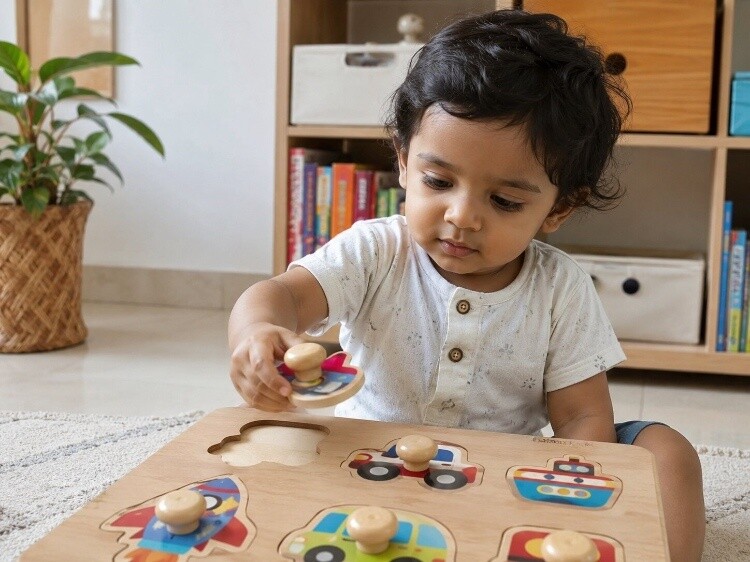
Simple knob puzzles
Puzzles with large knobs for grasping suit exactly this stage.
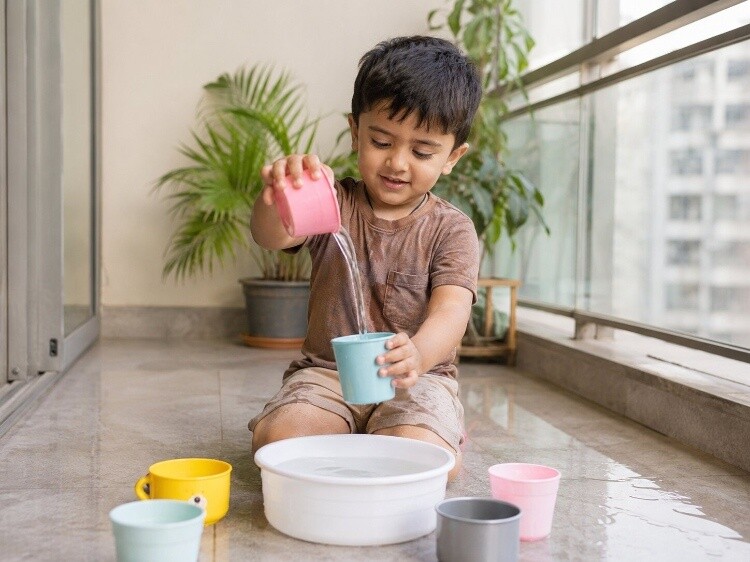
Water pouring with small cups
Bath time or balcony pouring builds wrist control and bilateral coordination.
What not to worry about at this stage
Hand preference isn't established yet — switching hands is normal well past age 2. Messy, imprecise attempts are the practice itself. And there's no writing readiness agenda at this age despite what some preschool marketing implies; the foundation for writing at 5 is built through play at 1-2, not through early pencil work.
The everyday-life advantage
The highest-frequency fine motor practice happens outside designated playtime: self-feeding, helping pull off socks, holding their own small cup. Involving a toddler in these daily moments — slower and messier though it makes everything — provides more total practice than any activity session.
Looking ahead to toddler classes
From around age 2, structured toddler programs — art and sensory classes, music and movement, playgroups — begin offering fine motor development within social settings. No urgency, but for parents starting to explore, knowing the local options helps.