
 Summer Camp
 Reading Writing
 Book Club
 Calligraphy
 Creative Writing
 English Speaking
 Handwriting
 Library
 Phonics
 Story Telling
 Art and Craft
 Clay Moulding
 Drawing
 Painting
 Pottery
 Sketching
 Drama Theatre
 Personality Development
 Public Speaking
 Languages
 Arabic
 Chinese
 French
 German
 Hindi
Hindi Italian
 Japanese
 Korean
 Persian
 Portuguese
 Russian
 Spanish
 Turkish
 Uzbek
Uzbek Sports and Fitness
 Aerobics
 Athletics
 Badminton
 Basket Ball
 Chess
Chess Cricket
 Football
 Golf
Golf Gymnastics
 Hulahoop
 Karate
 Martial Arts
 Pickleball
 Rugby
Rugby Skating
 Swimming
 Taekwondo
 Tennis
 Volleyball
 Yoga
Yoga Zumba
Zumba Tuition Classes
 Accounts
 Biology
 Business Studies
 CBSE
CBSE Chemistry
 Commerce
 Economics
 Homework Classes
 IB Board
 IGCSE
IGCSE Mathematics
 Physics
 Psychology
 Science
 Social Studies
 Vedic Maths
 Dance and Music
 Ballet
 Bhangra
 Bharatnatyam
 Bollywood Dance
 Casio
Casio Dandiya and Garba
 Drums
Drums Flute
Flute Guitar
 Harmonium
 Hip Hop
 Jazz
Jazz Kathak
 Keyboard
 Piano
Piano Salsa
Salsa Shlokas
 Sitar
Sitar Tabla
Tabla Ukulele
 Violin
 Vocal
Vocal Play School
 STEM
STEM
 Abacus
 App Development
 Artificial intelligence
 Basic Computer Courses
 Canva
Canva Coding
 Graphic Design
 Lego
Lego Python
 Robotics
 Rubiks Cube
 Scrabble
 Scratch
 Website Development
 Winter Camp
 Workshops
 Diwali Workshop
 Easter
 Ganesh Mahotsav
 Guru Nanak Jayanti Workshop
 Holi
Holi Independence day workshop
 Janmashtami Workshop
 Mothers day
 Navratri Workshops
 Raksha Bandhan workshop
 Ramayana Workshop
 Spring Camp
 Valentines Day Workshops
 Festive
 Daycare
 Cooking and Food
 Spring Camp
 Contests and Competitions
 Special abled
 Republic Day Workshops
 Mela
Mela
 Mela
Mela Cognitive Development
 Mother-Toddler Program
-Jul-03-2026-06-59-25-1926-AM.webp?width=30&height=30&name=Smart_20Skills_20(2)-Jul-03-2026-06-59-25-1926-AM.webp) Smart Skills
Smart Skills
 Financial Literacy
 Mental Wellbeing
 Meditation
 Reiki
Reiki





The kindergarten routine balances a genuinely tiring school day against the childhood still needed around it — sleep protected, decompression respected, play preserved, and the whole family aligned.
Kindergarten restructures the day around a genuinely demanding block: hours of social performance, instruction-following, and self-management. The routine's job is recovery and balance around it.
The non-negotiables
Sleep: 10-12 hours against the school alarm — For a 7 AM wake, bedtime lands 7:30-8:30; the school-age sleep debt shows up as morning battles and evening meltdowns before it shows anywhere else. The screen-free pre-sleep hour continues earning its keep.
The morning buffer — Mornings sized with ten spare minutes change the whole day's tone; the bag-and-uniform-ready-the-night-before ritual (with the child participating) buys the buffer.
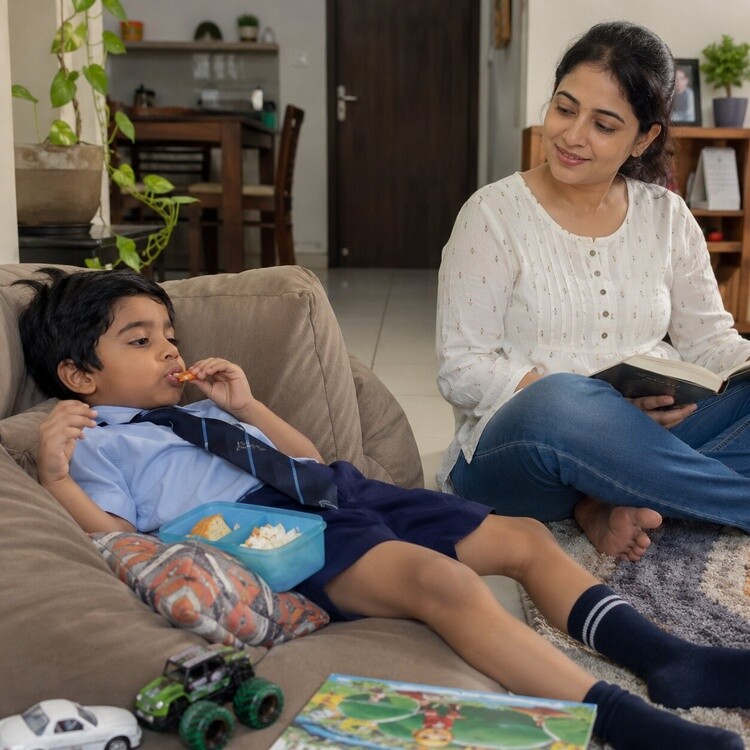
Post-school decompression — The transition home needs a pressure-free landing: snack, space, and no interrogation for thirty-odd minutes. The day's stories surface on their own schedule, usually sideways during play or at bedtime.
Daily outdoor play — The park hour survives the school era as the energy-regulation and friendship infrastructure it is; homework, where it exists, fits around play at this age, not the reverse.
The flexible middle
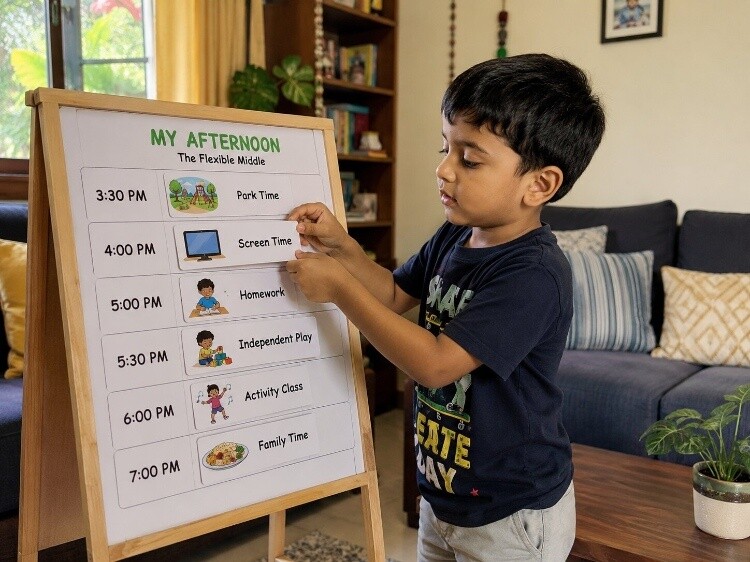
Post-decompression afternoons hold the day's variables — the park block, a bounded screen slot if screens feature, any light homework (brief, same-time, parent-adjacent), independent play, and for many families, an activity class once or twice weekly. The sequencing that works for most: movement before sitting work, screens after outdoor time rather than instead of it.
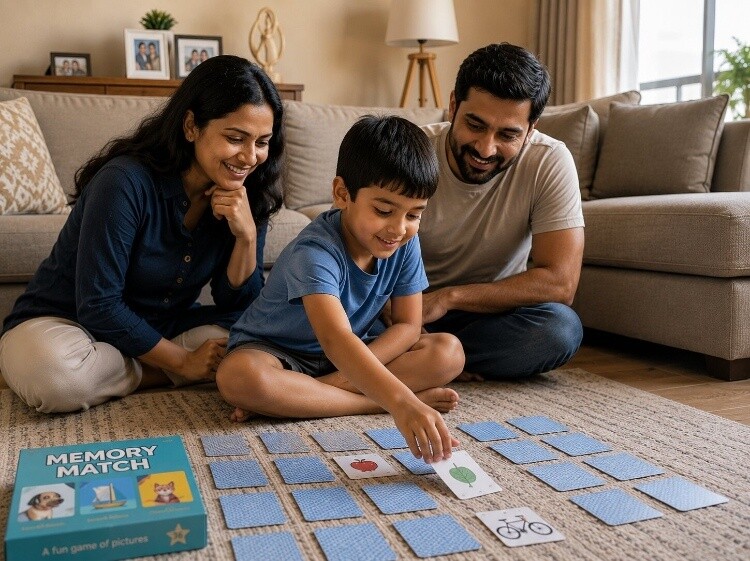
The activity-class question at this age
One, maybe two, weekly structured activities fit a kindergartner's energy budget; the over-scheduled five-year-old shows it in sleep, mood, and play hunger. The selection principle: follow demonstrated interest (the child who dances through the house, the one who kicks everything kickable) over strategic parental portfolios — five is for finding joys, not building resumes.
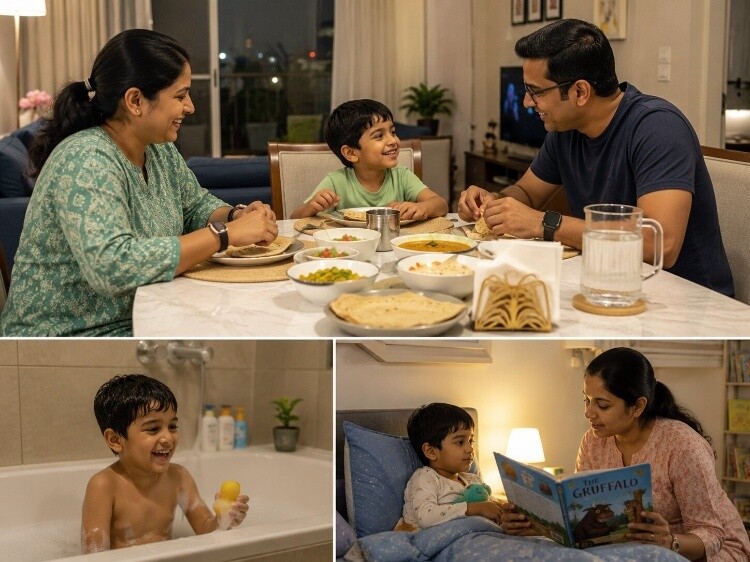
Evening architecture
Dinner with the family where logistics allow (the day's best language-and-connection slot), then the wind-down sequence — bath, books, bed — run at consistent times. The bedtime read remains the day's anchor ritual, now doing double duty as the day's debrief hour.
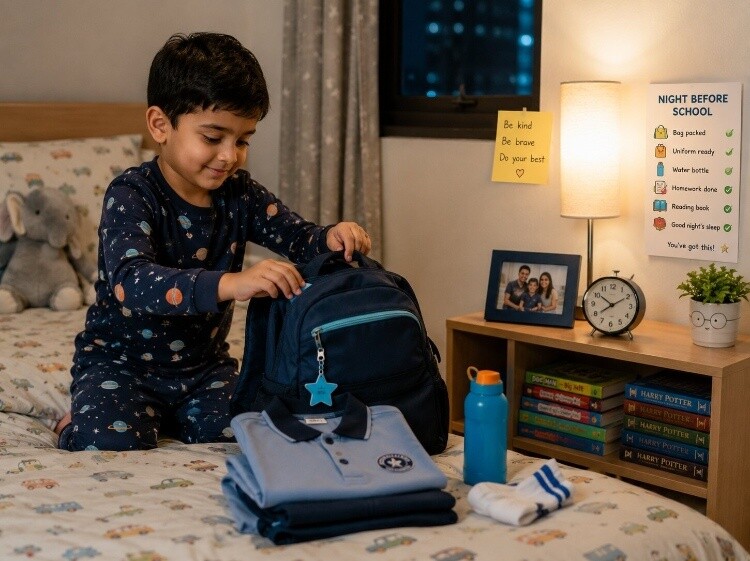
Weekend balance
One anchor activity or outing plus generous unstructured time; sleep anchors held within an hour of weekday times; boredom windows left unrescued for independent play to fill. The weekend that works is the one Monday morning can afford.
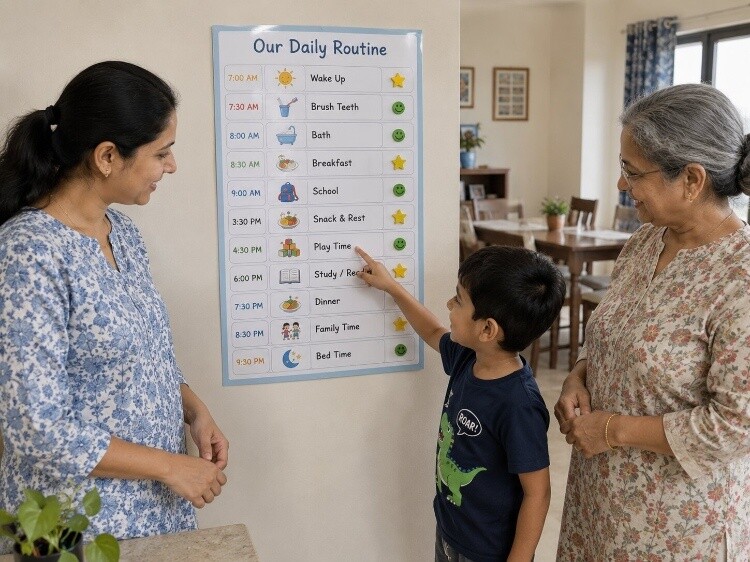
The alignment infrastructure
The routine survives contact with reality only if parents, grandparents, and help run roughly the same rules — the visible routine chart returns, now readable by the child themselves, as the household's shared reference. The child who knows the sequence owns the sequence — and the daily negotiations shrink accordingly.