
 Summer Camp
 Reading Writing
 Book Club
 Calligraphy
 Creative Writing
 English Speaking
 Handwriting
 Library
 Phonics
 Story Telling
 Art and Craft
 Clay Moulding
 Drawing
 Painting
 Pottery
 Sketching
 Drama Theatre
 Personality Development
 Public Speaking
 Languages
 Arabic
 Chinese
 French
 German
 Hindi
Hindi Italian
 Japanese
 Korean
 Persian
 Portuguese
 Russian
 Spanish
 Turkish
 Uzbek
Uzbek Sports and Fitness
 Aerobics
 Athletics
 Badminton
 Basket Ball
 Chess
Chess Cricket
 Football
 Golf
Golf Gymnastics
 Hulahoop
 Karate
 Martial Arts
 Pickleball
 Rugby
Rugby Skating
 Swimming
 Taekwondo
 Tennis
 Volleyball
 Yoga
Yoga Zumba
Zumba Tuition Classes
 Accounts
 Biology
 Business Studies
 CBSE
CBSE Chemistry
 Commerce
 Economics
 Homework Classes
 IB Board
 IGCSE
IGCSE Mathematics
 Physics
 Psychology
 Science
 Social Studies
 Vedic Maths
 Dance and Music
 Ballet
 Bhangra
 Bharatnatyam
 Bollywood Dance
 Casio
Casio Dandiya and Garba
 Drums
Drums Flute
Flute Guitar
 Harmonium
 Hip Hop
 Jazz
Jazz Kathak
 Keyboard
 Piano
Piano Salsa
Salsa Shlokas
 Sitar
Sitar Tabla
Tabla Ukulele
 Violin
 Vocal
Vocal Play School
 STEM
STEM
 Abacus
 App Development
 Artificial intelligence
 Basic Computer Courses
 Canva
Canva Coding
 Graphic Design
 Lego
Lego Python
 Robotics
 Rubiks Cube
 Scrabble
 Scratch
 Website Development
 Winter Camp
 Workshops
 Diwali Workshop
 Easter
 Ganesh Mahotsav
 Guru Nanak Jayanti Workshop
 Holi
Holi Independence day workshop
 Janmashtami Workshop
 Mothers day
 Navratri Workshops
 Raksha Bandhan workshop
 Ramayana Workshop
 Spring Camp
 Valentines Day Workshops
 Festive
 Daycare
 Cooking and Food
 Spring Camp
 Contests and Competitions
 Special abled
 Republic Day Workshops
 Mela
Mela
 Mela
Mela Cognitive Development
 Mother-Toddler Program
-Jul-03-2026-06-59-25-1926-AM.webp?width=30&height=30&name=Smart_20Skills_20(2)-Jul-03-2026-06-59-25-1926-AM.webp) Smart Skills
Smart Skills
 Financial Literacy
 Mental Wellbeing
 Meditation
 Reiki
Reiki

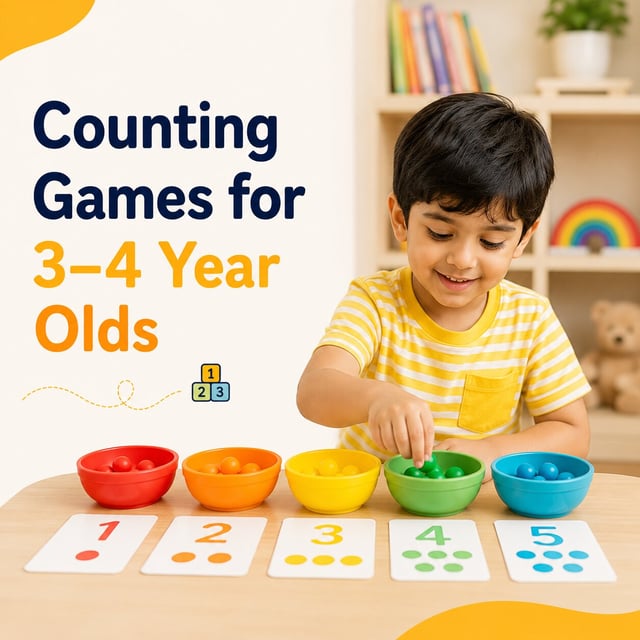
Real math at 3-4 is counting things, comparing amounts, and spotting patterns — built through games with objects, not number recitation. These games build number sense that worksheets can't.
Reciting one-to-twenty is performance; knowing that four rotis means this many is math. The difference — one-to-one correspondence, quantity sense — is built by counting real things in real moments.
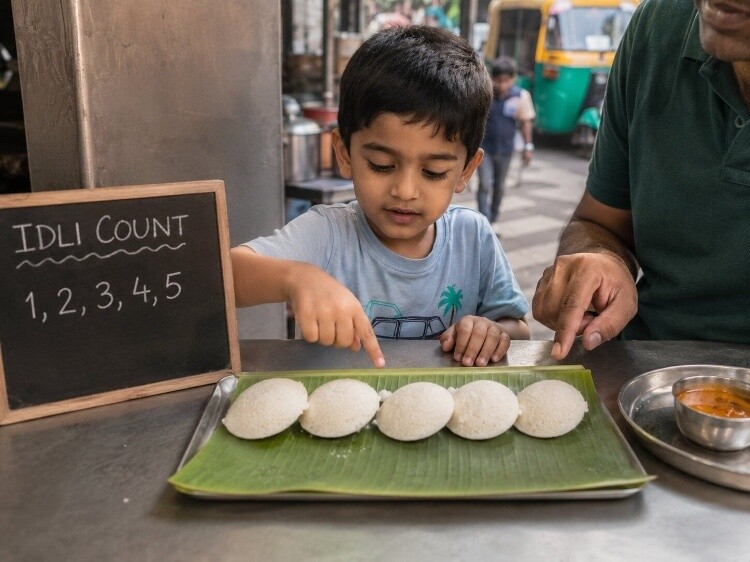
Everything-counting
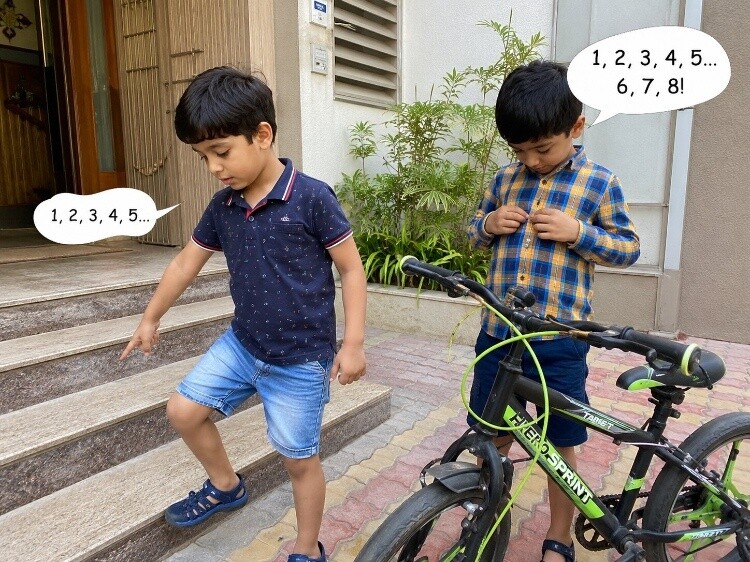
Steps, buttons, autos, idlis: the daily world as counting material.
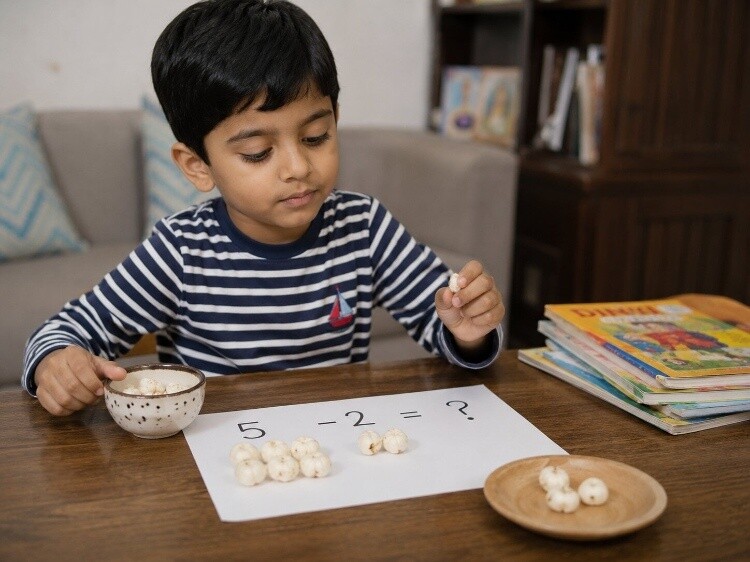
Snack math
"Take five makhanas. Eat two. How many left?" — subtraction with edible motivation.
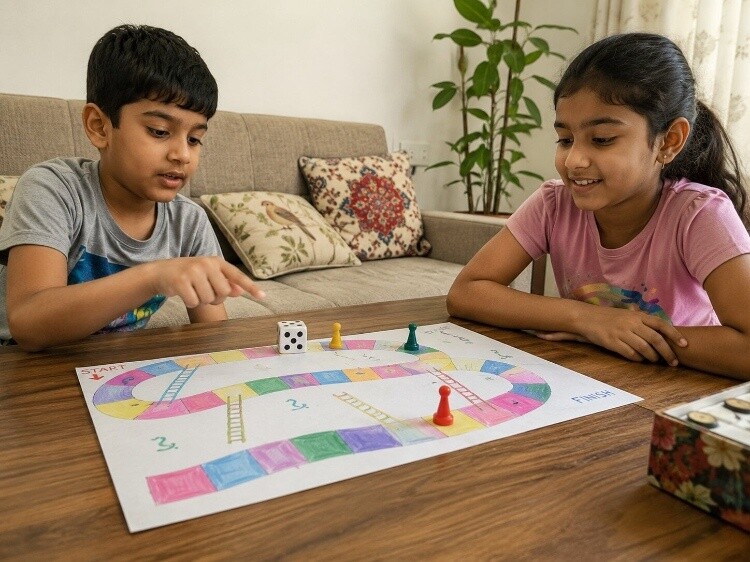
Dice-and-move games
Simple board games or homemade paths: dice reading plus counted movement.
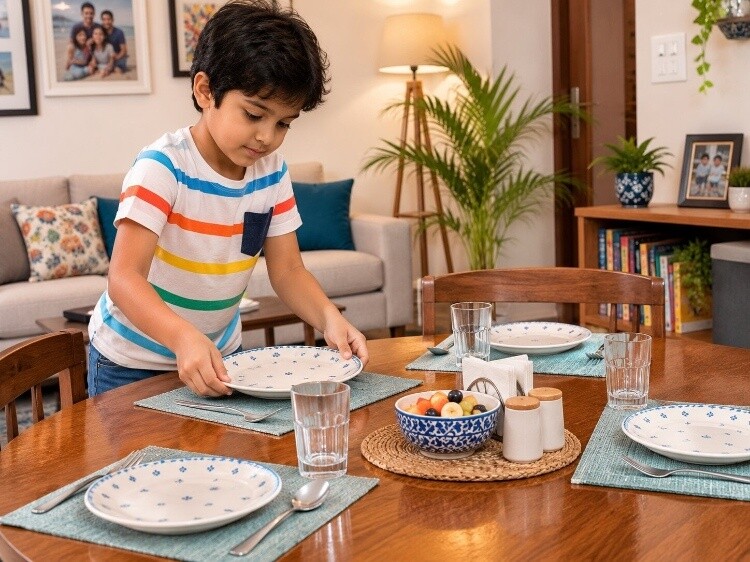
Setting the table
Four people, four plates, four glasses — one-to-one correspondence as genuine helping.
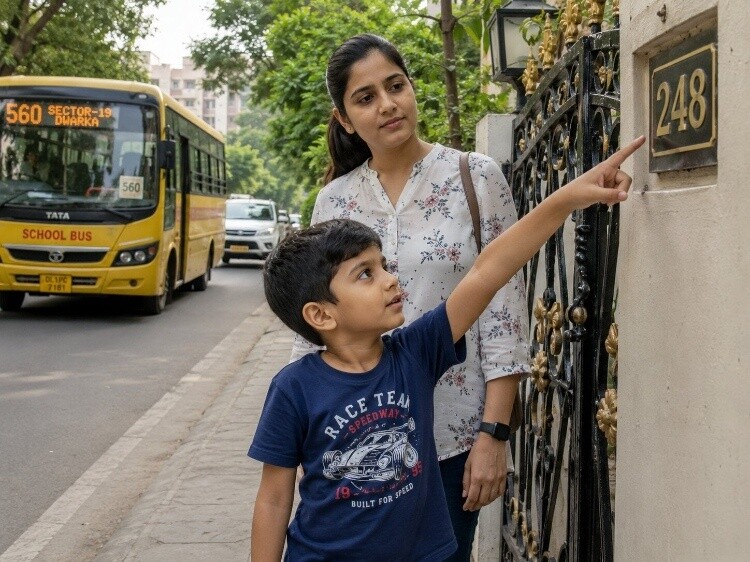
Number hunts
Spotting numerals on gates, buses, and number plates during walks.
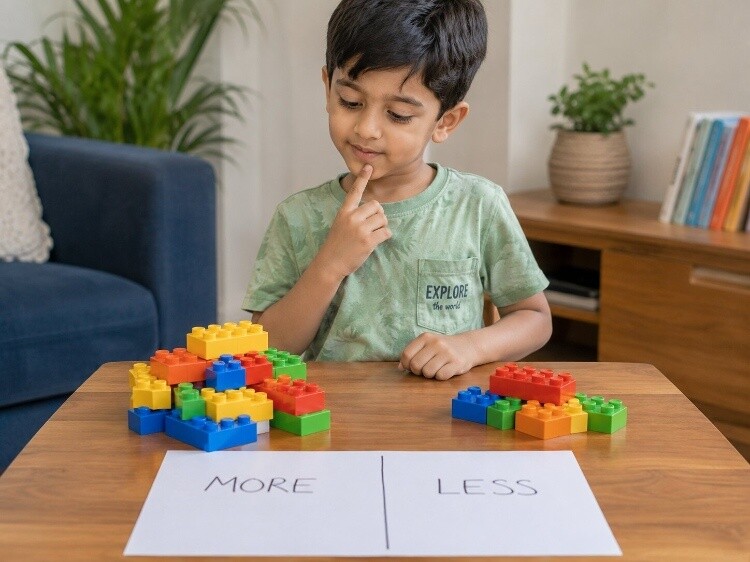
More-or-less comparisons
Two piles of blocks: which has more? Estimation before counting verifies.
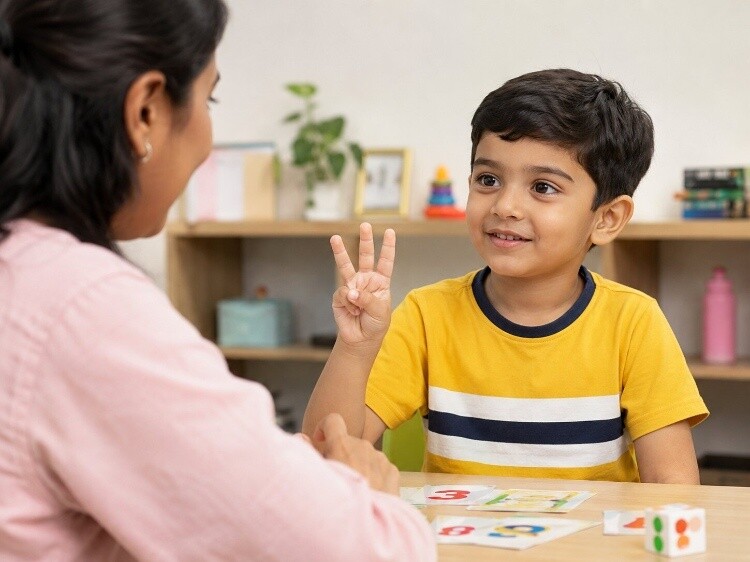
Finger counting games
Fingers as the always-available math tool; showing "three" on fingers on request.
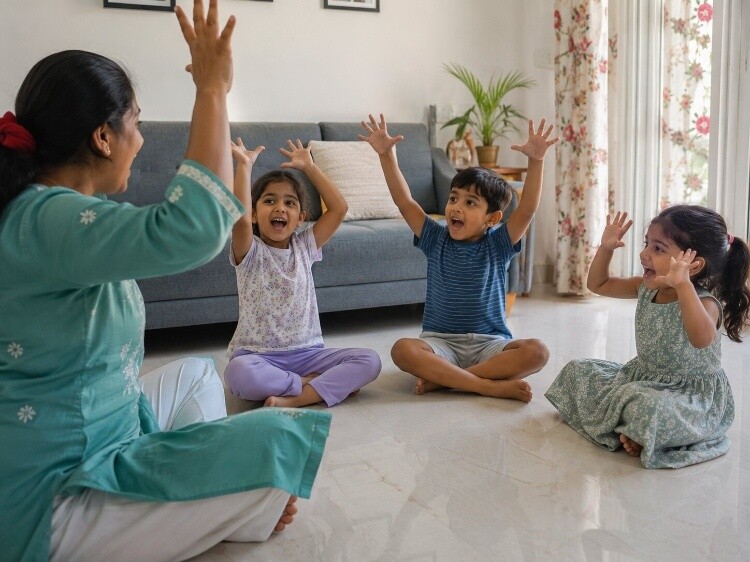
Counting songs with actions
Five little monkeys and its cousins: counting down with drama.
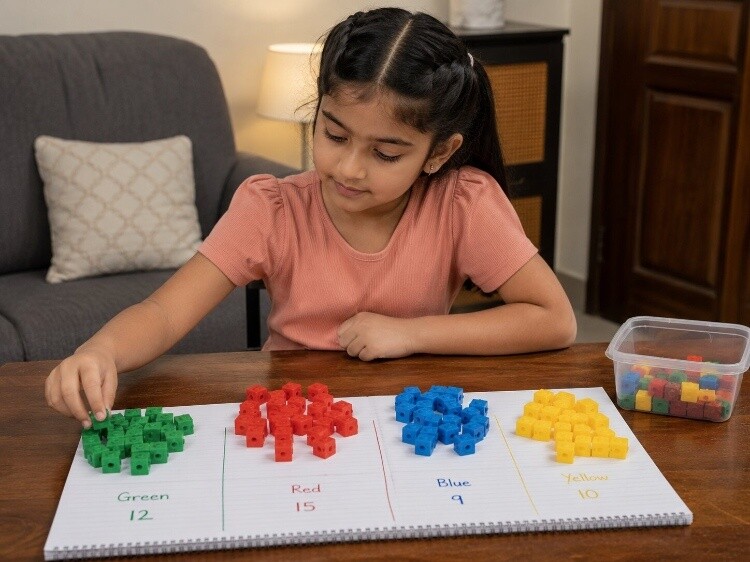
Sorting-then-counting
Sort the blocks by colour, then count each group — two math skills chained.
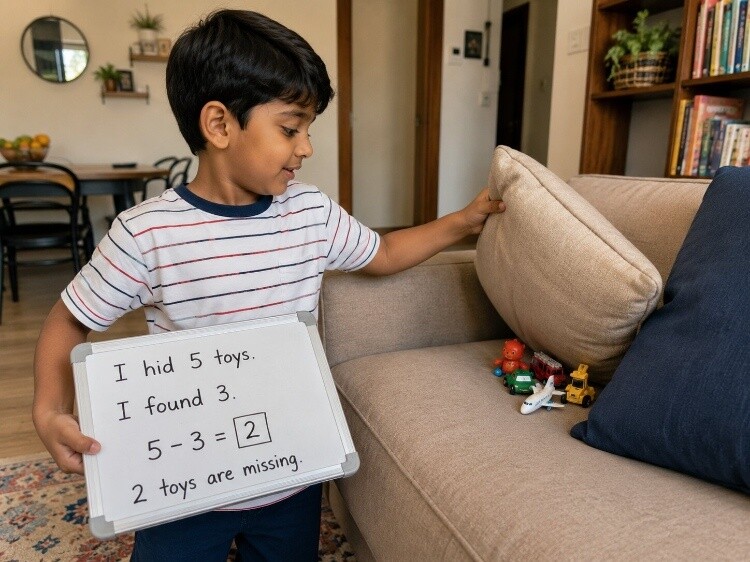
Hide-and-count
Hiding five toys, finding them, counting the found and deducing the missing.
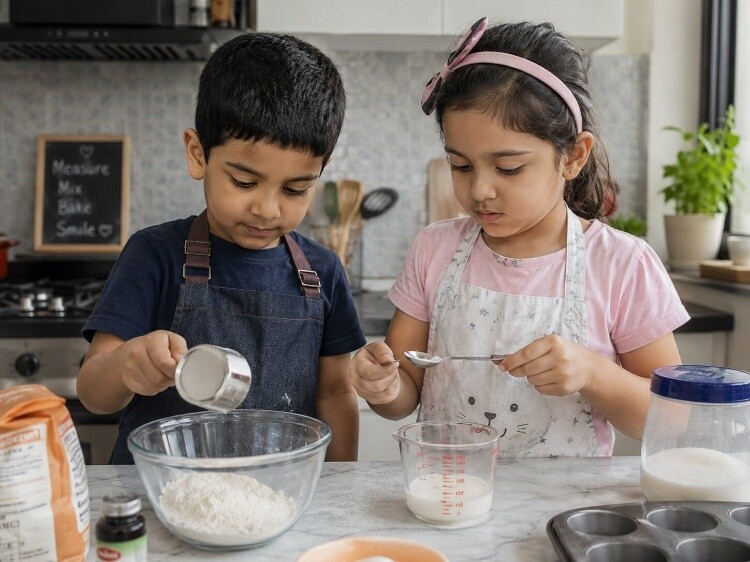
Kitchen measuring
Two cups, three spoons — counting inside cooking's real stakes.
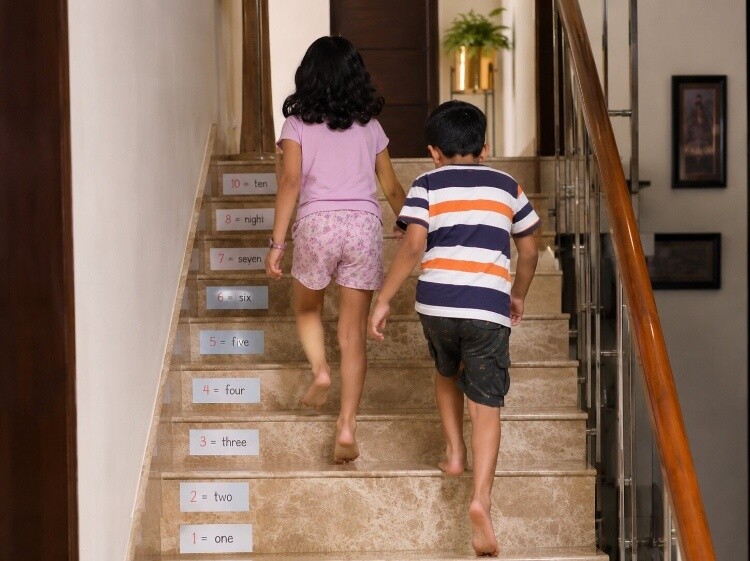
Staircase math
Counting up going up, down coming down — daily, embodied, free.
The sequence that matters
Stable count words → one-to-one touching-while-counting → understanding the last number counted IS the amount (cardinality) → comparison and simple change (add one, take one). Most 3-4 year olds are consolidating the middle steps; rushing written numerals past this sequence builds recitation without understanding.
Signals of genuine number sense growing
Counting objects with touch-coordination, answering "how many?" with the last count word rather than recounting, and fetching the right quantity on request ("bring three spoons"). These beat any recited number string as progress markers.