
 Summer Camp
 Reading Writing
 Book Club
 Calligraphy
 Creative Writing
 English Speaking
 Handwriting
 Library
 Phonics
 Story Telling
 Art and Craft
 Clay Moulding
 Drawing
 Painting
 Pottery
 Sketching
 Drama Theatre
 Personality Development
 Public Speaking
 Languages
 Arabic
 Chinese
 French
 German
 Hindi
Hindi Italian
 Japanese
 Korean
 Persian
 Portuguese
 Russian
 Spanish
 Turkish
 Uzbek
Uzbek Sports and Fitness
 Aerobics
 Athletics
 Badminton
 Basket Ball
 Chess
Chess Cricket
 Football
 Golf
Golf Gymnastics
 Hulahoop
 Karate
 Martial Arts
 Pickleball
 Rugby
Rugby Skating
 Swimming
 Taekwondo
 Tennis
 Volleyball
 Yoga
Yoga Zumba
Zumba Tuition Classes
 Accounts
 Biology
 Business Studies
 CBSE
CBSE Chemistry
 Commerce
 Economics
 Homework Classes
 IB Board
 IGCSE
IGCSE Mathematics
 Physics
 Psychology
 Science
 Social Studies
 Vedic Maths
 Dance and Music
 Ballet
 Bhangra
 Bharatnatyam
 Bollywood Dance
 Casio
Casio Dandiya and Garba
 Drums
Drums Flute
Flute Guitar
 Harmonium
 Hip Hop
 Jazz
Jazz Kathak
 Keyboard
 Piano
Piano Salsa
Salsa Shlokas
 Sitar
Sitar Tabla
Tabla Ukulele
 Violin
 Vocal
Vocal Play School
 STEM
STEM
 Abacus
 App Development
 Artificial intelligence
 Basic Computer Courses
 Canva
Canva Coding
 Graphic Design
 Lego
Lego Python
 Robotics
 Rubiks Cube
 Scrabble
 Scratch
 Website Development
 Winter Camp
 Workshops
 Diwali Workshop
 Easter
 Ganesh Mahotsav
 Guru Nanak Jayanti Workshop
 Holi
Holi Independence day workshop
 Janmashtami Workshop
 Mothers day
 Navratri Workshops
 Raksha Bandhan workshop
 Ramayana Workshop
 Spring Camp
 Valentines Day Workshops
 Festive
 Daycare
 Cooking and Food
 Spring Camp
 Contests and Competitions
 Special abled
 Republic Day Workshops
 Mela
Mela
 Mela
Mela Cognitive Development
 Mother-Toddler Program
-Jul-03-2026-06-59-25-1926-AM.webp?width=30&height=30&name=Smart_20Skills_20(2)-Jul-03-2026-06-59-25-1926-AM.webp) Smart Skills
Smart Skills
 Financial Literacy
 Mental Wellbeing
 Meditation
 Reiki
Reiki




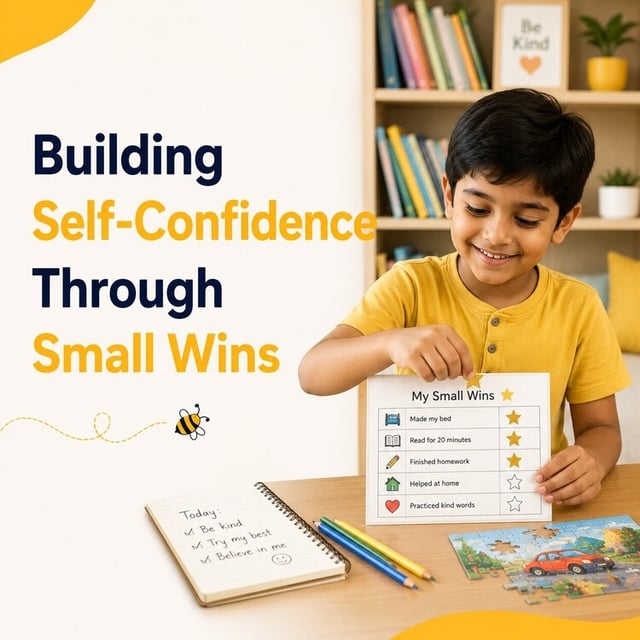
Genuine self-confidence accumulates through a track record of small, real achievements — not through praise alone. This final life-skills post ties the series together: confidence as the compound interest of consistent, real competence-building.
Across this entire life-skills series — money, chores, kitchen skills, decision-making, problem-solving, responsibility — runs a single underlying thread: each skill built genuinely, through real practice, deposits into a child's accumulated evidence that they are capable. Self-confidence is the compound interest of these small wins, not a separate thing to be built through praise alone.
Why small wins matter more than big ones
A single large achievement (winning a competition, a major performance) is memorable but rare and often outside a child's full control; small, frequent wins (successfully packed their own bag, correctly followed a recipe, resolved a friend conflict themselves) accumulate into a much larger, steadier foundation of self-belief precisely because they're frequent, attributable to the child's own effort, and repeatable.
The wins built across this series, connected
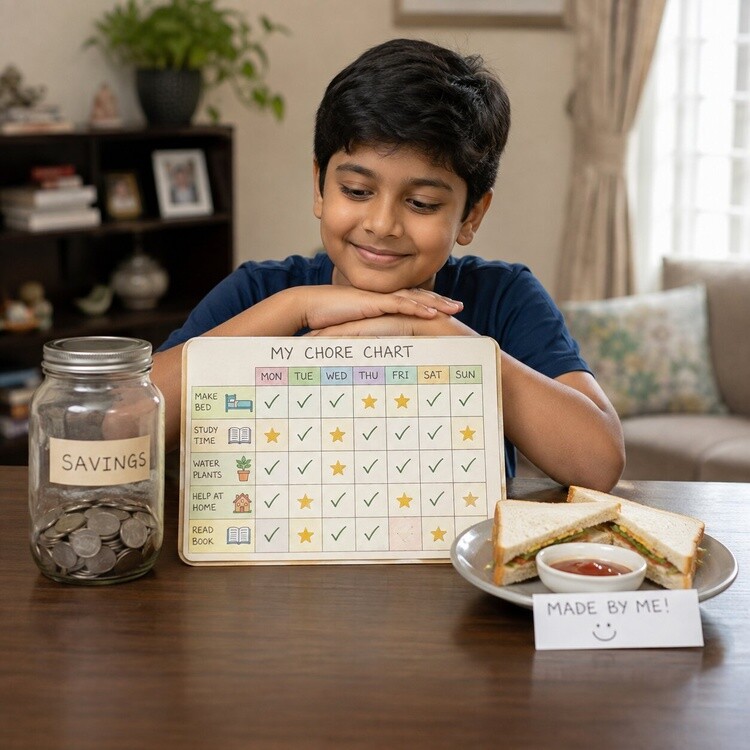
The child who's practiced real decision-making has evidence they can choose well. The one with genuine kitchen competence has evidence they can learn complex skills. The one who's managed money has evidence they can plan ahead. The one who's solved everyday problems has evidence they can figure things out. None of these were taught as "confidence-building" directly — the confidence is the accumulated byproduct of genuine competence built through the specific skills.
Why praise alone doesn't build what small wins do
Praise disconnected from genuine achievement ("you're so smart," delivered regardless of actual effort or outcome) can be detected by children as hollow, and worse, can create fragility — a self-concept unearned by evidence collapses easily at the first real failure. Confidence built through actual, repeated competence has a foundation praise alone can't replicate.
The parent's role across all of it
Consistently, the theme across every post in this life-skills series has been the same: create genuine opportunities for real competence-building, resist the urge to rescue or take over, allow natural consequences within safe bounds, and acknowledge effort and progress specifically rather than delivering generic praise. This is harder than either strict control or unlimited praise — it requires sustained restraint and genuine trust-building over years.
Confidence as protection for the years ahead
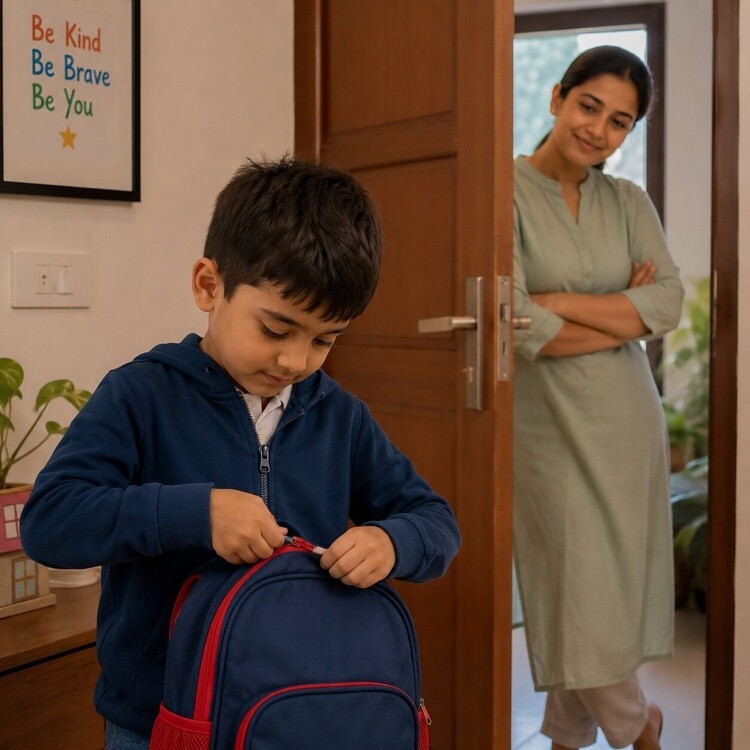
Adolescence brings intensified social comparison, academic pressure, and identity questions — a child entering this period with a genuine accumulated track record of real competence across money, cooking, decision-making, problem-solving, and responsibility carries a more durable foundation than one whose confidence rests primarily on praise, appearance, or unearned reassurance. The small wins built through the ordinary years before are, in a real sense, the preparation for the harder ones ahead.
A closing thought on this life skills series
None of the twelve topics in this series — chores, money, cooking, time management, goal-setting, decision-making, problem-solving, responsibility — are dramatic or headline-worthy individually. Together, built consistently across the years before adolescence, they constitute something genuinely significant: a child who has real, tested evidence of their own capability, built the only way capability is ever really built — through doing real things, sometimes struggling, and coming through the other side with proof it's possible.