
 Summer Camp
 Reading Writing
 Book Club
 Calligraphy
 Creative Writing
 English Speaking
 Handwriting
 Library
 Phonics
 Story Telling
 Art and Craft
 Clay Moulding
 Drawing
 Painting
 Pottery
 Sketching
 Drama Theatre
 Personality Development
 Public Speaking
 Languages
 Arabic
 Chinese
 French
 German
 Hindi
Hindi Italian
 Japanese
 Korean
 Persian
 Portuguese
 Russian
 Spanish
 Turkish
 Uzbek
Uzbek Sports and Fitness
 Aerobics
 Athletics
 Badminton
 Basket Ball
 Chess
Chess Cricket
 Football
 Golf
Golf Gymnastics
 Hulahoop
 Karate
 Martial Arts
 Pickleball
 Rugby
Rugby Skating
 Swimming
 Taekwondo
 Tennis
 Volleyball
 Yoga
Yoga Zumba
Zumba Tuition Classes
 Accounts
 Biology
 Business Studies
 CBSE
CBSE Chemistry
 Commerce
 Economics
 Homework Classes
 IB Board
 IGCSE
IGCSE Mathematics
 Physics
 Psychology
 Science
 Social Studies
 Vedic Maths
 Dance and Music
 Ballet
 Bhangra
 Bharatnatyam
 Bollywood Dance
 Casio
Casio Dandiya and Garba
 Drums
Drums Flute
Flute Guitar
 Harmonium
 Hip Hop
 Jazz
Jazz Kathak
 Keyboard
 Piano
Piano Salsa
Salsa Shlokas
 Sitar
Sitar Tabla
Tabla Ukulele
 Violin
 Vocal
Vocal Play School
 STEM
STEM
 Abacus
 App Development
 Artificial intelligence
 Basic Computer Courses
 Canva
Canva Coding
 Graphic Design
 Lego
Lego Python
 Robotics
 Rubiks Cube
 Scrabble
 Scratch
 Website Development
 Winter Camp
 Workshops
 Diwali Workshop
 Easter
 Ganesh Mahotsav
 Guru Nanak Jayanti Workshop
 Holi
Holi Independence day workshop
 Janmashtami Workshop
 Mothers day
 Navratri Workshops
 Raksha Bandhan workshop
 Ramayana Workshop
 Spring Camp
 Valentines Day Workshops
 Festive
 Daycare
 Cooking and Food
 Spring Camp
 Contests and Competitions
 Special abled
 Republic Day Workshops
 Mela
Mela
 Mela
Mela Cognitive Development
 Mother-Toddler Program
-Jul-03-2026-06-59-25-1926-AM.webp?width=30&height=30&name=Smart_20Skills_20(2)-Jul-03-2026-06-59-25-1926-AM.webp) Smart Skills
Smart Skills
 Financial Literacy
 Mental Wellbeing
 Meditation
 Reiki
Reiki


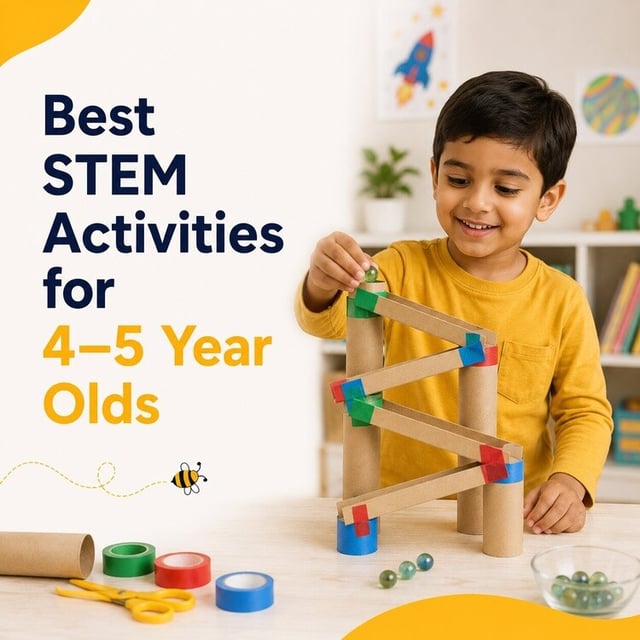
STEM at 4-5 is structured curiosity — predict, test, observe, wonder — using kitchen and household materials. These activities build the scientist's habit of mind before any formal science.
Four-to-five-year-olds are natural experimentalists — the STEM move is adding one small structure to their curiosity: "what do you think will happen?" before, and "what did we see?" after.
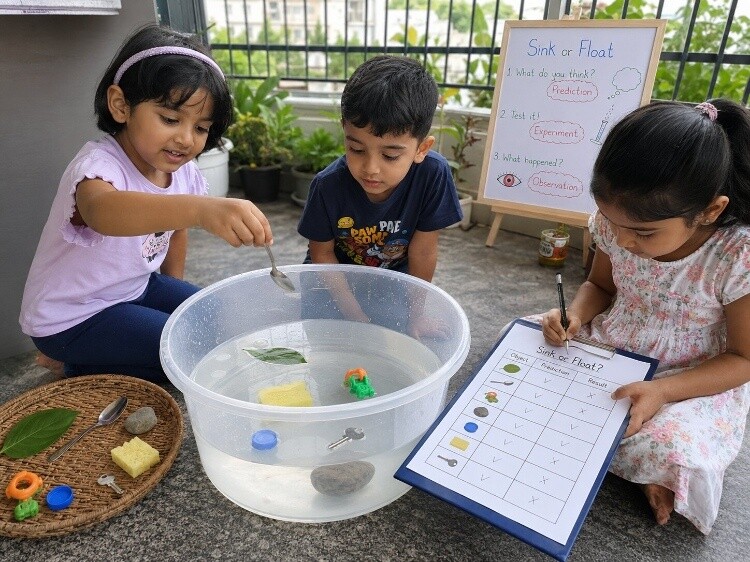
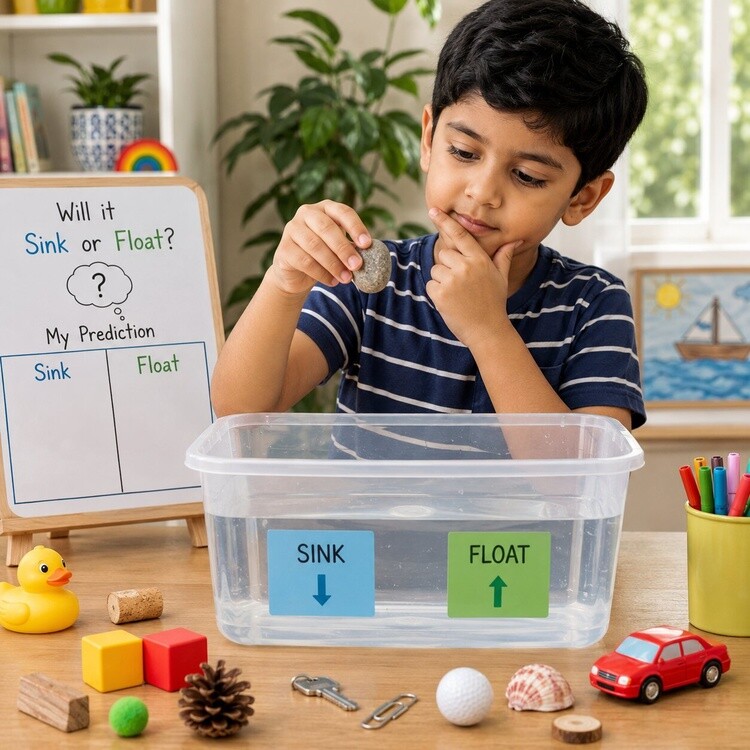
Sink or float prediction lab
A water tub and household objects, predicted then tested — the complete scientific method in a bucket.
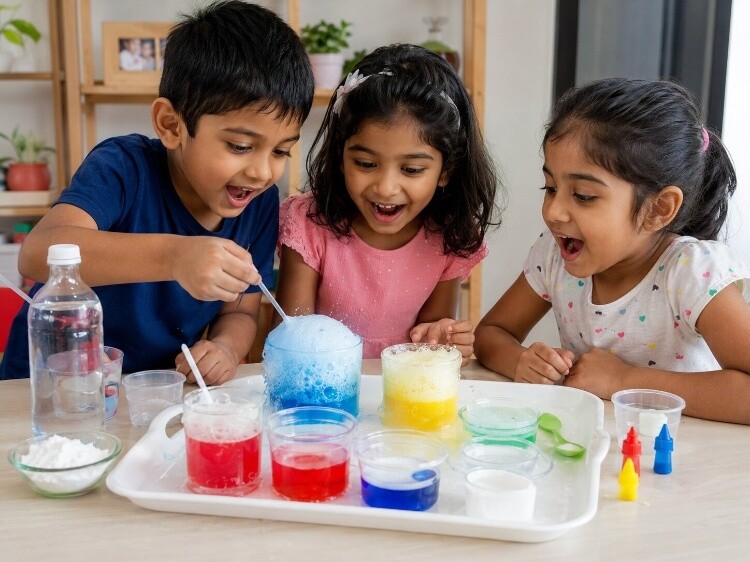
Baking soda and vinegar reactions
The classic fizz, with variations (amounts, containers, colours) as the "experiments."
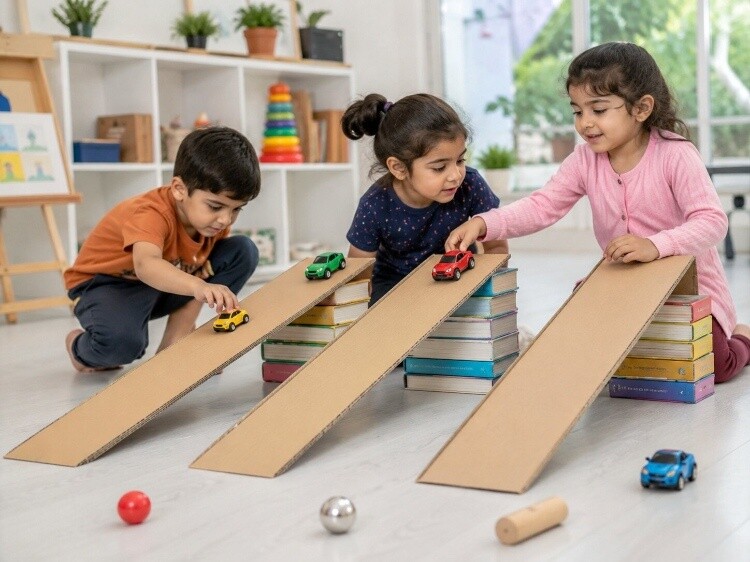
Ramp and rolling investigations
Cardboard ramps at varying steepness racing different objects — early physics with toy cars.
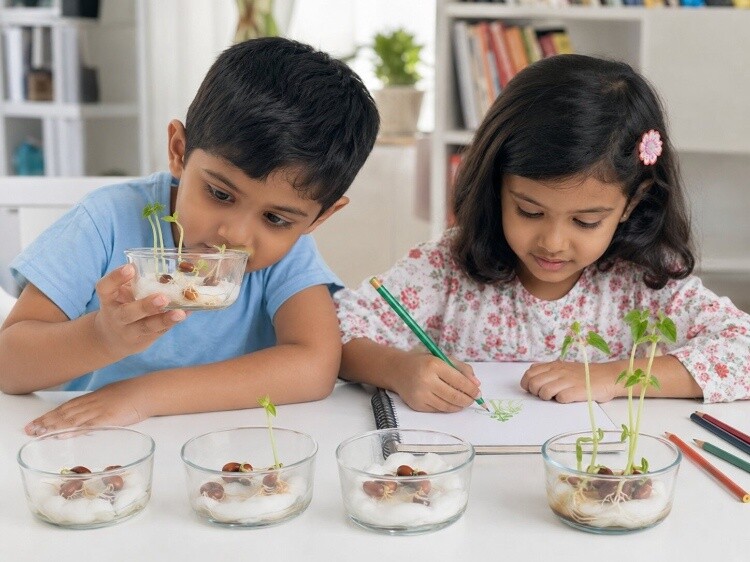
Growing experiments
Rajma seeds in wet cotton, observed and drawn daily — biology's patience curriculum.
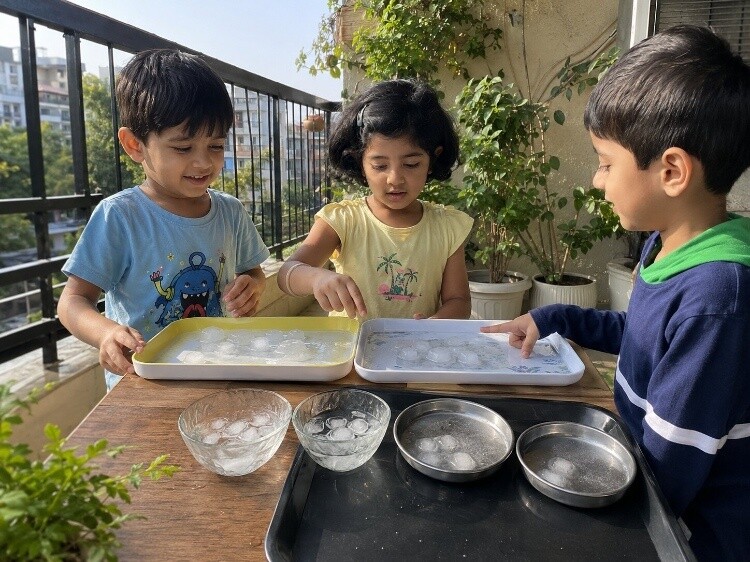
Ice investigations
Melting races (sun versus shade, salt versus plain) — states of matter via Delhi summer.
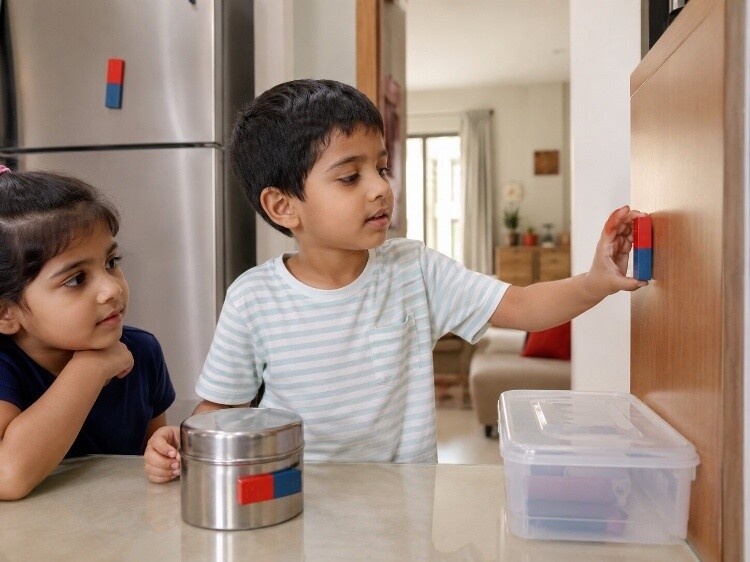
Magnet exploration
A fridge magnet tested across the house: attracts, doesn't, and the emerging metal pattern.
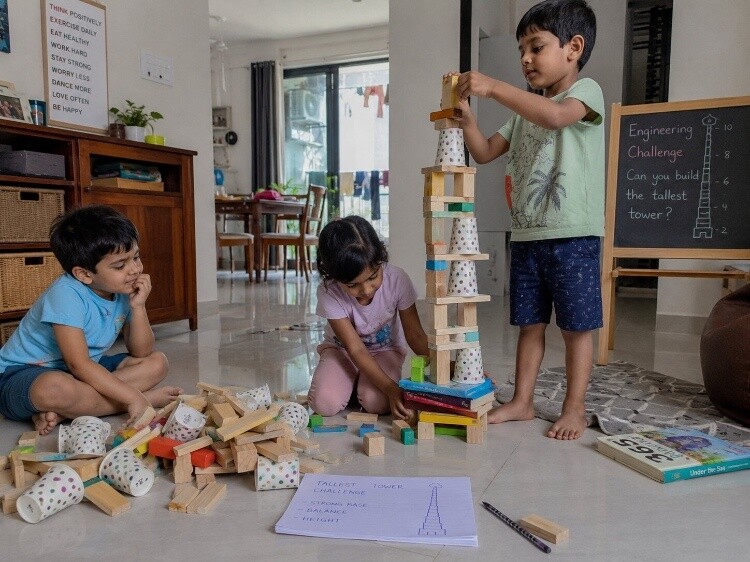
Tower engineering challenges
Tallest tower from blocks, cups, or books — with the collapse-and-retry loop as the lesson.
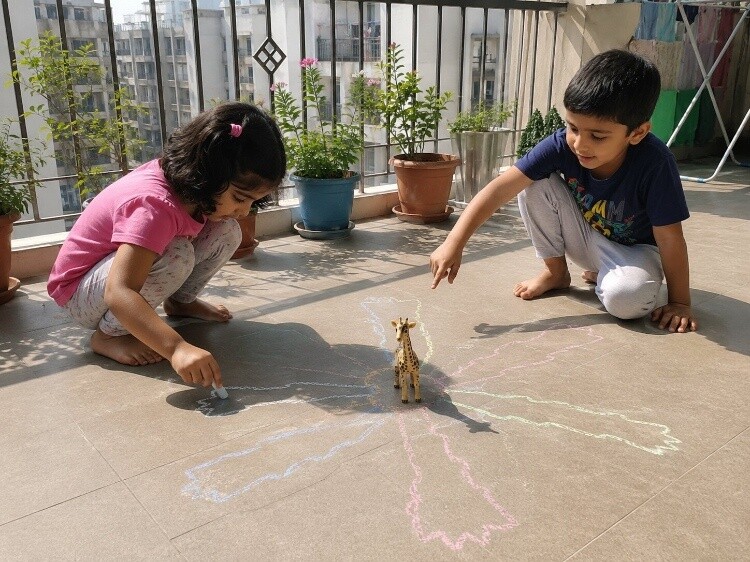
Shadow tracking
A toy's shadow chalk-traced through the day — earth science on the balcony floor.
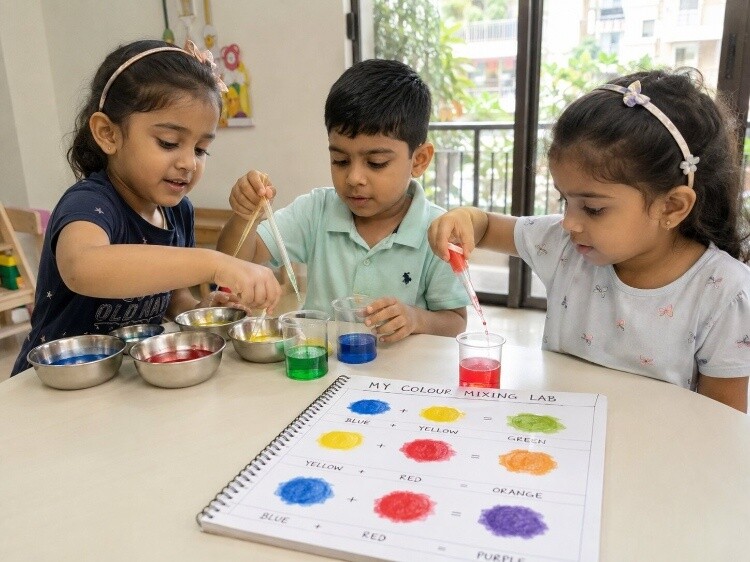
Colour mixing labs
Food-colour water in katoris, combined and recorded — chemistry's most beautiful entry point.
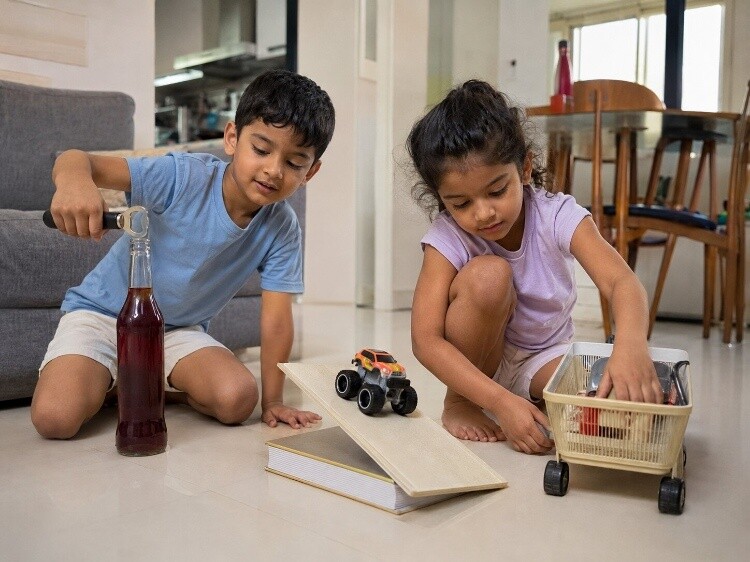
Simple machine hunting
Finding levers (bottle openers), wheels, and ramps around the house — engineering vocabulary via scavenger hunt.
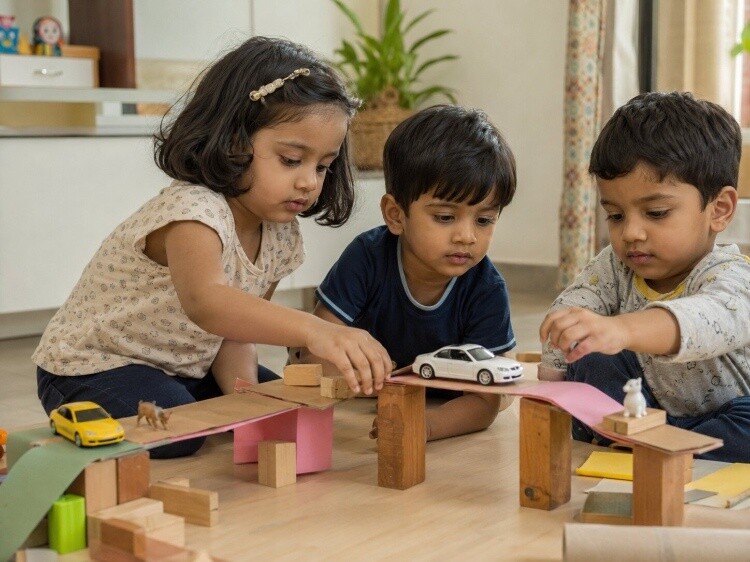
Bridge building
Paper and block bridges spanning gaps, load-tested with toys — iterative engineering.
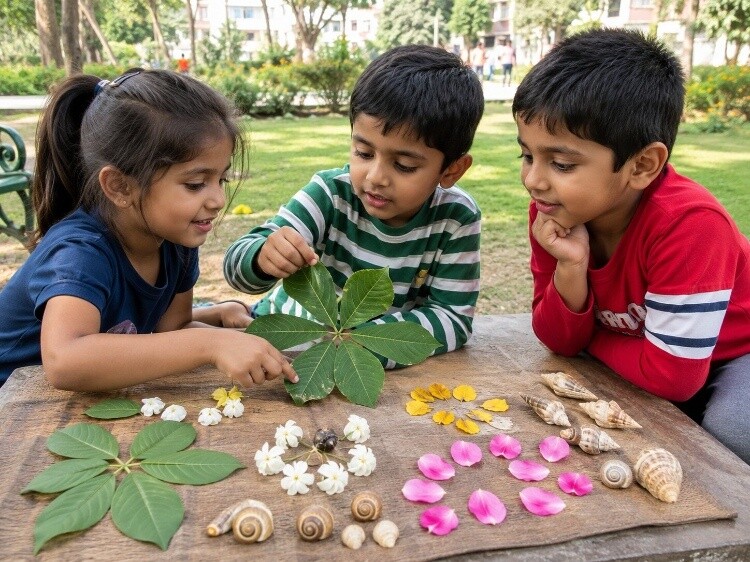
Nature pattern collecting
Leaf symmetries, petal counts, spiral shells — math hiding in the park.
The talk that turns play into STEM
The materials are ordinary; the questions do the work: "What do you think will happen?" (prediction), "What do you notice?" (observation), "Why do you think that happened?" (reasoning), "What if we changed...?" (variables). No correct-answer pressure — wrong predictions cheerfully tested are the entire point.
Failure as the feature
The collapsing tower and sinking "floater" teach the iteration habit — observe, adjust, retry — which is STEM's actual core skill. Parents rescuing every failure or correcting every prediction teach the opposite; sitting on your hands is the technique.
Where the interest leads
For children who hit the "again! another experiment!" register consistently, structured STEM and early robotics programs for 4-5+ have matured well in Delhi NCR — group experimentation with bigger equipment and peer wonder, a genuine next step when the kitchen lab starts feeling small.