
 Summer Camp
 Reading Writing
 Book Club
 Calligraphy
 Creative Writing
 English Speaking
 Handwriting
 Library
 Phonics
 Story Telling
 Art and Craft
 Clay Moulding
 Drawing
 Painting
 Pottery
 Sketching
 Drama Theatre
 Personality Development
 Public Speaking
 Languages
 Arabic
 Chinese
 French
 German
 Hindi
Hindi Italian
 Japanese
 Korean
 Persian
 Portuguese
 Russian
 Spanish
 Turkish
 Uzbek
Uzbek Sports and Fitness
 Aerobics
 Athletics
 Badminton
 Basket Ball
 Chess
Chess Cricket
 Football
 Golf
Golf Gymnastics
 Hulahoop
 Karate
 Martial Arts
 Pickleball
 Rugby
Rugby Skating
 Swimming
 Taekwondo
 Tennis
 Volleyball
 Yoga
Yoga Zumba
Zumba Tuition Classes
 Accounts
 Biology
 Business Studies
 CBSE
CBSE Chemistry
 Commerce
 Economics
 Homework Classes
 IB Board
 IGCSE
IGCSE Mathematics
 Physics
 Psychology
 Science
 Social Studies
 Vedic Maths
 Dance and Music
 Ballet
 Bhangra
 Bharatnatyam
 Bollywood Dance
 Casio
Casio Dandiya and Garba
 Drums
Drums Flute
Flute Guitar
 Harmonium
 Hip Hop
 Jazz
Jazz Kathak
 Keyboard
 Piano
Piano Salsa
Salsa Shlokas
 Sitar
Sitar Tabla
Tabla Ukulele
 Violin
 Vocal
Vocal Play School
 STEM
STEM
 Abacus
 App Development
 Artificial intelligence
 Basic Computer Courses
 Canva
Canva Coding
 Graphic Design
 Lego
Lego Python
 Robotics
 Rubiks Cube
 Scrabble
 Scratch
 Website Development
 Winter Camp
 Workshops
 Diwali Workshop
 Easter
 Ganesh Mahotsav
 Guru Nanak Jayanti Workshop
 Holi
Holi Independence day workshop
 Janmashtami Workshop
 Mothers day
 Navratri Workshops
 Raksha Bandhan workshop
 Ramayana Workshop
 Spring Camp
 Valentines Day Workshops
 Festive
 Daycare
 Cooking and Food
 Spring Camp
 Contests and Competitions
 Special abled
 Republic Day Workshops
 Mela
Mela
 Mela
Mela Cognitive Development
 Mother-Toddler Program
-Jul-03-2026-06-59-25-1926-AM.webp?width=30&height=30&name=Smart_20Skills_20(2)-Jul-03-2026-06-59-25-1926-AM.webp) Smart Skills
Smart Skills
 Financial Literacy
 Mental Wellbeing
 Meditation
 Reiki
Reiki



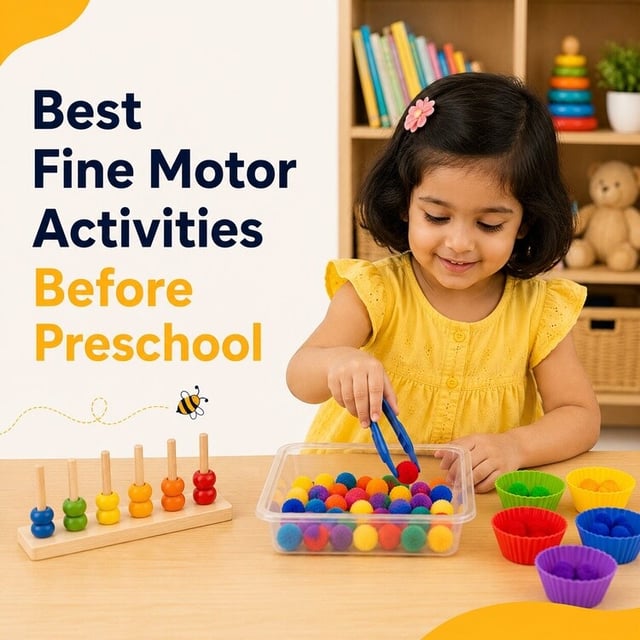
The hand skills preschool assumes — crayon grip, scissor readiness, self-help fastenings — are built through targeted play in the year before. These activities close the gap enjoyably.
Preschool quietly assumes hand skills: holding crayons, attempting scissors, managing tiffin boxes and water bottles. The year before is the building window, and the building method is play.
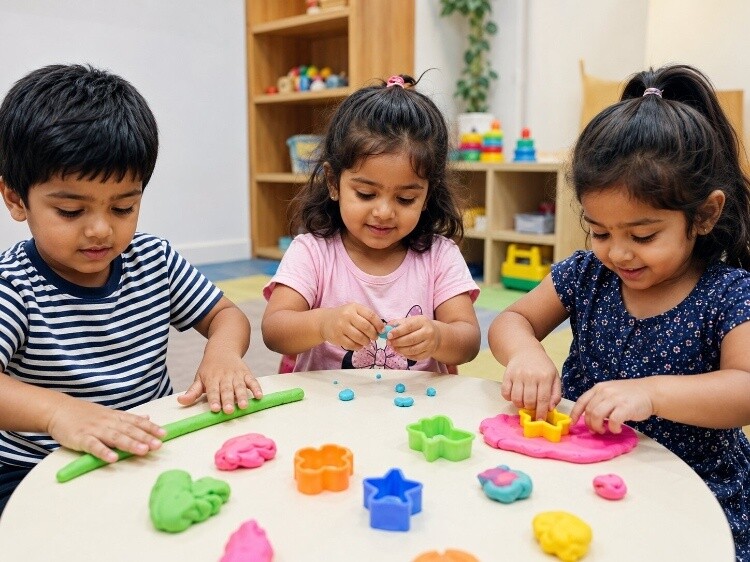
Playdough workouts
Rolling snakes, pinching pieces, cutter-pressing: the foundational hand gym.
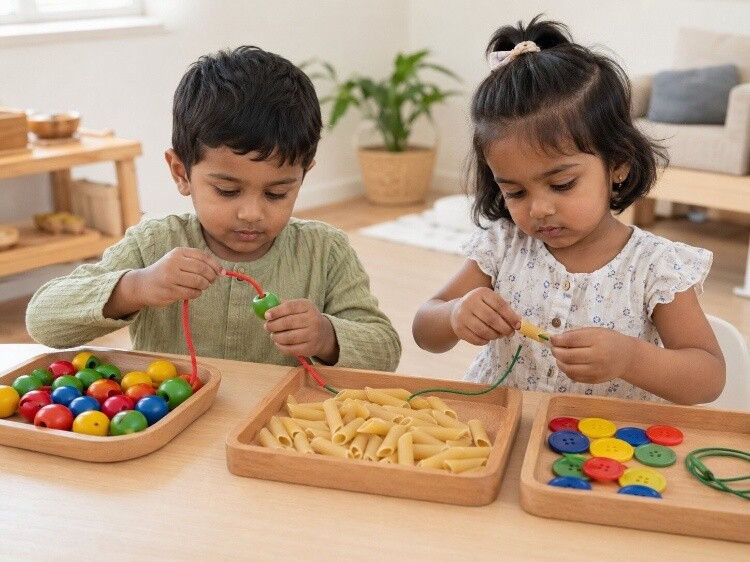
Threading progression
Large beads to smaller, pasta to buttons — precision grip in game form.
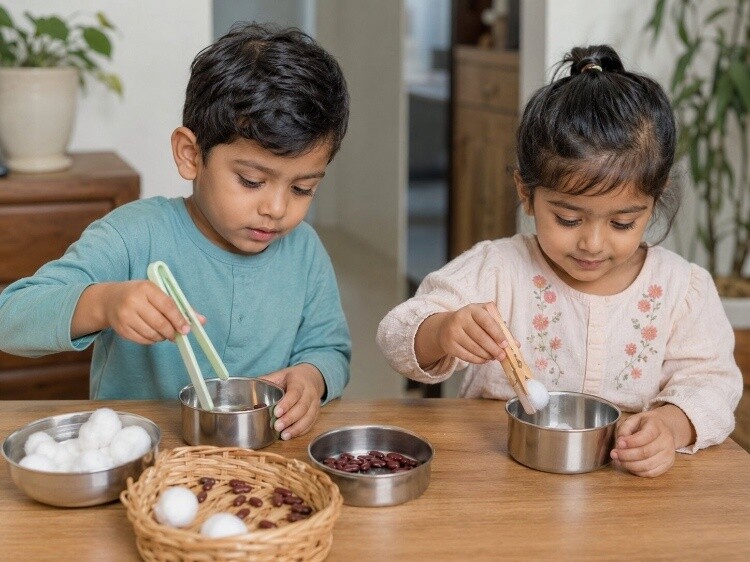
Tong and peg transfers
Moving cotton balls or rajma with kitchen tongs or clothes pegs — the exact muscles of pencil grip.
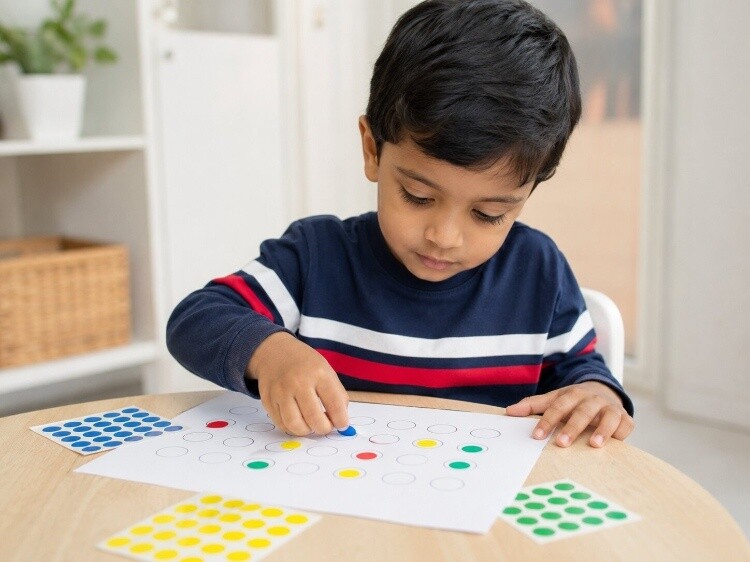
Sticker precision work
Placing stickers on targets (dots drawn on paper) rather than freely.
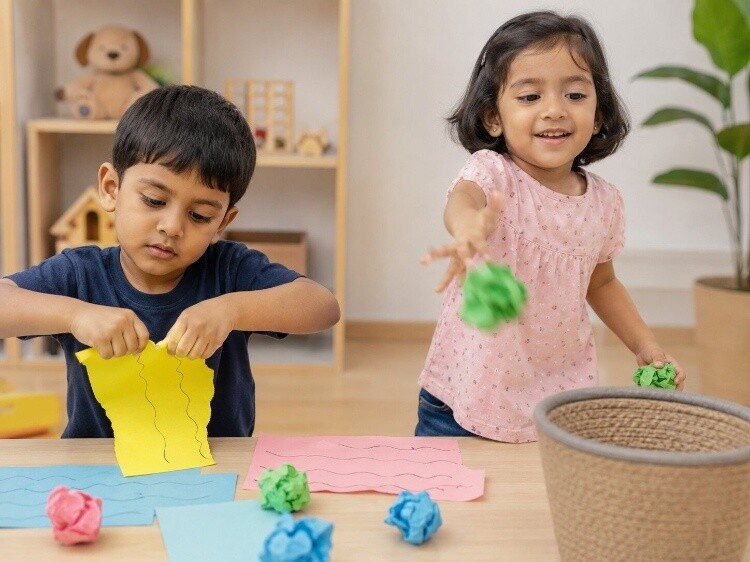
Tearing and scrunching paper
Controlled tearing along lines, scrunching balls for "basketball" — bilateral hand coordination.
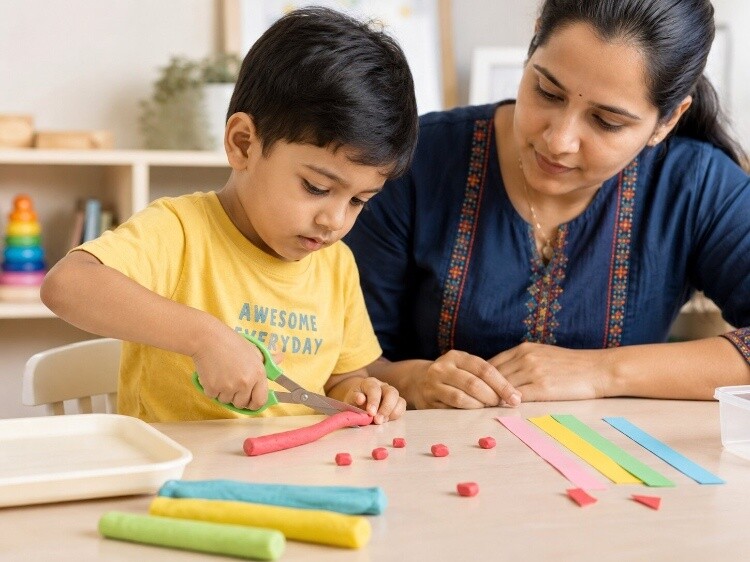
Early scissor practice
Child-safe scissors, supervised snipping of playdough snakes then paper strips — snipping before line-cutting.
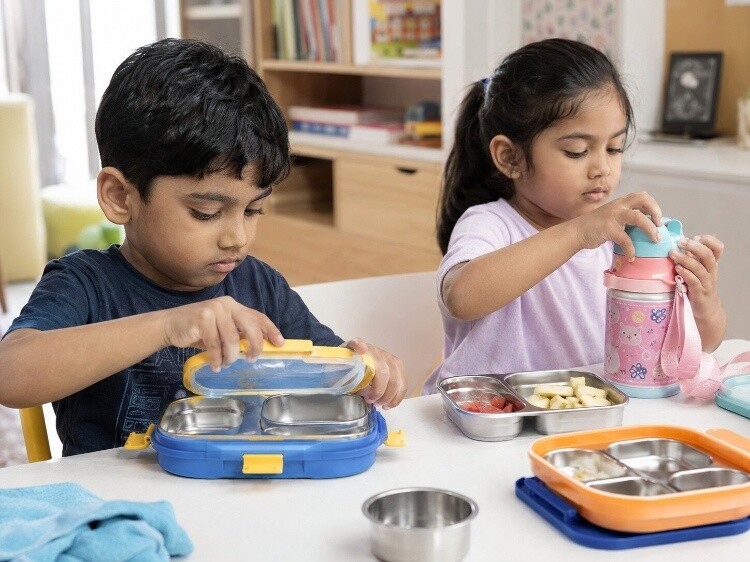
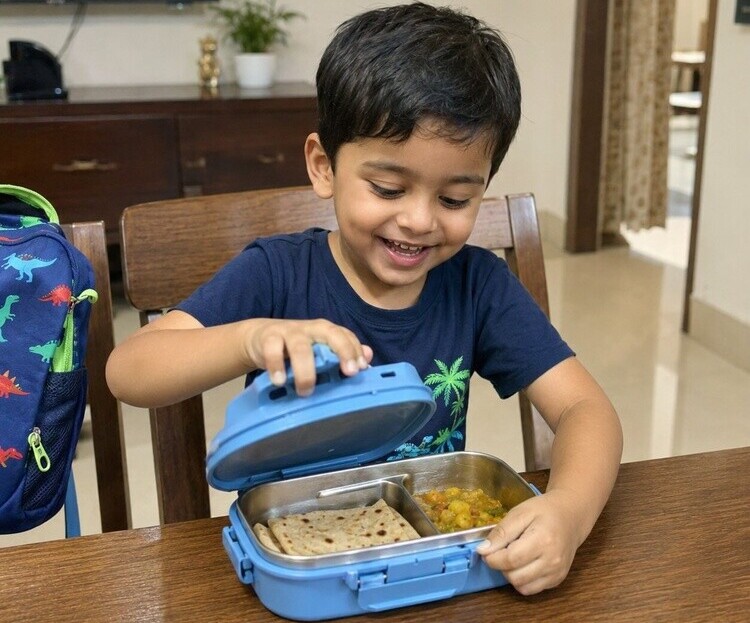
Tiffin and bottle practice
Opening and closing their actual school tiffin and water bottle until fluent — the most directly practical preparation available.
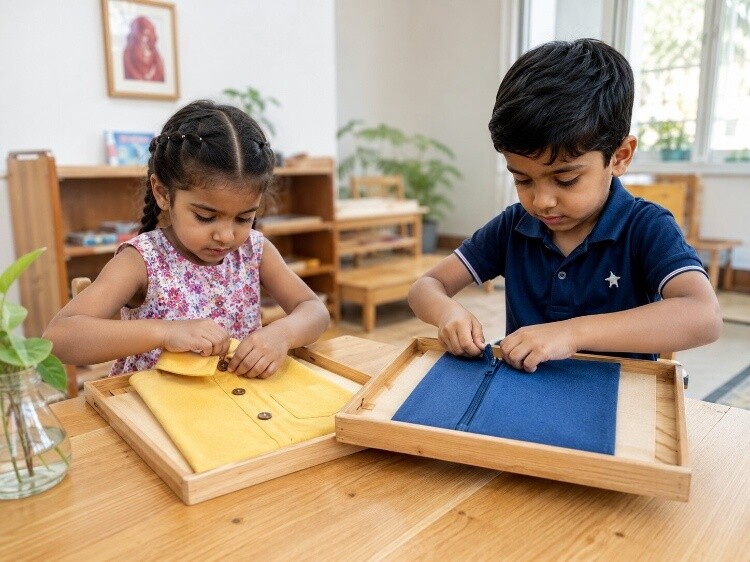
Button and zip boards
Fastening practice off-body first (easier), then on.
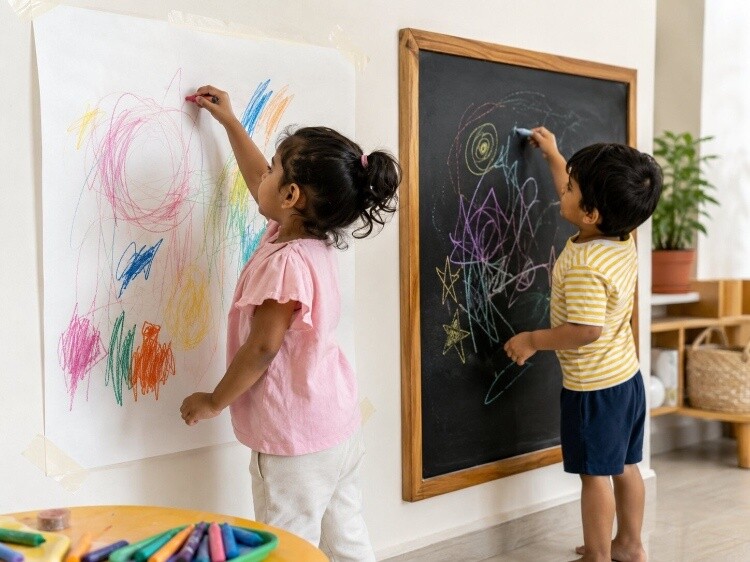
Chunky chalk and crayon work
Vertical surfaces (a wall-taped paper, a blackboard) build shoulder-wrist stability underneath fine control.
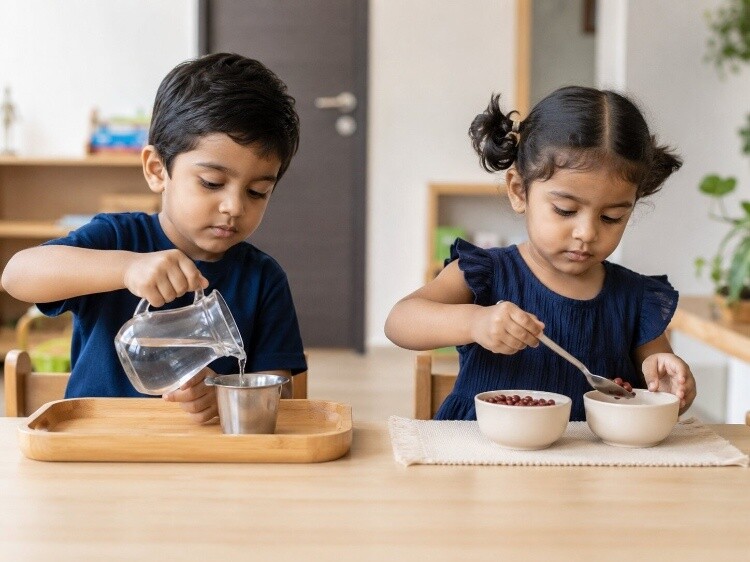
Water pouring and spooning transfers
Montessori-style pouring between vessels and spooning rajma between bowls.
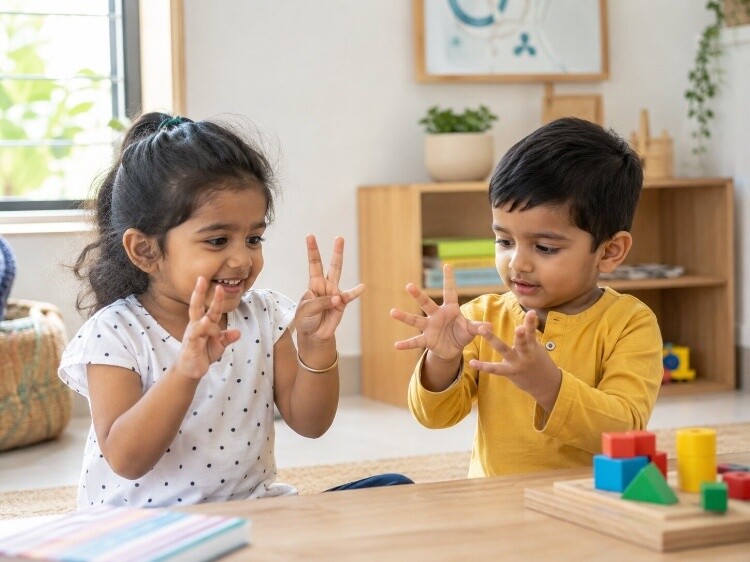
Finger rhymes and hand games
Finger isolation through rhymes and counting games.
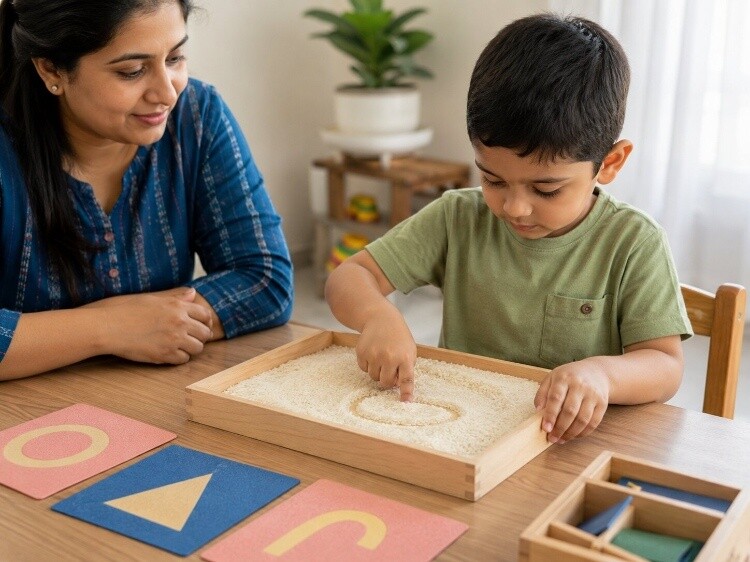
Sandpaper or rice-tray letter tracing
For children showing letter interest, tracing shapes in a rice tray — sensory pre-writing without pencil pressure.
The grip timeline, without panic
At 3-4, an immature crayon grip (fist or four-finger) is normal and self-correcting with hand-strength building; forcing a "correct" tripod grip before the strength exists creates awkward compensations. Small tools (broken chalk bits, short crayons) invite better grips naturally — the tool teaches, not the lecture.
The tiffin box detail that matters
A surprising share of early preschool distress is practical: a child who can't open their own tiffin or bottle at snack time, in a room of twenty children and two adults. Buying containers your child can genuinely operate, then practicing until boring, prevents a real daily stress.