
 Summer Camp
 Reading Writing
 Book Club
 Calligraphy
 Creative Writing
 English Speaking
 Handwriting
 Library
 Phonics
 Story Telling
 Art and Craft
 Clay Moulding
 Drawing
 Painting
 Pottery
 Sketching
 Drama Theatre
 Personality Development
 Public Speaking
 Languages
 Arabic
 Chinese
 French
 German
 Hindi
Hindi Italian
 Japanese
 Korean
 Persian
 Portuguese
 Russian
 Spanish
 Turkish
 Uzbek
Uzbek Sports and Fitness
 Aerobics
 Athletics
 Badminton
 Basket Ball
 Chess
Chess Cricket
 Football
 Golf
Golf Gymnastics
 Hulahoop
 Karate
 Martial Arts
 Pickleball
 Rugby
Rugby Skating
 Swimming
 Taekwondo
 Tennis
 Volleyball
 Yoga
Yoga Zumba
Zumba Tuition Classes
 Accounts
 Biology
 Business Studies
 CBSE
CBSE Chemistry
 Commerce
 Economics
 Homework Classes
 IB Board
 IGCSE
IGCSE Mathematics
 Physics
 Psychology
 Science
 Social Studies
 Vedic Maths
 Dance and Music
 Ballet
 Bhangra
 Bharatnatyam
 Bollywood Dance
 Casio
Casio Dandiya and Garba
 Drums
Drums Flute
Flute Guitar
 Harmonium
 Hip Hop
 Jazz
Jazz Kathak
 Keyboard
 Piano
Piano Salsa
Salsa Shlokas
 Sitar
Sitar Tabla
Tabla Ukulele
 Violin
 Vocal
Vocal Play School
 STEM
STEM
 Abacus
 App Development
 Artificial intelligence
 Basic Computer Courses
 Canva
Canva Coding
 Graphic Design
 Lego
Lego Python
 Robotics
 Rubiks Cube
 Scrabble
 Scratch
 Website Development
 Winter Camp
 Workshops
 Diwali Workshop
 Easter
 Ganesh Mahotsav
 Guru Nanak Jayanti Workshop
 Holi
Holi Independence day workshop
 Janmashtami Workshop
 Mothers day
 Navratri Workshops
 Raksha Bandhan workshop
 Ramayana Workshop
 Spring Camp
 Valentines Day Workshops
 Festive
 Daycare
 Cooking and Food
 Spring Camp
 Contests and Competitions
 Special abled
 Republic Day Workshops
 Mela
Mela
 Mela
Mela Cognitive Development
 Mother-Toddler Program
-Jul-03-2026-06-59-25-1926-AM.webp?width=30&height=30&name=Smart_20Skills_20(2)-Jul-03-2026-06-59-25-1926-AM.webp) Smart Skills
Smart Skills
 Financial Literacy
 Mental Wellbeing
 Meditation
 Reiki
Reiki





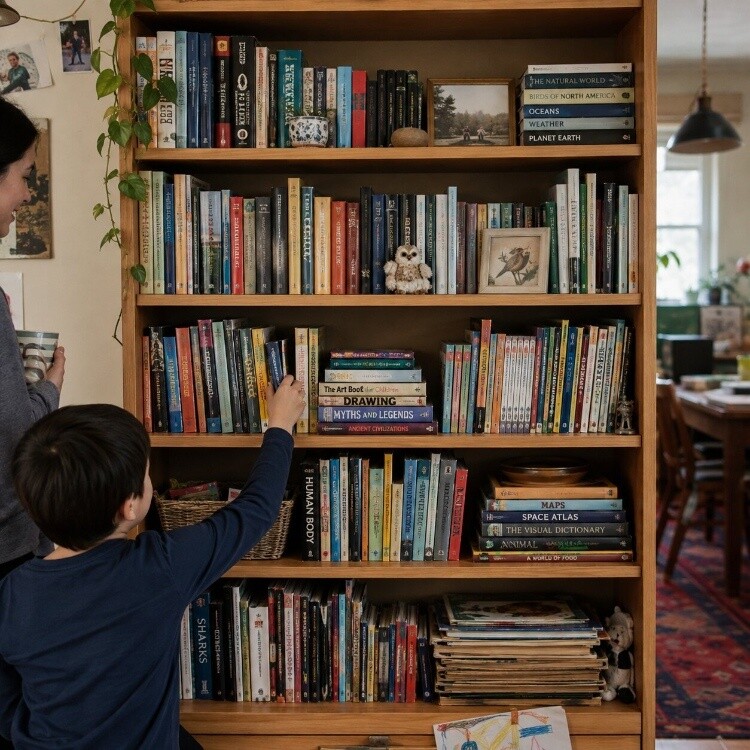
Ages 9-12 span the widest reading range in childhood — from reluctant readers needing hooks to voracious ones needing volume. The shelf strategy: genuine choice, format flexibility, and themes matching real pre-teen concerns.
The 9-12 reading landscape is genuinely diverse — children at wildly different reading levels and interests, navigating early identity questions that fiction can genuinely help process.
Fiction that resonates at this age
Coming-of-age and identity fiction — stories exploring belonging, fairness, and first independence — themes matching real pre-teen internal experience.
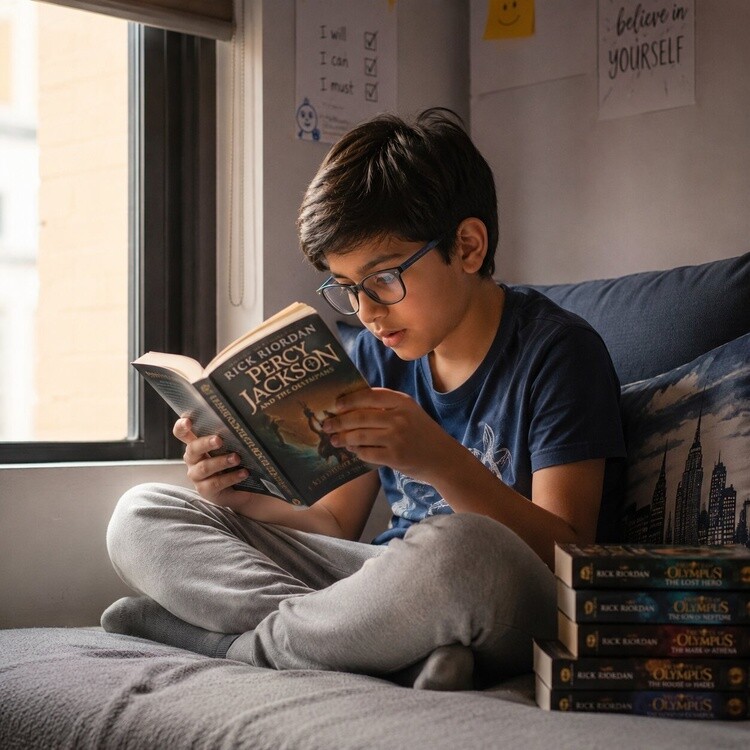
Fantasy and adventure series — immersive world-building offering escape and sustained engagement — often the volume-reading engine for this age group.
Mystery and thriller-lite — plot-driven page-turners building reading stamina through pure momentum.
School and friendship-centred realistic fiction — social dynamics, first crushes (handled age-appropriately), and peer pressure explored through characters.
Indian contemporary middle-grade — a genuinely growing category addressing Indian pre-teen life directly.
Historical fiction — Indian and world history brought alive through character-driven narrative.
Non-fiction for the specialist and the generalist
Biography offering role models beyond family and school. Science and technology deep-dives for the specialist reader. Current affairs and general knowledge digests, age-appropriately curated.
Format diversity, defended
Graphic novels at genuine middle-grade complexity now, verse novels, and audiobooks building comprehension and vocabulary — all legitimate reading, not consolation prizes.
Addressing the reading-gap reality directly
High-interest, controlled-vocabulary books serve struggling readers without condescension; graphic and audio formats bridge without shame.
The screen-competition reality, named
The books that win the competition tend to share qualities with what wins attention elsewhere — genuine stakes, humour, relatable protagonists, and momentum.