
 Summer Camp
 Reading Writing
 Book Club
 Calligraphy
 Creative Writing
 English Speaking
 Handwriting
 Library
 Phonics
 Story Telling
 Art and Craft
 Clay Moulding
 Drawing
 Painting
 Pottery
 Sketching
 Drama Theatre
 Personality Development
 Public Speaking
 Languages
 Arabic
 Chinese
 French
 German
 Hindi
Hindi Italian
 Japanese
 Korean
 Persian
 Portuguese
 Russian
 Spanish
 Turkish
 Uzbek
Uzbek Sports and Fitness
 Aerobics
 Athletics
 Badminton
 Basket Ball
 Chess
Chess Cricket
 Football
 Golf
Golf Gymnastics
 Hulahoop
 Karate
 Martial Arts
 Pickleball
 Rugby
Rugby Skating
 Swimming
 Taekwondo
 Tennis
 Volleyball
 Yoga
Yoga Zumba
Zumba Tuition Classes
 Accounts
 Biology
 Business Studies
 CBSE
CBSE Chemistry
 Commerce
 Economics
 Homework Classes
 IB Board
 IGCSE
IGCSE Mathematics
 Physics
 Psychology
 Science
 Social Studies
 Vedic Maths
 Dance and Music
 Ballet
 Bhangra
 Bharatnatyam
 Bollywood Dance
 Casio
Casio Dandiya and Garba
 Drums
Drums Flute
Flute Guitar
 Harmonium
 Hip Hop
 Jazz
Jazz Kathak
 Keyboard
 Piano
Piano Salsa
Salsa Shlokas
 Sitar
Sitar Tabla
Tabla Ukulele
 Violin
 Vocal
Vocal Play School
 STEM
STEM
 Abacus
 App Development
 Artificial intelligence
 Basic Computer Courses
 Canva
Canva Coding
 Graphic Design
 Lego
Lego Python
 Robotics
 Rubiks Cube
 Scrabble
 Scratch
 Website Development
 Winter Camp
 Workshops
 Diwali Workshop
 Easter
 Ganesh Mahotsav
 Guru Nanak Jayanti Workshop
 Holi
Holi Independence day workshop
 Janmashtami Workshop
 Mothers day
 Navratri Workshops
 Raksha Bandhan workshop
 Ramayana Workshop
 Spring Camp
 Valentines Day Workshops
 Festive
 Daycare
 Cooking and Food
 Spring Camp
 Contests and Competitions
 Special abled
 Republic Day Workshops
 Mela
Mela
 Mela
Mela Cognitive Development
 Mother-Toddler Program
-Jul-03-2026-06-59-25-1926-AM.webp?width=30&height=30&name=Smart_20Skills_20(2)-Jul-03-2026-06-59-25-1926-AM.webp) Smart Skills
Smart Skills
 Financial Literacy
 Mental Wellbeing
 Meditation
 Reiki
Reiki



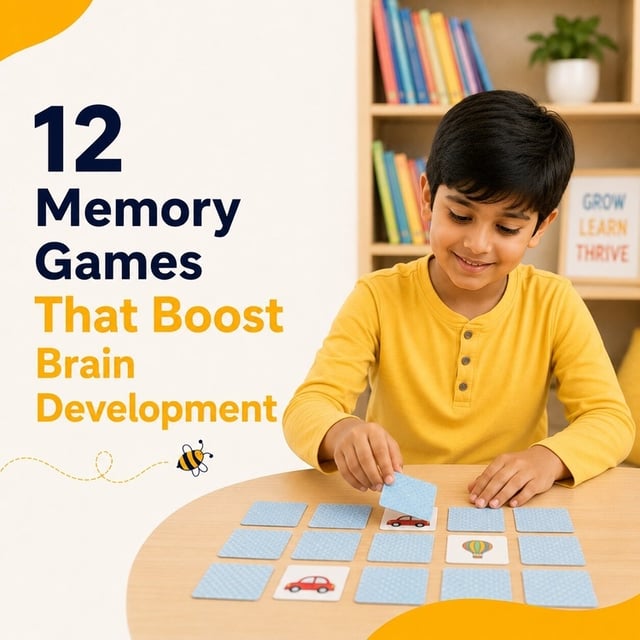
Memory skills — working memory, recall, and pattern recognition — are genuinely trainable through play, and many classic Indian family games already build these skills without any explicit "training" framing.
Memory isn't a fixed trait a child either has or doesn't — like most cognitive skills, it develops through practice, and games offer a genuinely enjoyable way to build it, often without a child even realising skill-building is happening.
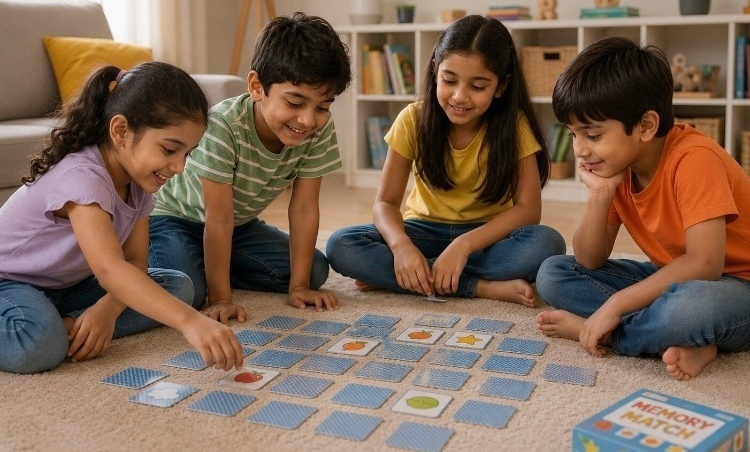
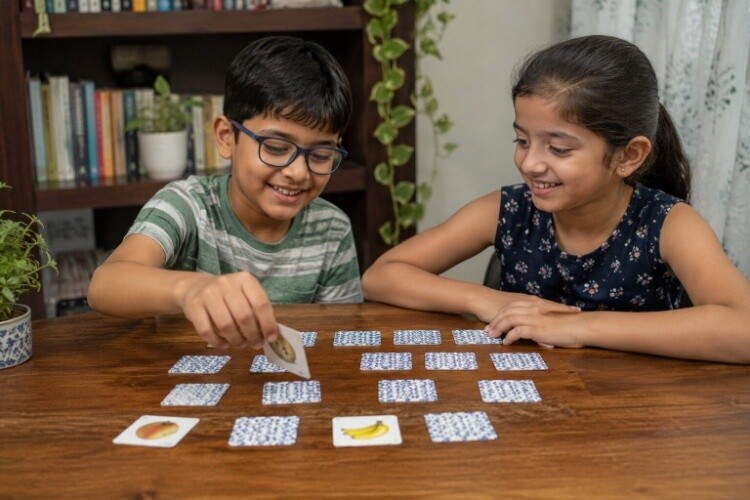
Classic memory/matching card games
Turning over pairs of cards to find matches remains one of the most effective, simple memory builders, easily homemade with any pair-picture set.

"I went to the market and bought..." chain game
A classic Indian family car-ride game — each person repeats the growing list and adds one item, building working memory through genuinely fun repetition.
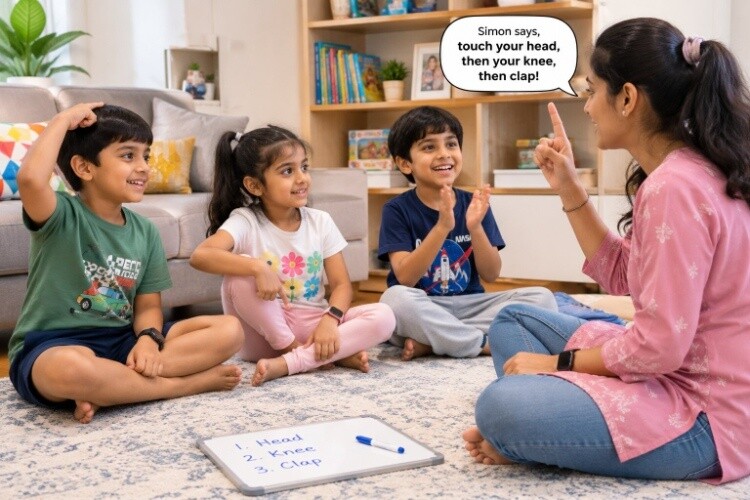
Simon Says with sequence memory
Beyond the classic version, adding sequence memory ("touch your head, then your knee, then clap") builds more advanced working memory.
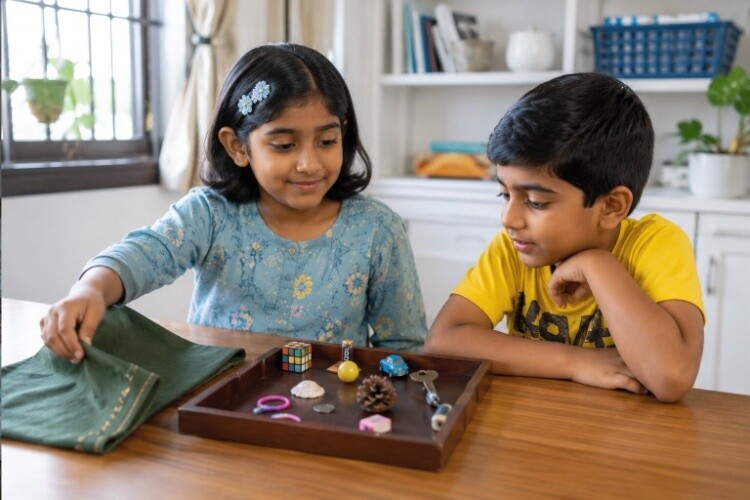
Kim's Game (memory tray)
Showing a tray of small objects briefly, covering it, and asking what's missing or what was there builds observational memory effectively.
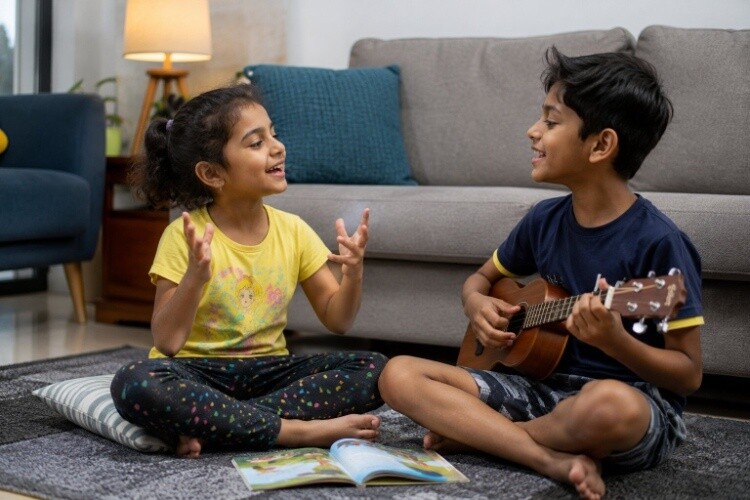
Song and rhyme memorisation
Learning and reciting songs, rhymes, or short poems by heart builds long-term memory encoding skills.
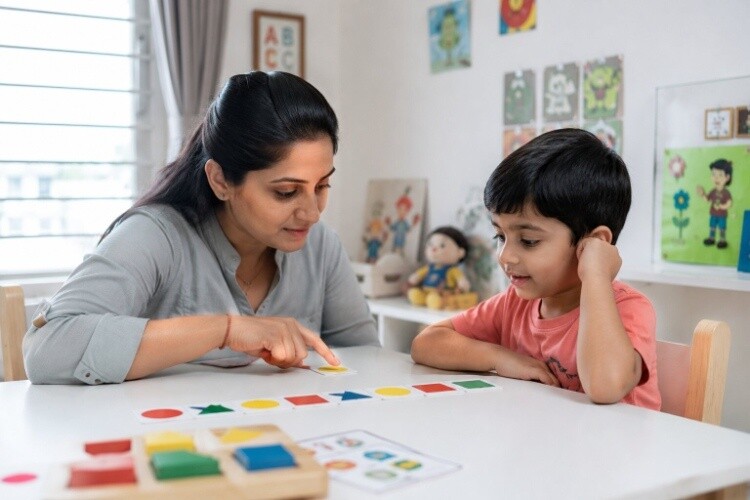
Sequence and pattern repetition games
Showing a simple pattern (colours, shapes, sounds) and asking a child to repeat it, gradually increasing complexity, builds working memory capacity.
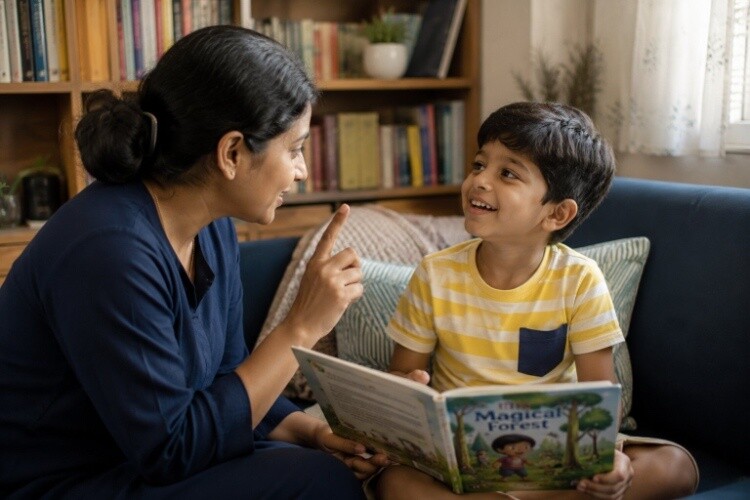
Storytelling with recall challenges
After telling or reading a story, asking a child to recall specific details (what colour was the character's shirt?) builds narrative memory.
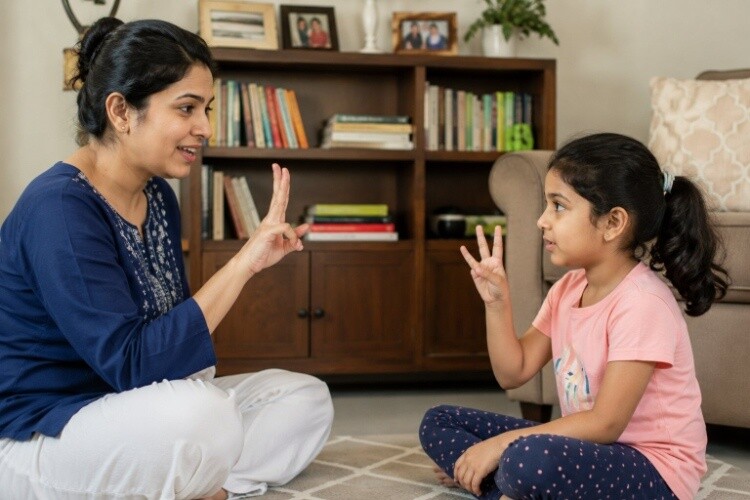
Number and word span games
Saying a short sequence of numbers or words and asking a child to repeat them back, gradually increasing length, is a simple, effective working memory builder.
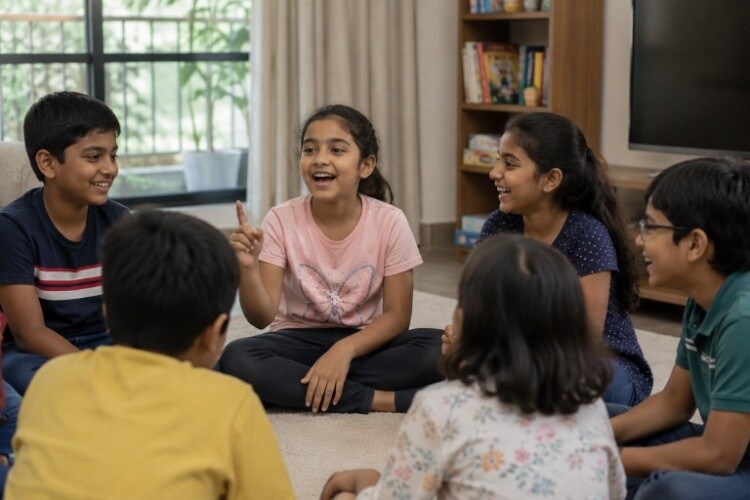
Antakshari and other song-chain games
Beyond entertainment value, Antakshari builds both memory recall (remembering song lyrics) and quick associative thinking.
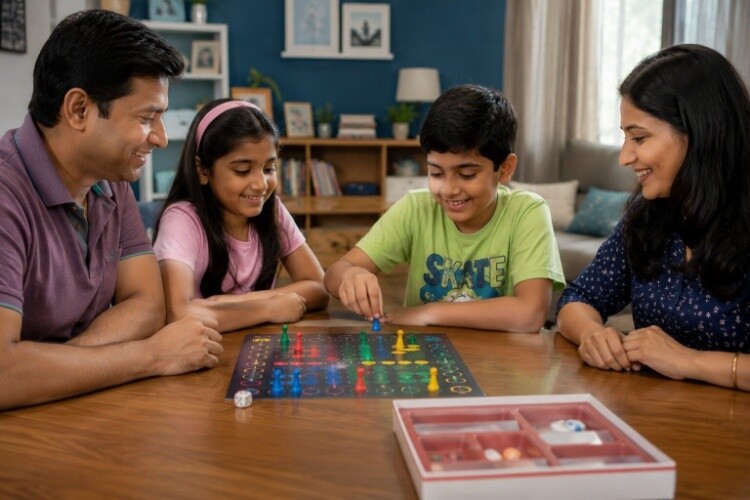
Board games requiring rule and turn memory
Many classic board games require remembering rules, previous moves, and strategy — genuine memory practice within an enjoyable format.
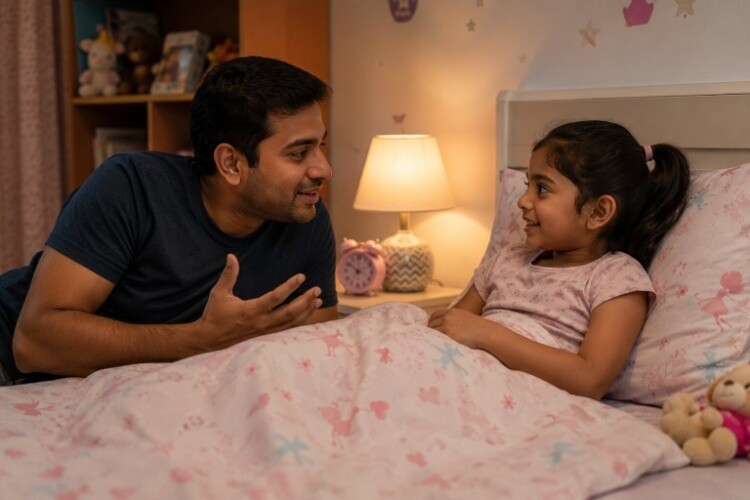
"What did we do today" bedtime recap
A simple nightly routine of recalling the day's events in order builds both memory and sequencing skills.
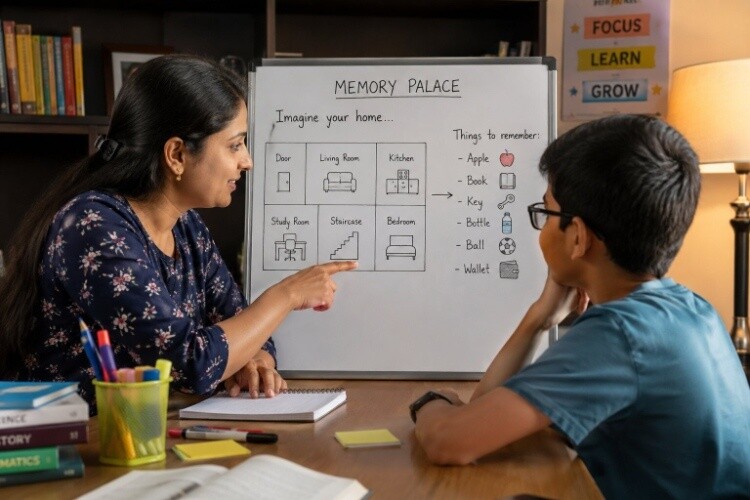
Memory palace / association techniques for older kids
For children around age 9-10 and older, simple introduction to memory association techniques (linking items to a familiar physical location) can be genuinely fun and build sophisticated memory strategy skills.
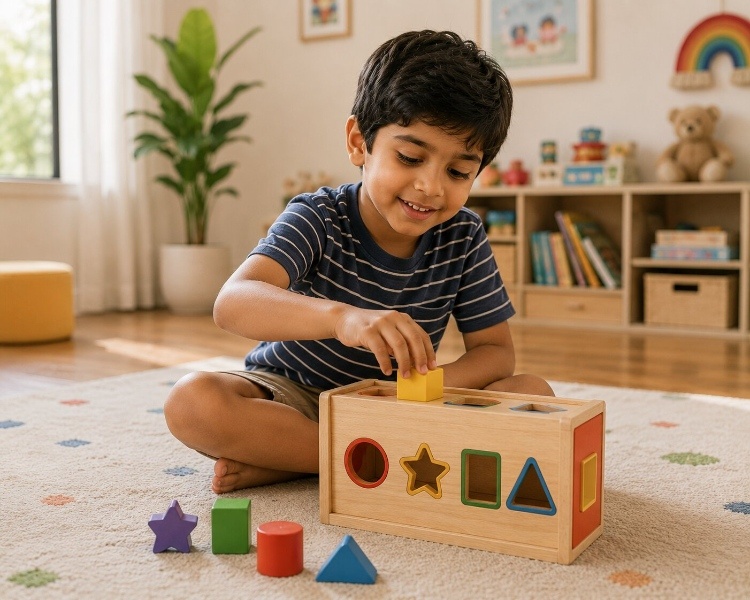
Why memory games matter beyond just recall ability
Strong working memory specifically supports mental math, following multi-step instructions, and reading comprehension — meaning memory game practice has genuine transfer value well beyond simply "remembering things better."

Fitting memory games into existing family traditions
Several of the most effective memory games here — Antakshari, the market list game — are already familiar parts of many Indian family traditions, particularly during car journeys or family gatherings, meaning genuine skill-building can happen without adding anything new to an already full schedule.
A realistic expectation for improvement
Memory capacity does genuinely improve with consistent practice, but progress is gradual — a child struggling with a 4-item sequence today might comfortably manage 6-7 items after weeks of regular, playful practice, and comparison to other children's memory capacity is far less useful than simply tracking a child's own gradual improvement over time.