
 Summer Camp
 Reading Writing
 Book Club
 Calligraphy
 Creative Writing
 English Speaking
 Handwriting
 Library
 Phonics
 Story Telling
 Art and Craft
 Clay Moulding
 Drawing
 Painting
 Pottery
 Sketching
 Drama Theatre
 Personality Development
 Public Speaking
 Languages
 Arabic
 Chinese
 French
 German
 Hindi
Hindi Italian
 Japanese
 Korean
 Persian
 Portuguese
 Russian
 Spanish
 Turkish
 Uzbek
Uzbek Sports and Fitness
 Aerobics
 Athletics
 Badminton
 Basket Ball
 Chess
Chess Cricket
 Football
 Golf
Golf Gymnastics
 Hulahoop
 Karate
 Martial Arts
 Pickleball
 Rugby
Rugby Skating
 Swimming
 Taekwondo
 Tennis
 Volleyball
 Yoga
Yoga Zumba
Zumba Tuition Classes
 Accounts
 Biology
 Business Studies
 CBSE
CBSE Chemistry
 Commerce
 Economics
 Homework Classes
 IB Board
 IGCSE
IGCSE Mathematics
 Physics
 Psychology
 Science
 Social Studies
 Vedic Maths
 Dance and Music
 Ballet
 Bhangra
 Bharatnatyam
 Bollywood Dance
 Casio
Casio Dandiya and Garba
 Drums
Drums Flute
Flute Guitar
 Harmonium
 Hip Hop
 Jazz
Jazz Kathak
 Keyboard
 Piano
Piano Salsa
Salsa Shlokas
 Sitar
Sitar Tabla
Tabla Ukulele
 Violin
 Vocal
Vocal Play School
 STEM
STEM
 Abacus
 App Development
 Artificial intelligence
 Basic Computer Courses
 Canva
Canva Coding
 Graphic Design
 Lego
Lego Python
 Robotics
 Rubiks Cube
 Scrabble
 Scratch
 Website Development
 Winter Camp
 Workshops
 Diwali Workshop
 Easter
 Ganesh Mahotsav
 Guru Nanak Jayanti Workshop
 Holi
Holi Independence day workshop
 Janmashtami Workshop
 Mothers day
 Navratri Workshops
 Raksha Bandhan workshop
 Ramayana Workshop
 Spring Camp
 Valentines Day Workshops
 Festive
 Daycare
 Cooking and Food
 Spring Camp
 Contests and Competitions
 Special abled
 Republic Day Workshops
 Mela
Mela
 Mela
Mela Cognitive Development
 Mother-Toddler Program
-Jul-03-2026-06-59-25-1926-AM.webp?width=30&height=30&name=Smart_20Skills_20(2)-Jul-03-2026-06-59-25-1926-AM.webp) Smart Skills
Smart Skills
 Financial Literacy
 Mental Wellbeing
 Meditation
 Reiki
Reiki




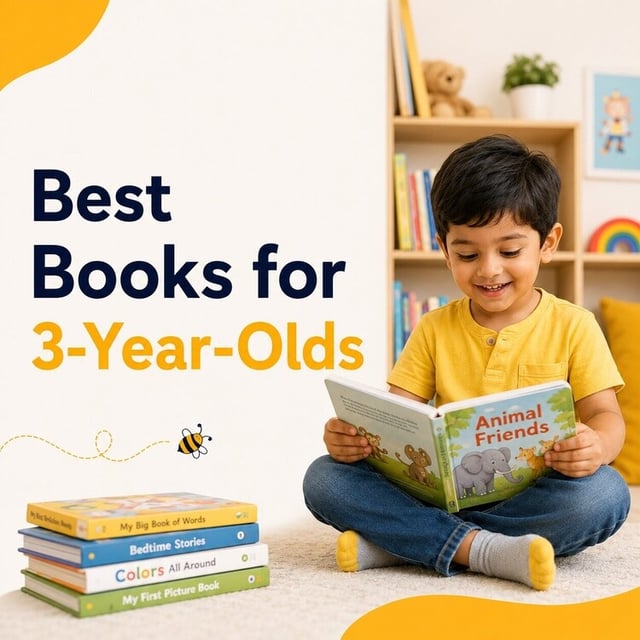
Three-year-olds want real stories now — plots with small problems, characters with feelings, and humour they can catch. Here's what fills the shelf between toddler board books and school readers.
At three, story comprehension arrives properly: they follow plots, worry for characters, laugh at absurdity, and connect stories to their own lives. The bookshelf should meet this leap.
What works now
Stories with genuine (small) problems — a lost toy, a scared first day, a sharing dispute — tension and resolution at preschool scale.
Character emotions named and shown — books where characters feel jealous, scared, or proud build the emotional vocabulary this age is constructing.
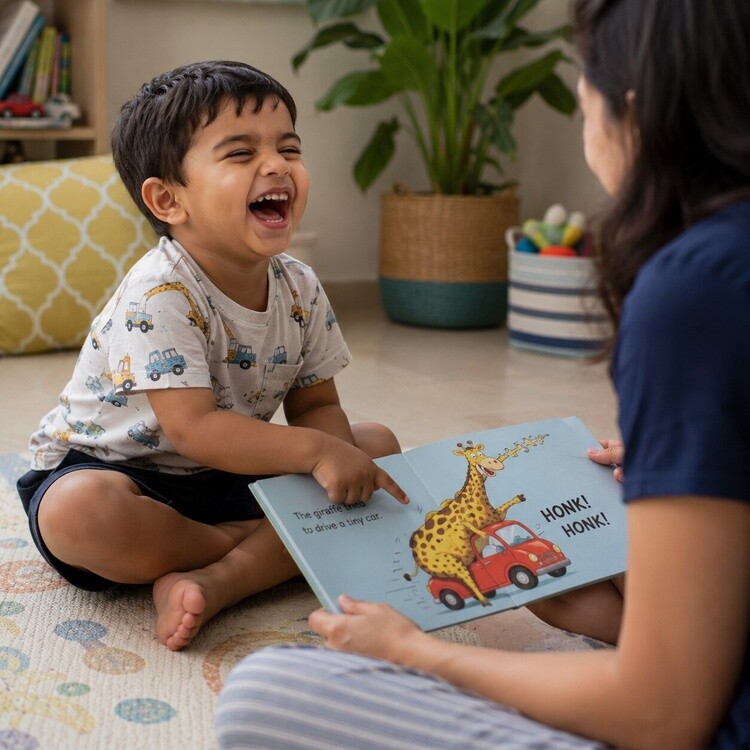
Humour with logic — absurdity they can catch: the dog in the pajamas, the upside-down house. Getting the joke is comprehension in action.
Rich, rhythmic language — vocabulary now stretches well past speech; books deliver words conversation doesn't.
Their world, plus one step — preschool stories, new-sibling stories, doctor-visit stories — life rehearsed through characters first.
Indian stories and settings — Tulika, Karadi Tales, Pratham, and Eklavya titles where festivals, foods, and families mirror their own; Panchatantra retellings begin landing properly now.
Reading habits that deepen the value
Dialogic reading matures: "Why is he sad? What would you do?" — comprehension questions as conversation, not quiz. Prediction games at page turns. Connecting stories to life ("remember when you also lost your ball?"). And the repeat-request loop continues serving development — the fifteenth reading builds vocabulary the first one introduced.
Print awareness, gently
Occasionally tracking words with a finger, noticing the title, letting them turn pages and "find" the start — ambient print familiarity, no drills attached. Children absorb how books work years before reading them.
Library and budget notes
Three-year-olds consume stories faster than shelves refill economically: library memberships, the parent-circle book exchange, and Pratham's low-cost catalogue keep variety flowing. Ten owned favourites plus rotating borrowed variety beats fifty owned once-reads.
The bedtime constant
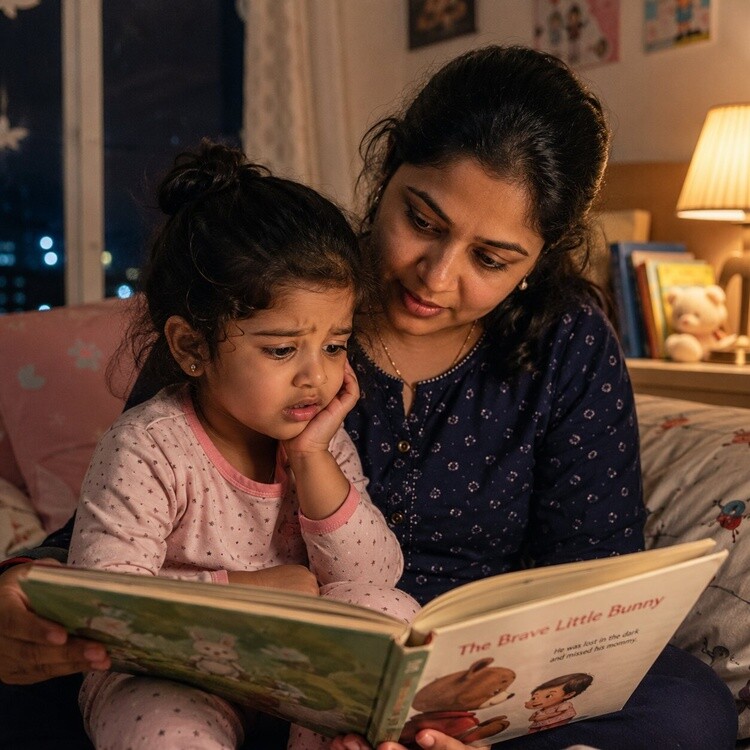
The fifteen-minute bedtime read remains the single highest-value literacy habit available — and at three, it's also becoming the day's debrief and the anxiety-processing hour. Protect it.