
 Summer Camp
 Reading Writing
 Book Club
 Calligraphy
 Creative Writing
 English Speaking
 Handwriting
 Library
 Phonics
 Story Telling
 Art and Craft
 Clay Moulding
 Drawing
 Painting
 Pottery
 Sketching
 Drama Theatre
 Personality Development
 Public Speaking
 Languages
 Arabic
 Chinese
 French
 German
 Hindi
Hindi Italian
 Japanese
 Korean
 Persian
 Portuguese
 Russian
 Spanish
 Turkish
 Uzbek
Uzbek Sports and Fitness
 Aerobics
 Athletics
 Badminton
 Basket Ball
 Chess
Chess Cricket
 Football
 Golf
Golf Gymnastics
 Hulahoop
 Karate
 Martial Arts
 Pickleball
 Rugby
Rugby Skating
 Swimming
 Taekwondo
 Tennis
 Volleyball
 Yoga
Yoga Zumba
Zumba Tuition Classes
 Accounts
 Biology
 Business Studies
 CBSE
CBSE Chemistry
 Commerce
 Economics
 Homework Classes
 IB Board
 IGCSE
IGCSE Mathematics
 Physics
 Psychology
 Science
 Social Studies
 Vedic Maths
 Dance and Music
 Ballet
 Bhangra
 Bharatnatyam
 Bollywood Dance
 Casio
Casio Dandiya and Garba
 Drums
Drums Flute
Flute Guitar
 Harmonium
 Hip Hop
 Jazz
Jazz Kathak
 Keyboard
 Piano
Piano Salsa
Salsa Shlokas
 Sitar
Sitar Tabla
Tabla Ukulele
 Violin
 Vocal
Vocal Play School
 STEM
STEM
 Abacus
 App Development
 Artificial intelligence
 Basic Computer Courses
 Canva
Canva Coding
 Graphic Design
 Lego
Lego Python
 Robotics
 Rubiks Cube
 Scrabble
 Scratch
 Website Development
 Winter Camp
 Workshops
 Diwali Workshop
 Easter
 Ganesh Mahotsav
 Guru Nanak Jayanti Workshop
 Holi
Holi Independence day workshop
 Janmashtami Workshop
 Mothers day
 Navratri Workshops
 Raksha Bandhan workshop
 Ramayana Workshop
 Spring Camp
 Valentines Day Workshops
 Festive
 Daycare
 Cooking and Food
 Spring Camp
 Contests and Competitions
 Special abled
 Republic Day Workshops
 Mela
Mela
 Mela
Mela Cognitive Development
 Mother-Toddler Program
-Jul-03-2026-06-59-25-1926-AM.webp?width=30&height=30&name=Smart_20Skills_20(2)-Jul-03-2026-06-59-25-1926-AM.webp) Smart Skills
Smart Skills
 Financial Literacy
 Mental Wellbeing
 Meditation
 Reiki
Reiki



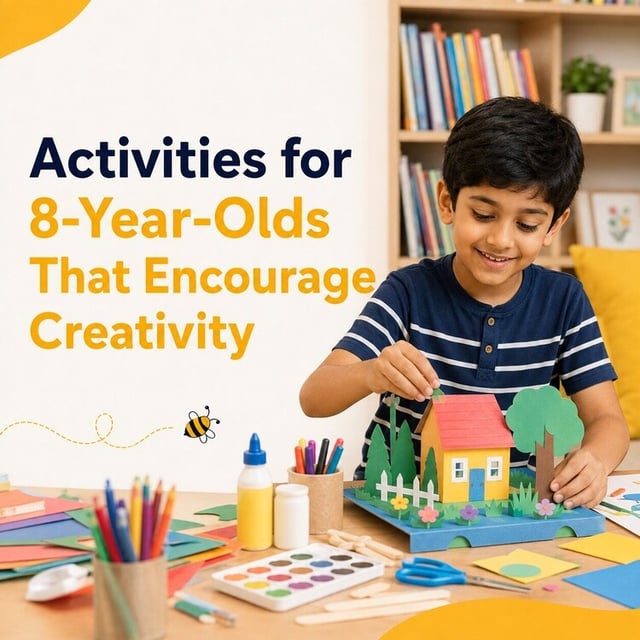
Eight-year-old creativity goes project-scale — multi-day builds, invented worlds, first real making across mediums. The support it needs: materials, time, and an audience that doesn't take over.
At eight, creativity develops ambition: single-session art becomes multi-day projects, pretend play becomes world-building, and "look what I made" starts meaning something substantial.
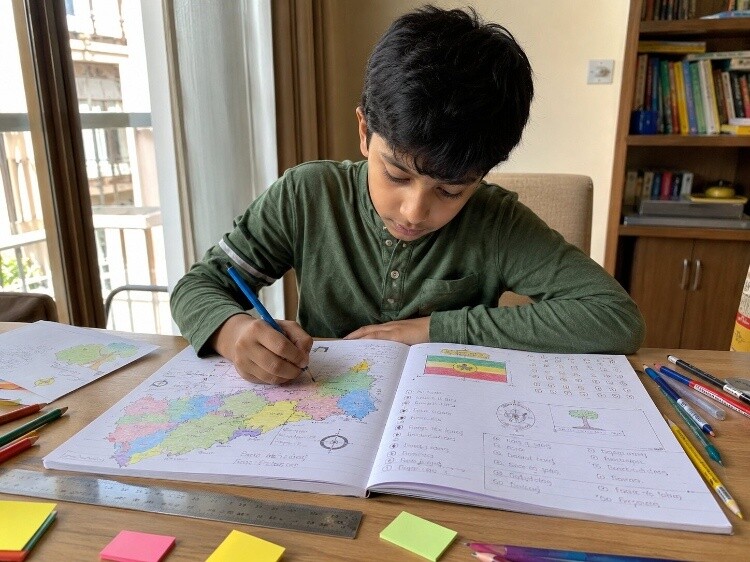
World-building projects
Invented countries with maps, flags, languages, and laws — the notebook-consuming deep game of this age.
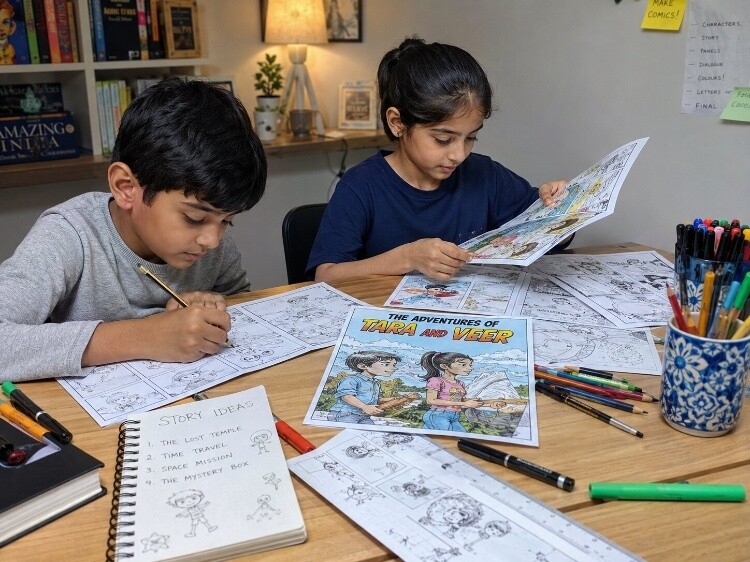
Comic book production
Multi-page stories with panels, speech bubbles, and cover art — the natural eight-year-old publishing format.
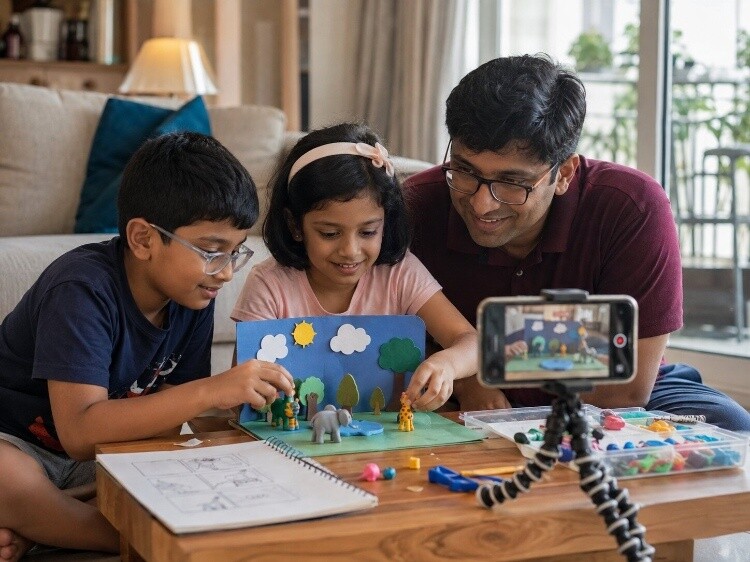
Stop-motion experiments
Toy-and-phone animation (a parent-supervised camera use) — patience-intensive magic.
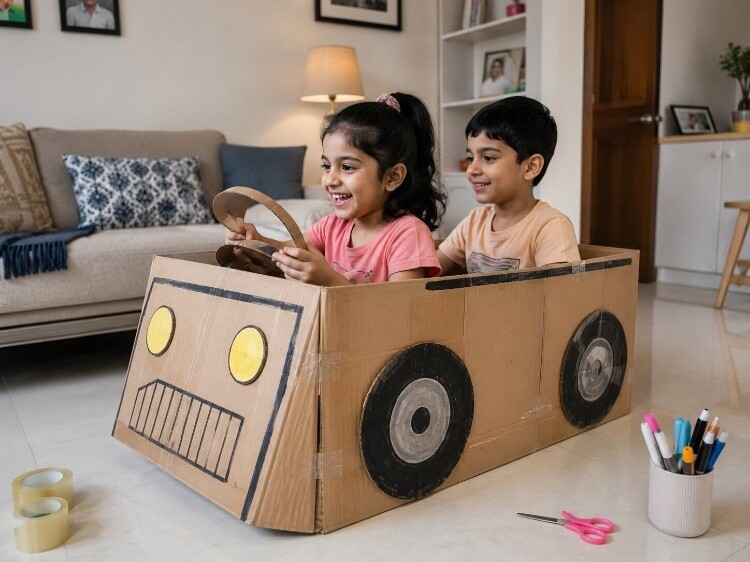
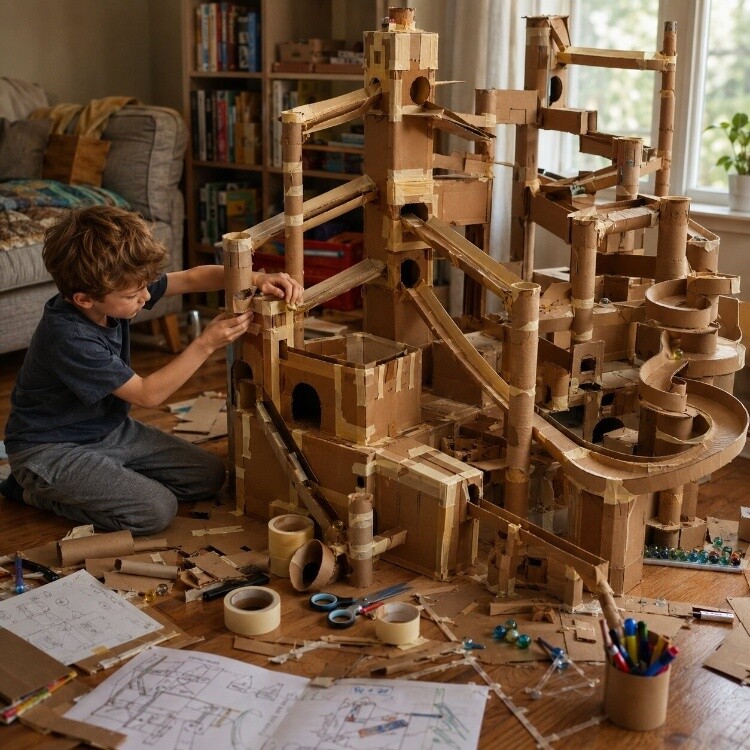
Cardboard engineering
Marble runs, pinball machines, automata attempts — the recycling stash meets real mechanism ambition.
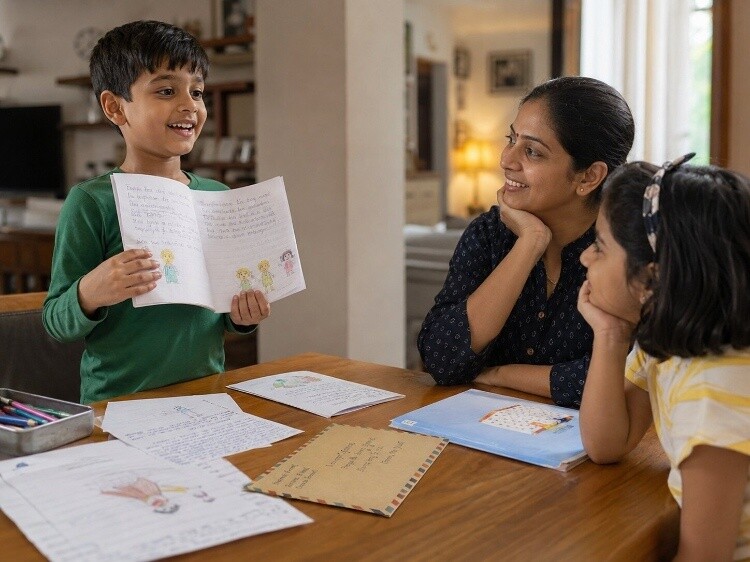
Story writing with real stakes
Stories written for an audience: the family reading, the grandparent post, the class — authorship going public.
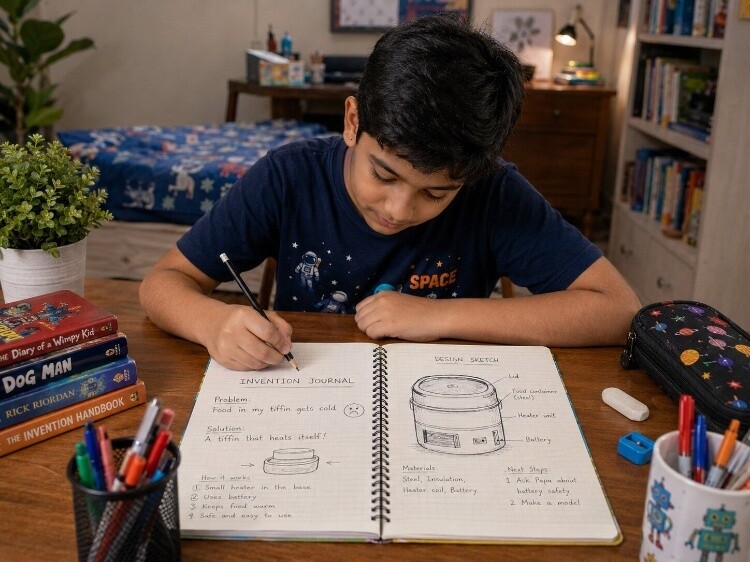
Invention journals
Problem-spotting and solution-sketching ("a tiffin that heats itself") — the inventor's habit of mind on paper.
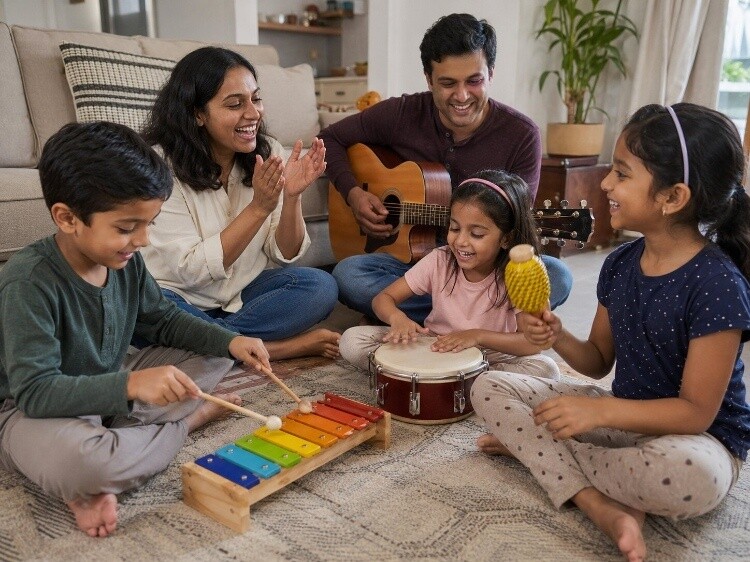
Music making
First instrument exploration, body-percussion compositions, or family-band productions — organised sound as creative medium.
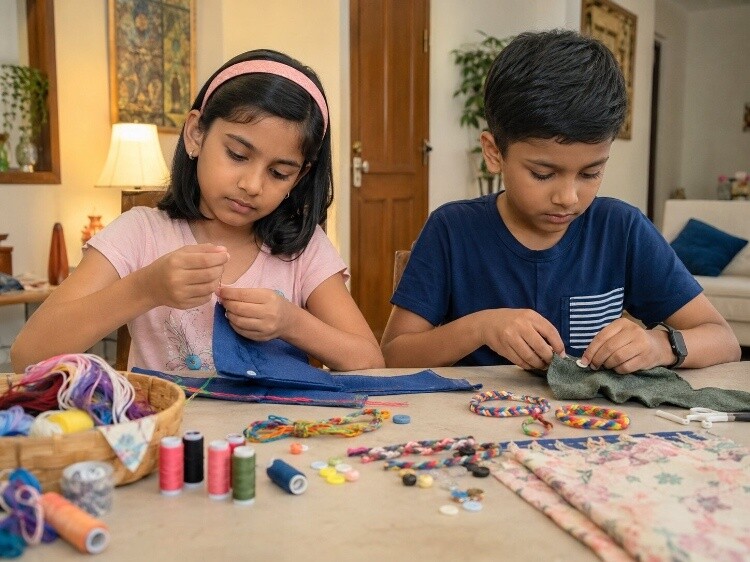
Sewing and craft upgrades
Real needle basics, friendship bands, button repairs — textile competence meeting creative application.
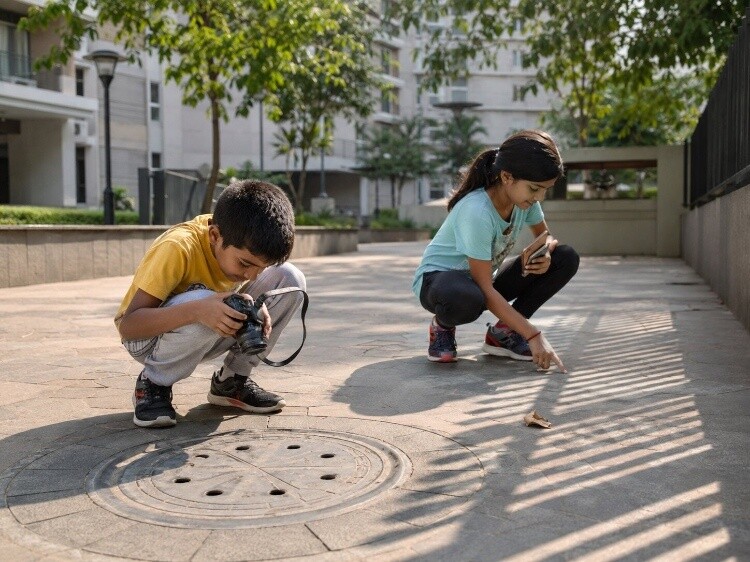
Photography missions
Themed shoots (circles, shadows, "things nobody notices") with any available camera — seeing as the skill.
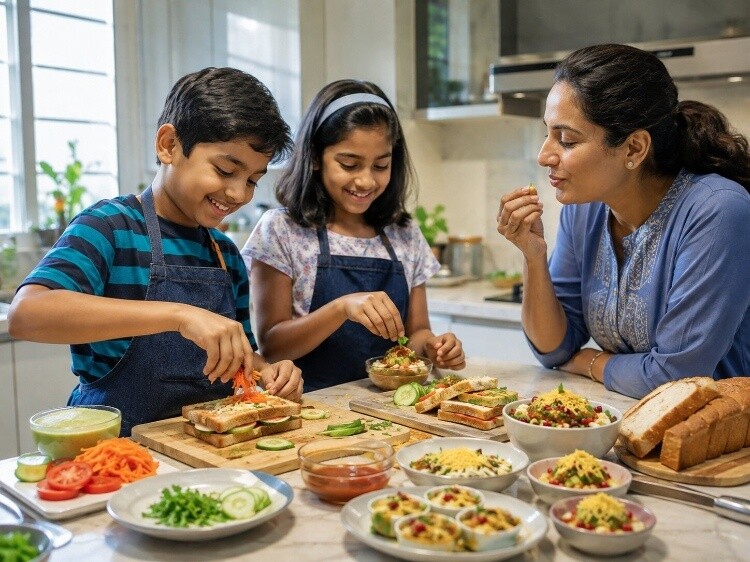
Recipe invention
Sandwich and chaat R&D with family taste-testing — creativity with edible feedback loops.
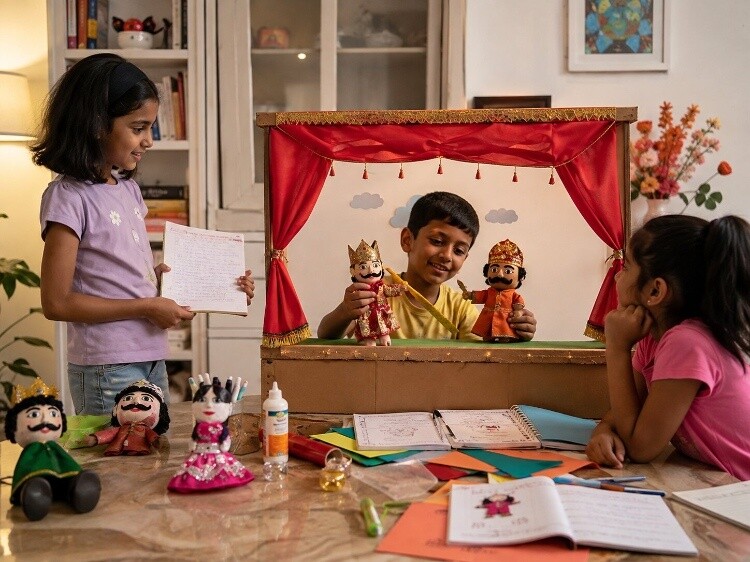
Puppet theatre productions
Script, puppets, stage, and performance — the full production pipeline in miniature.
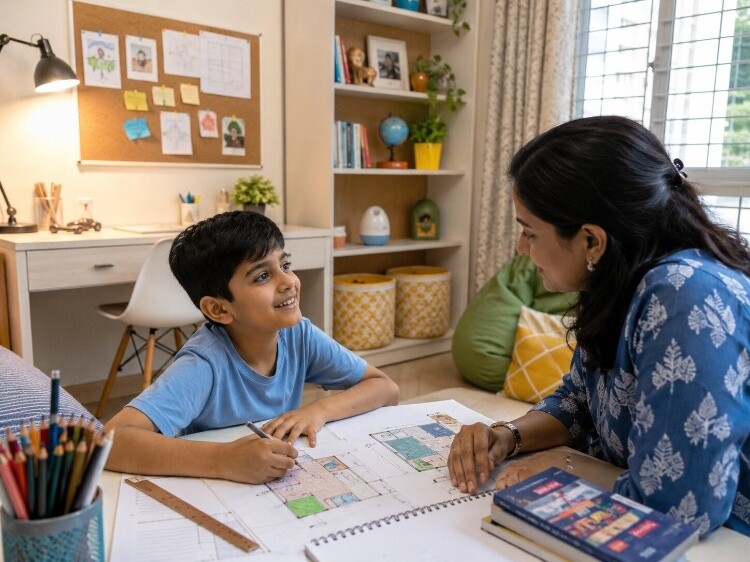
Room and space design
Their corner redesigned on paper then (negotiated) reality — spatial creativity with lived results.
The multi-day project shift
The developmental leap here is sustained creative ambition — projects surviving overnight, revised across days, and finished for real. Supporting it: workspace that can stay set up (the perpetual-puzzle tray principle extended), visible progress acknowledgment, and rescue-resistance when the middle gets hard — the abandoned-project pattern often traces to adult over-help at the first frustration.
Audience without takeover
Eight-year-old makers want audience — and the audience's job is reception, not direction. The comic gets read (fully, with laughing at the right parts), the invention journal gets serious questions, the puppet show gets attended — and none of them get improved-by-adults. Publication venues help: the fridge gallery graduates to the family WhatsApp, the grandparent post, the school submission.
When making wants more
The child sustaining project-scale making is ready for structured creative development where the interest points — art programs, creative writing groups, music lessons, maker and robotics clubs — the ecosystem across Delhi NCR now serves every one of these lanes at this age.