
 Summer Camp
 Reading Writing
 Book Club
 Calligraphy
 Creative Writing
 English Speaking
 Handwriting
 Library
 Phonics
 Story Telling
 Art and Craft
 Clay Moulding
 Drawing
 Painting
 Pottery
 Sketching
 Drama Theatre
 Personality Development
 Public Speaking
 Languages
 Arabic
 Chinese
 French
 German
 Hindi
Hindi Italian
 Japanese
 Korean
 Persian
 Portuguese
 Russian
 Spanish
 Turkish
 Uzbek
Uzbek Sports and Fitness
 Aerobics
 Athletics
 Badminton
 Basket Ball
 Chess
Chess Cricket
 Football
 Golf
Golf Gymnastics
 Hulahoop
 Karate
 Martial Arts
 Pickleball
 Rugby
Rugby Skating
 Swimming
 Taekwondo
 Tennis
 Volleyball
 Yoga
Yoga Zumba
Zumba Tuition Classes
 Accounts
 Biology
 Business Studies
 CBSE
CBSE Chemistry
 Commerce
 Economics
 Homework Classes
 IB Board
 IGCSE
IGCSE Mathematics
 Physics
 Psychology
 Science
 Social Studies
 Vedic Maths
 Dance and Music
 Ballet
 Bhangra
 Bharatnatyam
 Bollywood Dance
 Casio
Casio Dandiya and Garba
 Drums
Drums Flute
Flute Guitar
 Harmonium
 Hip Hop
 Jazz
Jazz Kathak
 Keyboard
 Piano
Piano Salsa
Salsa Shlokas
 Sitar
Sitar Tabla
Tabla Ukulele
 Violin
 Vocal
Vocal Play School
 STEM
STEM
 Abacus
 App Development
 Artificial intelligence
 Basic Computer Courses
 Canva
Canva Coding
 Graphic Design
 Lego
Lego Python
 Robotics
 Rubiks Cube
 Scrabble
 Scratch
 Website Development
 Winter Camp
 Workshops
 Diwali Workshop
 Easter
 Ganesh Mahotsav
 Guru Nanak Jayanti Workshop
 Holi
Holi Independence day workshop
 Janmashtami Workshop
 Mothers day
 Navratri Workshops
 Raksha Bandhan workshop
 Ramayana Workshop
 Spring Camp
 Valentines Day Workshops
 Festive
 Daycare
 Cooking and Food
 Spring Camp
 Contests and Competitions
 Special abled
 Republic Day Workshops
 Mela
Mela
 Mela
Mela Cognitive Development
 Mother-Toddler Program
-Jul-03-2026-06-59-25-1926-AM.webp?width=30&height=30&name=Smart_20Skills_20(2)-Jul-03-2026-06-59-25-1926-AM.webp) Smart Skills
Smart Skills
 Financial Literacy
 Mental Wellbeing
 Meditation
 Reiki
Reiki



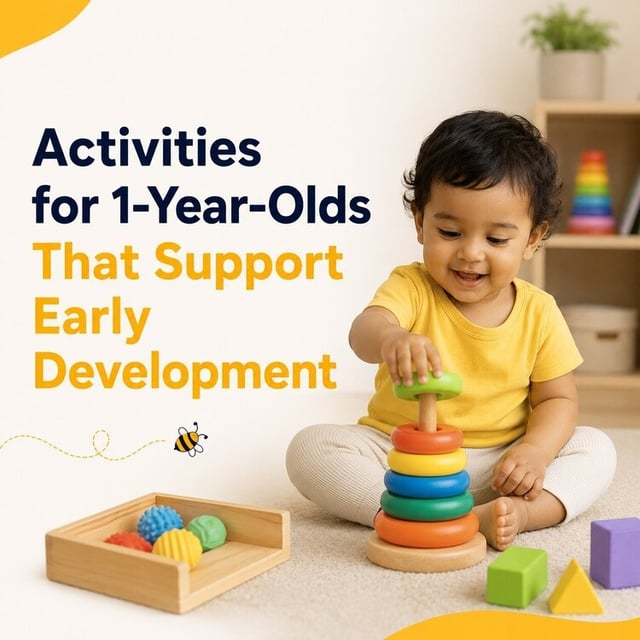
One-year-olds learn through simple, repeated everyday interactions — no special equipment or programs needed. These activities support motor, language, and cognitive development using what's already in your home.
The first year's dramatic milestones — sitting, crawling, maybe first steps — can make parents feel the second year needs equally dramatic "developmental activities." The reality is simpler and more reassuring: at this age, the richest developmental input is ordinary interaction, repeated often, with an attentive adult.
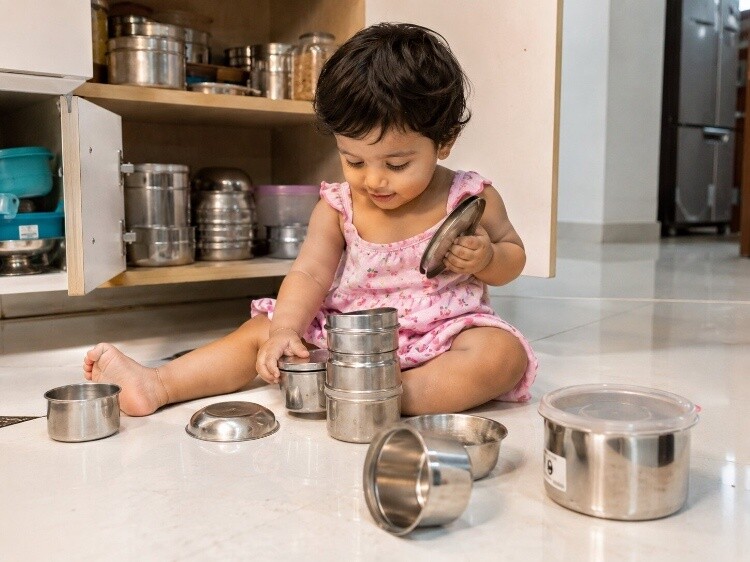
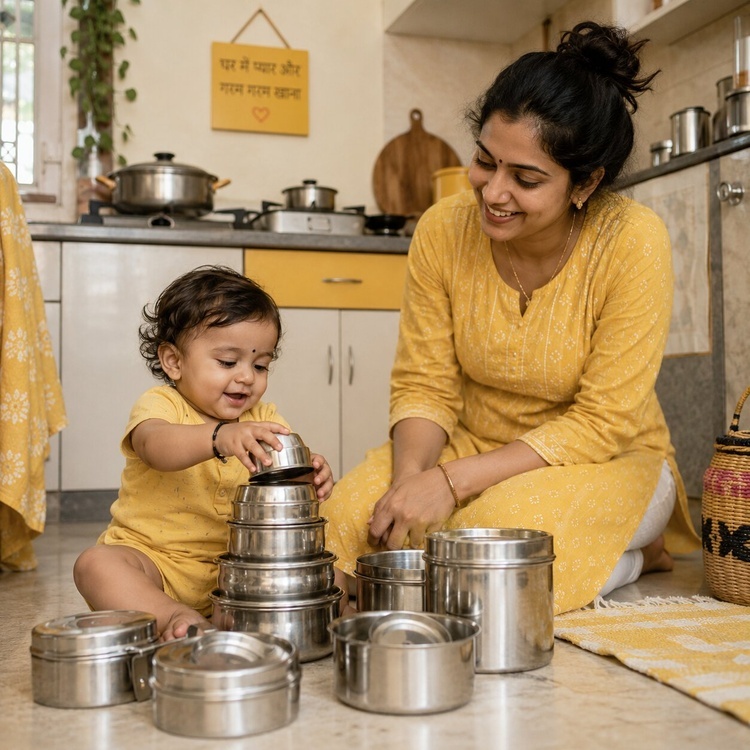
Container play with kitchen items
Steel bowls, dabbas, and cups of different sizes — stacking, nesting, and banging them together builds spatial understanding and cause-and-effect thinking. The kitchen shelf a one-year-old empties repeatedly isn't mischief; it's genuinely productive exploration.
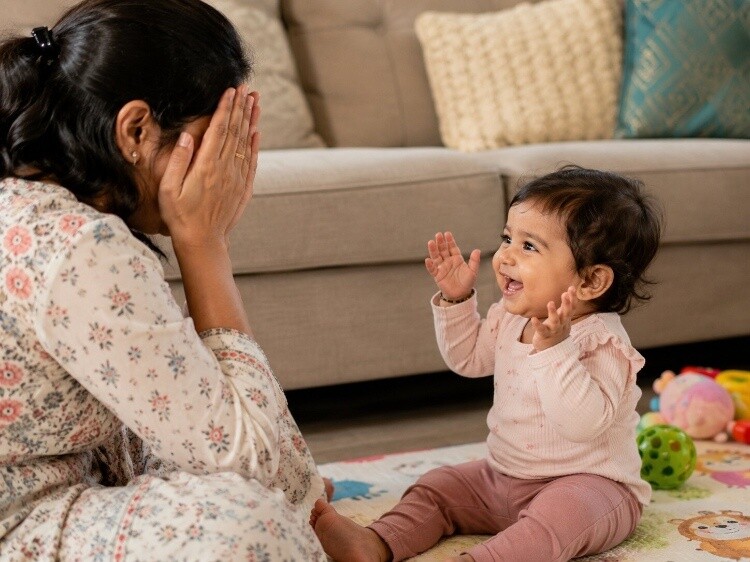
Peek-a-boo and hiding games
Beyond the giggles, peek-a-boo builds object permanence — the understanding that things continue existing when out of sight — a foundational cognitive milestone at this age.
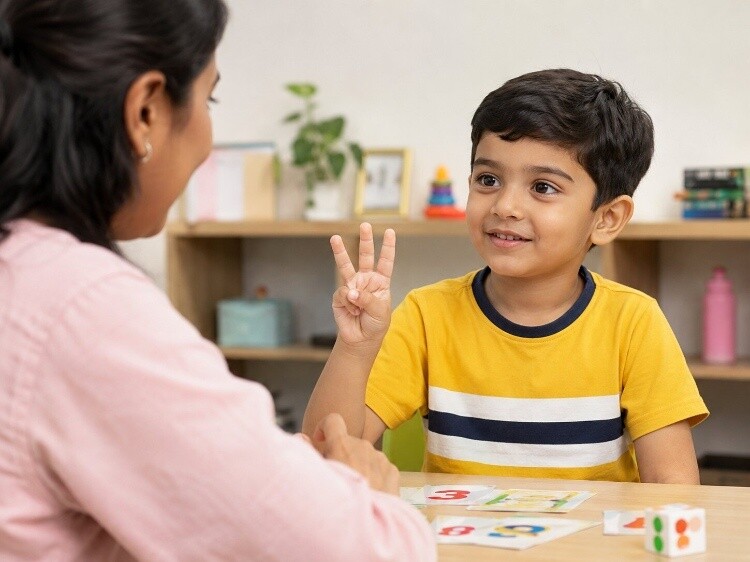
Narrated daily routines
Simply describing what you're doing during a nappy change, bath, or meal ("now we're washing your hands, the water is warm") builds language exposure at exactly the pace a one-year-old's brain absorbs it.
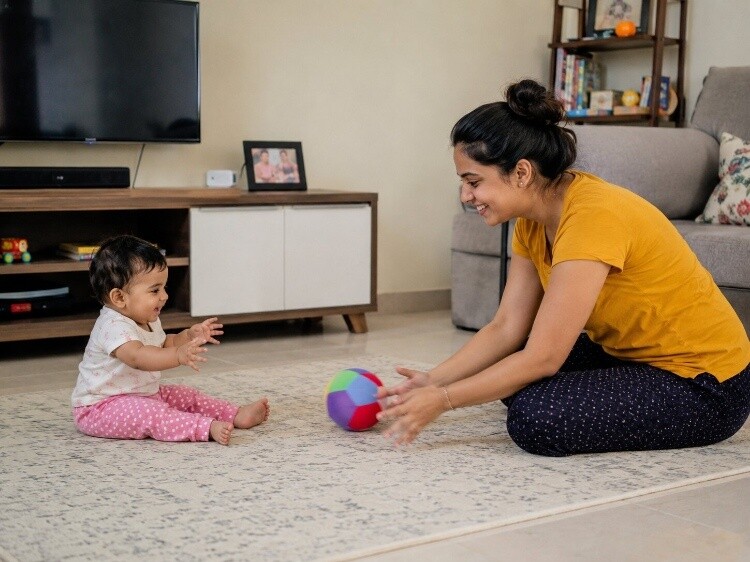
Simple ball rolling
Sitting across from your child and rolling a soft ball back and forth builds tracking, coordination, and the earliest turn-taking — a genuine social skill foundation.
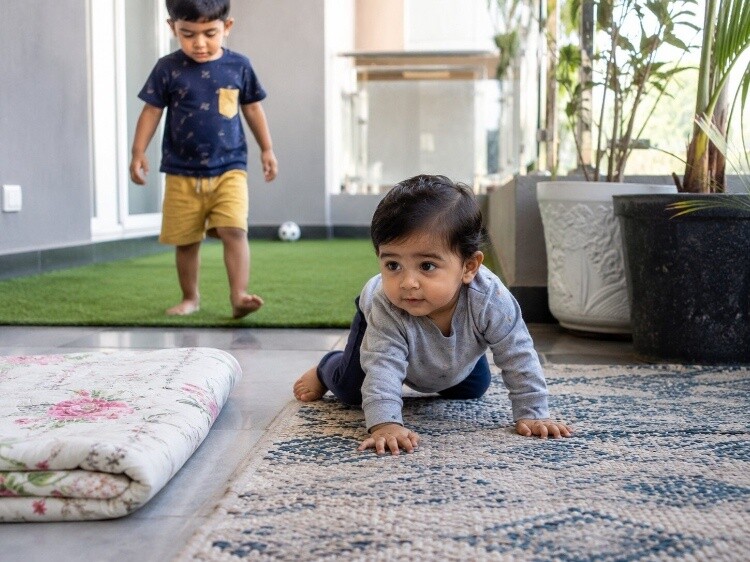
Textured walking and crawling surfaces
Letting your child move across different textures — a durrie, a smooth floor, grass in the park, a folded razai — builds sensory and balance development through ordinary variety.
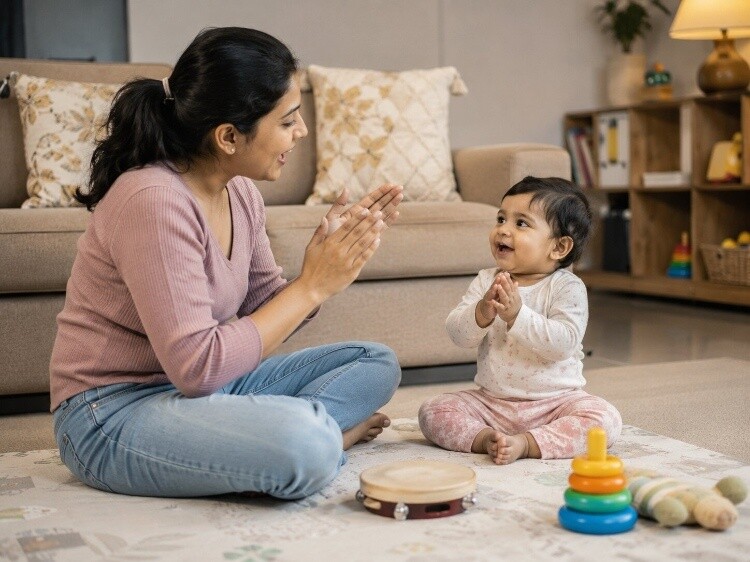
Music, clapping, and simple action rhymes
Familiar rhymes with actions build rhythm, anticipation, and early language patterning. The repetition that bores adults is exactly what a one-year-old's developing brain wants.
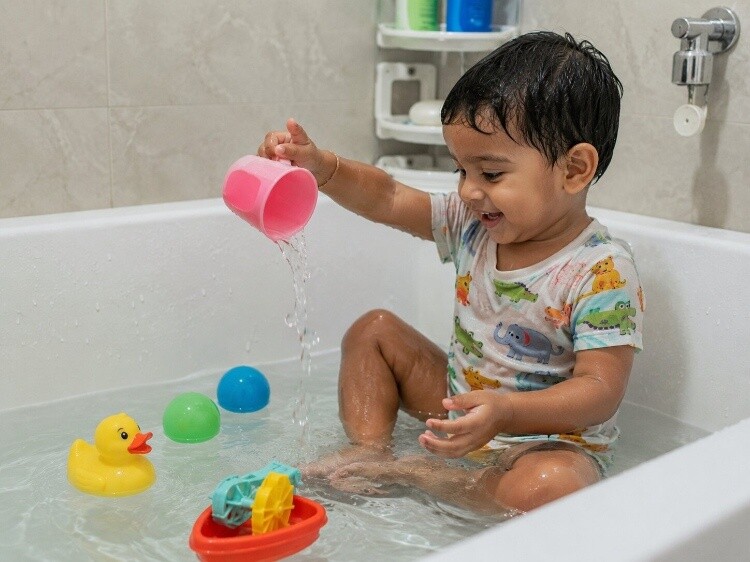
Water play during bath time
Cups for pouring, floating objects, splashing — bath time doubles as sensory and motor development time with zero extra setup.
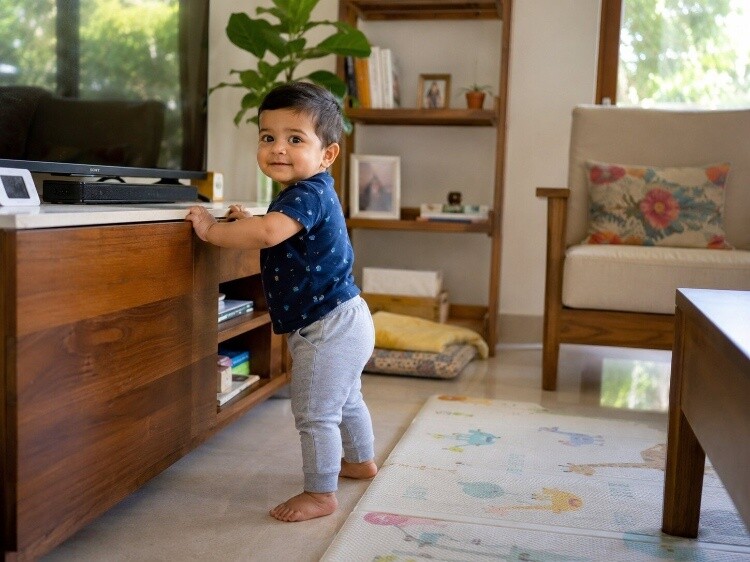
Sturdy furniture cruising
Arranging safe, stable furniture so a new walker can cruise along it supports the walking transition naturally — no walker device needed (paediatricians generally advise against wheeled walkers).
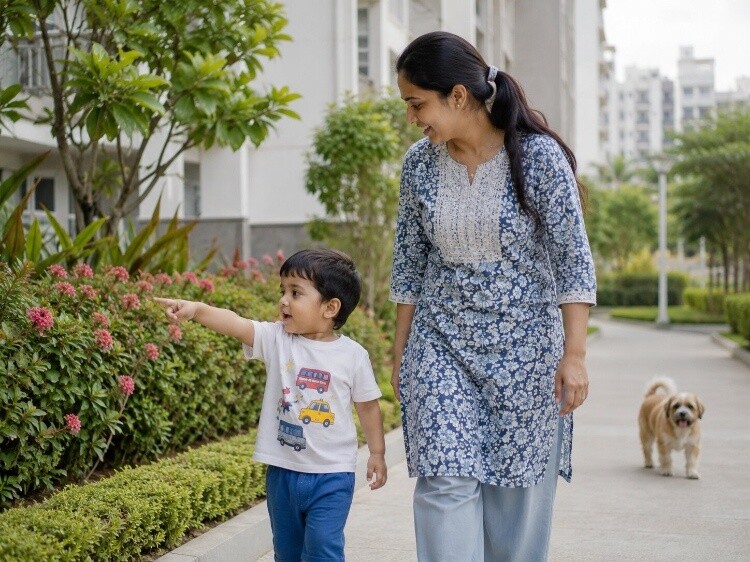
Pointing and naming walks
A slow walk around the colony or society garden, pointing at and naming things — dog, flower, auto, bird — is one of the highest-value language activities available at this age.
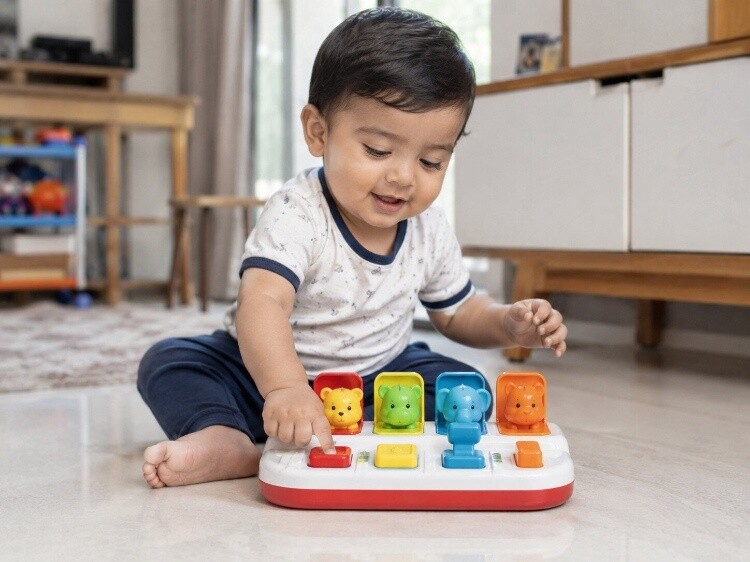
Simple cause-and-effect toys
Toys where an action produces a clear result — a button that makes a sound, a lever that pops something up — build the earliest understanding that actions have effects.
What one-year-olds don't need
Flashcards, academic programs, and screen-based "learning" apps offer no meaningful advantage at this age — and the marketing suggesting otherwise preys on parental anxiety. Responsive interaction with familiar adults remains the gold standard, and it's free.
A note for households with multiple caregivers
In homes where grandparents or domestic help share care, the biggest developmental lever is ensuring everyone interacts and talks with the baby rather than parking them with passive entertainment. A helper who chats and plays during care routines adds genuine developmental value; a phone propped up in front of a one-year-old does the opposite.
Looking ahead
Around age two, many parents start exploring structured toddler activities — playgroups, mother-toddler classes, music and movement sessions. There's no rush, but knowing what's available nearby helps when the time feels right.