
 Summer Camp
 Reading Writing
 Book Club
 Calligraphy
 Creative Writing
 English Speaking
 Handwriting
 Library
 Phonics
 Story Telling
 Art and Craft
 Clay Moulding
 Drawing
 Painting
 Pottery
 Sketching
 Drama Theatre
 Personality Development
 Public Speaking
 Languages
 Arabic
 Chinese
 French
 German
 Hindi
Hindi Italian
 Japanese
 Korean
 Persian
 Portuguese
 Russian
 Spanish
 Turkish
 Uzbek
Uzbek Sports and Fitness
 Aerobics
 Athletics
 Badminton
 Basket Ball
 Chess
Chess Cricket
 Football
 Golf
Golf Gymnastics
 Hulahoop
 Karate
 Martial Arts
 Pickleball
 Rugby
Rugby Skating
 Swimming
 Taekwondo
 Tennis
 Volleyball
 Yoga
Yoga Zumba
Zumba Tuition Classes
 Accounts
 Biology
 Business Studies
 CBSE
CBSE Chemistry
 Commerce
 Economics
 Homework Classes
 IB Board
 IGCSE
IGCSE Mathematics
 Physics
 Psychology
 Science
 Social Studies
 Vedic Maths
 Dance and Music
 Ballet
 Bhangra
 Bharatnatyam
 Bollywood Dance
 Casio
Casio Dandiya and Garba
 Drums
Drums Flute
Flute Guitar
 Harmonium
 Hip Hop
 Jazz
Jazz Kathak
 Keyboard
 Piano
Piano Salsa
Salsa Shlokas
 Sitar
Sitar Tabla
Tabla Ukulele
 Violin
 Vocal
Vocal Play School
 STEM
STEM
 Abacus
 App Development
 Artificial intelligence
 Basic Computer Courses
 Canva
Canva Coding
 Graphic Design
 Lego
Lego Python
 Robotics
 Rubiks Cube
 Scrabble
 Scratch
 Website Development
 Winter Camp
 Workshops
 Diwali Workshop
 Easter
 Ganesh Mahotsav
 Guru Nanak Jayanti Workshop
 Holi
Holi Independence day workshop
 Janmashtami Workshop
 Mothers day
 Navratri Workshops
 Raksha Bandhan workshop
 Ramayana Workshop
 Spring Camp
 Valentines Day Workshops
 Festive
 Daycare
 Cooking and Food
 Spring Camp
 Contests and Competitions
 Special abled
 Republic Day Workshops
 Mela
Mela
 Mela
Mela Cognitive Development
 Mother-Toddler Program
-Jul-03-2026-06-59-25-1926-AM.webp?width=30&height=30&name=Smart_20Skills_20(2)-Jul-03-2026-06-59-25-1926-AM.webp) Smart Skills
Smart Skills
 Financial Literacy
 Mental Wellbeing
 Meditation
 Reiki
Reiki



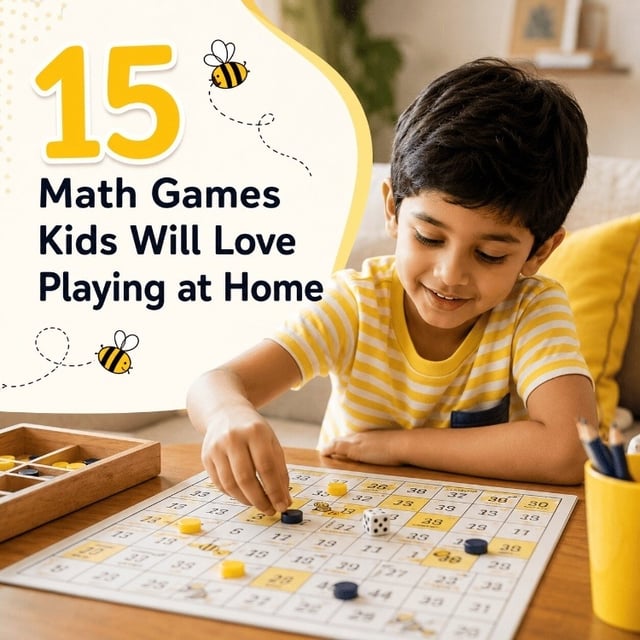
Math anxiety often starts early and compounds over years. These 15 games build number confidence through play, using materials most Indian households already have, with zero worksheet pressure attached.
Math anxiety is real, and it often starts forming years before a child ever mentions struggling. Games sidestep this almost entirely — a child playing a dice game doesn't feel like they're "doing math," even though they're building the exact same skills a worksheet would target, just without the associated dread.
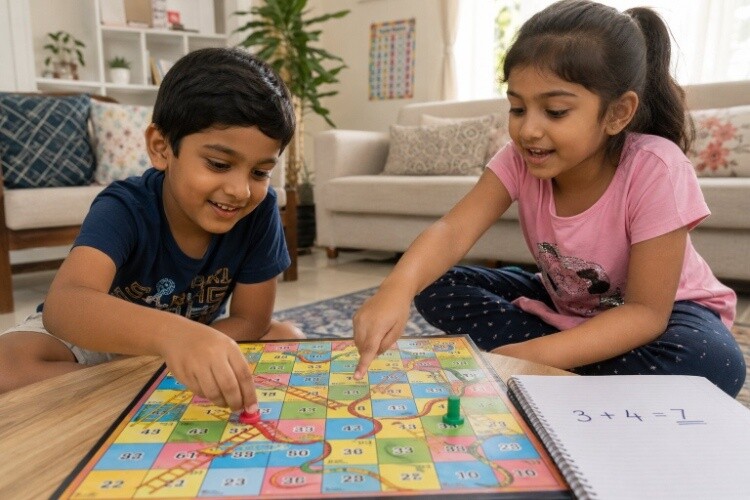
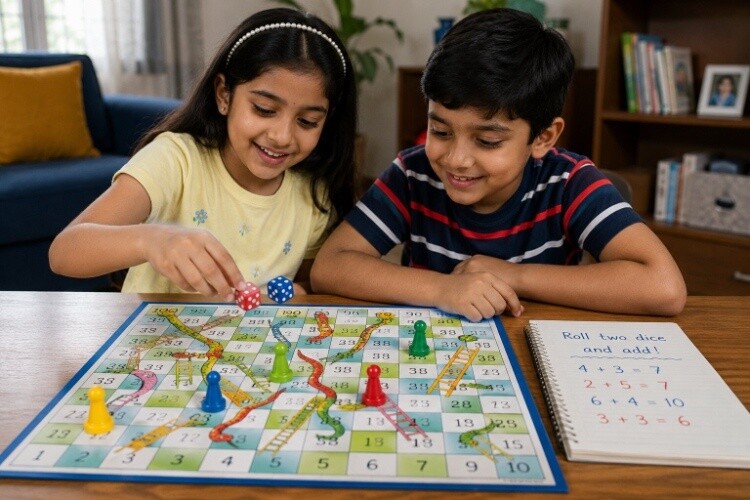
Snakes and Ladders with addition
Instead of moving by a single dice roll, roll two dice and add them before moving — doubles the addition practice within a game kids already love.
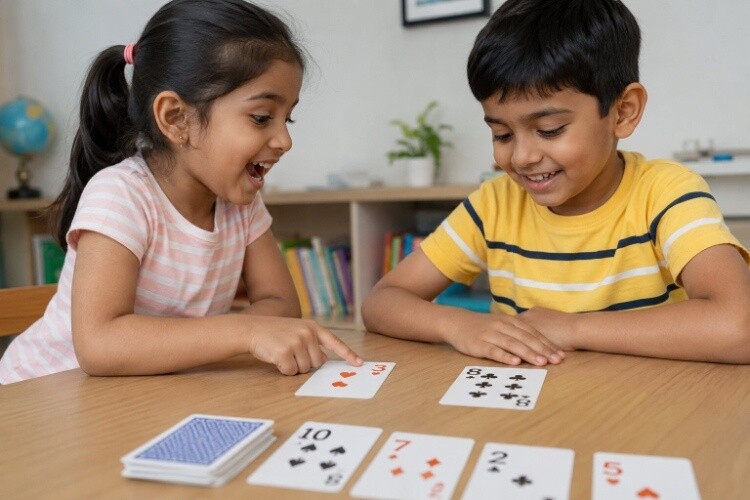
Playing cards for number recognition and comparison
A simple game of "highest card wins" builds number comparison skills fast, especially for younger children still learning number values.
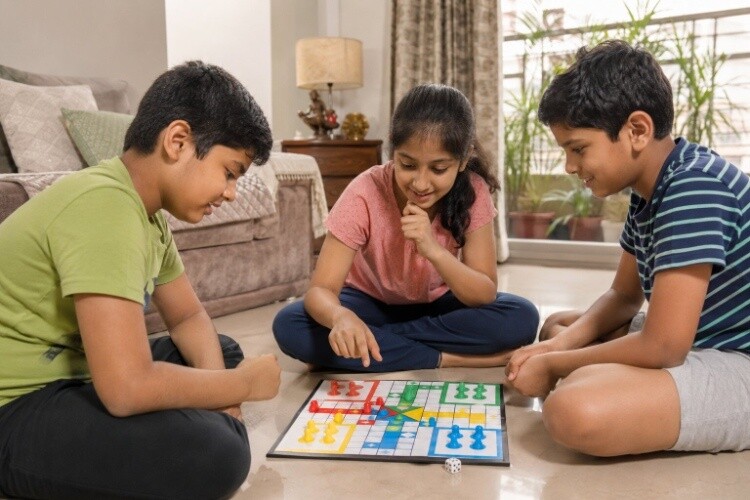
Ludo with multiplication moves
For older kids, multiply the dice roll by 2 or 3 before moving — an easy modification to a game already in most Indian homes.
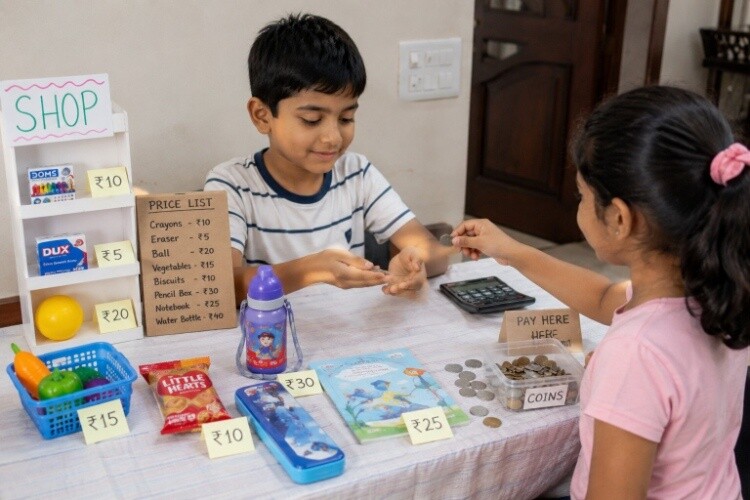
Shopping game with play or real small change
Set up a pretend "shop" with priced household items and let your child calculate totals and change — genuinely effective, low-cost practice.
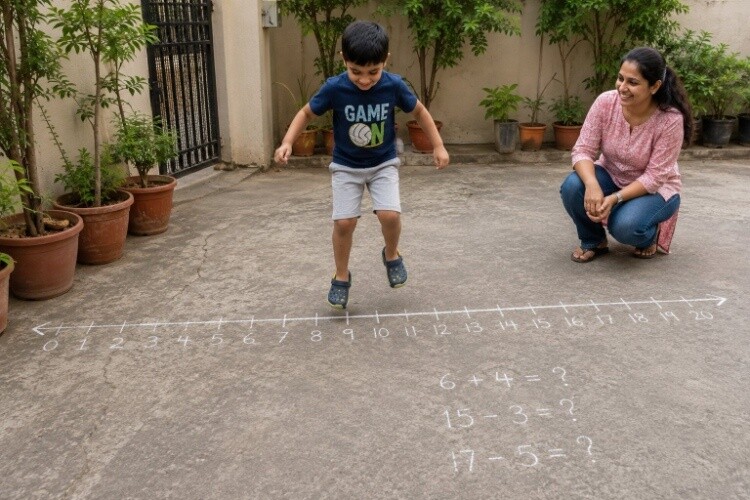
Number line hopscotch
Draw a number line with chalk and call out simple addition or subtraction problems for your child to hop the answer to.
Dominoes for pattern and addition practice
Beyond the traditional matching game, add up the dots on both halves for extra addition practice with each placement.
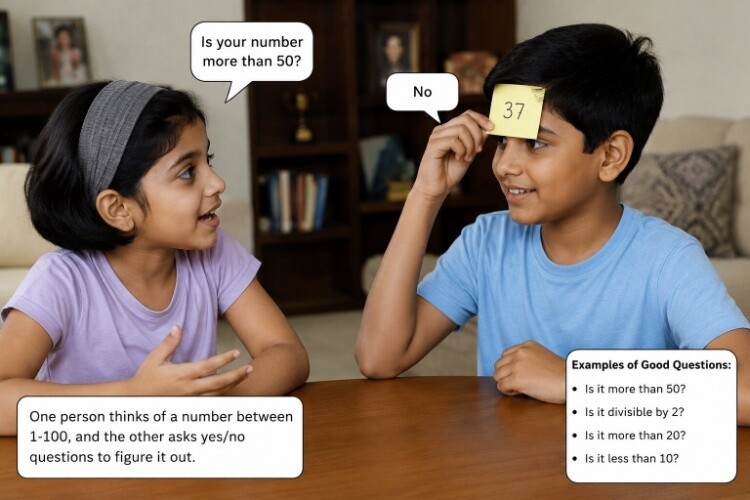
"Guess my number" with clues
One person thinks of a number between 1-100, and the other asks yes/no questions ("is it more than 50?") to narrow it down — builds logical and estimation thinking.
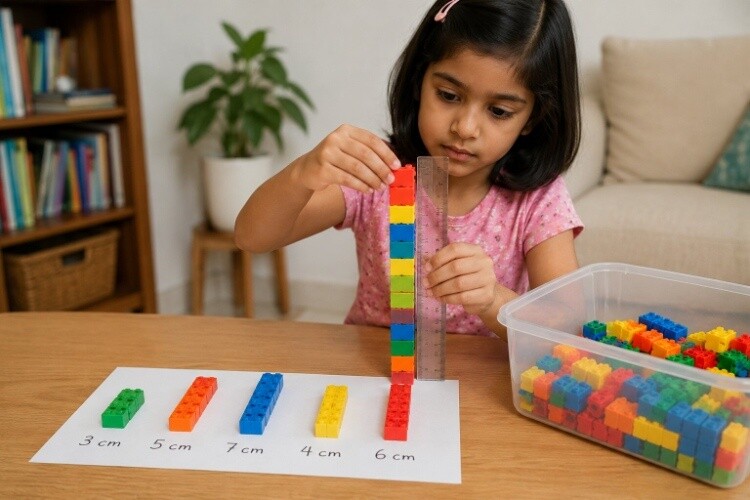
Building with blocks by measurement
"Build a tower exactly 10 blocks tall" or "build one twice as tall as this one" quietly introduces measurement and comparison concepts.
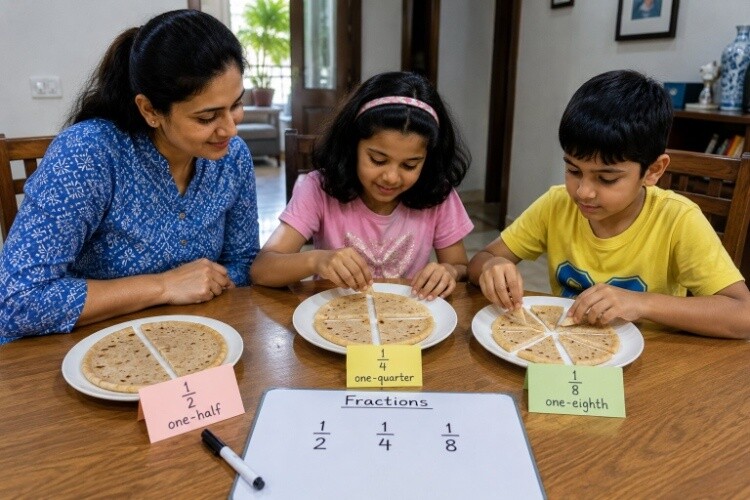
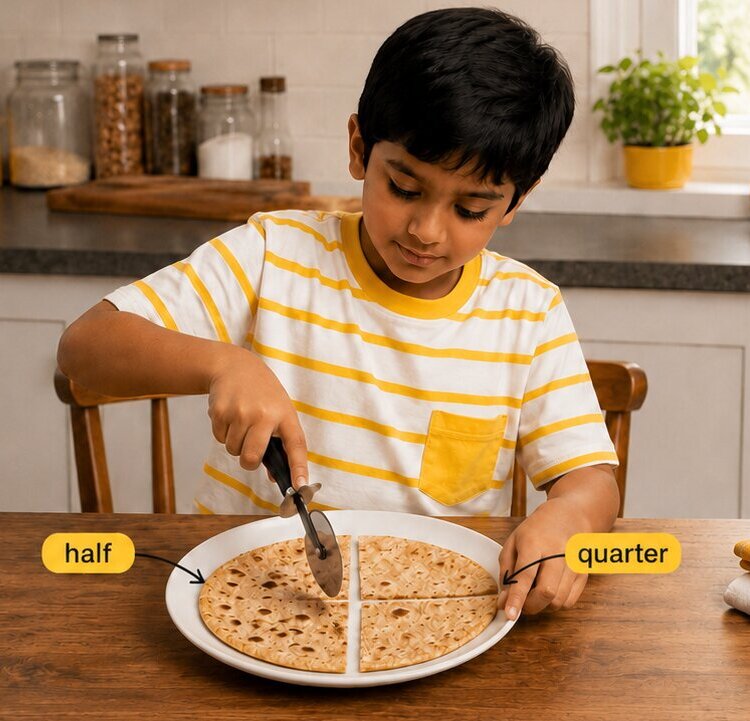
Fraction pizza or roti
Cutting a roti or paper circle into equal parts while discussing "half," "quarter," and "one-eighth" makes fractions tangible rather than abstract.
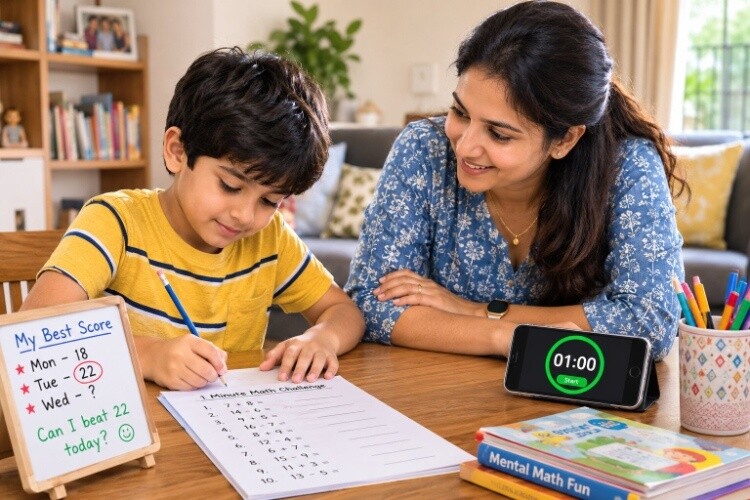
Timer challenges for quick mental math
A simple one-minute timer with a stack of basic problems, racing against their own previous best score — motivating without being competitive against others.
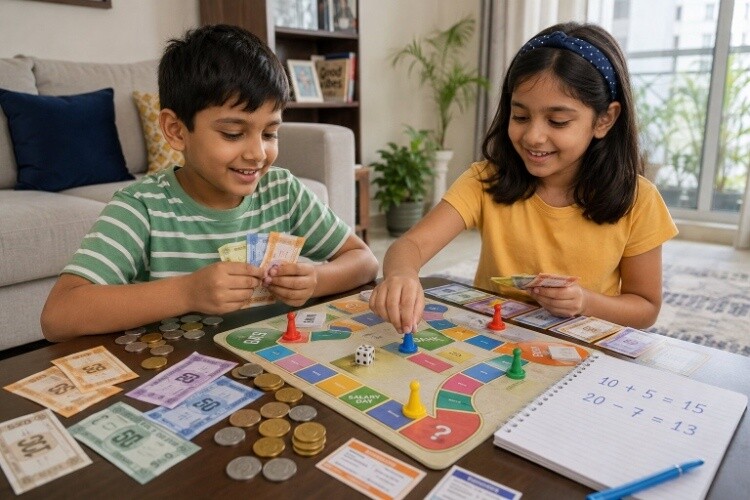
Board game money banking
Games involving play money (Monopoly-style or simpler versions) build addition, subtraction, and basic financial literacy simultaneously.
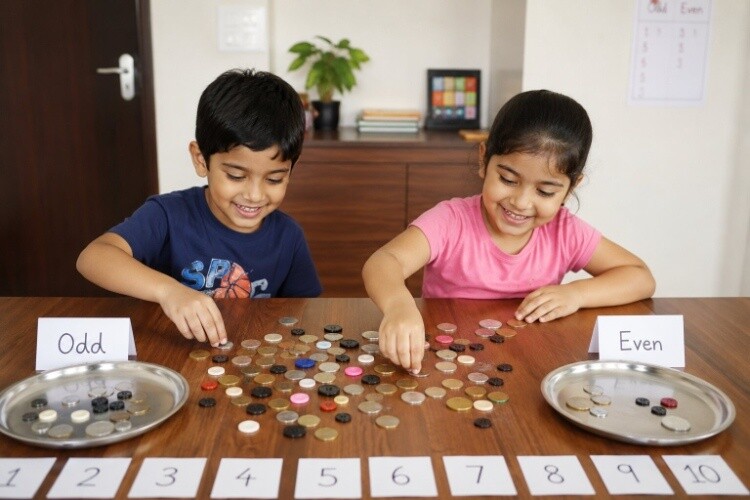
Odd and even sorting race
Scatter small objects (buttons, coins) and race to sort them into odd and even piles by counting groups.
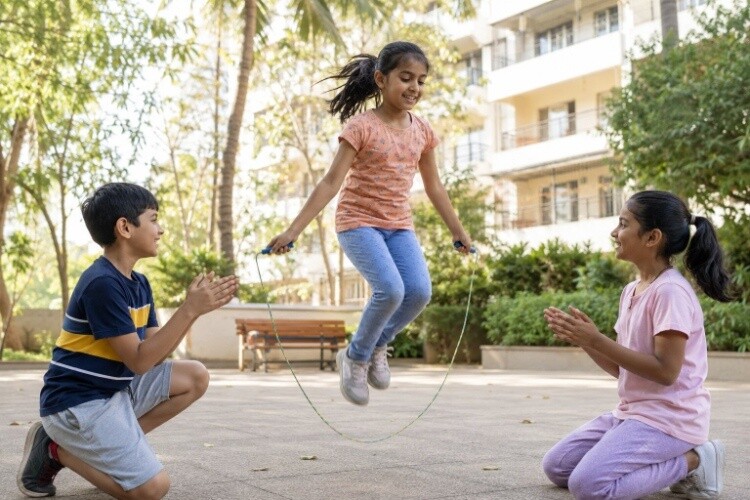
Skip counting with jump rope or clapping
Counting by 2s, 5s, or 10s while jumping rope or clapping turns a memorisation task into a physical, rhythmic activity.
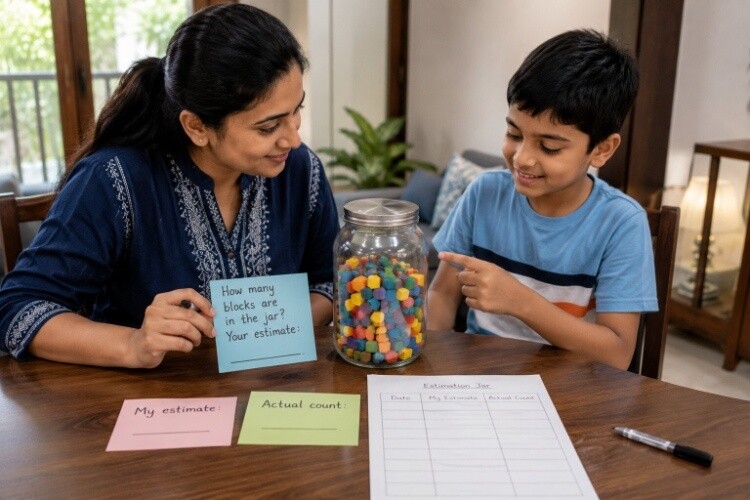
Estimation jar
Fill a jar with small objects and have your child estimate the count before actually counting together — builds number sense about quantity.
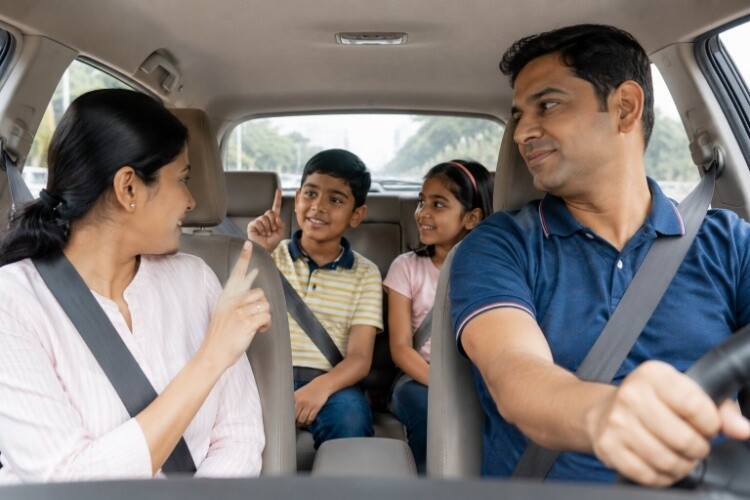
Family math trivia during car rides
Simple mental math questions during the daily commute turn otherwise "dead time" into light, pressure-free practice.
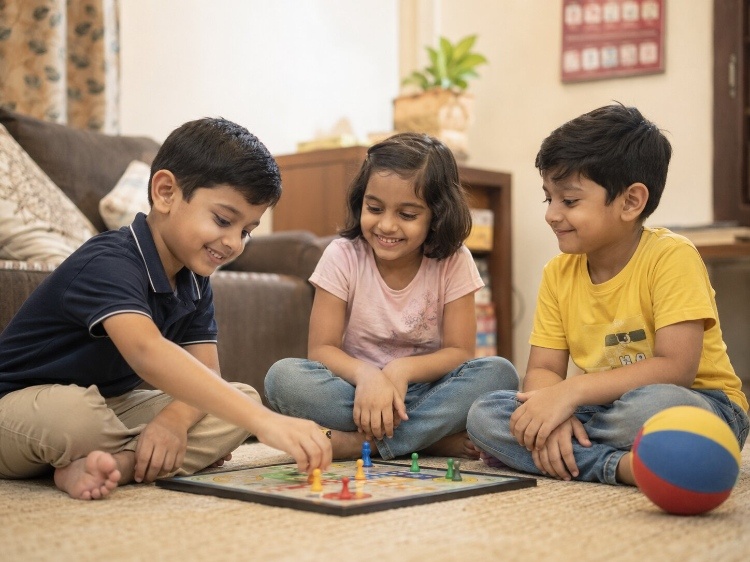
Why play works better than drilling for most kids
Math confidence is built through repeated positive exposure, not intensity of practice. A child who plays a quick math game for ten minutes most days, enjoying it, will generally develop stronger number sense over a year than one who does longer, tenser worksheet sessions a few times a week.
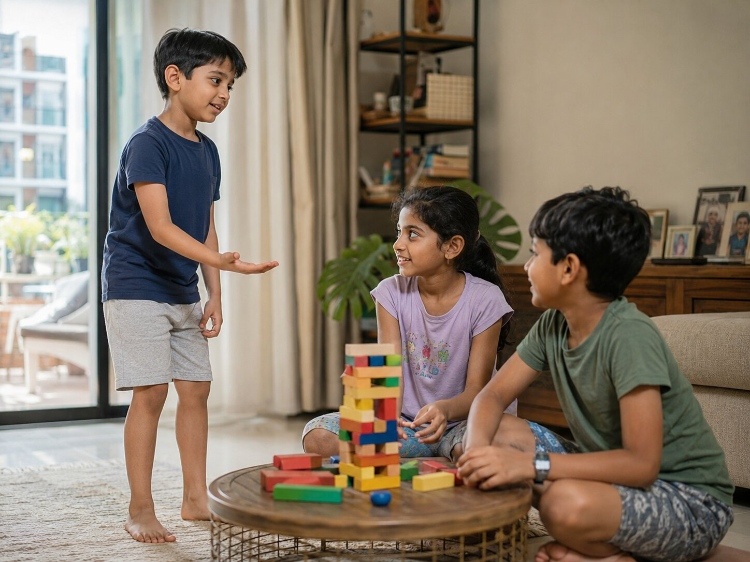
Balancing games with school expectations
These games aren't a replacement for structured schoolwork, but a complement to it — most effective as a way to keep math feeling approachable and fun on non-homework days, or as a warm-up before tackling more formal practice.