
 Summer Camp
 Reading Writing
 Book Club
 Calligraphy
 Creative Writing
 English Speaking
 Handwriting
 Library
 Phonics
 Story Telling
 Art and Craft
 Clay Moulding
 Drawing
 Painting
 Pottery
 Sketching
 Drama Theatre
 Personality Development
 Public Speaking
 Languages
 Arabic
 Chinese
 French
 German
 Hindi
Hindi Italian
 Japanese
 Korean
 Persian
 Portuguese
 Russian
 Spanish
 Turkish
 Uzbek
Uzbek Sports and Fitness
 Aerobics
 Athletics
 Badminton
 Basket Ball
 Chess
Chess Cricket
 Football
 Golf
Golf Gymnastics
 Hulahoop
 Karate
 Martial Arts
 Pickleball
 Rugby
Rugby Skating
 Swimming
 Taekwondo
 Tennis
 Volleyball
 Yoga
Yoga Zumba
Zumba Tuition Classes
 Accounts
 Biology
 Business Studies
 CBSE
CBSE Chemistry
 Commerce
 Economics
 Homework Classes
 IB Board
 IGCSE
IGCSE Mathematics
 Physics
 Psychology
 Science
 Social Studies
 Vedic Maths
 Dance and Music
 Ballet
 Bhangra
 Bharatnatyam
 Bollywood Dance
 Casio
Casio Dandiya and Garba
 Drums
Drums Flute
Flute Guitar
 Harmonium
 Hip Hop
 Jazz
Jazz Kathak
 Keyboard
 Piano
Piano Salsa
Salsa Shlokas
 Sitar
Sitar Tabla
Tabla Ukulele
 Violin
 Vocal
Vocal Play School
 STEM
STEM
 Abacus
 App Development
 Artificial intelligence
 Basic Computer Courses
 Canva
Canva Coding
 Graphic Design
 Lego
Lego Python
 Robotics
 Rubiks Cube
 Scrabble
 Scratch
 Website Development
 Winter Camp
 Workshops
 Diwali Workshop
 Easter
 Ganesh Mahotsav
 Guru Nanak Jayanti Workshop
 Holi
Holi Independence day workshop
 Janmashtami Workshop
 Mothers day
 Navratri Workshops
 Raksha Bandhan workshop
 Ramayana Workshop
 Spring Camp
 Valentines Day Workshops
 Festive
 Daycare
 Cooking and Food
 Spring Camp
 Contests and Competitions
 Special abled
 Republic Day Workshops
 Mela
Mela
 Mela
Mela Cognitive Development
 Mother-Toddler Program
-Jul-03-2026-06-59-25-1926-AM.webp?width=30&height=30&name=Smart_20Skills_20(2)-Jul-03-2026-06-59-25-1926-AM.webp) Smart Skills
Smart Skills
 Financial Literacy
 Mental Wellbeing
 Meditation
 Reiki
Reiki




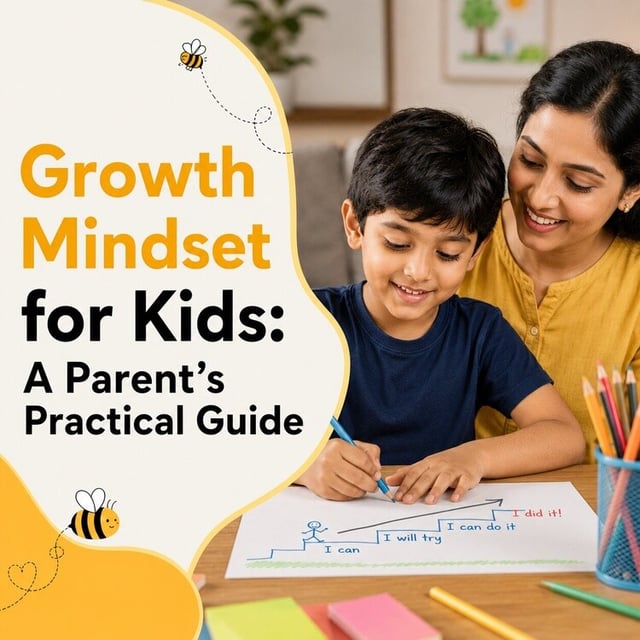
Growth mindset — the belief that abilities can be developed through effort — offers a genuinely useful counterbalance to India's often intense marks-and-comparison academic culture, without dismissing the real value of achievement and effort.
The concept of "growth mindset" has become widely discussed, sometimes to the point of oversimplification. At its genuine core, it's a useful, research-backed idea: believing that abilities can be developed through effort and learning (rather than being fixed traits) tends to build more resilient, motivated learners.
Understanding the actual distinction
A "fixed mindset" assumes intelligence and ability are largely fixed traits — you're either good at math or you're not. A "growth mindset" assumes abilities develop through effort, strategy, and learning from mistakes — you're not yet good at math, but consistent effort and the right approach can change that.
Why this distinction matters practically for Indian families
Given the significant emphasis many Indian educational environments place on marks, rank, and comparative academic performance, growth mindset offers a genuinely useful counterbalance — helping a child interpret a difficult test result as information about where more effort or a different strategy is needed, rather than as a fixed verdict on their inherent ability.
Language shifts that build growth mindset thinking
Replacing "you're so smart" with "you worked really hard on that" shifts the internal narrative from a fixed trait to an effort-based process. Replacing "I'm not good at this" (when a child says it) with "I'm not good at this yet" reframes a fixed statement into a developmental one. Discussing mistakes as useful information ("what does this tell us about what to try differently?") rather than failures to be ashamed of.
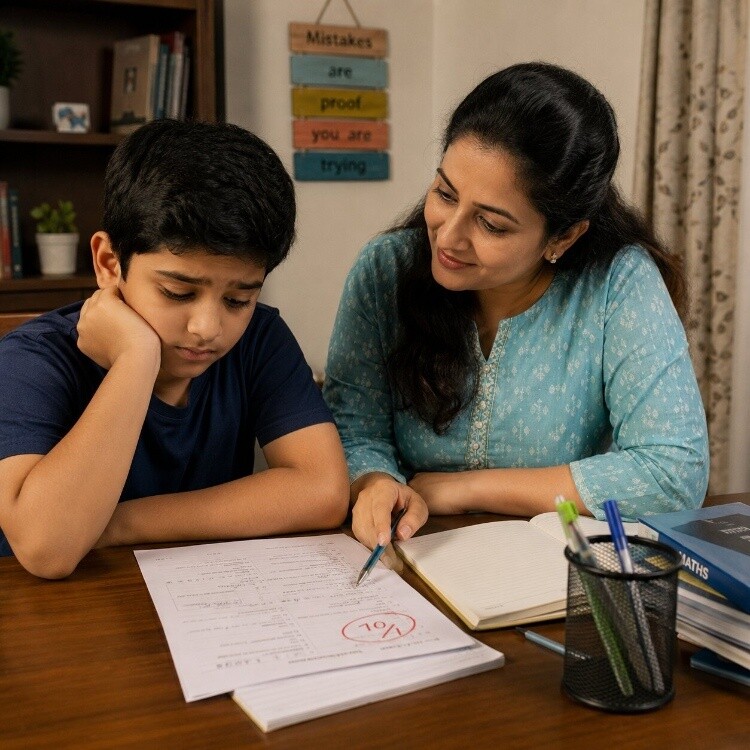
Balancing growth mindset with genuine acknowledgment of real difficulty
A common misapplication of growth mindset is dismissing genuine struggle with empty "you can do anything if you try hard enough" messaging — this can feel invalidating when a task is genuinely, legitimately difficult. A more accurate approach acknowledges real difficulty while still emphasising that effort and the right strategy meaningfully improve outcomes over time.
Applying this to academic pressure specifically
Rather than framing a disappointing exam result purely in terms of the mark itself, discussing what specific areas need more practice, what study strategies might work better, and reinforcing that this single result doesn't define overall ability, helps build a growth-oriented relationship with academic challenges.
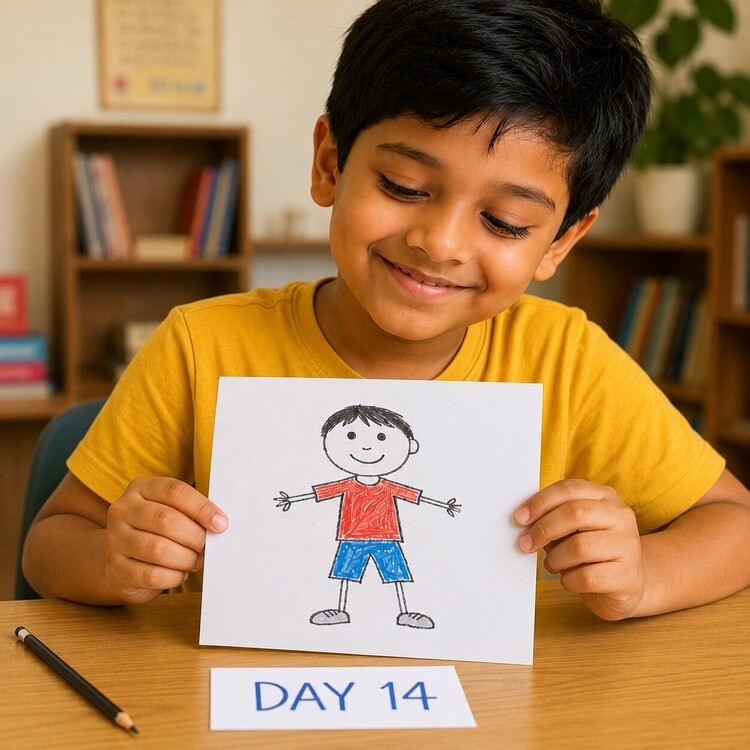
Applying this beyond academics — to sports, creative pursuits, and social skills
Growth mindset thinking applies just as usefully outside academics — a child who initially struggles with a new sport or social situation benefits from the same "not yet, but improving with practice" framing as one struggling with a math concept.
Genuine limitations of the growth mindset framework
It's worth acknowledging honestly that growth mindset, while genuinely useful, isn't a complete solution to every learning challenge — some children do have specific learning differences that benefit from targeted support beyond effort and mindset alone, and it's important not to dismiss genuine additional support needs by over-attributing struggle purely to insufficient effort or mindset.
A realistic way to introduce this at home
Rather than explicitly lecturing about "growth mindset" as a concept, the most effective approach is simply modelling the language and thinking consistently — narrating your own learning process, discussing mistakes constructively, and consistently emphasising effort and strategy alongside outcomes, over months and years, rather than as a single conversation.