
 Summer Camp
 Reading Writing
 Book Club
 Calligraphy
 Creative Writing
 English Speaking
 Handwriting
 Library
 Phonics
 Story Telling
 Art and Craft
 Clay Moulding
 Drawing
 Painting
 Pottery
 Sketching
 Drama Theatre
 Personality Development
 Public Speaking
 Languages
 Arabic
 Chinese
 French
 German
 Hindi
Hindi Italian
 Japanese
 Korean
 Persian
 Portuguese
 Russian
 Spanish
 Turkish
 Uzbek
Uzbek Sports and Fitness
 Aerobics
 Athletics
 Badminton
 Basket Ball
 Chess
Chess Cricket
 Football
 Golf
Golf Gymnastics
 Hulahoop
 Karate
 Martial Arts
 Pickleball
 Rugby
Rugby Skating
 Swimming
 Taekwondo
 Tennis
 Volleyball
 Yoga
Yoga Zumba
Zumba Tuition Classes
 Accounts
 Biology
 Business Studies
 CBSE
CBSE Chemistry
 Commerce
 Economics
 Homework Classes
 IB Board
 IGCSE
IGCSE Mathematics
 Physics
 Psychology
 Science
 Social Studies
 Vedic Maths
 Dance and Music
 Ballet
 Bhangra
 Bharatnatyam
 Bollywood Dance
 Casio
Casio Dandiya and Garba
 Drums
Drums Flute
Flute Guitar
 Harmonium
 Hip Hop
 Jazz
Jazz Kathak
 Keyboard
 Piano
Piano Salsa
Salsa Shlokas
 Sitar
Sitar Tabla
Tabla Ukulele
 Violin
 Vocal
Vocal Play School
 STEM
STEM
 Abacus
 App Development
 Artificial intelligence
 Basic Computer Courses
 Canva
Canva Coding
 Graphic Design
 Lego
Lego Python
 Robotics
 Rubiks Cube
 Scrabble
 Scratch
 Website Development
 Winter Camp
 Workshops
 Diwali Workshop
 Easter
 Ganesh Mahotsav
 Guru Nanak Jayanti Workshop
 Holi
Holi Independence day workshop
 Janmashtami Workshop
 Mothers day
 Navratri Workshops
 Raksha Bandhan workshop
 Ramayana Workshop
 Spring Camp
 Valentines Day Workshops
 Festive
 Daycare
 Cooking and Food
 Spring Camp
 Contests and Competitions
 Special abled
 Republic Day Workshops
 Mela
Mela
 Mela
Mela Cognitive Development
 Mother-Toddler Program
-Jul-03-2026-06-59-25-1926-AM.webp?width=30&height=30&name=Smart_20Skills_20(2)-Jul-03-2026-06-59-25-1926-AM.webp) Smart Skills
Smart Skills
 Financial Literacy
 Mental Wellbeing
 Meditation
 Reiki
Reiki




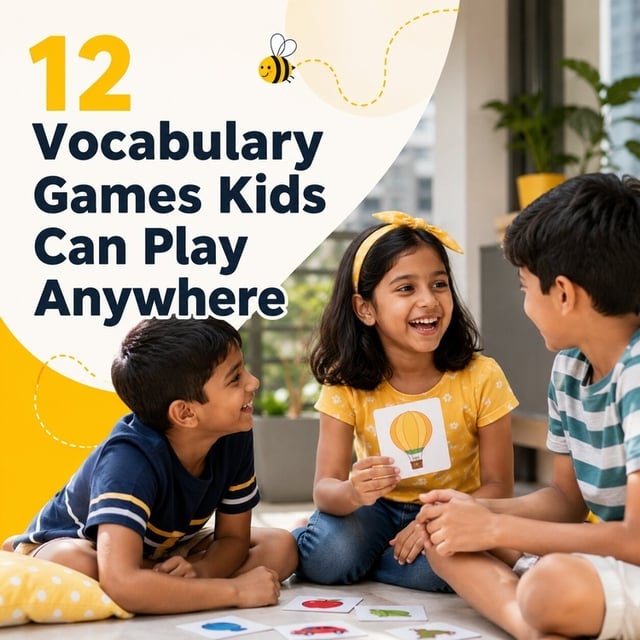
Building vocabulary doesn't need flashcards or worksheets — these 12 games work in a car, at a dinner table, or during a park visit, making vocabulary building a natural part of everyday moments rather than a separate task.
Strong vocabulary is one of the biggest long-term predictors of reading comprehension and academic success, and the good news is that it can be built almost entirely through play, in moments that already exist in a busy family day.

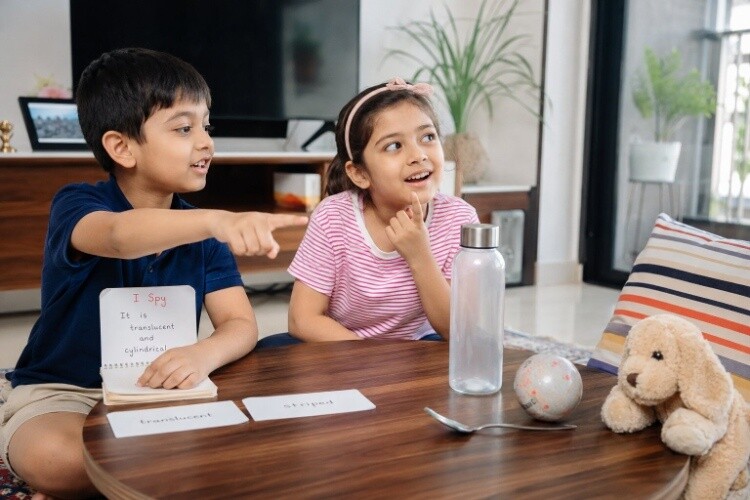
"I Spy" with descriptive clues
Rather than just colour, use more sophisticated descriptive words ("I spy something translucent" or "something spherical") to build vocabulary alongside the classic game.
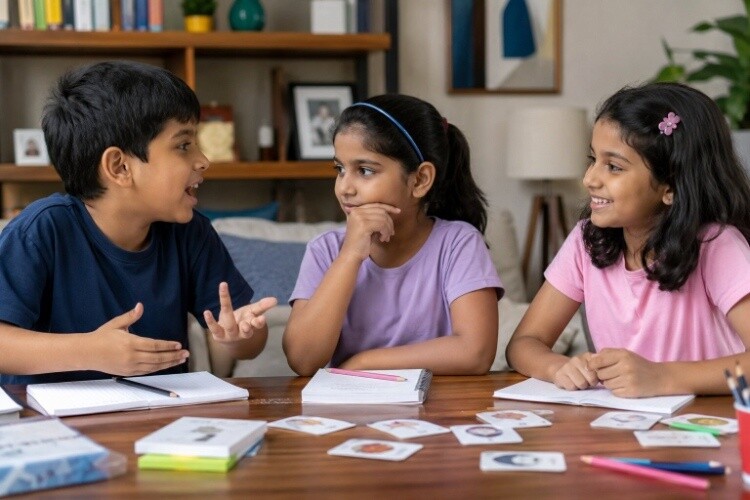
Synonym chain
One person says a word, the next has to say a synonym, continuing until someone gets stuck — genuinely effective for building word-association skills.
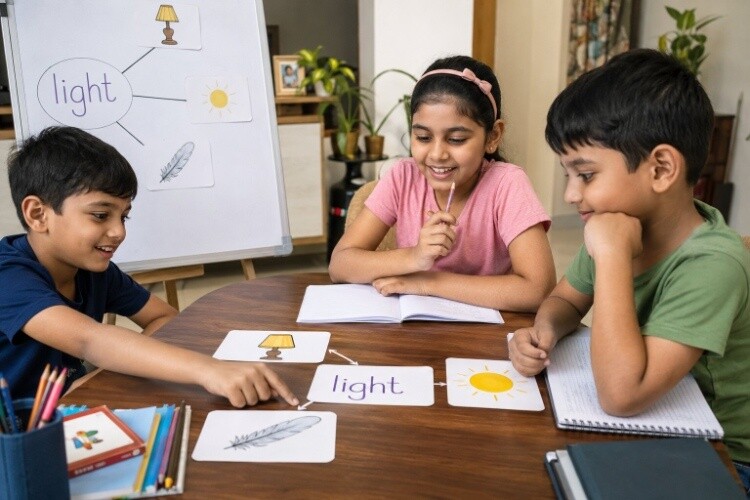
"One word, many meanings"
Pick a word with multiple meanings (like "bank" or "light") and see how many different meanings your child can identify — builds nuanced word understanding.
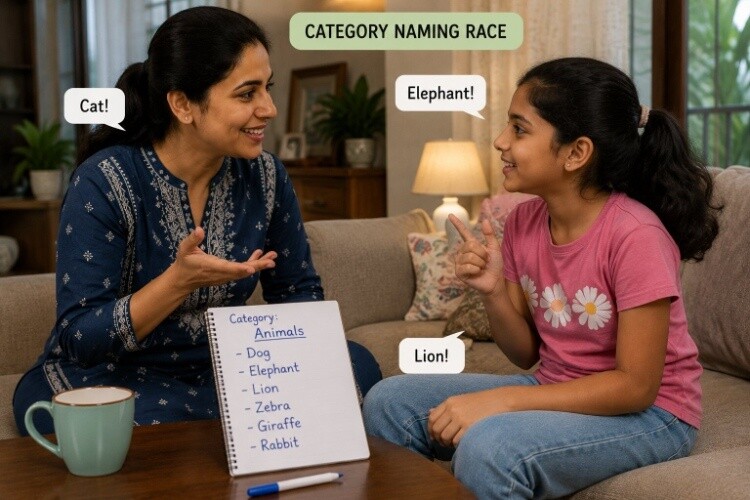
Category naming race
Pick a category (animals, fruits, things that are round) and take turns naming items until someone can't think of a new one — quick, competitive, and vocabulary-building.
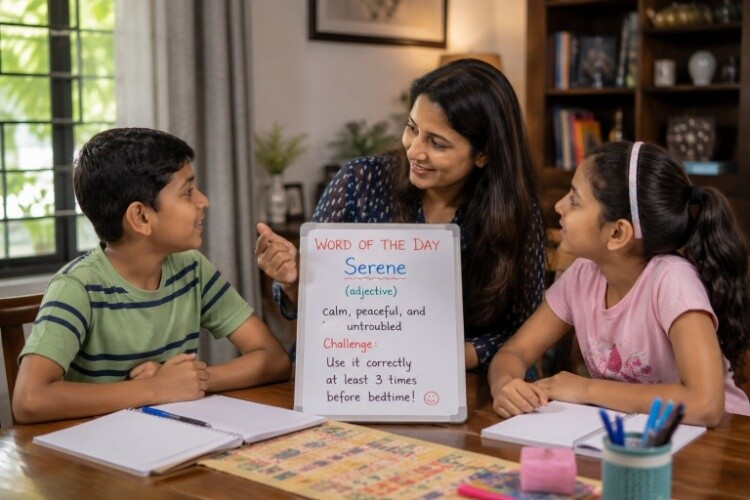
Word of the day, used throughout the day
Introduce one new word each morning and challenge everyone in the family to use it correctly at least three times before bedtime.
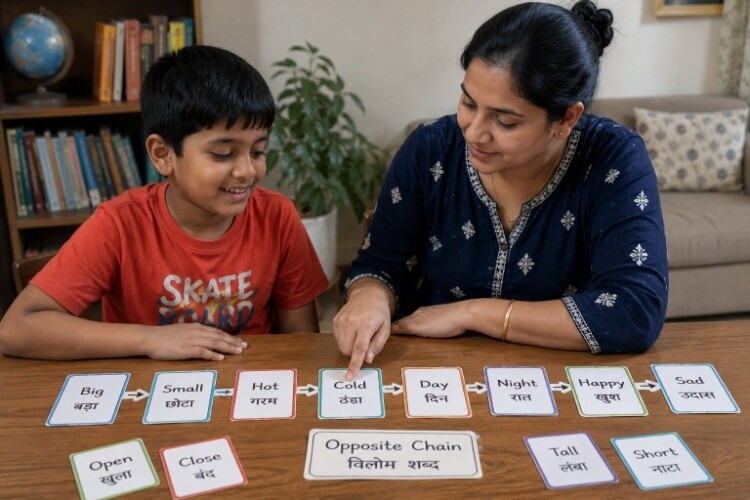
Opposite chain (vilom shabd) game
A bilingual twist — practicing opposites in both English and Hindi builds vocabulary richness across both languages simultaneously.
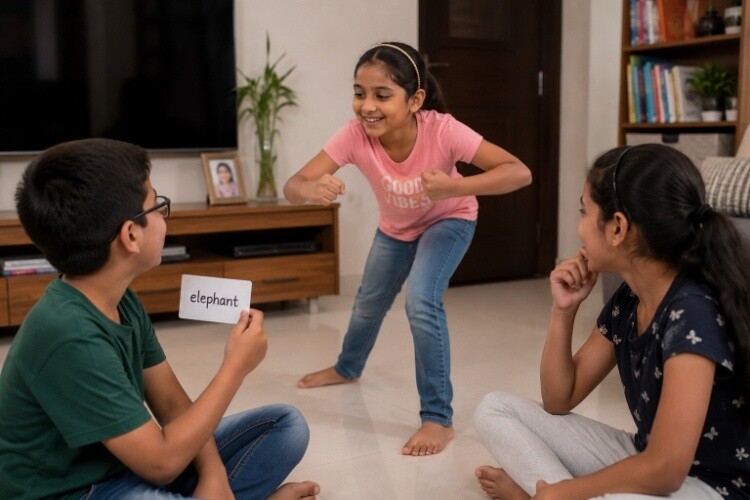
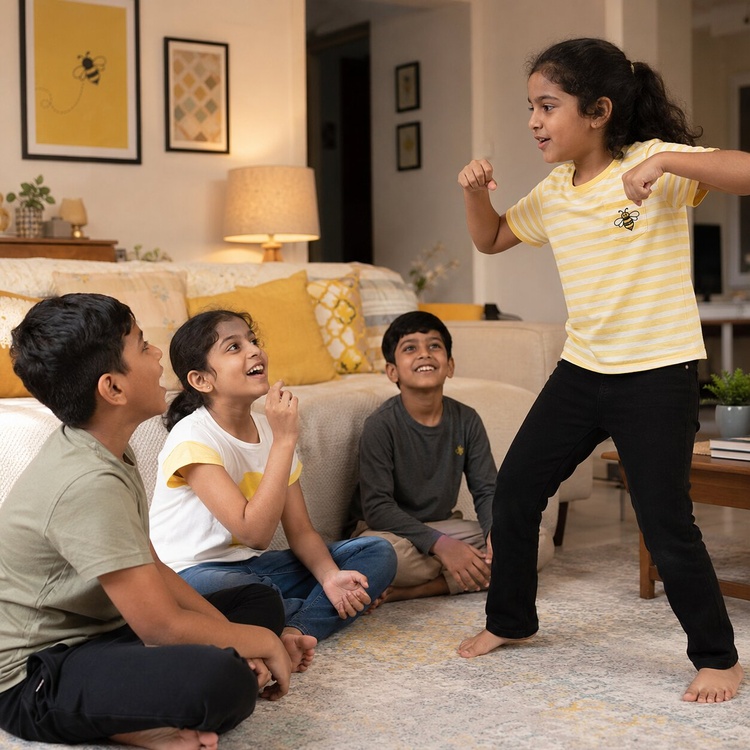
Charades with vocabulary words
Acting out a slightly more advanced word without speaking builds both vocabulary retention and creative expression.
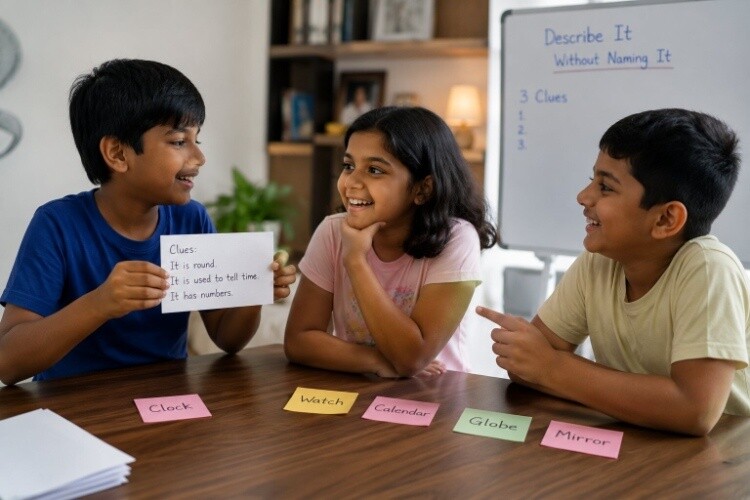
"Describe it without naming it" guessing game
One person describes an object using only adjectives and function, without naming it, while others guess — builds descriptive vocabulary richness.
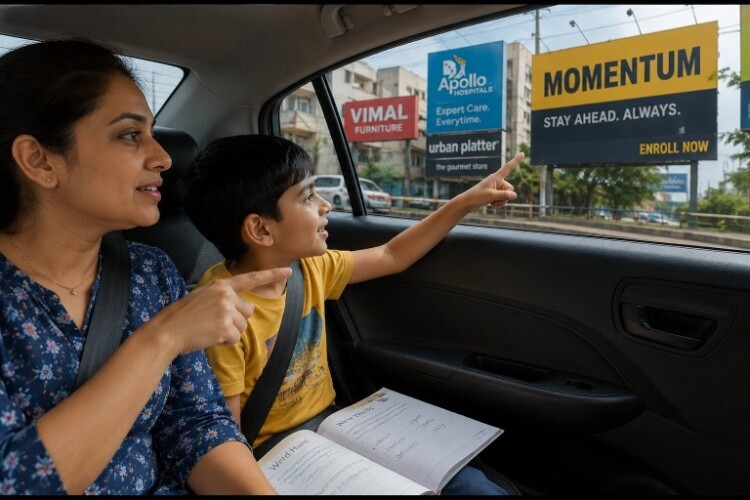
Newspaper or hoarding word hunt
During a car ride, spot and discuss unfamiliar words on hoardings or shop signs — turns commute time into passive vocabulary exposure.
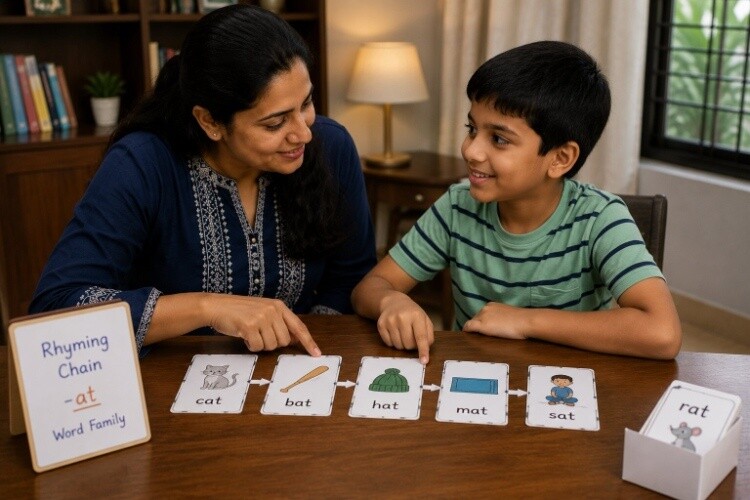
Rhyming and word-family games
Beyond phonics benefit, building rhyming chains (cat, bat, hat, mat, sat) reinforces word pattern recognition that supports vocabulary growth.
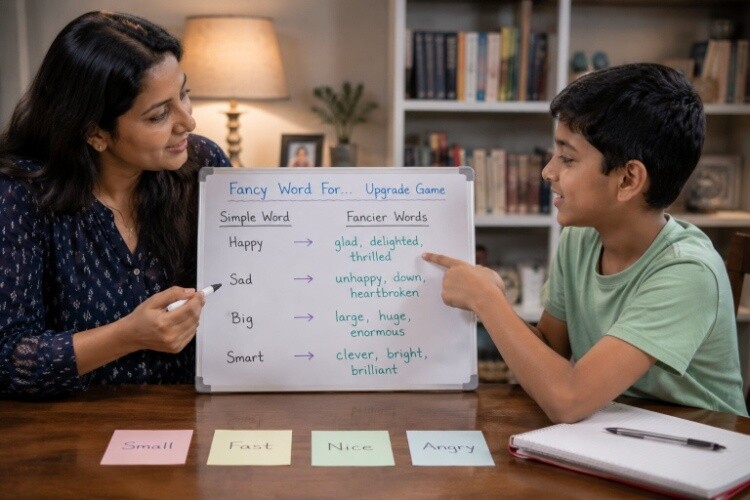
"Fancy word for..." upgrade game
Take a simple word ("happy") and challenge your child to find a "fancier" synonym (glad, delighted, thrilled) — builds an appreciation for vocabulary range and nuance.
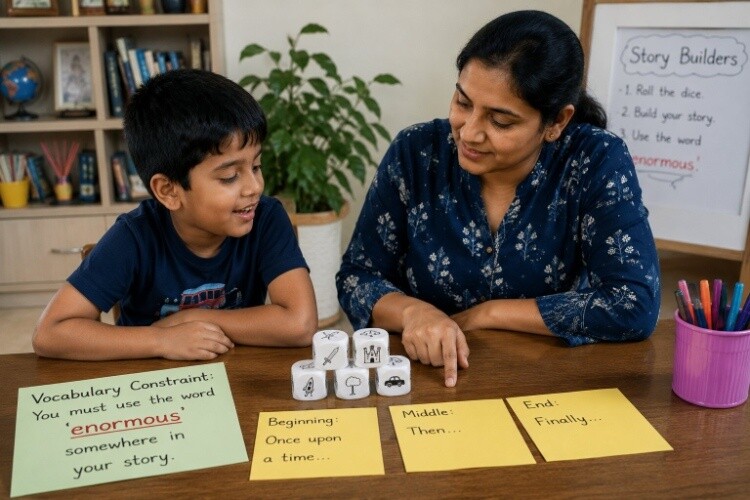
Story dice with vocabulary constraints
When playing story-building games, occasionally add a constraint — "you must use the word 'enormous' somewhere in your sentence" — builds active vocabulary application, not just recognition.
Why playing with words beats memorising word lists
Vocabulary genuinely sticks when it's encountered and used in multiple contexts, not memorised as an isolated definition. A child who plays these games regularly absorbs new words far more durably than one drilling flashcard lists.
Fitting vocabulary building into time you already have
Car rides, dinner table conversations, and park visits are all genuine opportunities for these games — none require any special materials, planning, or dedicated separate time, making them especially practical for busy working-parent households.
The long-term payoff
Vocabulary breadth correlates strongly with reading comprehension, writing quality, and even general academic confidence — building it playfully through childhood tends to produce more durable, natural results than intensive vocabulary drilling closer to exam time.