
 Summer Camp
 Reading Writing
 Book Club
 Calligraphy
 Creative Writing
 English Speaking
 Handwriting
 Library
 Phonics
 Story Telling
 Art and Craft
 Clay Moulding
 Drawing
 Painting
 Pottery
 Sketching
 Drama Theatre
 Personality Development
 Public Speaking
 Languages
 Arabic
 Chinese
 French
 German
 Hindi
Hindi Italian
 Japanese
 Korean
 Persian
 Portuguese
 Russian
 Spanish
 Turkish
 Uzbek
Uzbek Sports and Fitness
 Aerobics
 Athletics
 Badminton
 Basket Ball
 Chess
Chess Cricket
 Football
 Golf
Golf Gymnastics
 Hulahoop
 Karate
 Martial Arts
 Pickleball
 Rugby
Rugby Skating
 Swimming
 Taekwondo
 Tennis
 Volleyball
 Yoga
Yoga Zumba
Zumba Tuition Classes
 Accounts
 Biology
 Business Studies
 CBSE
CBSE Chemistry
 Commerce
 Economics
 Homework Classes
 IB Board
 IGCSE
IGCSE Mathematics
 Physics
 Psychology
 Science
 Social Studies
 Vedic Maths
 Dance and Music
 Ballet
 Bhangra
 Bharatnatyam
 Bollywood Dance
 Casio
Casio Dandiya and Garba
 Drums
Drums Flute
Flute Guitar
 Harmonium
 Hip Hop
 Jazz
Jazz Kathak
 Keyboard
 Piano
Piano Salsa
Salsa Shlokas
 Sitar
Sitar Tabla
Tabla Ukulele
 Violin
 Vocal
Vocal Play School
 STEM
STEM
 Abacus
 App Development
 Artificial intelligence
 Basic Computer Courses
 Canva
Canva Coding
 Graphic Design
 Lego
Lego Python
 Robotics
 Rubiks Cube
 Scrabble
 Scratch
 Website Development
 Winter Camp
 Workshops
 Diwali Workshop
 Easter
 Ganesh Mahotsav
 Guru Nanak Jayanti Workshop
 Holi
Holi Independence day workshop
 Janmashtami Workshop
 Mothers day
 Navratri Workshops
 Raksha Bandhan workshop
 Ramayana Workshop
 Spring Camp
 Valentines Day Workshops
 Festive
 Daycare
 Cooking and Food
 Spring Camp
 Contests and Competitions
 Special abled
 Republic Day Workshops
 Mela
Mela
 Mela
Mela Cognitive Development
 Mother-Toddler Program
-Jul-03-2026-06-59-25-1926-AM.webp?width=30&height=30&name=Smart_20Skills_20(2)-Jul-03-2026-06-59-25-1926-AM.webp) Smart Skills
Smart Skills
 Financial Literacy
 Mental Wellbeing
 Meditation
 Reiki
Reiki



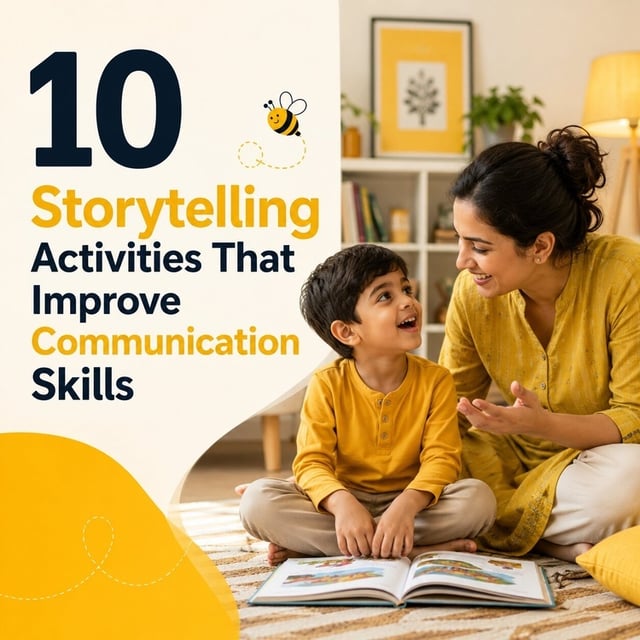
Storytelling — a tradition deeply rooted in Indian family culture — builds verbal communication, sequencing, and confidence in ways that structured lessons often can't match. These activities revive and extend that tradition intentionally.
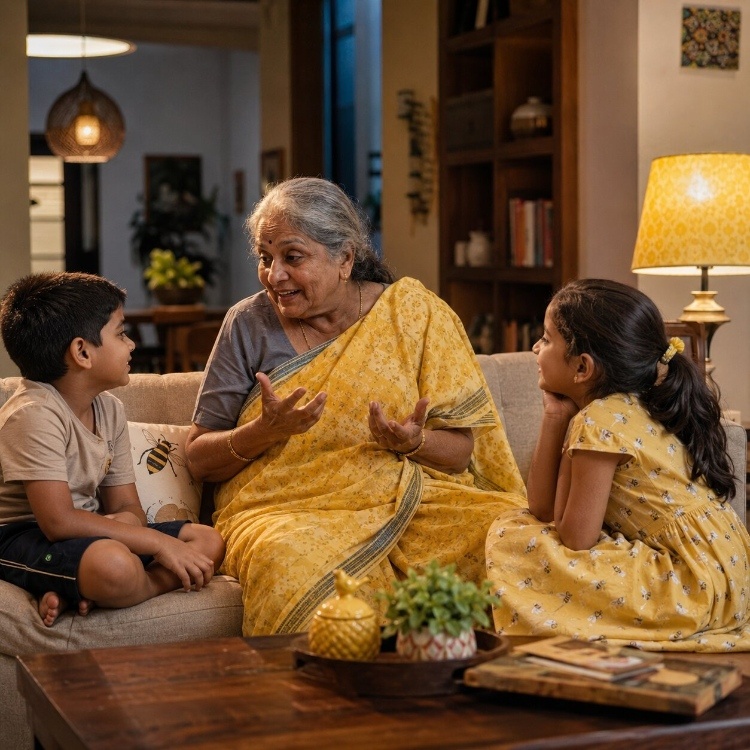
Storytelling has always been a natural part of Indian family life — grandparents narrating folktales, mealtime anecdotes, festival stories passed down generations. These activities lean into that existing tradition, using it deliberately to build genuine communication skills.
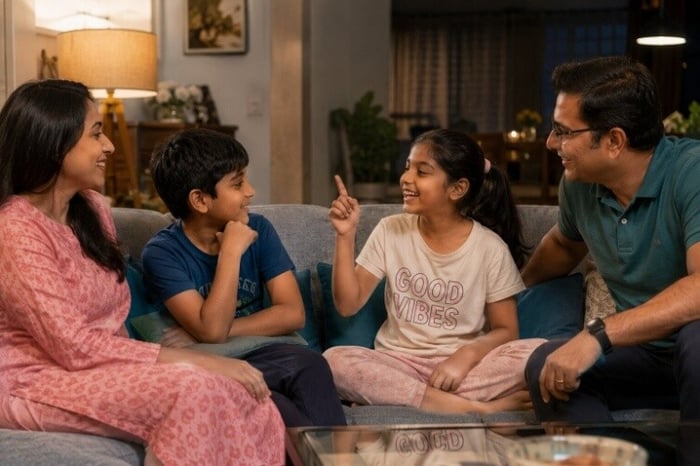
One person starts a story with a single sentence, and each family member adds the next sentence in turn — builds listening, sequencing, and spontaneous verbal creativity.
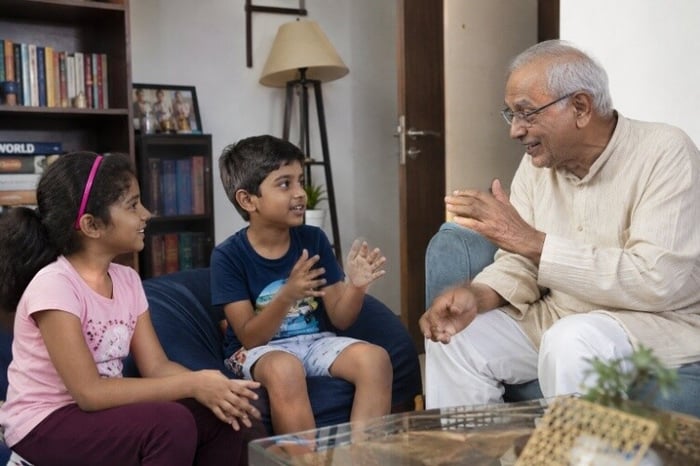
After hearing a story from a grandparent, have your child retell it later to someone else — reinforces both the cultural connection and communication skill simultaneously.
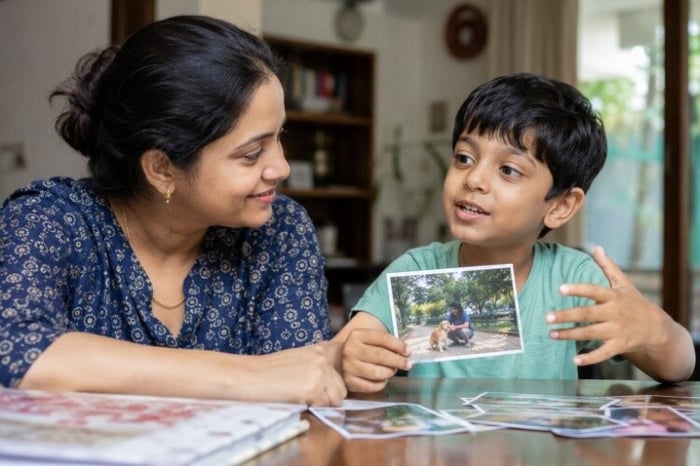
Show a random photograph or picture and ask your child to invent a story about what's happening in it — builds spontaneous narrative thinking without the pressure of a blank page.
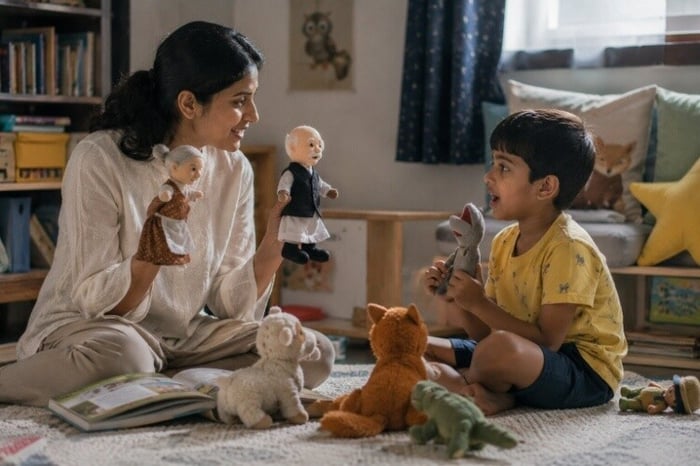
Using simple household puppets or toys to act out a story builds expressive communication and dialogue skills, especially engaging for younger children.
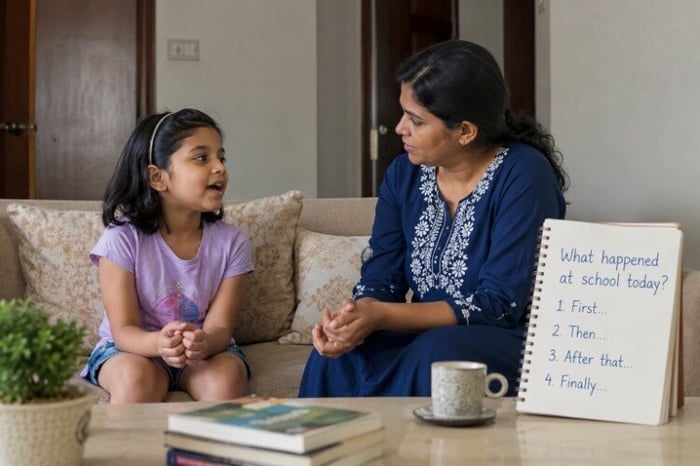
Rather than accepting a one-word "fine" answer, gently guide your child to tell the day as a mini-story — what happened first, then what, then how it ended — builds daily narrative practice.
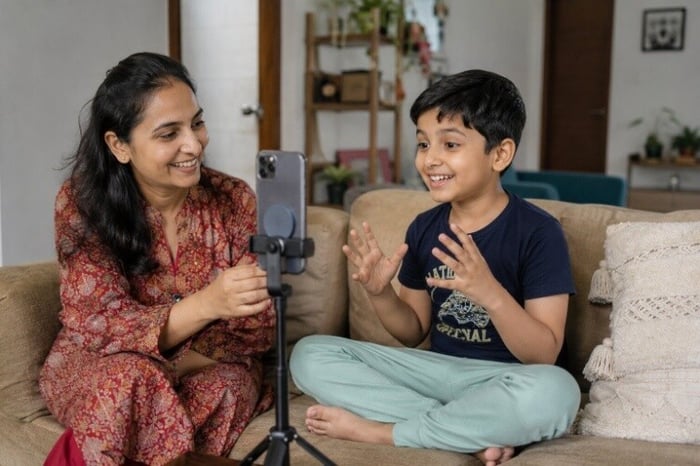
Recording your child telling a story on a phone and playing it back builds self-awareness of pacing, clarity, and expression in a genuinely engaging, low-pressure format.
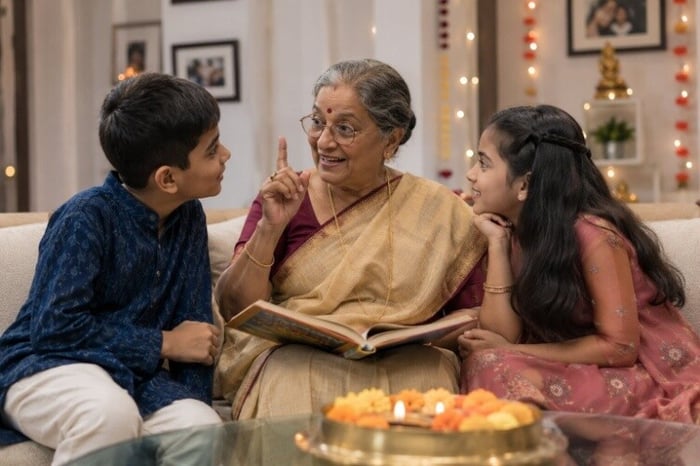
Actively asking a grandparent or elder relative to narrate the story behind a festival (why Diwali is celebrated, the story of Holi) both connects culturally and models skilled oral storytelling.
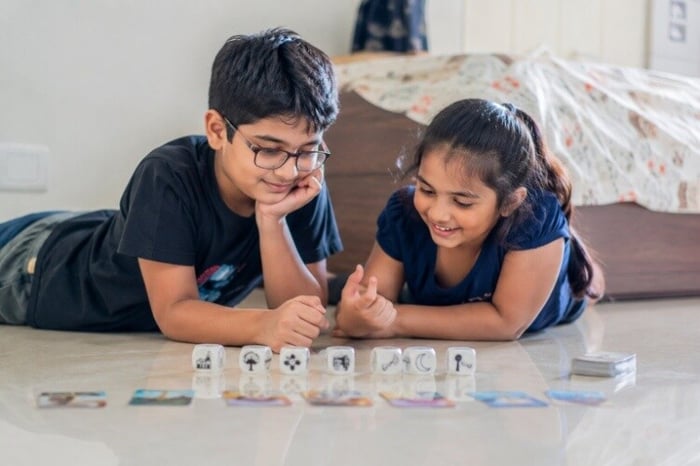
Simple story-prompt dice (available inexpensively, or easily homemade with drawn symbols) give a random set of story elements to weave together — builds creative flexibility.
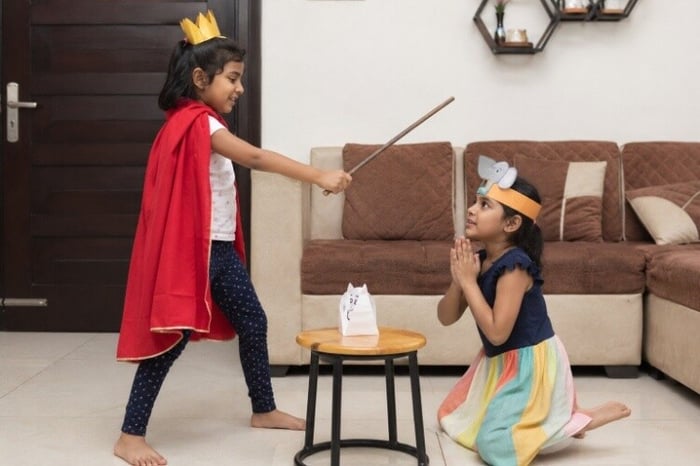
Physically acting out a favourite story, even with minimal props, builds expressive and physical communication alongside verbal storytelling.
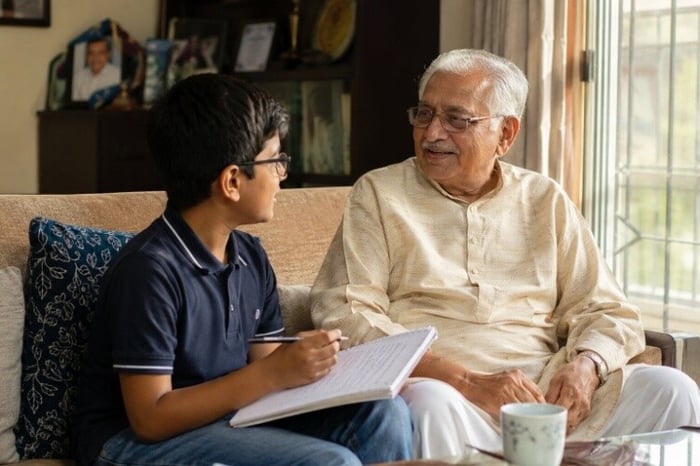
Having your child interview a grandparent or relative about their childhood, then retell what they learned, builds both listening and narrative communication skills together.
Why storytelling builds communication better than direct instruction
Structured "communication skills" lessons often feel artificial to children, while storytelling engages the same underlying skills — sequencing, vocabulary, expression, audience awareness — through something genuinely enjoyable, which tends to produce more natural, lasting improvement.
The cultural value alongside the skill-building
In many Indian households, especially joint family settings, storytelling activities double as genuine intergenerational connection — a child who regularly hears and retells family stories builds identity and belonging alongside communication skill, a combination worth actively nurturing rather than leaving to chance.
A simple weekly habit worth starting
A once-a-week "story night," even just 15-20 minutes, where family members take turns telling or continuing a story, builds this skill consistently without requiring any special materials or preparation.