
 Summer Camp
 Reading Writing
 Book Club
 Calligraphy
 Creative Writing
 English Speaking
 Handwriting
 Library
 Phonics
 Story Telling
 Art and Craft
 Clay Moulding
 Drawing
 Painting
 Pottery
 Sketching
 Drama Theatre
 Personality Development
 Public Speaking
 Languages
 Arabic
 Chinese
 French
 German
 Hindi
Hindi Italian
 Japanese
 Korean
 Persian
 Portuguese
 Russian
 Spanish
 Turkish
 Uzbek
Uzbek Sports and Fitness
 Aerobics
 Athletics
 Badminton
 Basket Ball
 Chess
Chess Cricket
 Football
 Golf
Golf Gymnastics
 Hulahoop
 Karate
 Martial Arts
 Pickleball
 Rugby
Rugby Skating
 Swimming
 Taekwondo
 Tennis
 Volleyball
 Yoga
Yoga Zumba
Zumba Tuition Classes
 Accounts
 Biology
 Business Studies
 CBSE
CBSE Chemistry
 Commerce
 Economics
 Homework Classes
 IB Board
 IGCSE
IGCSE Mathematics
 Physics
 Psychology
 Science
 Social Studies
 Vedic Maths
 Dance and Music
 Ballet
 Bhangra
 Bharatnatyam
 Bollywood Dance
 Casio
Casio Dandiya and Garba
 Drums
Drums Flute
Flute Guitar
 Harmonium
 Hip Hop
 Jazz
Jazz Kathak
 Keyboard
 Piano
Piano Salsa
Salsa Shlokas
 Sitar
Sitar Tabla
Tabla Ukulele
 Violin
 Vocal
Vocal Play School
 STEM
STEM
 Abacus
 App Development
 Artificial intelligence
 Basic Computer Courses
 Canva
Canva Coding
 Graphic Design
 Lego
Lego Python
 Robotics
 Rubiks Cube
 Scrabble
 Scratch
 Website Development
 Winter Camp
 Workshops
 Diwali Workshop
 Easter
 Ganesh Mahotsav
 Guru Nanak Jayanti Workshop
 Holi
Holi Independence day workshop
 Janmashtami Workshop
 Mothers day
 Navratri Workshops
 Raksha Bandhan workshop
 Ramayana Workshop
 Spring Camp
 Valentines Day Workshops
 Festive
 Daycare
 Cooking and Food
 Spring Camp
 Contests and Competitions
 Special abled
 Republic Day Workshops
 Mela
Mela
 Mela
Mela Cognitive Development
 Mother-Toddler Program
-Jul-03-2026-06-59-25-1926-AM.webp?width=30&height=30&name=Smart_20Skills_20(2)-Jul-03-2026-06-59-25-1926-AM.webp) Smart Skills
Smart Skills
 Financial Literacy
 Mental Wellbeing
 Meditation
 Reiki
Reiki




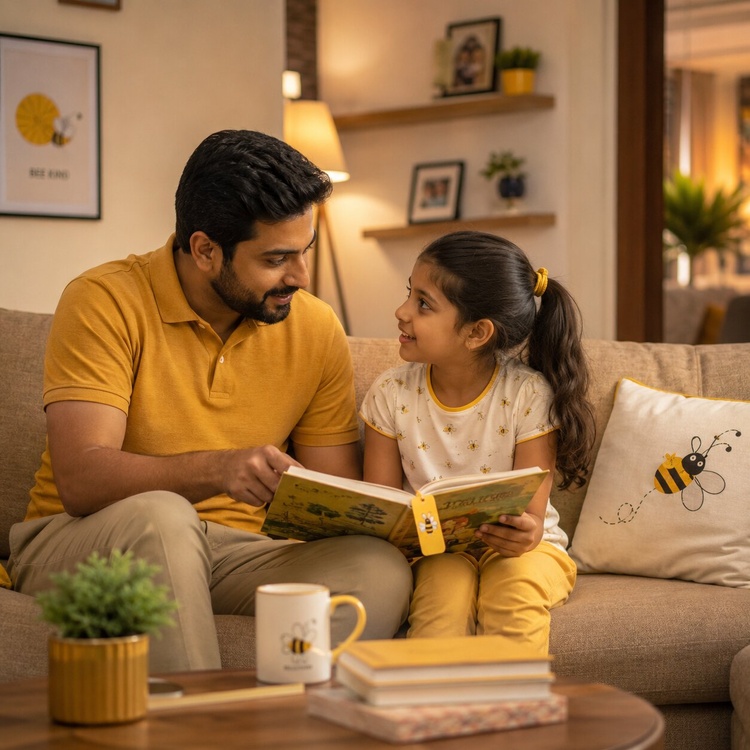
Reading fluently and understanding what's read are two different skills — many children can decode words accurately while missing the deeper meaning. These 12 activities build genuine comprehension, aligned to how Indian school assessments actually test it.
A child who reads a passage smoothly but can't answer a single question about it afterward is more common than many parents expect. Fluency and comprehension develop somewhat separately, and comprehension often needs its own dedicated attention, especially once school assessments start weighting it heavily.
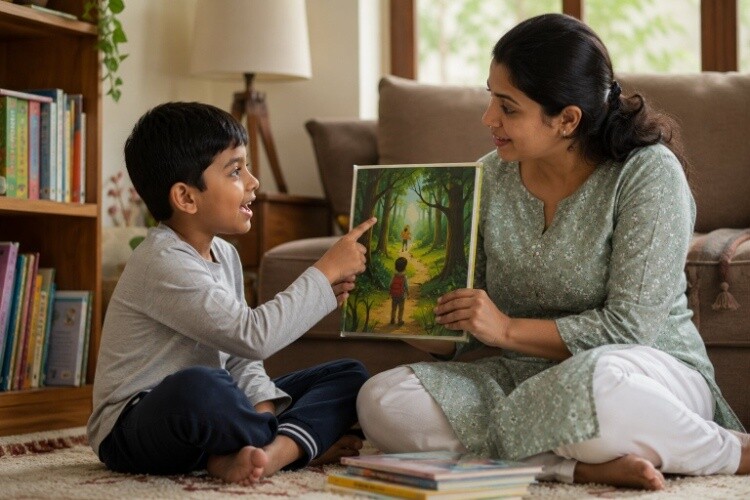
Predict before reading
Before starting a new chapter or story, ask your child to guess what might happen based on the title or cover — builds active engagement with the text before it even begins.
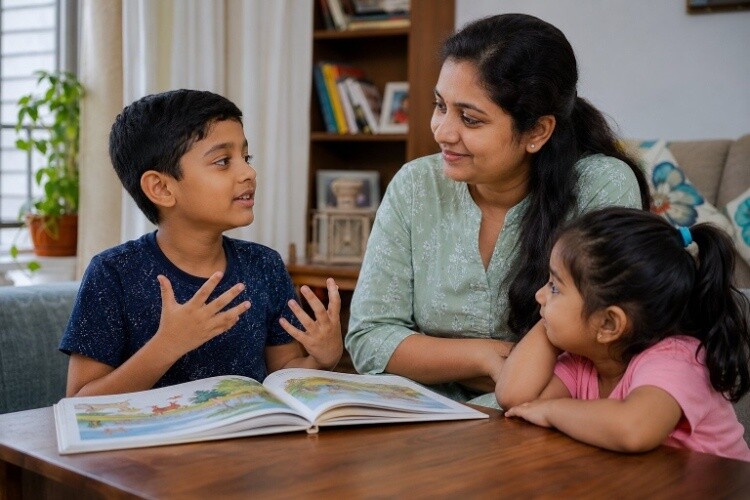
Pause and summarise in their own words
After each page or short section, ask your child to explain what just happened, in their own words rather than repeating the text — genuinely tests understanding versus memorisation.
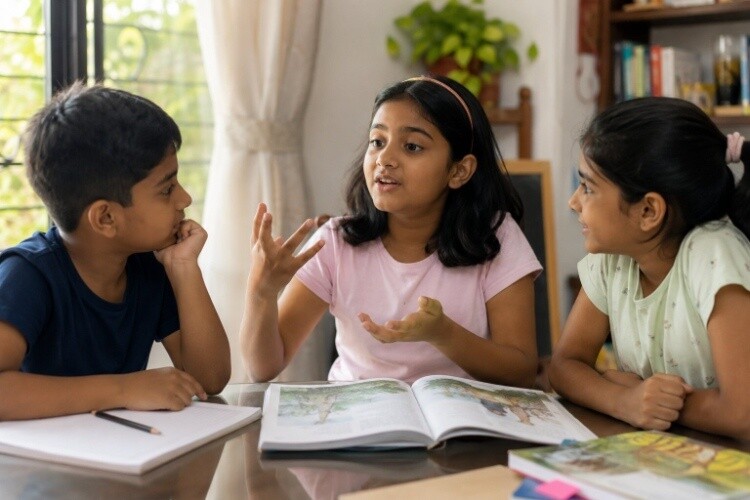
Ask "why" questions, not just "what" questions
"What did the character do?" tests recall; "why do you think they did that?" tests genuine comprehension and inference.
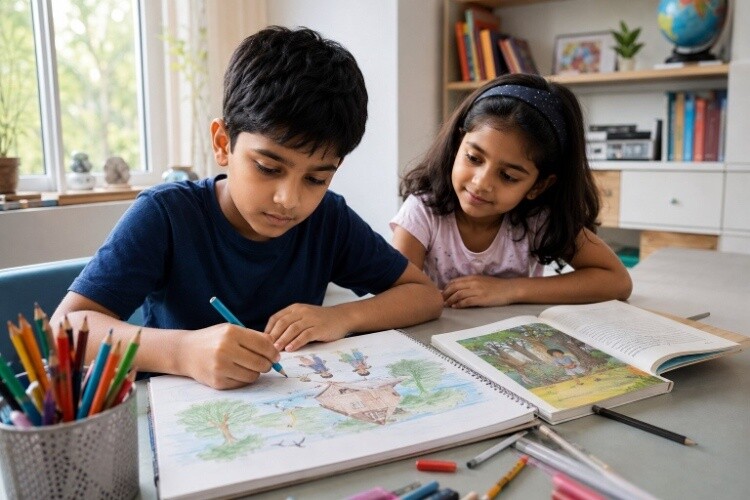
Draw the scene just read
Asking a child to sketch what they've just read (even roughly) reveals whether they've formed a genuine mental picture of the text, a strong indicator of real comprehension.
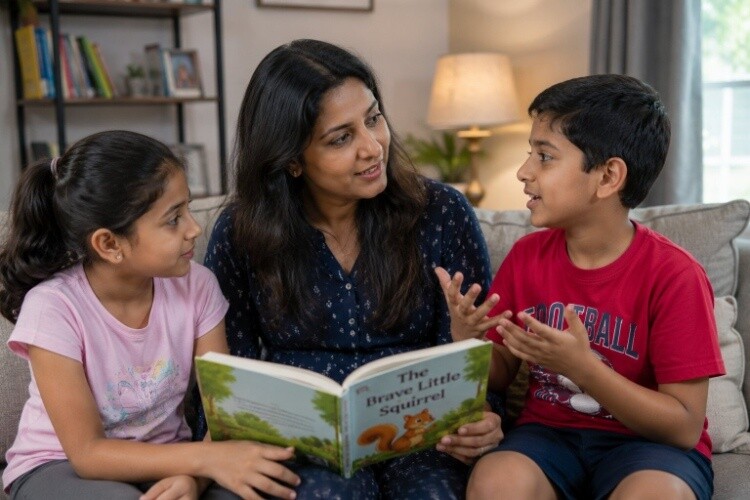
Connect the story to personal experience
"Has something like this ever happened to you?" builds the kind of personal connection that deepens both understanding and retention.
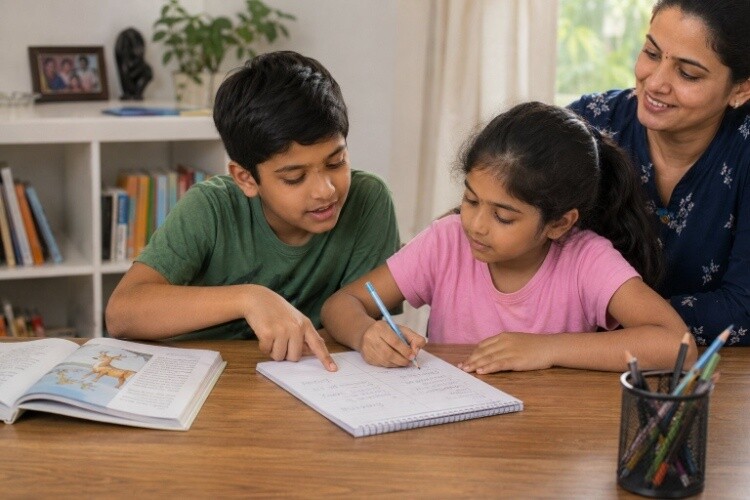
Identify the main problem and solution
For story-based texts, explicitly identifying "what went wrong" and "how it got fixed" builds structural comprehension that directly supports school-style comprehension questions.
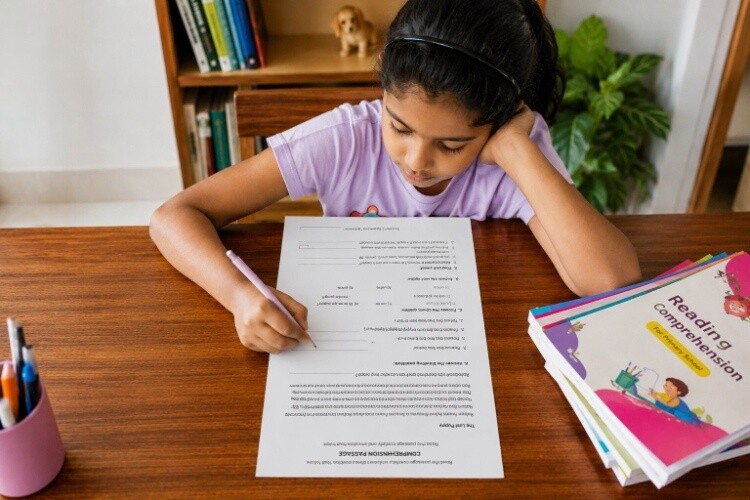
Practice with the exact format schools use
CBSE and ICSE comprehension assessments often follow a consistent format (short passage, factual and inferential questions) — practicing with genuinely similar formats builds both comprehension and test familiarity together.
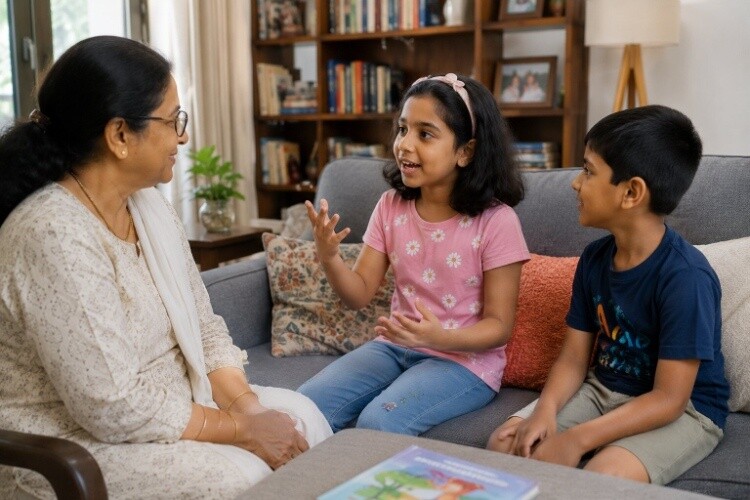
Retell the story to someone else
Having your child retell a story to a grandparent or sibling who hasn't read it forces genuine comprehension and sequencing, since gaps become immediately obvious in the retelling.
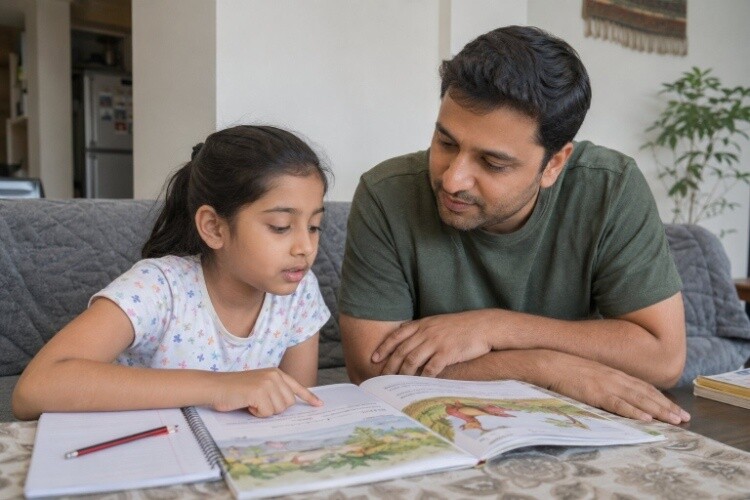
Identify unfamiliar words and guess meaning from context
Rather than immediately explaining a hard word, ask your child to guess its meaning from surrounding sentences first — builds a genuinely useful lifelong reading skill.
Compare two characters or two versions of a story
"How is this character different from the other one?" or comparing a book to its film adaptation builds comparative and analytical thinking.
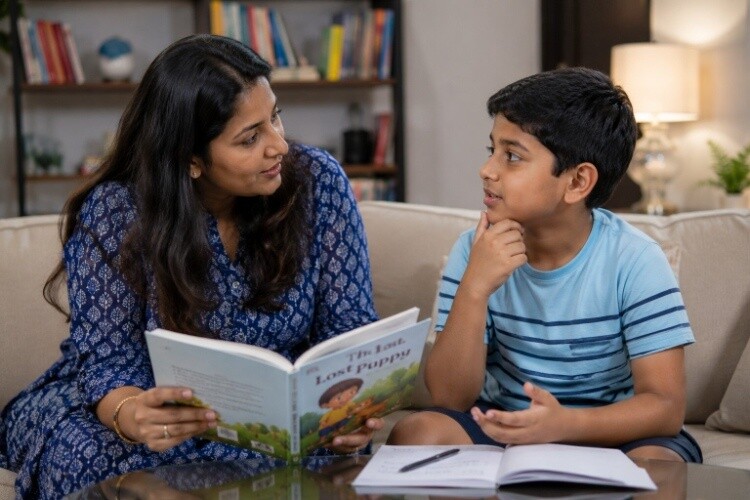
Ask about the author's intention
Even simply, "why do you think the author wrote this story?" introduces early critical reading skills well before it's formally taught in higher grades.
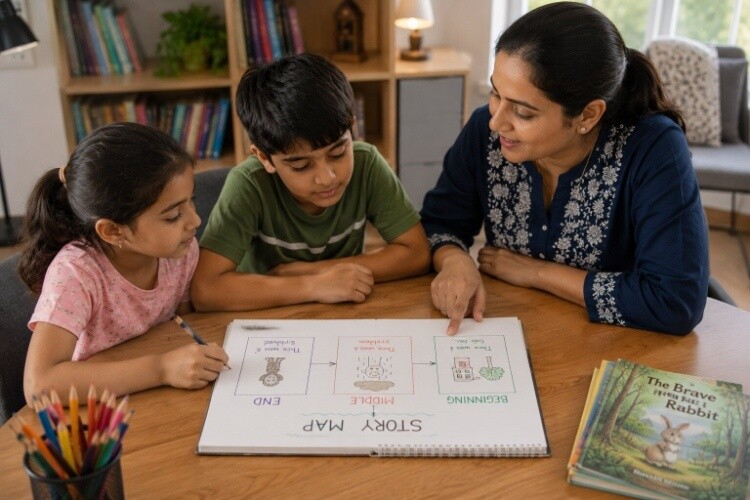
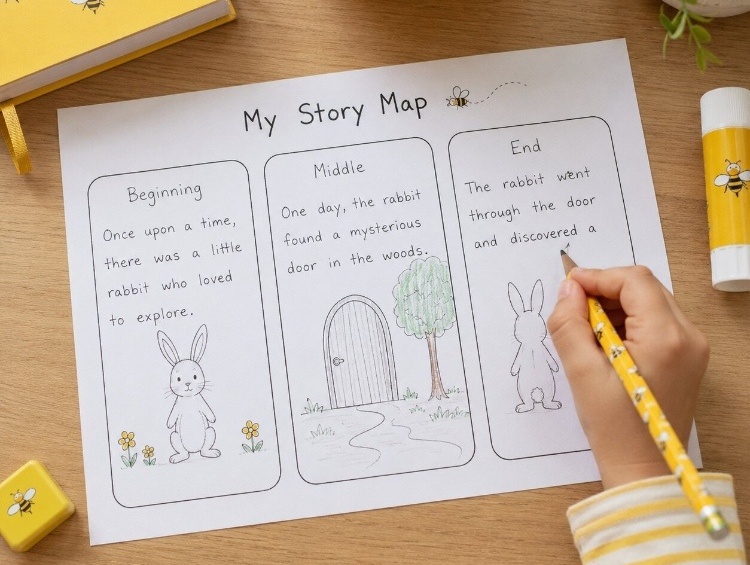
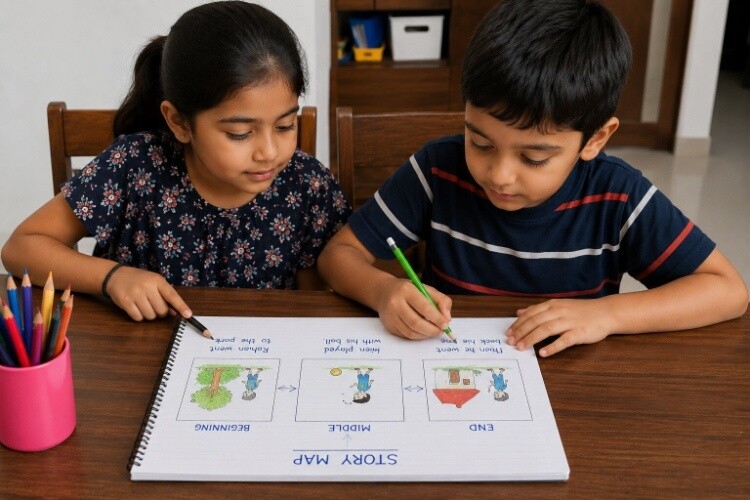
Use graphic organisers for structure
A simple hand-drawn story map (beginning, middle, end boxes) visually reinforces narrative structure and comprehension for visual learners.
Why this matters for exam performance specifically
Reading comprehension sections carry significant weight in CBSE and ICSE assessments from an early grade — a child with genuinely strong comprehension skills, built through years of these kinds of activities, tends to handle unseen passage questions with far more confidence than one relying purely on exam-time strategy.
Keeping it feeling like conversation, not testing
The tone matters enormously here — these questions work best woven naturally into reading time as genuine curiosity, not delivered like a pop quiz. A child who senses every reading session ends in an interrogation will start avoiding reading altogether.