
 Summer Camp
 Reading Writing
 Book Club
 Calligraphy
 Creative Writing
 English Speaking
 Handwriting
 Library
 Phonics
 Story Telling
 Art and Craft
 Clay Moulding
 Drawing
 Painting
 Pottery
 Sketching
 Drama Theatre
 Personality Development
 Public Speaking
 Languages
 Arabic
 Chinese
 French
 German
 Hindi
Hindi Italian
 Japanese
 Korean
 Persian
 Portuguese
 Russian
 Spanish
 Turkish
 Uzbek
Uzbek Sports and Fitness
 Aerobics
 Athletics
 Badminton
 Basket Ball
 Chess
Chess Cricket
 Football
 Golf
Golf Gymnastics
 Hulahoop
 Karate
 Martial Arts
 Pickleball
 Rugby
Rugby Skating
 Swimming
 Taekwondo
 Tennis
 Volleyball
 Yoga
Yoga Zumba
Zumba Tuition Classes
 Accounts
 Biology
 Business Studies
 CBSE
CBSE Chemistry
 Commerce
 Economics
 Homework Classes
 IB Board
 IGCSE
IGCSE Mathematics
 Physics
 Psychology
 Science
 Social Studies
 Vedic Maths
 Dance and Music
 Ballet
 Bhangra
 Bharatnatyam
 Bollywood Dance
 Casio
Casio Dandiya and Garba
 Drums
Drums Flute
Flute Guitar
 Harmonium
 Hip Hop
 Jazz
Jazz Kathak
 Keyboard
 Piano
Piano Salsa
Salsa Shlokas
 Sitar
Sitar Tabla
Tabla Ukulele
 Violin
 Vocal
Vocal Play School
 STEM
STEM
 Abacus
 App Development
 Artificial intelligence
 Basic Computer Courses
 Canva
Canva Coding
 Graphic Design
 Lego
Lego Python
 Robotics
 Rubiks Cube
 Scrabble
 Scratch
 Website Development
 Winter Camp
 Workshops
 Diwali Workshop
 Easter
 Ganesh Mahotsav
 Guru Nanak Jayanti Workshop
 Holi
Holi Independence day workshop
 Janmashtami Workshop
 Mothers day
 Navratri Workshops
 Raksha Bandhan workshop
 Ramayana Workshop
 Spring Camp
 Valentines Day Workshops
 Festive
 Daycare
 Cooking and Food
 Spring Camp
 Contests and Competitions
 Special abled
 Republic Day Workshops
 Mela
Mela
 Mela
Mela Cognitive Development
 Mother-Toddler Program
-Jul-03-2026-06-59-25-1926-AM.webp?width=30&height=30&name=Smart_20Skills_20(2)-Jul-03-2026-06-59-25-1926-AM.webp) Smart Skills
Smart Skills
 Financial Literacy
 Mental Wellbeing
 Meditation
 Reiki
Reiki



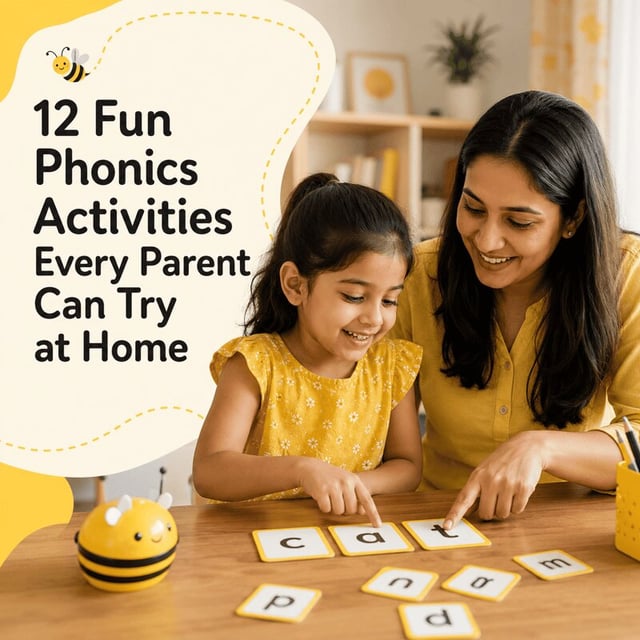
Phonics practice doesn't need workbooks or apps — everyday objects and five-minute games build the same skills more effectively, especially for kids who resist formal worksheets after a full school day.
By the time your child gets home from school, they've likely already done enough structured worksheet time. Adding another sit-down phonics session often meets resistance — not because the child can't do it, but because they're simply tired of sitting still and being taught. These activities work because they don't feel like more school.
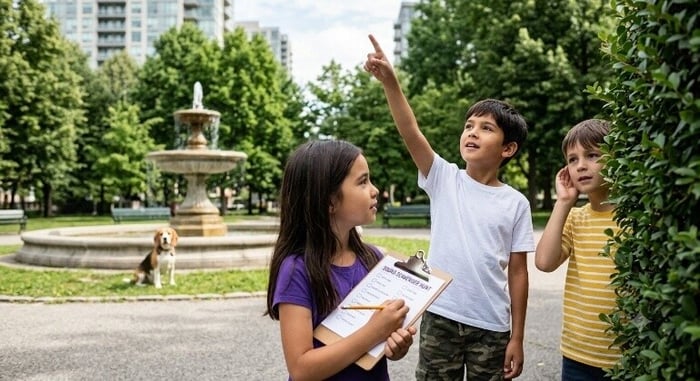
Call out a letter sound and have your child run around the house finding three objects that start with it. "S" might get sock, spoon, and soap. Movement plus sound recognition works better than sitting still for many kids.
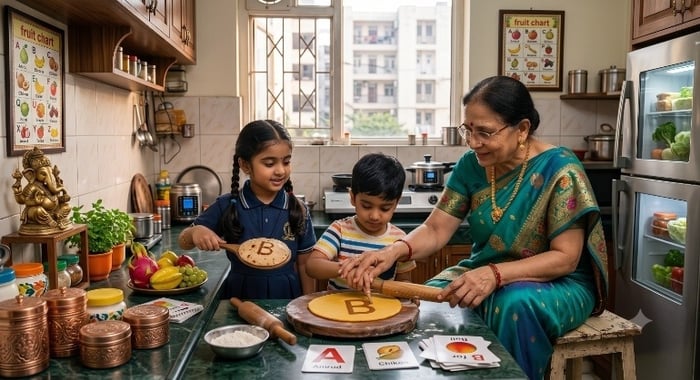
While making round rotis or parathas, trace letter shapes in the dough before cooking, or use a butter knife to "carve" the letter your child is learning that week. Combines a normal household activity with reinforcement.
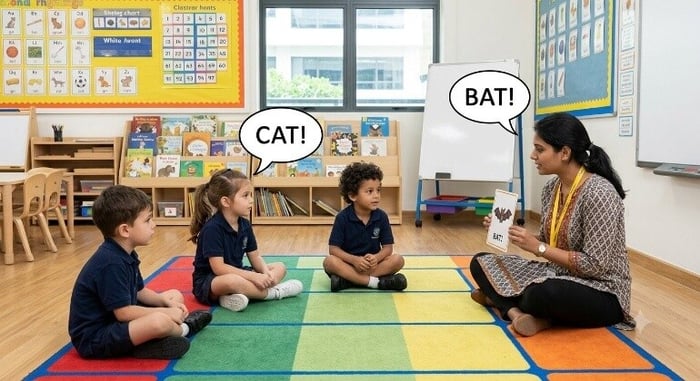
A phonics-friendly twist on the classic Indian game — instead of songs, take turns saying rhyming words. "Cat, bat, hat, mat" until someone gets stuck.
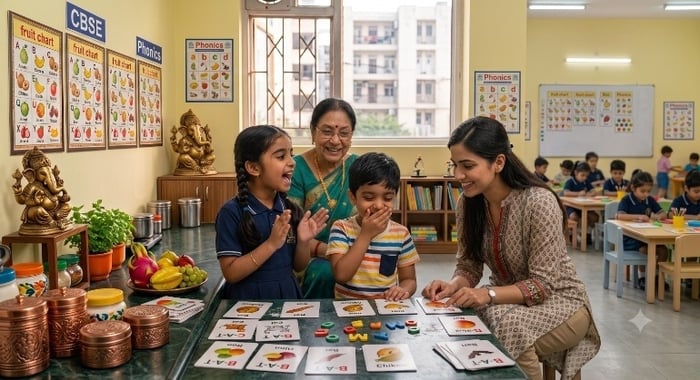
Lay out 8-10 small kitchen items (spoon, cup, ball, key) and have your child sort them by starting sound into two bowls. Genuinely effective for kinesthetic learners.
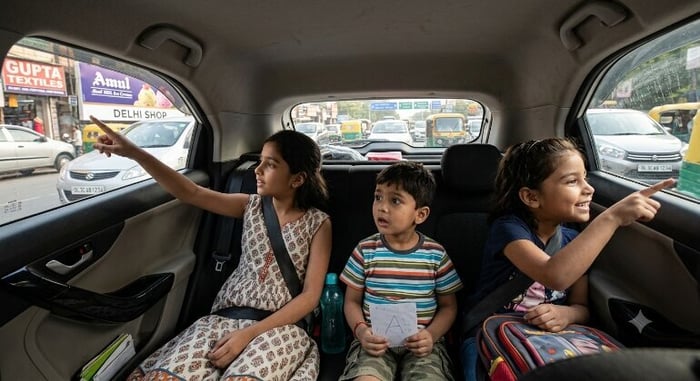
During the daily school run or any car journey, spot letters on number plates, hoardings, and shop signs, and say the sound each one makes.
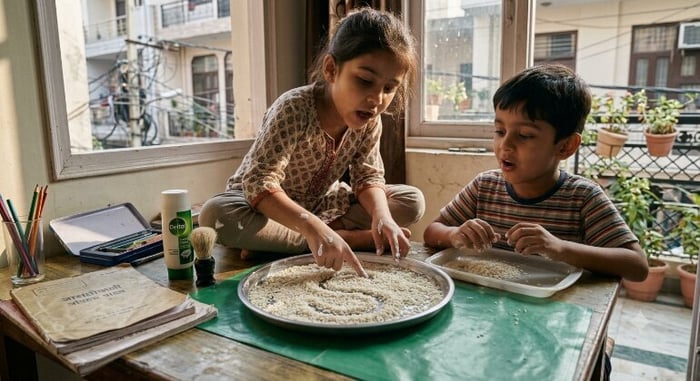
Spread a thin layer of shaving cream or dry rice/rava on a tray and have your child trace letters with a finger while saying the sound aloud. Tactile, low-mess, and easy to redo instantly.
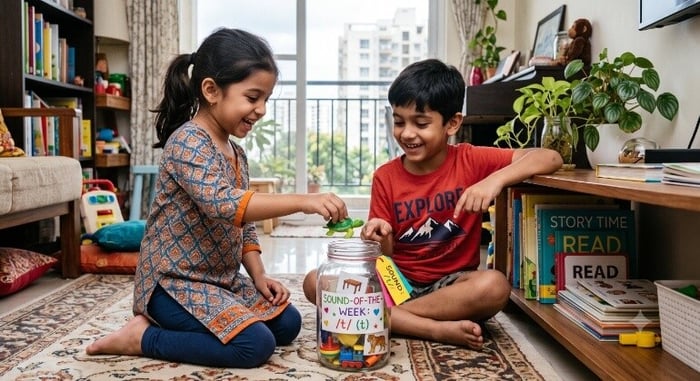
Pick one tricky sound each week (like "th" or "sh") and add a small object or picture to a jar each time you spot something with that sound during the week.
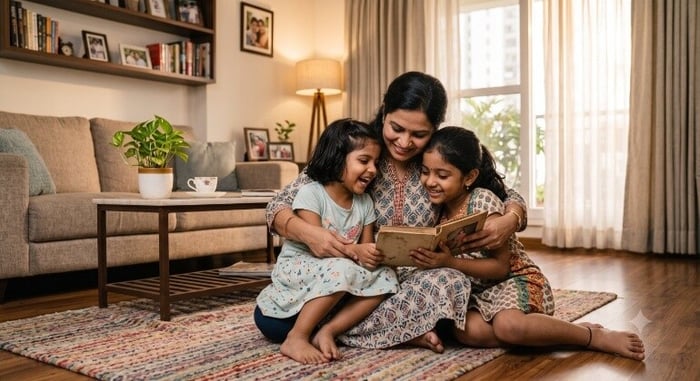
Say a word slowly in separate sounds ("c...a...t") and have your child clap once per sound, then say the blended word. Builds the blending skill that many kids find hardest.
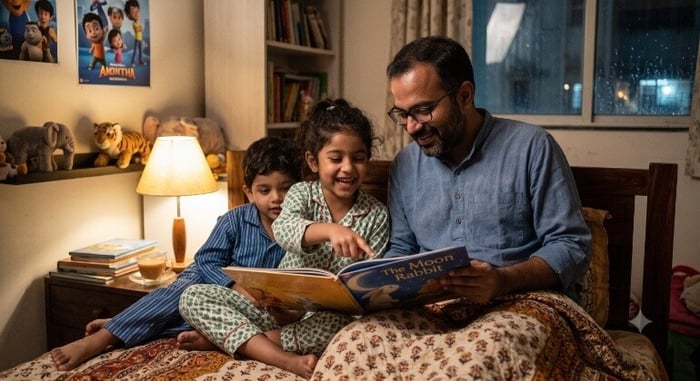
While reading a bedtime story, occasionally pause and ask your child to find a word on the page that starts with a specific sound. Keeps reading time interactive without turning it into a test.
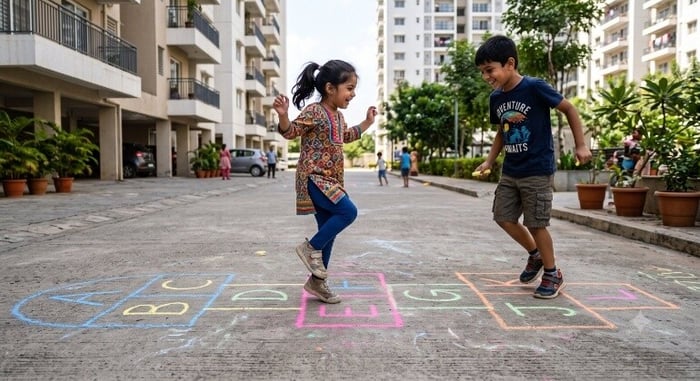
Draw a hopscotch grid with letters instead of numbers on the society pathway or terrace, and call out sounds for your child to hop to.
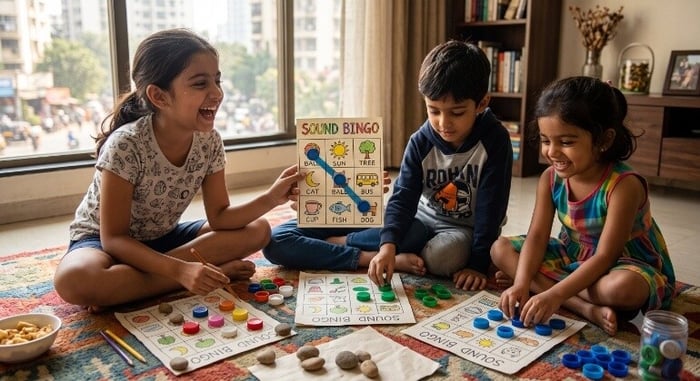
Draw a simple 9-box grid with pictures (ball, sun, tree, moon) and call out sounds — first to cover three in a row wins. Reusable and easy to make from scrap paper.
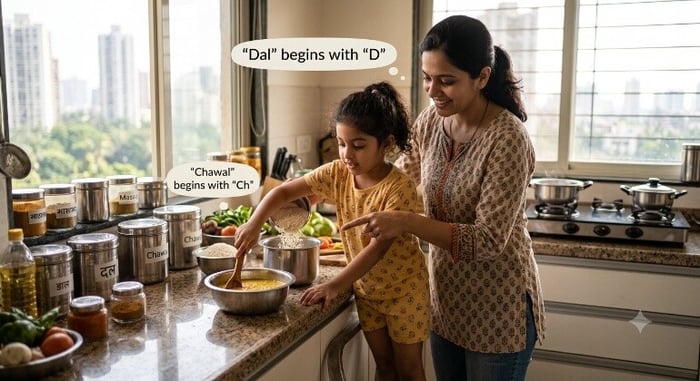
While helping in the kitchen, ask your child to name the starting sound of each ingredient being used — "dal" starts with "d," "chawal" starts with "ch."