
 Summer Camp
 Reading Writing
 Book Club
 Calligraphy
 Creative Writing
 English Speaking
 Handwriting
 Library
 Phonics
 Story Telling
 Art and Craft
 Clay Moulding
 Drawing
 Painting
 Pottery
 Sketching
 Drama Theatre
 Personality Development
 Public Speaking
 Languages
 Arabic
 Chinese
 French
 German
 Hindi
Hindi Italian
 Japanese
 Korean
 Persian
 Portuguese
 Russian
 Spanish
 Turkish
 Uzbek
Uzbek Sports and Fitness
 Aerobics
 Athletics
 Badminton
 Basket Ball
 Chess
Chess Cricket
 Football
 Golf
Golf Gymnastics
 Hulahoop
 Karate
 Martial Arts
 Pickleball
 Rugby
Rugby Skating
 Swimming
 Taekwondo
 Tennis
 Volleyball
 Yoga
Yoga Zumba
Zumba Tuition Classes
 Accounts
 Biology
 Business Studies
 CBSE
CBSE Chemistry
 Commerce
 Economics
 Homework Classes
 IB Board
 IGCSE
IGCSE Mathematics
 Physics
 Psychology
 Science
 Social Studies
 Vedic Maths
 Dance and Music
 Ballet
 Bhangra
 Bharatnatyam
 Bollywood Dance
 Casio
Casio Dandiya and Garba
 Drums
Drums Flute
Flute Guitar
 Harmonium
 Hip Hop
 Jazz
Jazz Kathak
 Keyboard
 Piano
Piano Salsa
Salsa Shlokas
 Sitar
Sitar Tabla
Tabla Ukulele
 Violin
 Vocal
Vocal Play School
 STEM
STEM
 Abacus
 App Development
 Artificial intelligence
 Basic Computer Courses
 Canva
Canva Coding
 Graphic Design
 Lego
Lego Python
 Robotics
 Rubiks Cube
 Scrabble
 Scratch
 Website Development
 Winter Camp
 Workshops
 Diwali Workshop
 Easter
 Ganesh Mahotsav
 Guru Nanak Jayanti Workshop
 Holi
Holi Independence day workshop
 Janmashtami Workshop
 Mothers day
 Navratri Workshops
 Raksha Bandhan workshop
 Ramayana Workshop
 Spring Camp
 Valentines Day Workshops
 Festive
 Daycare
 Cooking and Food
 Spring Camp
 Contests and Competitions
 Special abled
 Republic Day Workshops
 Mela
Mela
 Mela
Mela Cognitive Development
 Mother-Toddler Program
-Jul-03-2026-06-59-25-1926-AM.webp?width=30&height=30&name=Smart_20Skills_20(2)-Jul-03-2026-06-59-25-1926-AM.webp) Smart Skills
Smart Skills
 Financial Literacy
 Mental Wellbeing
 Meditation
 Reiki
Reiki



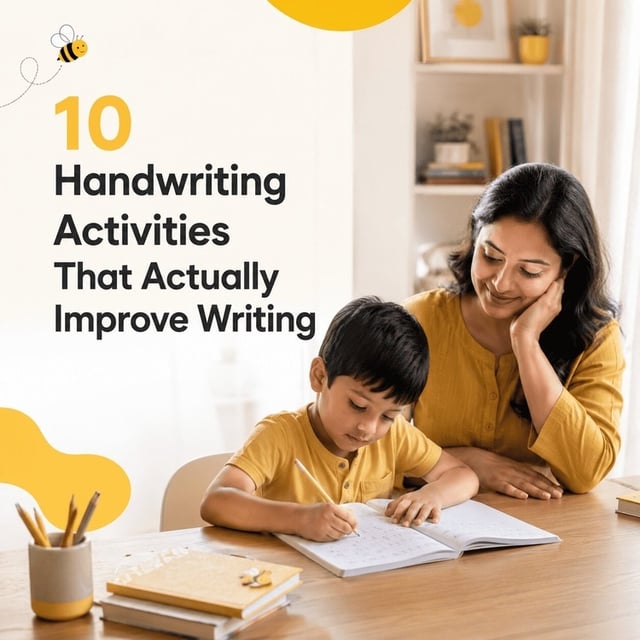
Handwriting struggles are common and rarely about laziness — they're usually about grip, hand strength, or insufficient practice in a fun format. These activities build the underlying hand strength and control that worksheets alone often miss.
If your child's handwriting has become a source of daily frustration — smudged pages, uneven letters, a teacher's note about "needs to improve" — it's worth knowing that handwriting struggles are extremely common and rarely reflect intelligence or effort. Often, the missing piece isn't more writing practice, but the underlying hand strength and coordination that supports it.
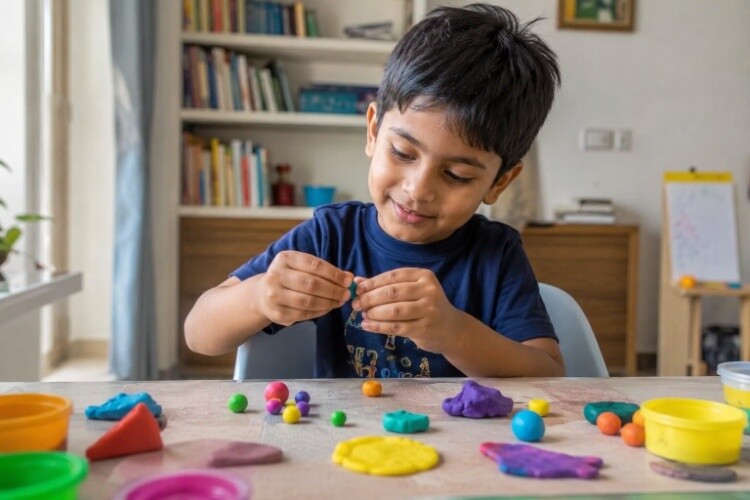
Playdough or clay strengthening exercises
Rolling small balls, pinching pieces, and squeezing playdough for a few minutes daily builds the hand muscles needed for pencil control — more effective than most people expect.
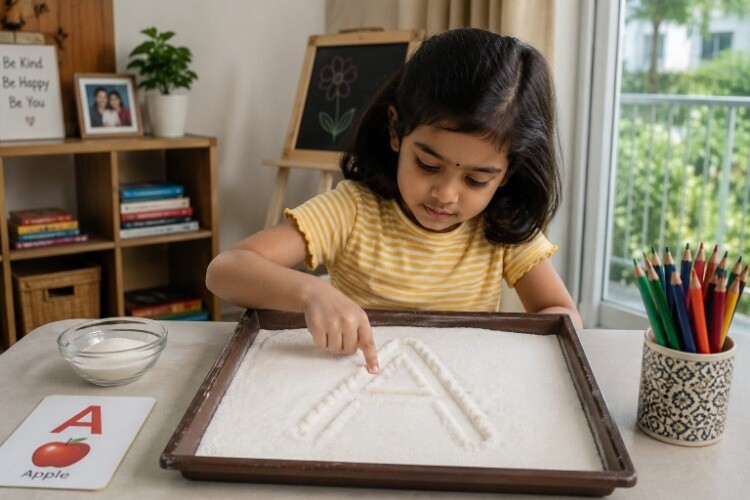
Tracing in sand, salt, or rava on a tray
Large, low-pressure tracing movements build muscle memory for letter shapes without the frustration of a pencil that "won't cooperate."
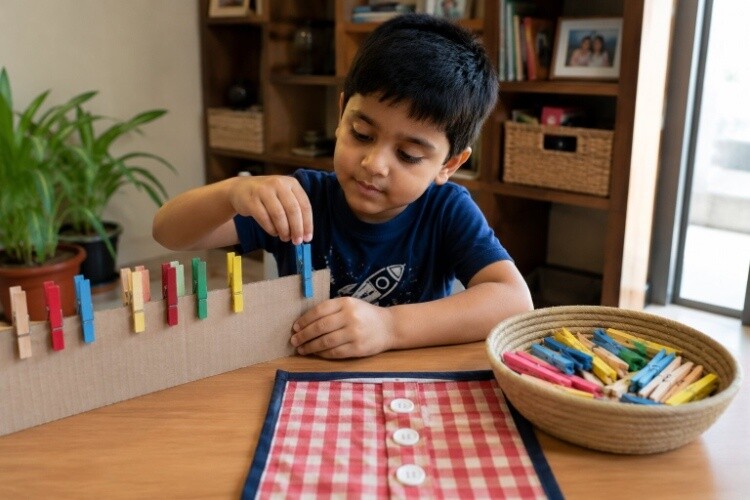
Clothespin or button activities
Squeezing clothespins onto a cardboard edge, or buttoning/unbuttoning practice, strengthens the small hand muscles used in writing
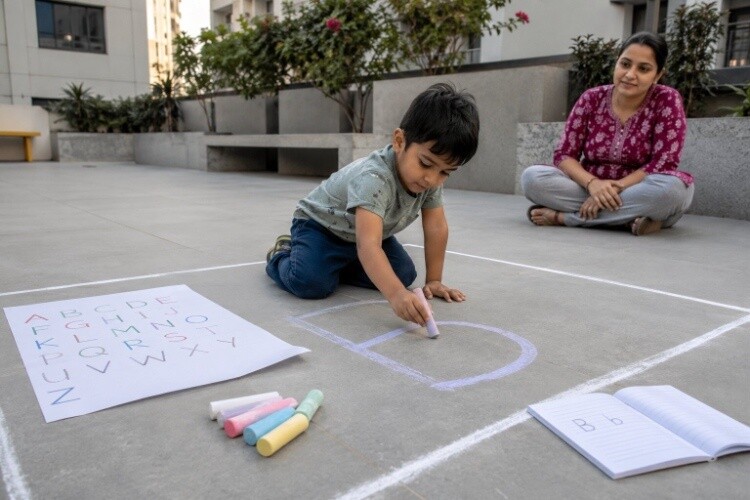
Large-scale writing before small-scale
Practicing letters in giant size on a chalk-drawn pavement square or a large sheet of paper builds motor patterns before shrinking down to notebook-sized writing.
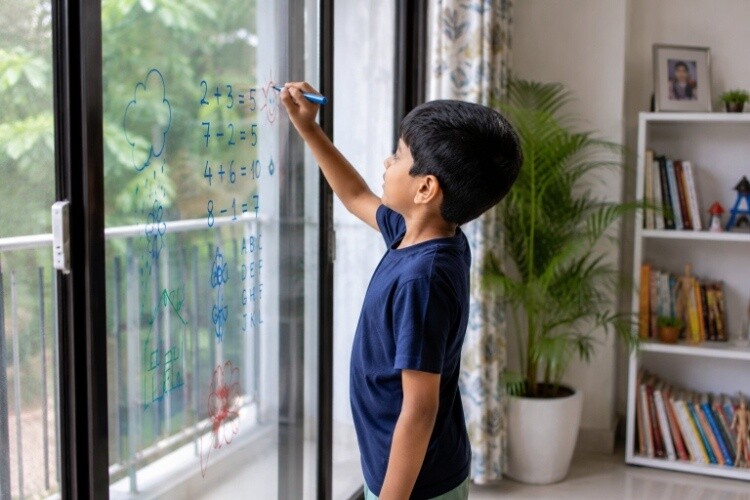
Vertical surface writing
Writing on a wall-mounted whiteboard or a windowpane (with washable markers) engages the wrist and shoulder differently than a flat desk, building better control over time.
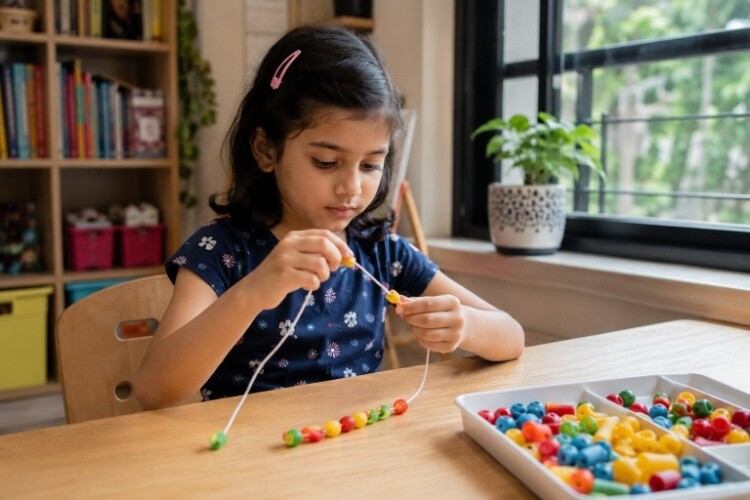
Threading beads or pasta
A simple, low-cost fine motor activity — threading dried pasta or beads onto string — that directly supports pencil grip strength.
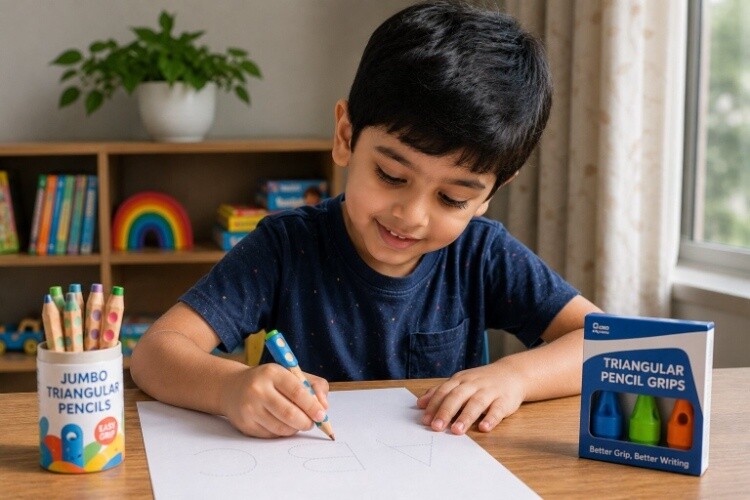
Using thick, short pencils or triangular grips
The right tool matters — a pencil that's too thin or too long for a small hand makes grip harder to control, regardless of how much practice happens.
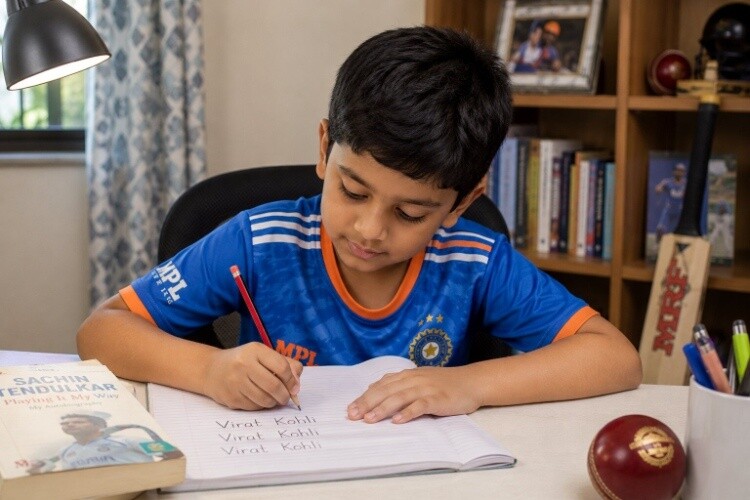
Copying favourite short phrases instead of random sentences
Letting a child copy their favourite cricket player's name or a line from a beloved book keeps motivation higher than generic worksheet sentences.
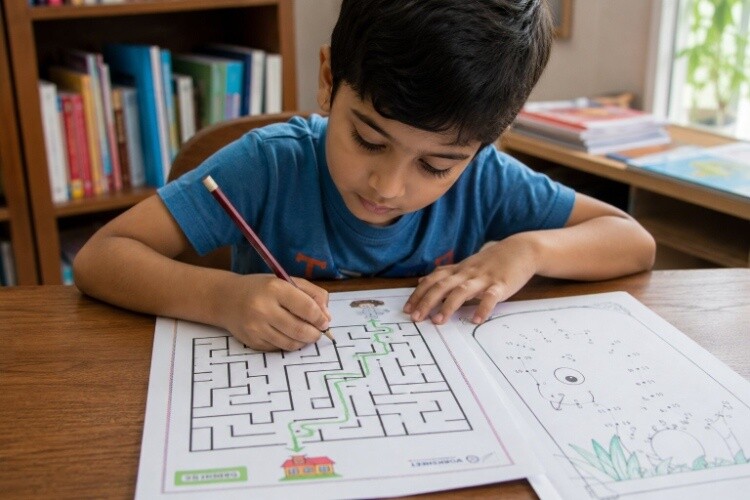
Mazes and dot-to-dot puzzles
These build the same controlled hand movements as handwriting, in a format that feels like play rather than practice.
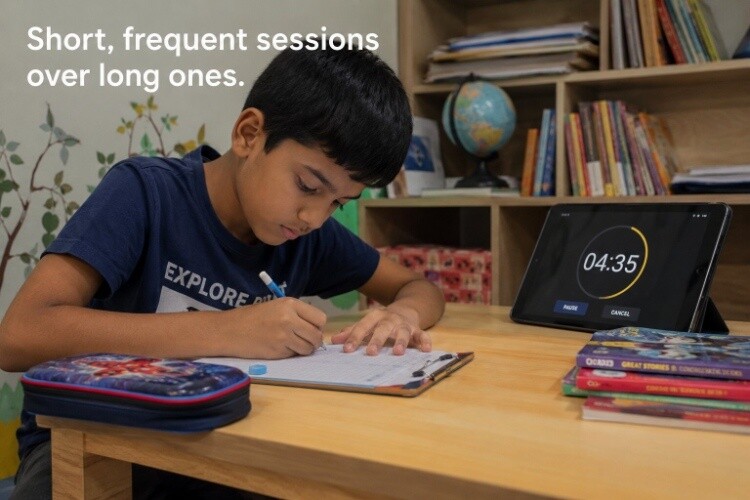
Short, frequent sessions over long ones
Five minutes twice a day produces better results than one 20-minute forced session — fatigue sets in fast for developing hand muscles, and messy end-of-session writing often reflects tiredness, not skill level.