
 Summer Camp
 Reading Writing
 Book Club
 Calligraphy
 Creative Writing
 English Speaking
 Handwriting
 Library
 Phonics
 Story Telling
 Art and Craft
 Clay Moulding
 Drawing
 Painting
 Pottery
 Sketching
 Drama Theatre
 Personality Development
 Public Speaking
 Languages
 Arabic
 Chinese
 French
 German
 Hindi
Hindi Italian
 Japanese
 Korean
 Persian
 Portuguese
 Russian
 Spanish
 Turkish
 Uzbek
Uzbek Sports and Fitness
 Aerobics
 Athletics
 Badminton
 Basket Ball
 Chess
Chess Cricket
 Football
 Golf
Golf Gymnastics
 Hulahoop
 Karate
 Martial Arts
 Pickleball
 Rugby
Rugby Skating
 Swimming
 Taekwondo
 Tennis
 Volleyball
 Yoga
Yoga Zumba
Zumba Tuition Classes
 Accounts
 Biology
 Business Studies
 CBSE
CBSE Chemistry
 Commerce
 Economics
 Homework Classes
 IB Board
 IGCSE
IGCSE Mathematics
 Physics
 Psychology
 Science
 Social Studies
 Vedic Maths
 Dance and Music
 Ballet
 Bhangra
 Bharatnatyam
 Bollywood Dance
 Casio
Casio Dandiya and Garba
 Drums
Drums Flute
Flute Guitar
 Harmonium
 Hip Hop
 Jazz
Jazz Kathak
 Keyboard
 Piano
Piano Salsa
Salsa Shlokas
 Sitar
Sitar Tabla
Tabla Ukulele
 Violin
 Vocal
Vocal Play School
 STEM
STEM
 Abacus
 App Development
 Artificial intelligence
 Basic Computer Courses
 Canva
Canva Coding
 Graphic Design
 Lego
Lego Python
 Robotics
 Rubiks Cube
 Scrabble
 Scratch
 Website Development
 Winter Camp
 Workshops
 Diwali Workshop
 Easter
 Ganesh Mahotsav
 Guru Nanak Jayanti Workshop
 Holi
Holi Independence day workshop
 Janmashtami Workshop
 Mothers day
 Navratri Workshops
 Raksha Bandhan workshop
 Ramayana Workshop
 Spring Camp
 Valentines Day Workshops
 Festive
 Daycare
 Cooking and Food
 Spring Camp
 Contests and Competitions
 Special abled
 Republic Day Workshops
 Mela
Mela
 Mela
Mela Cognitive Development
 Mother-Toddler Program
-Jul-03-2026-06-59-25-1926-AM.webp?width=30&height=30&name=Smart_20Skills_20(2)-Jul-03-2026-06-59-25-1926-AM.webp) Smart Skills
Smart Skills
 Financial Literacy
 Mental Wellbeing
 Meditation
 Reiki
Reiki



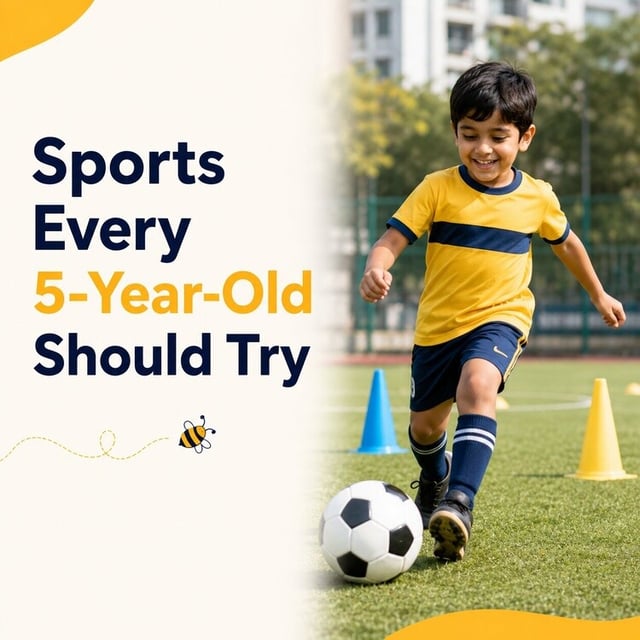
Five is sampling age, not specialising age — broad movement exposure across several sports builds the general athlete before any single sport claims them. Here's the sampler menu and how to run it.
The right sports strategy at five is a buffet, not a commitment: varied movement patterns, several environments, and attention to what makes this particular child light up.
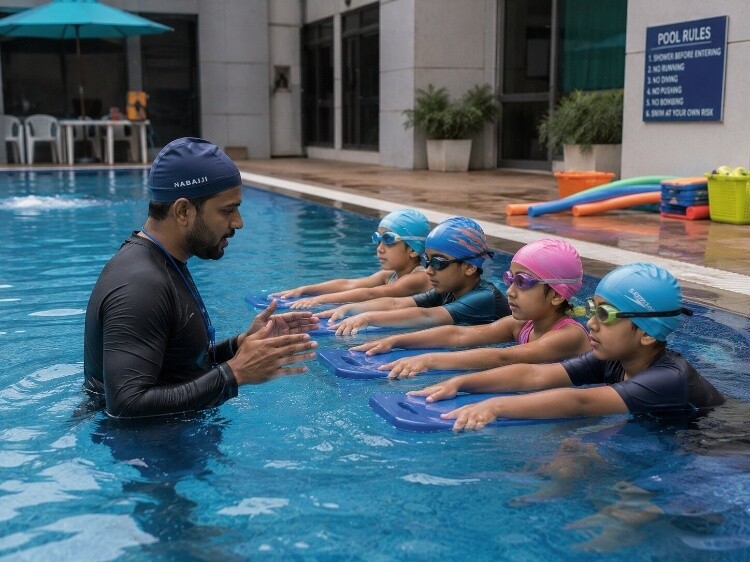
Swimming
The life-skill sport: full-body coordination, water safety, and Delhi-summer sanity; society pools and academy programs both serve, with coach ratios the thing to check.
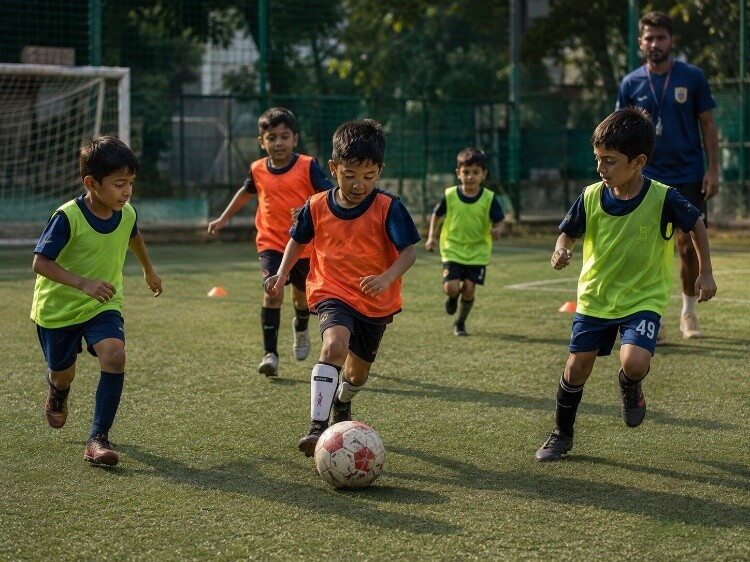
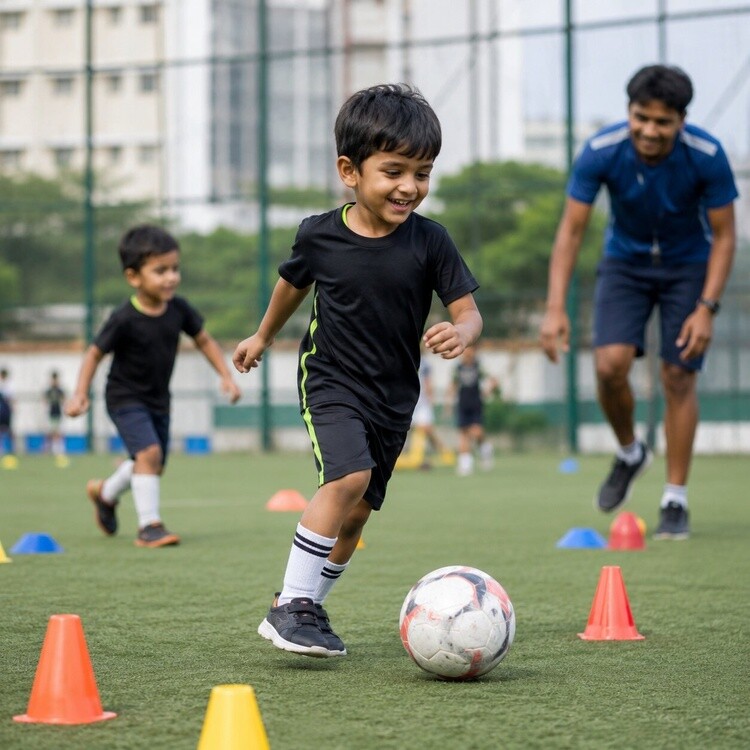
Football
Running, kicking, and first team-ness; intro programs at this age are (rightly) chaos-with-cones, and that's the curriculum.
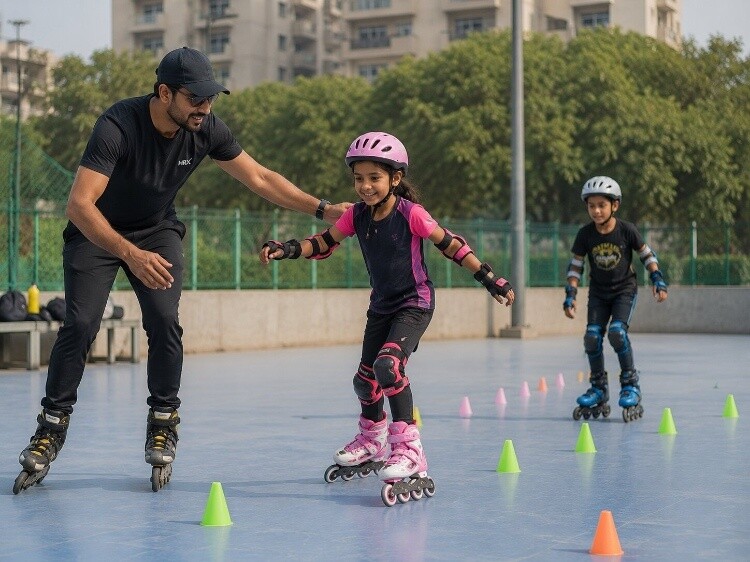
Skating
Balance and courage in equal measure; one of the most popular first classes across Delhi NCR for good reason.
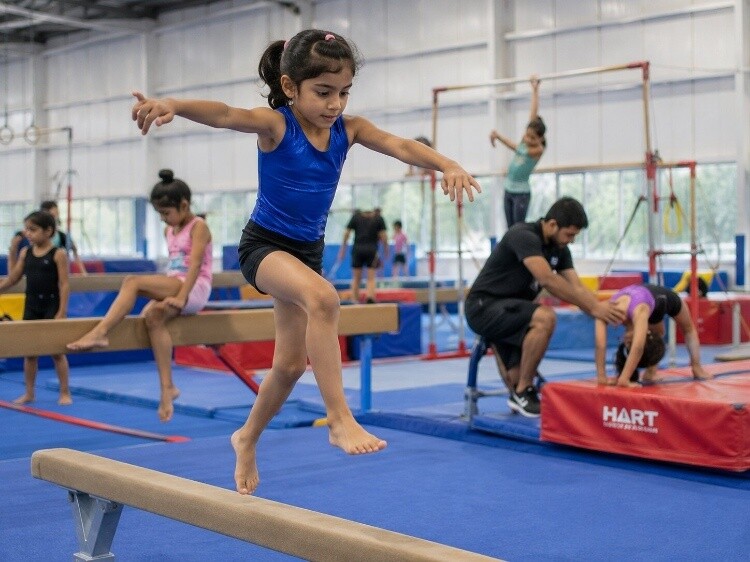
Gymnastics or movement classes
Flexibility, body control, and vestibular richness — arguably the best general-athlete foundation available at five.
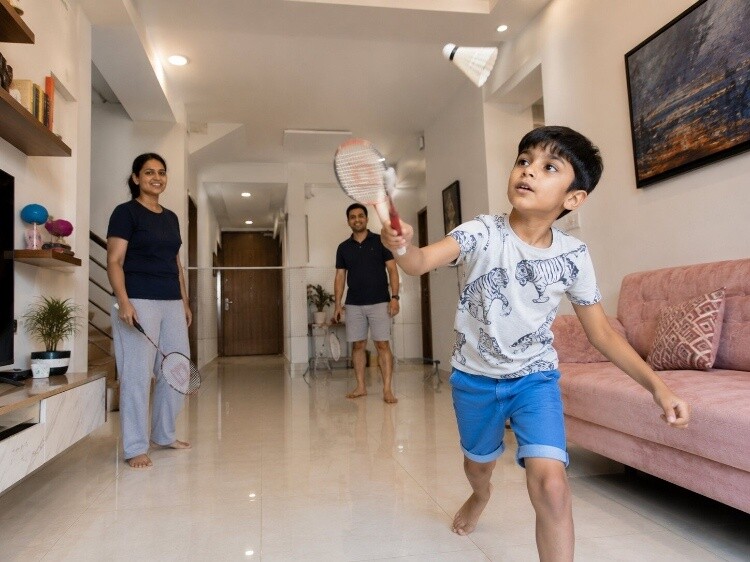
Badminton, scaled
Hand-eye tracking with the family-game advantage: practicable at home with a balloon or shuttle from day one.
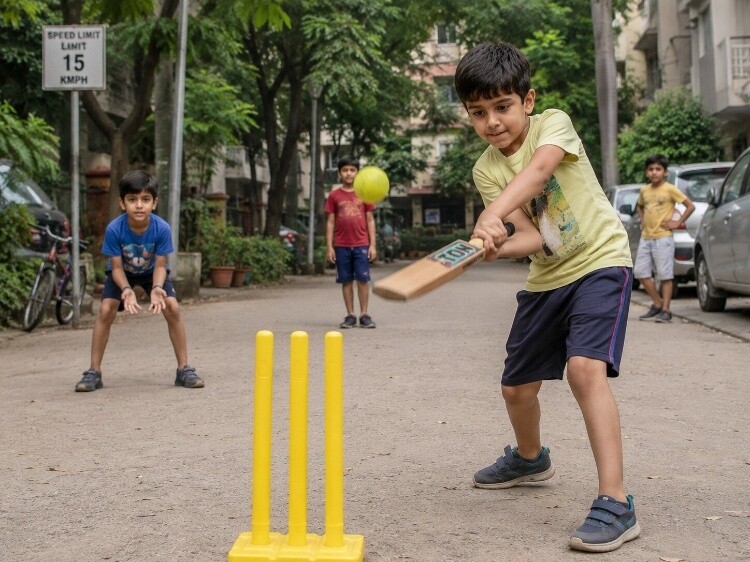
Cricket, informally first
The colony game before the academy: throwing, catching, and batting basics in their natural habitat.
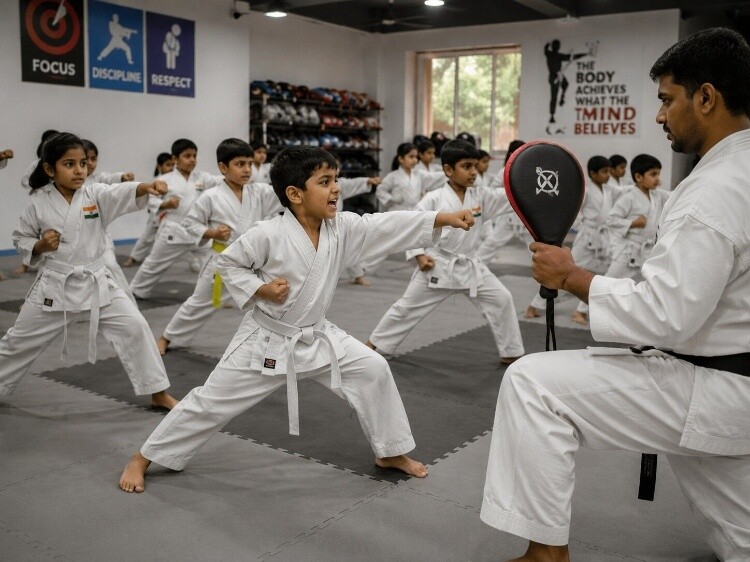
Martial arts intros
Body discipline, listening structure, and confidence — where a child's energy wants channel and form.
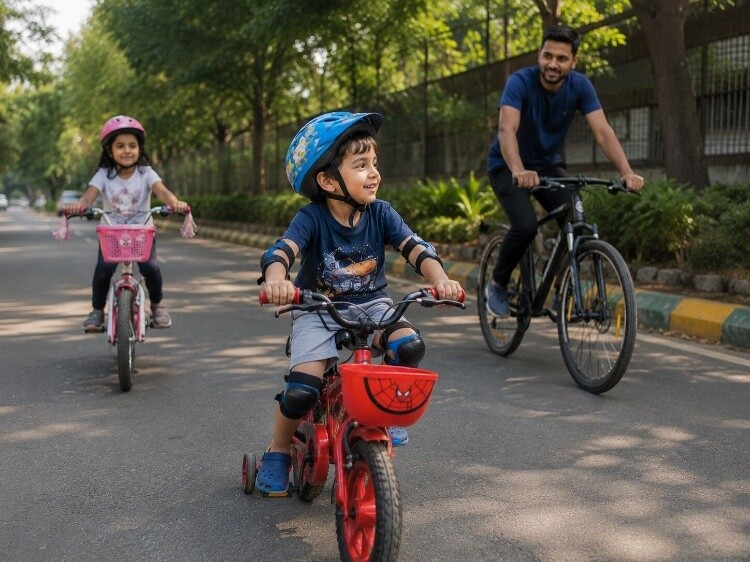
Cycling
The independence sport: balance-bike or training-wheel progressions toward the two-wheeled freedom milestone.
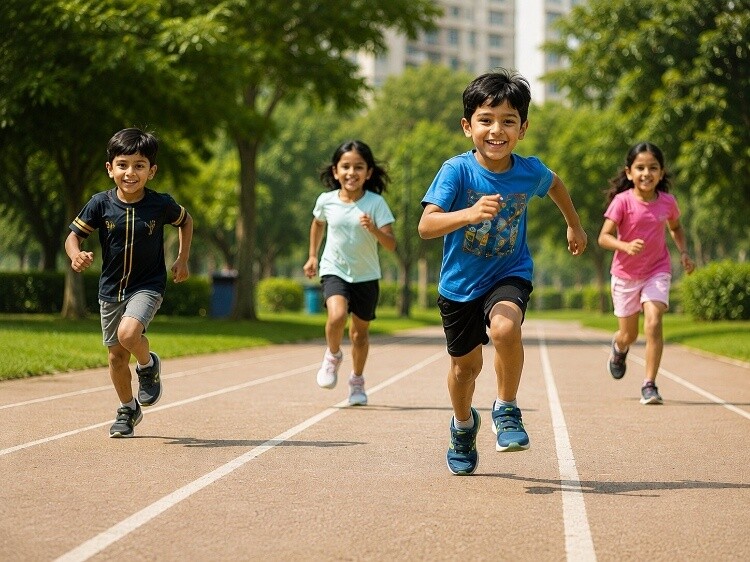
Athletics via play
Running races, jumping games, throwing at targets — the park's free decathlon.
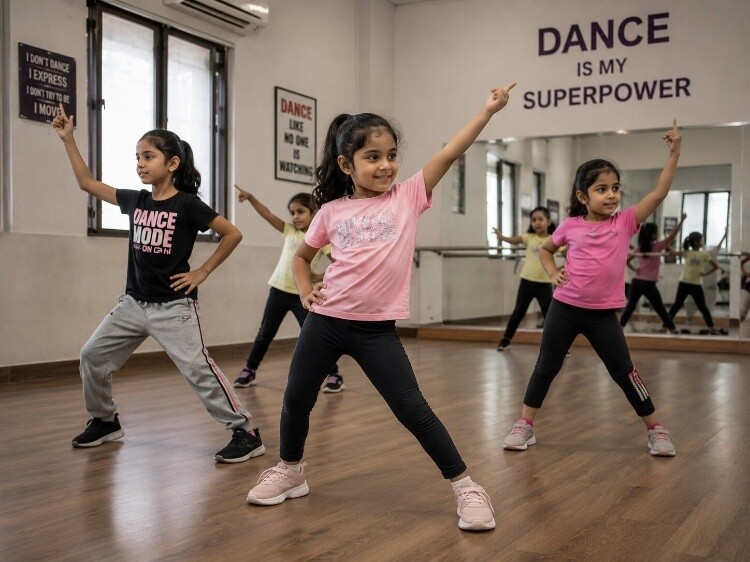
Dance
Very much a sport at this age: cardio, coordination, rhythm, and performance courage.
Reading the child's signals
The sport that sticks announces itself: asked-for between sessions, replayed at home, described unprompted. The parental job is exposure breadth plus signal-listening — not portfolio strategy. A season each of two or three different movements over the year beats a locked-in single track at this age on every development measure.
Class-choosing pragmatics
Trial classes before commitments, coach warmth over credential walls at this age (the five-year-old's coach question is "is this fun and am I safe?"), batch sizes small enough for turns, and schedule realism against the energy budget — one sport slot, maybe two, alongside school is plenty.
The late-starter reassurance
No sport door closes at five — or eight, or ten. Early sampling is about movement richness and joy, not competitive runway; the children who last in sports are overwhelmingly the ones who associate them with fun, and burnout research points squarely at early over-specialisation as the risk to avoid.