
 Summer Camp
 Reading Writing
 Book Club
 Calligraphy
 Creative Writing
 English Speaking
 Handwriting
 Library
 Phonics
 Story Telling
 Art and Craft
 Clay Moulding
 Drawing
 Painting
 Pottery
 Sketching
 Drama Theatre
 Personality Development
 Public Speaking
 Languages
 Arabic
 Chinese
 French
 German
 Hindi
Hindi Italian
 Japanese
 Korean
 Persian
 Portuguese
 Russian
 Spanish
 Turkish
 Uzbek
Uzbek Sports and Fitness
 Aerobics
 Athletics
 Badminton
 Basket Ball
 Chess
Chess Cricket
 Football
 Golf
Golf Gymnastics
 Hulahoop
 Karate
 Martial Arts
 Pickleball
 Rugby
Rugby Skating
 Swimming
 Taekwondo
 Tennis
 Volleyball
 Yoga
Yoga Zumba
Zumba Tuition Classes
 Accounts
 Biology
 Business Studies
 CBSE
CBSE Chemistry
 Commerce
 Economics
 Homework Classes
 IB Board
 IGCSE
IGCSE Mathematics
 Physics
 Psychology
 Science
 Social Studies
 Vedic Maths
 Dance and Music
 Ballet
 Bhangra
 Bharatnatyam
 Bollywood Dance
 Casio
Casio Dandiya and Garba
 Drums
Drums Flute
Flute Guitar
 Harmonium
 Hip Hop
 Jazz
Jazz Kathak
 Keyboard
 Piano
Piano Salsa
Salsa Shlokas
 Sitar
Sitar Tabla
Tabla Ukulele
 Violin
 Vocal
Vocal PlaySchools
 Preschool
 STEM
STEM
 Abacus
 App Development
 Artificial intelligence
 Basic Computer Courses
 Canva
Canva Coding
 Graphic Design
 Lego
Lego Python
 Robotics
 Rubiks Cube
 Scrabble
 Scratch
 Website Development
 Winter Camp
 Workshops
 Diwali Workshop
 Easter
 Ganesh Mahotsav
 Guru Nanak Jayanti Workshop
 Holi
Holi Independence day workshop
 Janmashtami Workshop
 Mothers day
 Navratri Workshops
 Raksha Bandhan workshop
 Ramayana Workshop
 Spring Camp
 Valentines Day Workshops
 Festive
 Daycare
 Cooking and Food
 Spring Camp
 Contests and Competitions
 Special abled
 Republic Day Workshops
 Mela
Mela
 Mela
Mela Cognitive Development
 Mother-Toddler Program
-Jul-03-2026-06-59-25-1926-AM.webp?width=30&height=30&name=Smart_20Skills_20(2)-Jul-03-2026-06-59-25-1926-AM.webp) Smart Skills
Smart Skills
 Financial Literacy


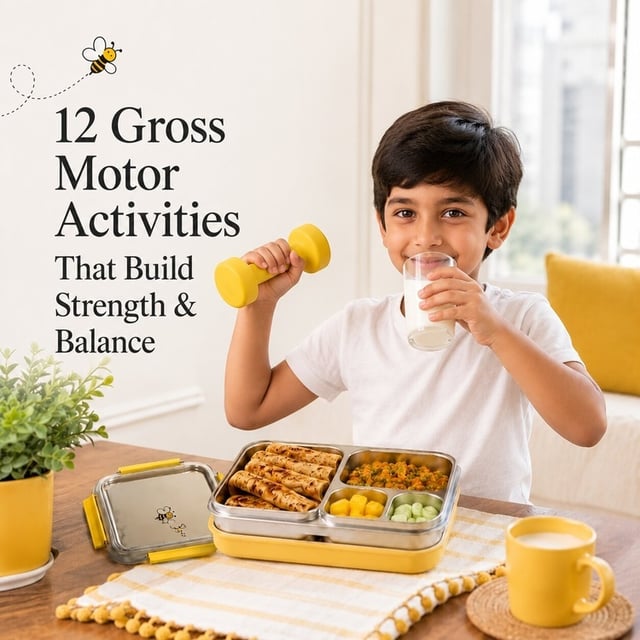
Gross motor skills — the large muscle movements behind running, jumping, and balancing — develop best through varied, genuinely fun physical play, much of it easily accessible through park visits and simple society or colony spaces.
Gross motor development underpins nearly every physical activity a child will engage in, from playground play to formal sports later on. The good news: most gross motor development happens naturally through unstructured play, especially given how many Indian families have genuine access to parks and open colony spaces.
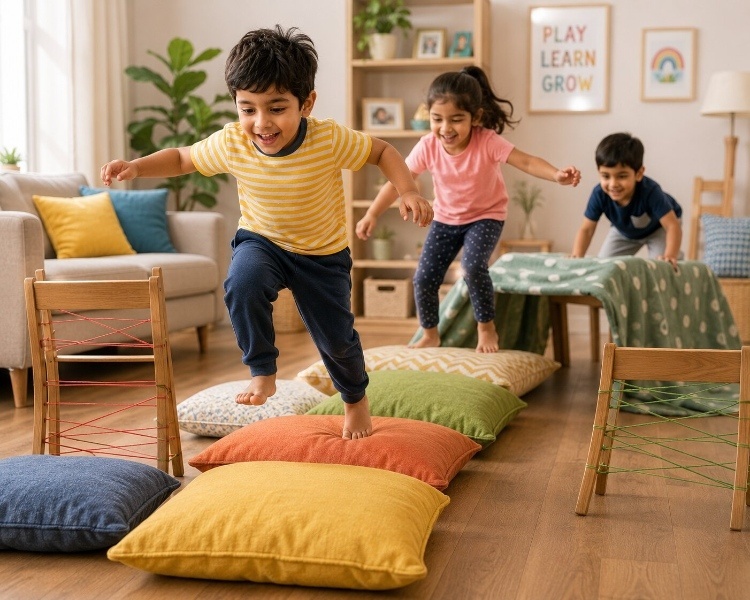
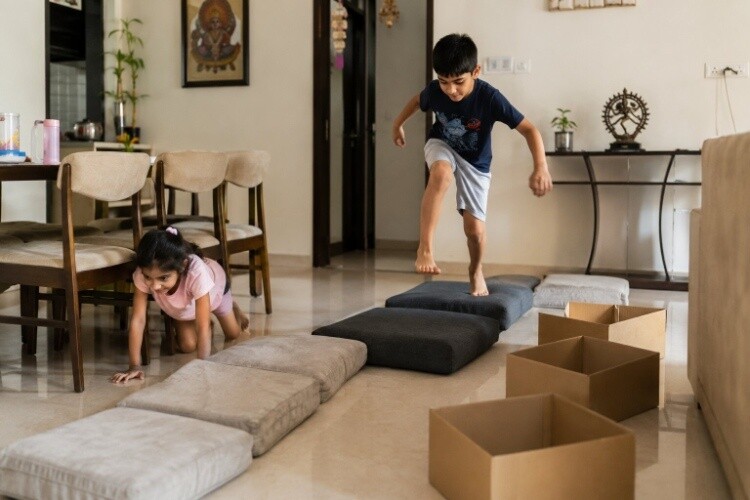
Simple obstacle courses using household items
Arranging cushions, chairs, and boxes into a simple obstacle course to crawl under, climb over, and navigate through builds coordination and planning simultaneously.
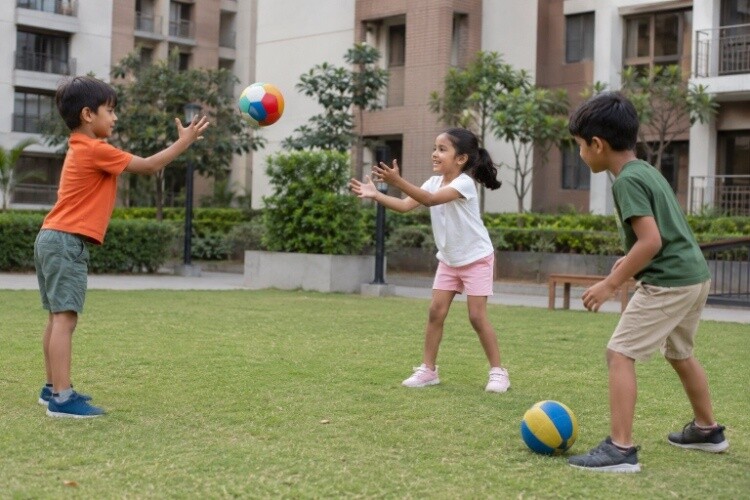
Ball games — throwing, catching, kicking
Basic ball play, even informal, builds hand-eye and foot-eye coordination that underlies most later sports participation.
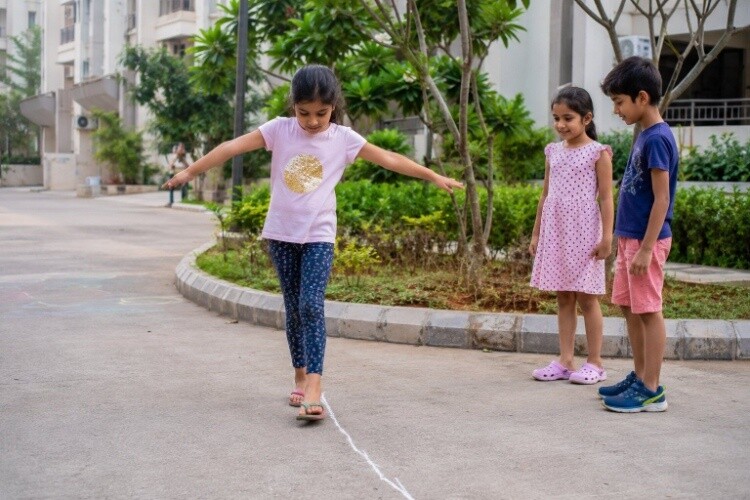
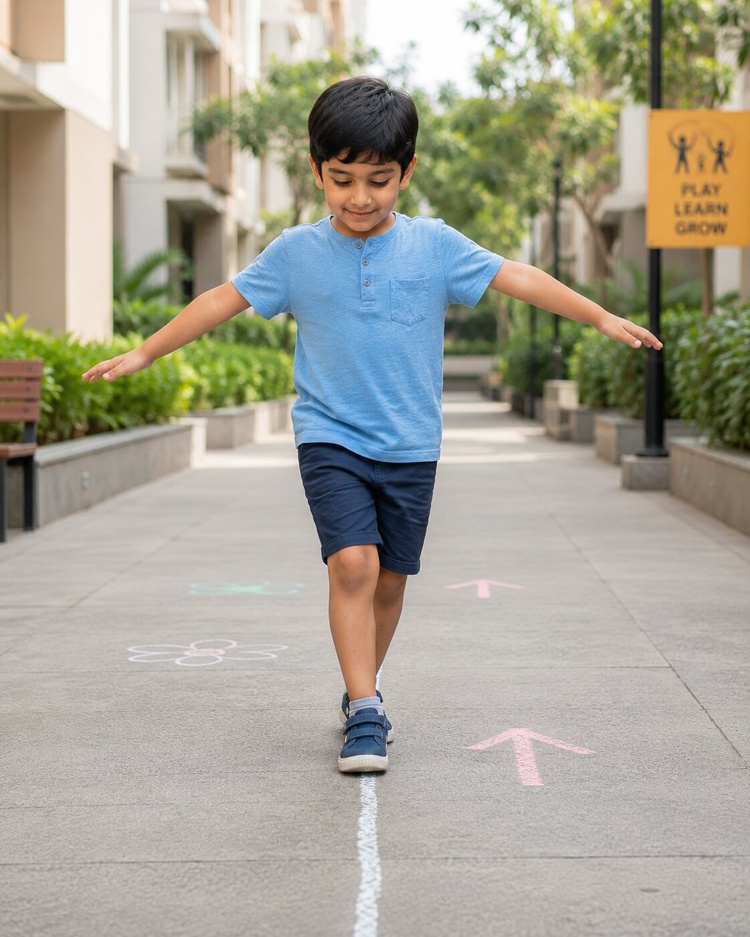
Balance beam using chalk lines or a low curb
Walking along a chalk-drawn line or low, safe raised edge builds balance in a genuinely low-cost, easily repeatable way.
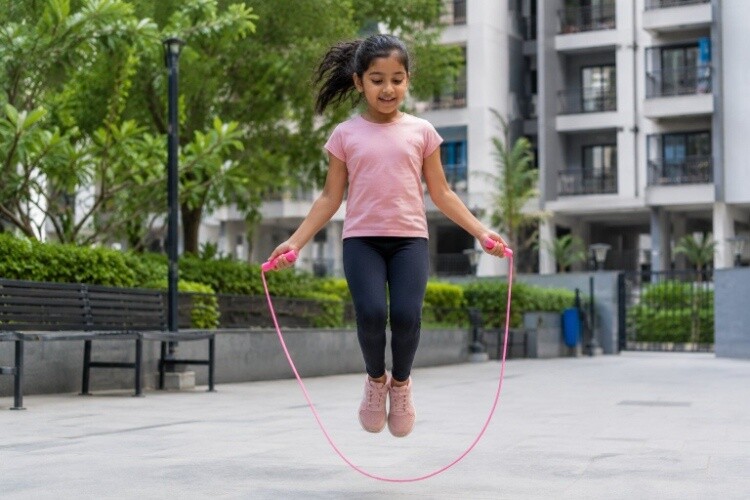
Jump rope
A classic for good reason — builds coordination, rhythm, and cardiovascular fitness simultaneously, and works well even in relatively small spaces.
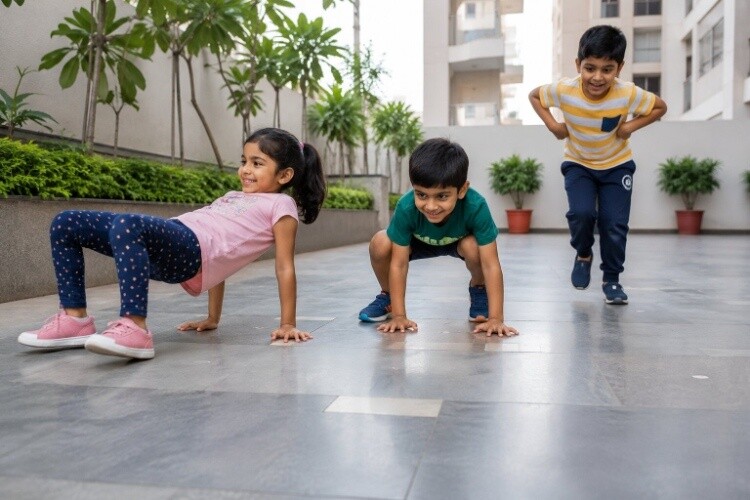
Animal walk games
"Walk like a crab," "hop like a frog," "waddle like a duck" — playful movement games that build strength and coordination across different muscle groups.
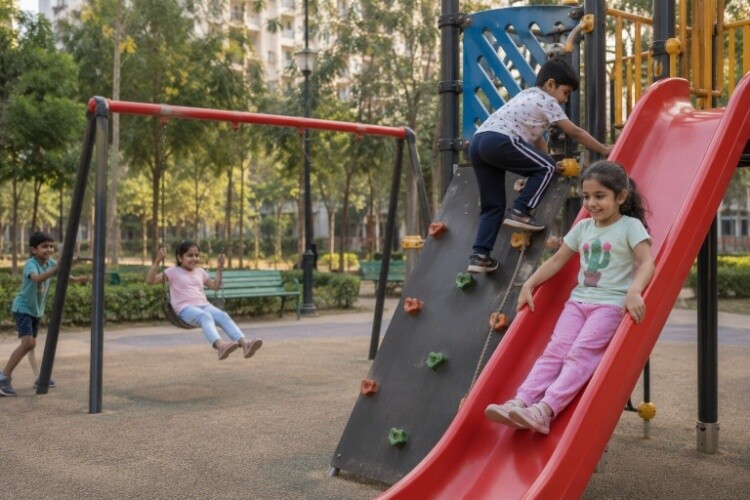
Park equipment use — climbing, swinging, sliding
Genuine, unstructured playground time remains one of the most effective gross motor builders available, and most Indian residential areas offer reasonable park access.
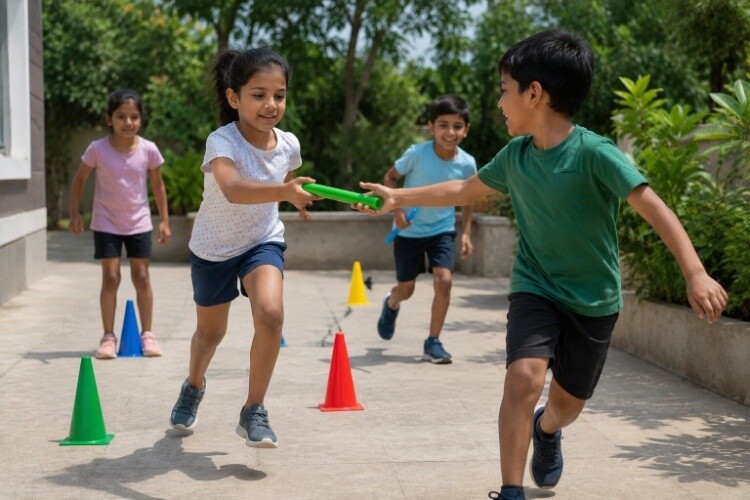
Simple relay races with siblings or friends
Structured but playful races build speed, coordination, and social cooperative skills together.
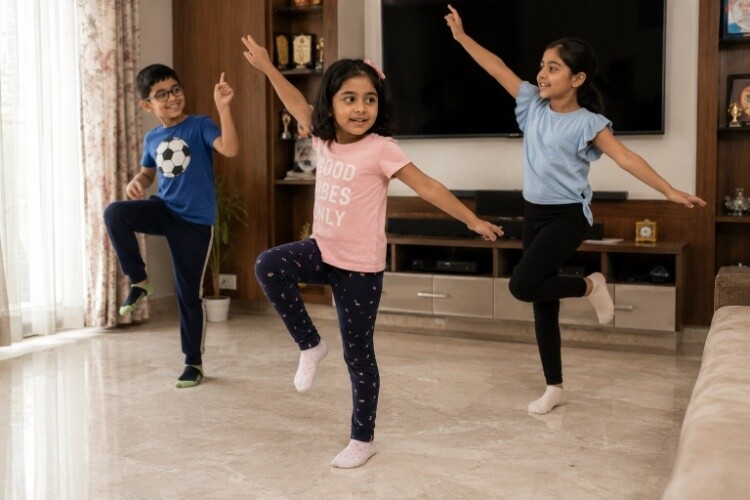
Freeze dance
Dancing to music and freezing on cue builds body control and the ability to stop movement quickly — a genuinely useful coordination skill.
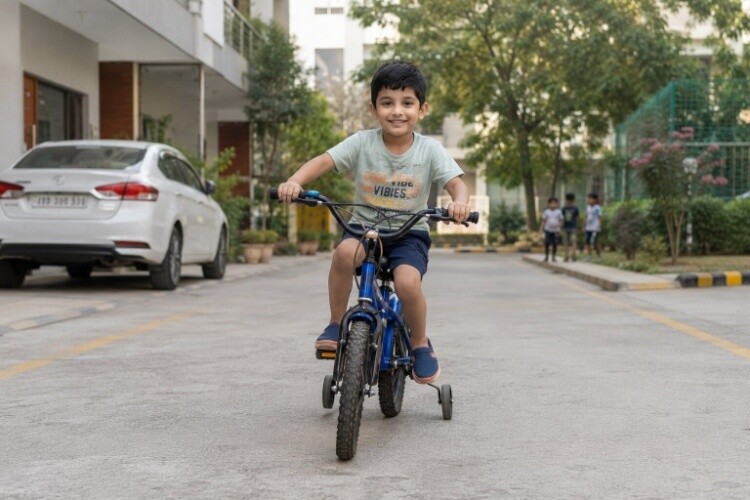
Cycling, with or without training wheels
A significant milestone activity that builds balance, leg strength, and independence, widely accessible across most Indian residential settings.
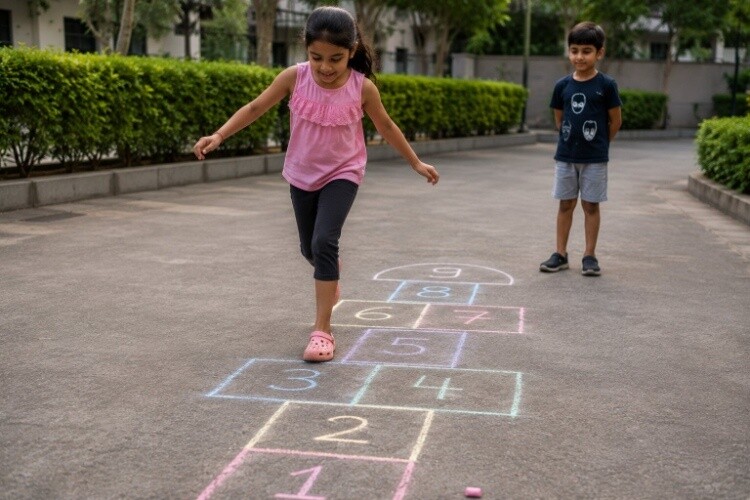
Hopscotch
A traditional, low-cost game requiring only chalk that builds balance, coordination, and number recognition simultaneously.
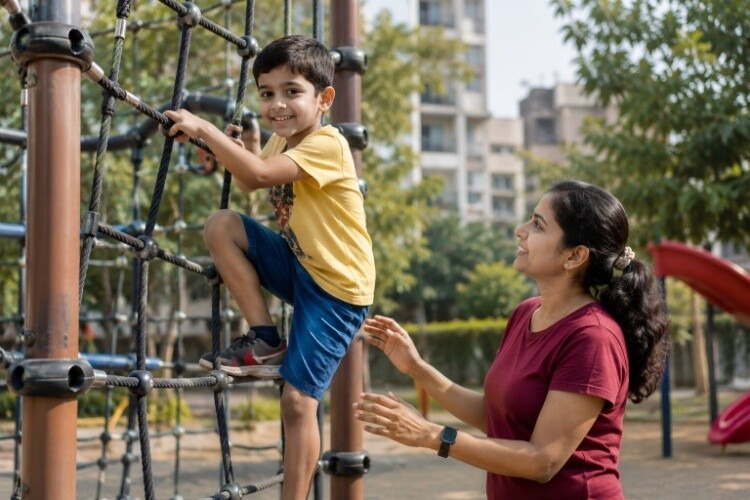
Climbing (age-appropriate structures or trees, supervised)
Builds upper body strength and spatial awareness — genuinely valuable, though requiring appropriate supervision for safety.
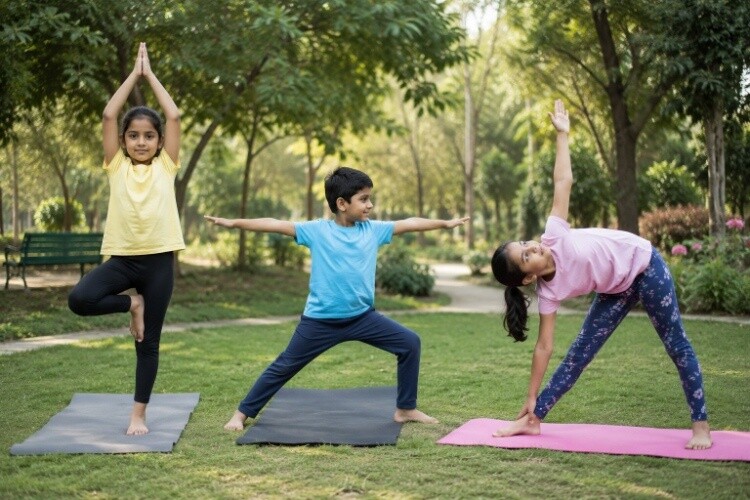
Simple yoga poses adapted for kids
Basic, playful yoga poses build flexibility, balance, and body awareness, and connect naturally to a widely practiced Indian tradition.
Why unstructured outdoor play matters as much as structured activities
While formal sports classes offer valuable structured skill-building, genuinely unstructured outdoor play — running, climbing, inventing games with other children — builds gross motor skills through natural, self-directed exploration that structured activities alone can't fully replicate.
Balancing screen time concerns with genuine outdoor access
For families with reasonable park or colony space access, prioritising even 45-60 minutes of outdoor active play daily supports both physical development and serves as a genuinely effective counterbalance to sedentary screen time.
When gross motor development might need extra attention
If a child seems significantly less coordinated than peers across multiple activities, avoids physical play consistently, or shows unusual clumsiness well beyond typical childhood variation, a conversation with a paediatrician can help determine whether additional support would be beneficial.