
 Summer Camp
 Reading Writing
 Book Club
 Calligraphy
 Creative Writing
 English Speaking
 Handwriting
 Library
 Phonics
 Story Telling
 Art and Craft
 Clay Moulding
 Drawing
 Painting
 Pottery
 Sketching
 Drama Theatre
 Personality Development
 Public Speaking
 Languages
 Arabic
 Chinese
 French
 German
 Hindi
Hindi Italian
 Japanese
 Korean
 Persian
 Portuguese
 Russian
 Spanish
 Turkish
 Uzbek
Uzbek Sports and Fitness
 Aerobics
 Athletics
 Badminton
 Basket Ball
 Chess
Chess Cricket
 Football
 Golf
Golf Gymnastics
 Hulahoop
 Karate
 Martial Arts
 Pickleball
 Rugby
Rugby Skating
 Swimming
 Taekwondo
 Tennis
 Volleyball
 Yoga
Yoga Zumba
Zumba Tuition Classes
 Accounts
 Biology
 Business Studies
 CBSE
CBSE Chemistry
 Commerce
 Economics
 Homework Classes
 IB Board
 IGCSE
IGCSE Mathematics
 Physics
 Psychology
 Science
 Social Studies
 Vedic Maths
 Dance and Music
 Ballet
 Bhangra
 Bharatnatyam
 Bollywood Dance
 Casio
Casio Dandiya and Garba
 Drums
Drums Flute
Flute Guitar
 Harmonium
 Hip Hop
 Jazz
Jazz Kathak
 Keyboard
 Piano
Piano Salsa
Salsa Shlokas
 Sitar
Sitar Tabla
Tabla Ukulele
 Violin
 Vocal
Vocal Play School
 STEM
STEM
 Abacus
 App Development
 Artificial intelligence
 Basic Computer Courses
 Canva
Canva Coding
 Graphic Design
 Lego
Lego Python
 Robotics
 Rubiks Cube
 Scrabble
 Scratch
 Website Development
 Winter Camp
 Workshops
 Diwali Workshop
 Easter
 Ganesh Mahotsav
 Guru Nanak Jayanti Workshop
 Holi
Holi Independence day workshop
 Janmashtami Workshop
 Mothers day
 Navratri Workshops
 Raksha Bandhan workshop
 Ramayana Workshop
 Spring Camp
 Valentines Day Workshops
 Festive
 Daycare
 Cooking and Food
 Spring Camp
 Contests and Competitions
 Special abled
 Republic Day Workshops
 Mela
Mela
 Mela
Mela Cognitive Development
 Mother-Toddler Program
-Jul-03-2026-06-59-25-1926-AM.webp?width=30&height=30&name=Smart_20Skills_20(2)-Jul-03-2026-06-59-25-1926-AM.webp) Smart Skills
Smart Skills
 Financial Literacy
 Mental Wellbeing
 Meditation
 Reiki
Reiki




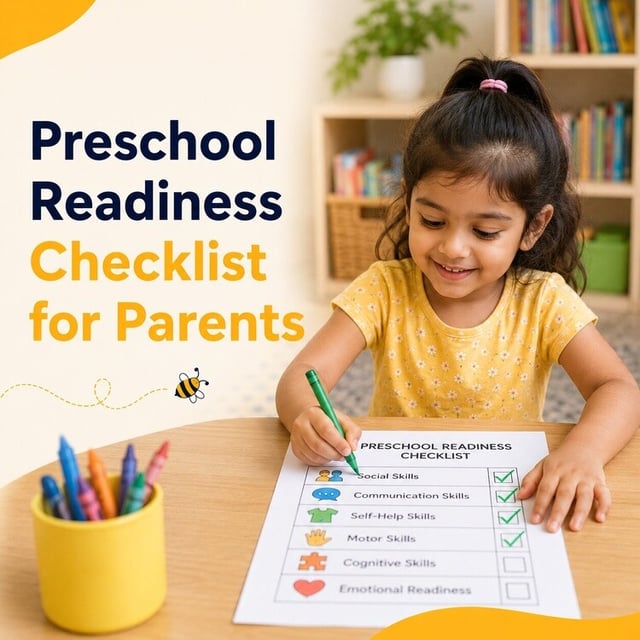
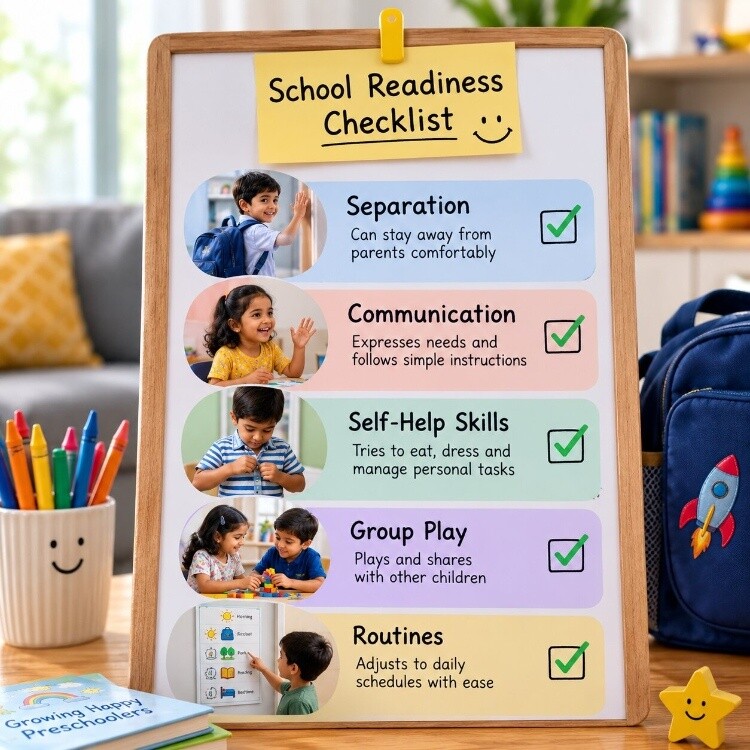
Preschool readiness is about separation comfort, basic self-help, and communication — not letters or numbers. Here's an honest checklist, plus how to build the gaps in the months before starting.
The preschool admission season generates its own anxiety economy, but genuine readiness has little to do with the academic questions some schools inappropriately ask three-year-olds. Here's what actually matters.
The readiness areas that count
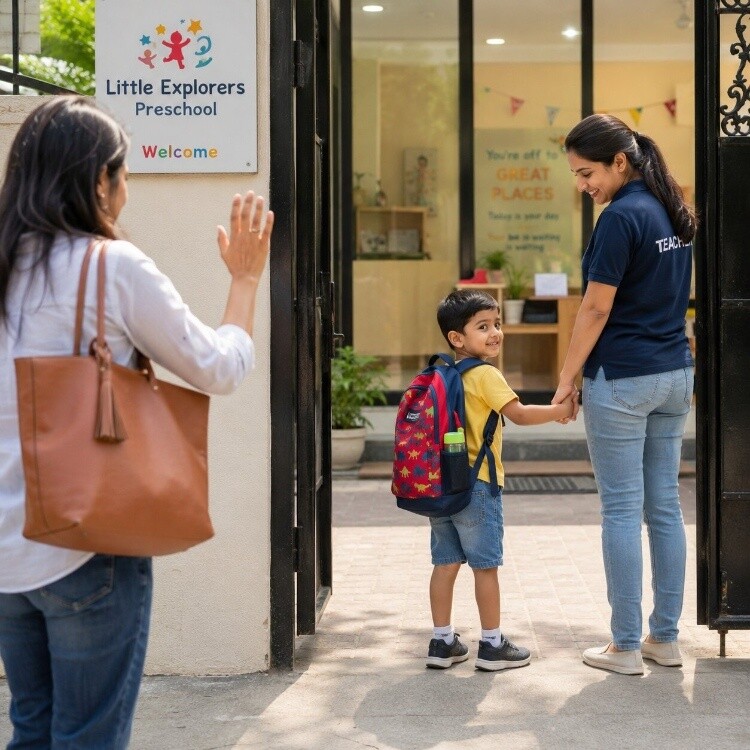
Separation tolerance — can your child manage a caregiver's absence for stretches, with another trusted adult? Not without protest — protest is normal — but with recovery.
Communication basics — can they express needs ("water," "susu," "help") understandably to a non-family adult, and follow simple instructions?
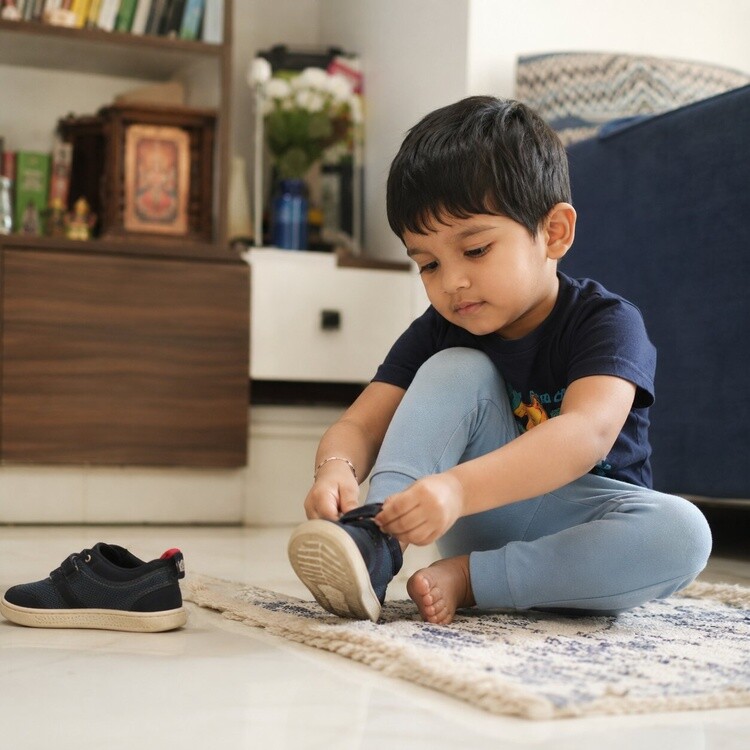
Self-help foundations — some independence with eating, managing simple clothing, and indicating toilet needs (full training helps but isn't universally required — ask each school).
Group tolerance — can they be around other children without constant adult mediation? Playing alongside is enough; playing with comes later.
Routine adaptability — can they move between activities (with warning and support) without every transition becoming a battle?
What is NOT required, despite what admission forms imply
Reciting alphabets or numbers, writing anything, English fluency, or sitting still for extended periods. A preschool testing three-year-olds on academics is revealing its own philosophy — treat it as information about the school.
Building readiness in the months before
Practice short separations with trusted adults, lengthening gradually and always leaving with a confident goodbye (sneaking out corrodes trust). Build self-help through unhurried practice: self-feeding, shoe attempts, clothing participation. Visit the school beforehand — playground time on the premises builds familiarity. Talk about school concretely and positively without overselling. Read preschool-themed picture books. And adjust the sleep schedule toward school timing a few weeks early.
The adjustment period, honestly
Even fully ready children commonly cry at drop-off for days or weeks — the readiness question is whether they settle after you leave (ask the teacher, who sees what you don't) and gradually improve. Most children settle within two to six weeks; regression at home (clinginess, sleep changes) during this period is normal processing.
Choosing between school philosophies
Delhi NCR offers everything from play-based Montessori-style settings to formal academic-prep preschools. For most children, play-based early years with warm caregiver ratios beat academic head-starts — the research here is consistent. Trust visits and gut feel over brochures.