
 Summer Camp
 Reading Writing
 Book Club
 Calligraphy
 Creative Writing
 English Speaking
 Handwriting
 Library
 Phonics
 Story Telling
 Art and Craft
 Clay Moulding
 Drawing
 Painting
 Pottery
 Sketching
 Drama Theatre
 Personality Development
 Public Speaking
 Languages
 Arabic
 Chinese
 French
 German
 Hindi
Hindi Italian
 Japanese
 Korean
 Persian
 Portuguese
 Russian
 Spanish
 Turkish
 Uzbek
Uzbek Sports and Fitness
 Aerobics
 Athletics
 Badminton
 Basket Ball
 Chess
Chess Cricket
 Football
 Golf
Golf Gymnastics
 Hulahoop
 Karate
 Martial Arts
 Pickleball
 Rugby
Rugby Skating
 Swimming
 Taekwondo
 Tennis
 Volleyball
 Yoga
Yoga Zumba
Zumba Tuition Classes
 Accounts
 Biology
 Business Studies
 CBSE
CBSE Chemistry
 Commerce
 Economics
 Homework Classes
 IB Board
 IGCSE
IGCSE Mathematics
 Physics
 Psychology
 Science
 Social Studies
 Vedic Maths
 Dance and Music
 Ballet
 Bhangra
 Bharatnatyam
 Bollywood Dance
 Casio
Casio Dandiya and Garba
 Drums
Drums Flute
Flute Guitar
 Harmonium
 Hip Hop
 Jazz
Jazz Kathak
 Keyboard
 Piano
Piano Salsa
Salsa Shlokas
 Sitar
Sitar Tabla
Tabla Ukulele
 Violin
 Vocal
Vocal Play School
 STEM
STEM
 Abacus
 App Development
 Artificial intelligence
 Basic Computer Courses
 Canva
Canva Coding
 Graphic Design
 Lego
Lego Python
 Robotics
 Rubiks Cube
 Scrabble
 Scratch
 Website Development
 Winter Camp
 Workshops
 Diwali Workshop
 Easter
 Ganesh Mahotsav
 Guru Nanak Jayanti Workshop
 Holi
Holi Independence day workshop
 Janmashtami Workshop
 Mothers day
 Navratri Workshops
 Raksha Bandhan workshop
 Ramayana Workshop
 Spring Camp
 Valentines Day Workshops
 Festive
 Daycare
 Cooking and Food
 Spring Camp
 Contests and Competitions
 Special abled
 Republic Day Workshops
 Mela
Mela
 Mela
Mela Cognitive Development
 Mother-Toddler Program
-Jul-03-2026-06-59-25-1926-AM.webp?width=30&height=30&name=Smart_20Skills_20(2)-Jul-03-2026-06-59-25-1926-AM.webp) Smart Skills
Smart Skills
 Financial Literacy
 Mental Wellbeing
 Meditation
 Reiki
Reiki




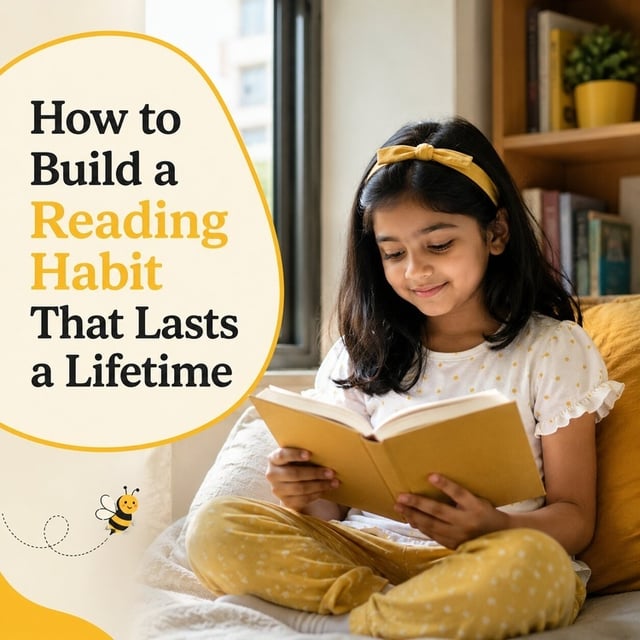
A lifelong reading habit isn't built through occasional big pushes — it's built through small, consistent, low-pressure daily exposure over years. Here's what actually works, fitted around real Indian family schedules.
Many parents who love reading themselves feel a specific frustration when their child shows little interest in books. The good news: reading habits are built, not innate — and the building blocks are simpler and more forgiving than most "how to raise a reader" advice suggests.
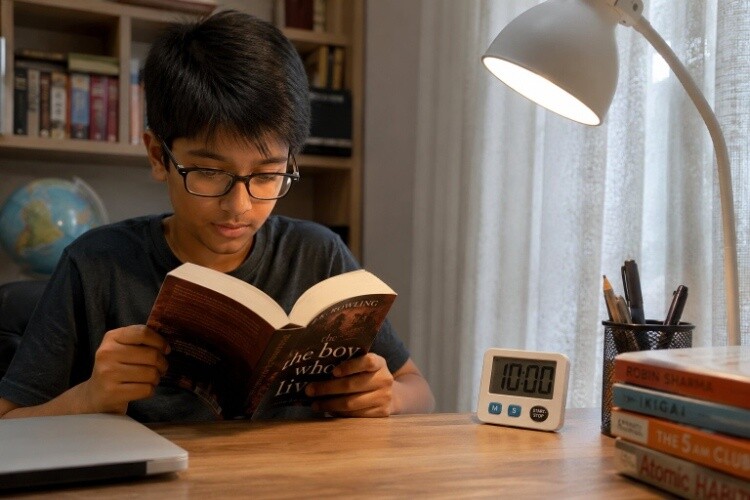
Start with consistency over intensity
Ten minutes of reading every single day builds a stronger habit than an hour of reading once a week. The daily rhythm matters more than the duration, especially in the early stages of habit formation.
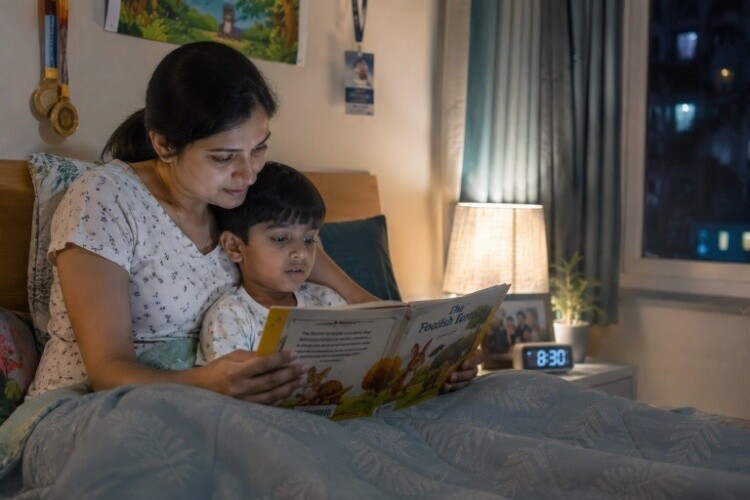
Protect a specific time slot, ideally daily
Bedtime reading works well for many families precisely because it's already a fixed part of the evening routine — attaching a new habit to an existing one significantly increases the odds it sticks.
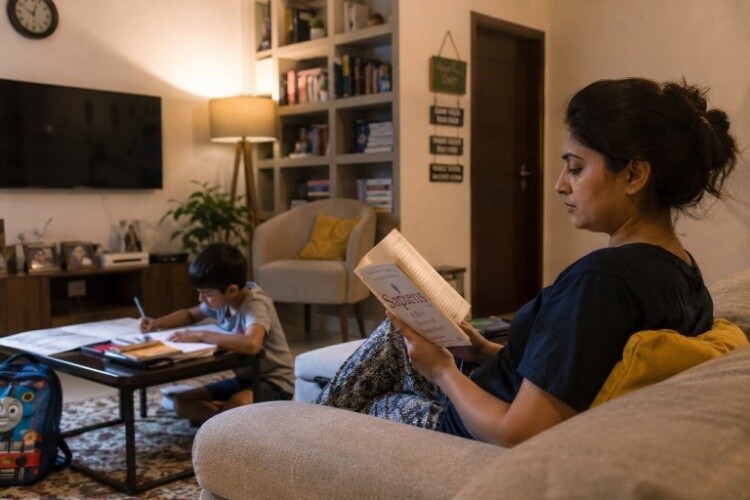
Let your child see you reading, genuinely
Children absorb far more from what they observe than what they're told. A household where reading (books, not just phone scrolling) is visibly part of adult life sends a powerful, wordless message.

Don't tie reading to rewards or punishment
Reading offered as a reward ("finish your vegetables and you can read") or used as a consequence-adjacent task can subtly frame it as either a treat to be earned or a chore — neither builds genuine intrinsic love for it.
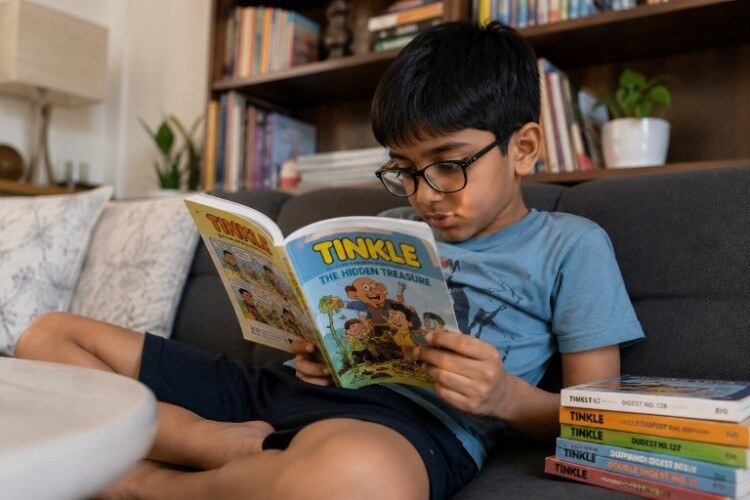
Follow interest relentlessly, even if it seems repetitive or "beneath" their level
A child rereading the same comic for the tenth time, or stuck on one specific series, is still building reading fluency and habit — resist the urge to redirect toward something more "appropriate" too quickly.
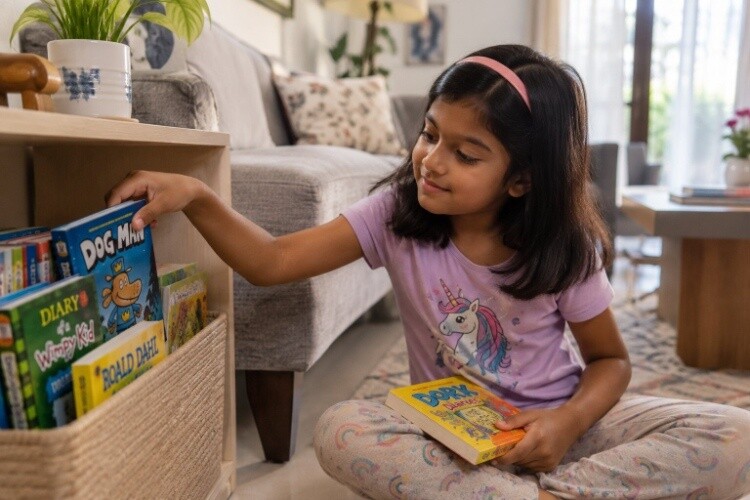
Make books easily accessible, physically
A child is far more likely to pick up a book that's visible and within reach than one stored away — a simple basket or shelf in a commonly used room works better than books confined to a bedroom.
Use commute and waiting time
School bus rides, waiting at a tuition centre, or car journeys are genuine opportunities for reading time (or audiobook listening) that many families overlook simply because it doesn't feel like "reading time" in a traditional sense.
Talk about what they're reading, without quizzing
A casual "what's happening in your book?" during dinner, asked with genuine curiosity rather than as a comprehension check, keeps reading connected to conversation and connection rather than performance.
Expect and accept phases of less interest
Reading habits ebb and flow, especially around exam periods or when a new interest (a sport, a game) temporarily takes priority. This isn't habit failure — it's normal, and the habit typically resumes once space opens up again.