
 Summer Camp
 Reading Writing
 Book Club
 Calligraphy
 Creative Writing
 English Speaking
 Handwriting
 Library
 Phonics
 Story Telling
 Art and Craft
 Clay Moulding
 Drawing
 Painting
 Pottery
 Sketching
 Drama Theatre
 Personality Development
 Public Speaking
 Languages
 Arabic
 Chinese
 French
 German
 Hindi
Hindi Italian
 Japanese
 Korean
 Persian
 Portuguese
 Russian
 Spanish
 Turkish
 Uzbek
Uzbek Sports and Fitness
 Aerobics
 Athletics
 Badminton
 Basket Ball
 Chess
Chess Cricket
 Football
 Golf
Golf Gymnastics
 Hulahoop
 Karate
 Martial Arts
 Pickleball
 Rugby
Rugby Skating
 Swimming
 Taekwondo
 Tennis
 Volleyball
 Yoga
Yoga Zumba
Zumba Tuition Classes
 Accounts
 Biology
 Business Studies
 CBSE
CBSE Chemistry
 Commerce
 Economics
 Homework Classes
 IB Board
 IGCSE
IGCSE Mathematics
 Physics
 Psychology
 Science
 Social Studies
 Vedic Maths
 Dance and Music
 Ballet
 Bhangra
 Bharatnatyam
 Bollywood Dance
 Casio
Casio Dandiya and Garba
 Drums
Drums Flute
Flute Guitar
 Harmonium
 Hip Hop
 Jazz
Jazz Kathak
 Keyboard
 Piano
Piano Salsa
Salsa Shlokas
 Sitar
Sitar Tabla
Tabla Ukulele
 Violin
 Vocal
Vocal PlaySchools
 Preschool
 STEM
STEM
 Abacus
 App Development
 Artificial intelligence
 Basic Computer Courses
 Canva
Canva Coding
 Graphic Design
 Lego
Lego Python
 Robotics
 Rubiks Cube
 Scrabble
 Scratch
 Website Development
 Winter Camp
 Workshops
 Diwali Workshop
 Easter
 Ganesh Mahotsav
 Guru Nanak Jayanti Workshop
 Holi
Holi Independence day workshop
 Janmashtami Workshop
 Mothers day
 Navratri Workshops
 Raksha Bandhan workshop
 Ramayana Workshop
 Spring Camp
 Valentines Day Workshops
 Festive
 Daycare
 Cooking and Food
 Spring Camp
 Contests and Competitions
 Special abled
 Republic Day Workshops
 Mela
Mela
 Mela
Mela Cognitive Development
 Mother-Toddler Program
-Jul-03-2026-06-59-25-1926-AM.webp?width=30&height=30&name=Smart_20Skills_20(2)-Jul-03-2026-06-59-25-1926-AM.webp) Smart Skills
Smart Skills
 Financial Literacy





Most homework battles are really about timing, energy, and environment — not ability or attitude. Small structural changes usually resolve more conflict than any pep talk or punishment.
Every evening around 6 PM, the same scene plays out. Bag is opened, books come out, and within ten minutes there are tears, or shouting, or both. By the time homework is actually done, everyone's drained — and you still have dinner and bedtime ahead.
If this sounds familiar, the good news is that most homework battles aren't really about the homework. They're about timing, tiredness, and an environment that isn't set up to help a child focus.
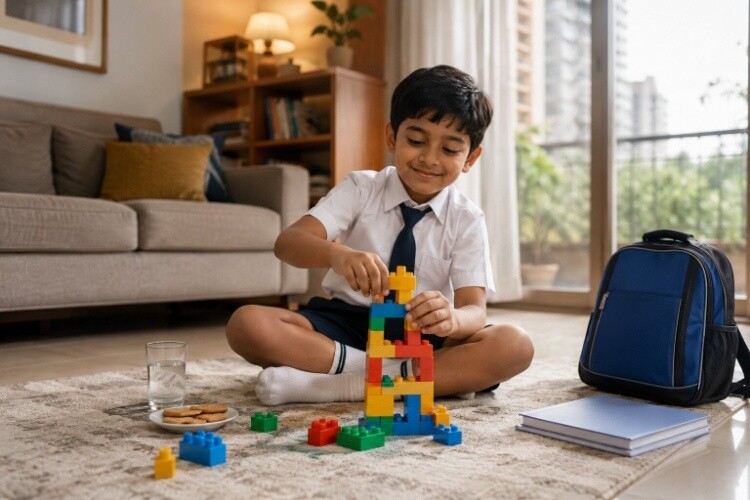
Don't start homework immediately after school
A child who's just spent 6-7 hours in a structured environment needs a genuine break before sitting down again — even 30 minutes of free, unstructured play resets focus significantly.
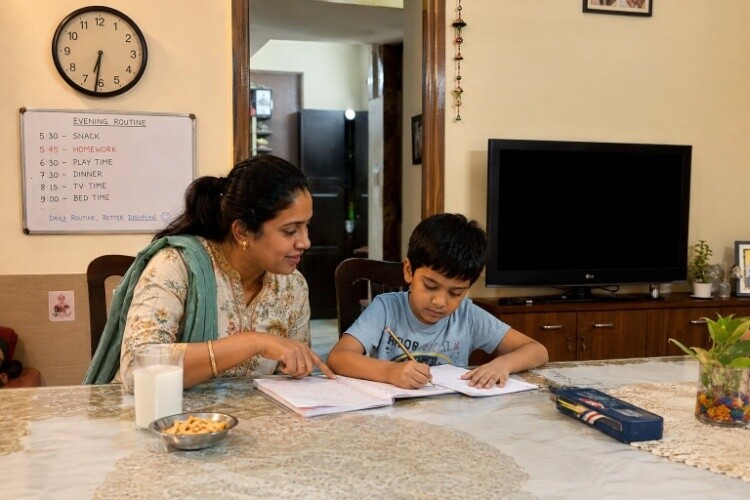
Fix a consistent time, not a "whenever it gets done" approach
Homework done at a random, shifting time every day is harder for a child's brain to prepare for. A consistent slot — even something simple like "after evening snack, before TV" — builds an internal rhythm that reduces resistance over a few weeks.
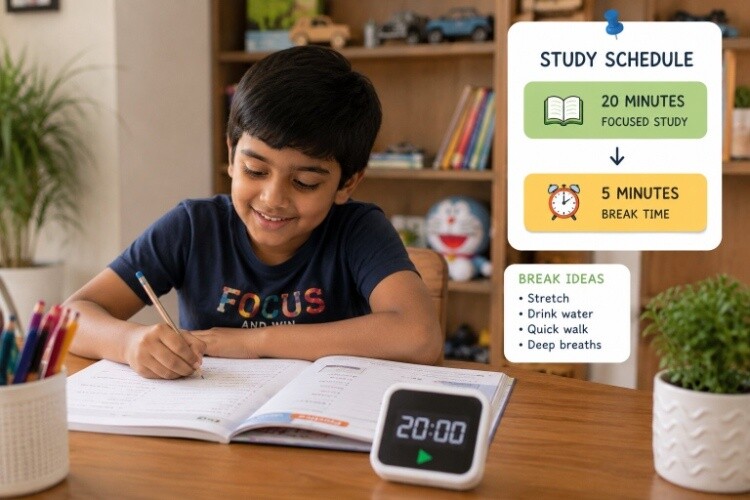
Break it into smaller chunks with short breaks
Twenty minutes of focused work followed by a five-minute break usually produces better results than a continuous 45-minute session that ends in a meltdown at minute 30.
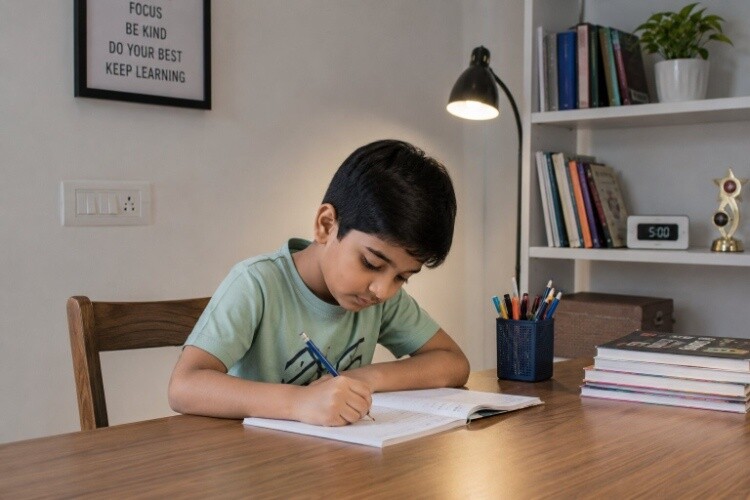
Set up a dedicated, boring space
A homework spot that's away from the TV, main family activity, and toys — even a corner of the dining table — reduces the constant pull of distraction. It doesn't need to be a separate room, especially in shared-space homes; consistency matters more than size.
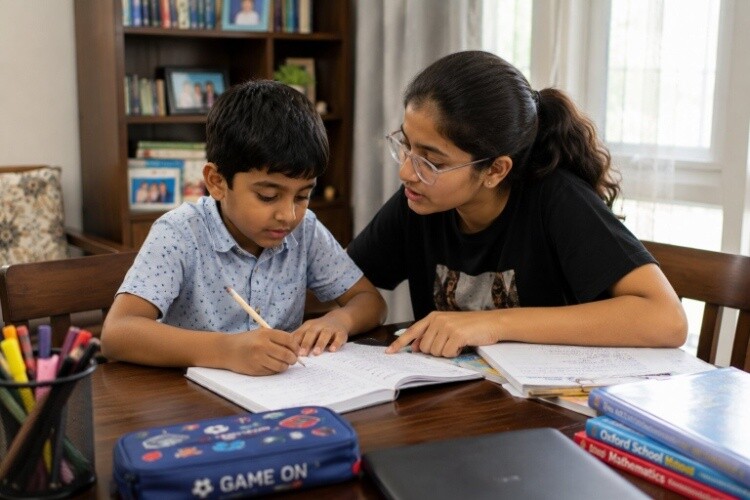
Remove yourself as the enforcer, where possible
If every homework session becomes a parent-child standoff, consider whether grandparents, an elder sibling, or a tutor could take the lead a few days a week. Sometimes the relationship needs a break from being the "homework police."

Let natural consequences happen sometimes
If a child genuinely refuses and homework isn't done, and it's safe to do so, letting them face the teacher's response occasionally teaches responsibility more effectively than nightly parental pressure ever will.
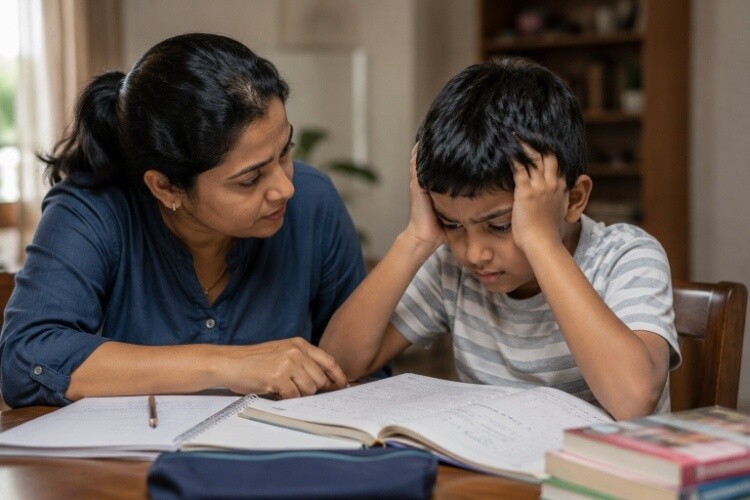
Watch for signs it's genuinely too hard, not just resistance
If a subject consistently causes distress beyond typical reluctance, it might be a comprehension gap rather than an attitude problem — worth a quiet word with the teacher rather than nightly conflict at home.
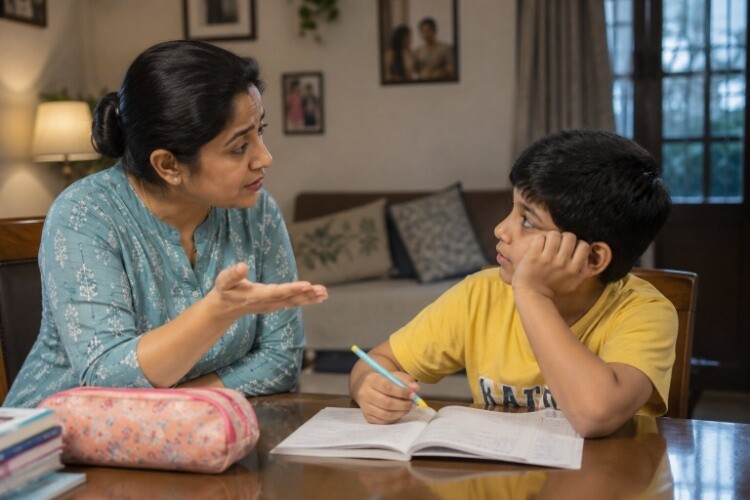
Keep siblings and comparisons out of it
"Your sister finished hers in 20 minutes" rarely motivates — it usually just adds shame on top of an already frustrating task.

Praise effort and process, not just correct answers
"You worked through that even though it was hard" builds more resilience than "good, all correct" — especially for a child who struggles.
Accept that some evenings will still be hard
Even with the best structure, some days will still involve tears — a bad day at school, tiredness, or just an off day. That doesn't mean the system has failed; it means your child is human.
The reassurance that helps most
Homework battles are one of the most common struggles across Indian households with school-going children, cutting across joint families, nuclear families, working and non-working parents. You are not doing anything wrong by finding this hard — and small, consistent changes to timing and environment tend to help far more than any single conversation about trying harder.