
 Reading Writing
 Book Club
 Calligraphy
 Creative Writing
 English Speaking
 Handwriting
 Library
 Phonics
 Story Telling
 Art and Craft
 Clay Moulding
 Drawing
 Painting
 Pottery
 Sketching
 Drama Theatre
 Personality Development
 Public Speaking
 Languages
 Arabic
 Chinese
 French
 German
 Hindi
 Italian
 Japanese
 Korean
 Persian
 Portuguese
 Russian
 Spanish
 Turkish
 Uzbek
 Sports and Fitness
 Aerobics
 Athletics
 Badminton
 Basket Ball
 Chess
 Cricket
 Football
 Golf
 Gymnastics
 Hulahoop
 Karate
 Martial Arts
 Pickleball
 Rugby
 Skating
 Swimming
 Taekwondo
 Tennis
 Volleyball
 Yoga
 Zumba
 Tuition Classes
 Accounts
 Biology
 Business Studies
 CBSE
 Chemistry
 Commerce
 Economics
 Homework Classes
 IB Board
 IGCSE
 Mathematics
 Physics
 Psychology
 Science
 Social Studies
 Vedic Maths
 Dance and Music
 Ballet
 Bhangra
 Bharatnatyam
 Bollywood Dance
 Casio
 Dandiya and Garba
 Drums
 Flute
 Guitar
 Harmonium
 Hip Hop
 Jazz
 Kathak
 Keyboard
 Piano
 Salsa
 Shlokas
 Sitar
 Tabla
 Ukulele
 Violin
 Vocal
 Play School
 STEM
 Abacus
 App Development
 Artificial intelligence
 Basic Computer Courses
 Canva
 Coding
 Graphic Design
 Lego
 Python
 Robotics
 Rubiks Cube
 Scrabble
 Scratch
 Website Development
 Workshops
 Diwali Workshops
 Guru Nanak Jayanti Workshop
 Halloween
 Independence day workshop
 Navratri Workshops
 Raksha Bandhan workshop
 Ramayana Workshop
 Spring Camp
 Valentines Day Workshops
 Festive
 Daycare
 Cooking and Food
 Spring Camp
 Contests and Competitions
 Special abled
 Republic Day Workshops
 Mela
 Mela
 Cognitive Development
 Mother-Toddler Program
 Music
 Dance
 Smart Skills
 Financial Literacy
 Mental Wellbeing
 Meditation
 Reiki





School bus safety concerns are genuinely warranted given periodic incidents reported across Delhi NCR, but the practical checklist for actually assessing safety is often unclear to parents. Here's a concrete, actionable checklist.
School bus safety generates genuine periodic parental anxiety, particularly following any reported incident, but general worry without a concrete assessment framework doesn't translate into effective action — here's a specific, practical checklist worth actually working through for your child's specific school bus arrangement.
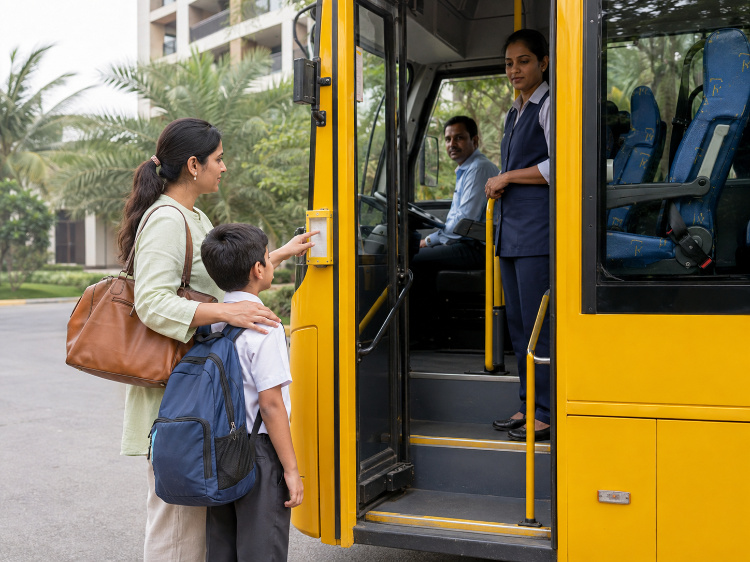
Vehicle and equipment checks worth confirming directly
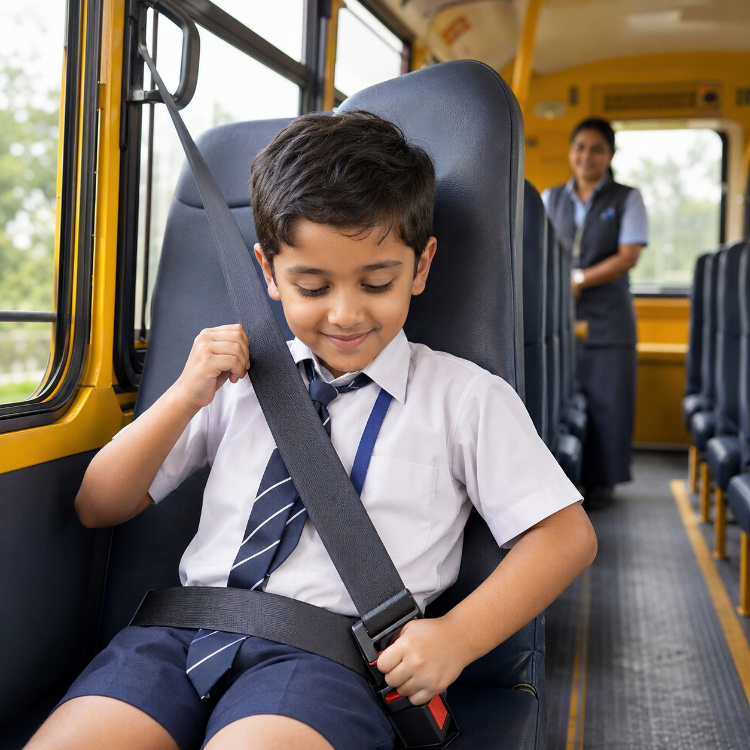
Confirm the bus has valid, current fitness and pollution certification, not just an assumed general compliance — schools should be able to provide or confirm this documentation status if directly asked, and it's genuinely reasonable to ask. Check for functioning seatbelts appropriate to your child's age and seating position, and genuinely confirm your child understands and consistently uses them, since availability alone doesn't guarantee actual use without explicit expectation-setting. Verify the presence and apparent functionality of basic safety equipment — fire extinguisher, first aid kit — rather than assuming these exist without direct confirmation. And check window and door safety mechanisms specifically, including whether windows have appropriate restrictions preventing a young child from opening them dangerously wide during transit.
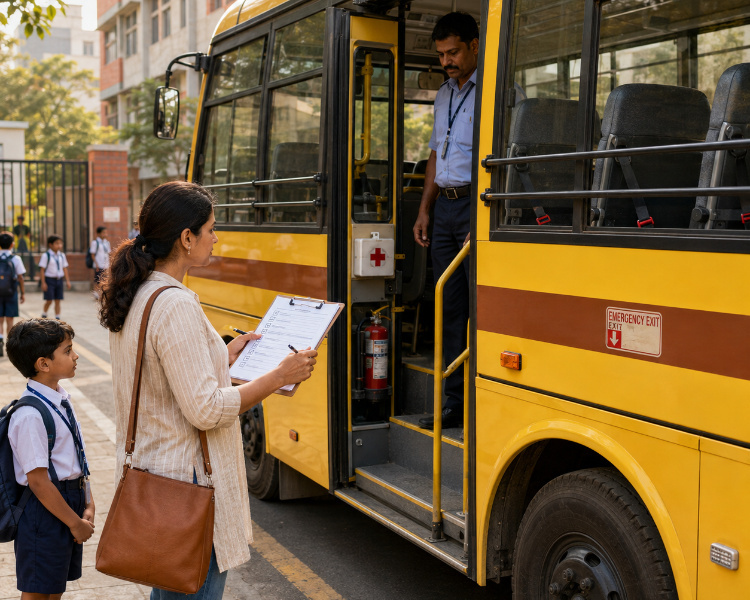
Driver and attendant checks worth confirming
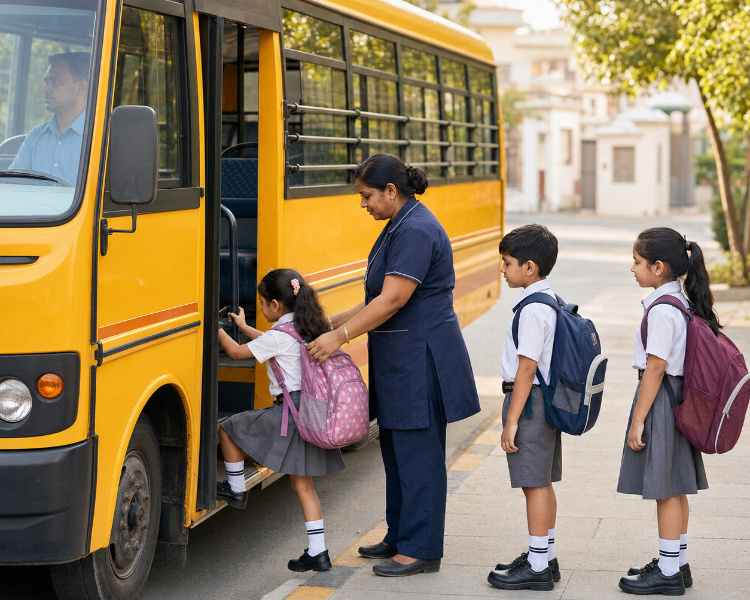
Verify the driver holds a valid, appropriate commercial driving licence and has undergone any background verification the school claims to conduct — reasonable to ask directly what verification process the school follows, rather than assuming rigorous vetting without confirmation. Confirm whether a dedicated attendant (separate from the driver) travels on the bus, particularly important for younger children's routes, since attendee presence significantly affects the ability to manage in-transit issues (a child needing help, a safety concern) that a solely-driving driver cannot adequately address while also operating the vehicle.
Route and process checks worth understanding
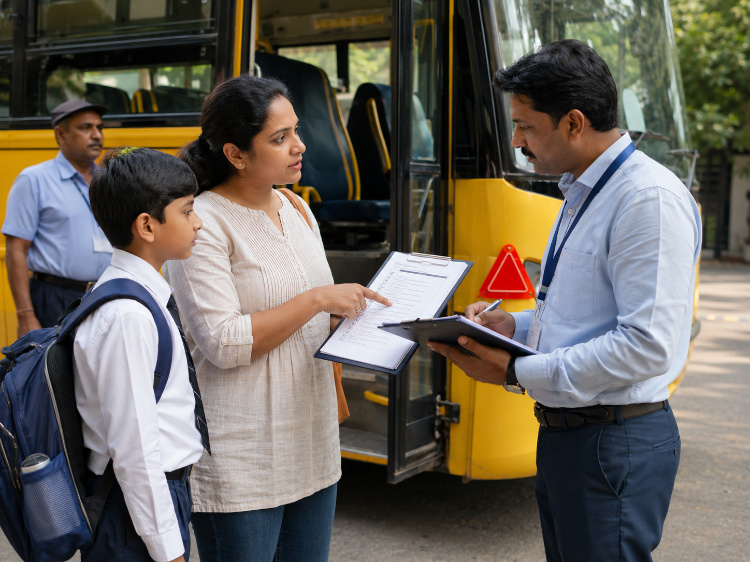
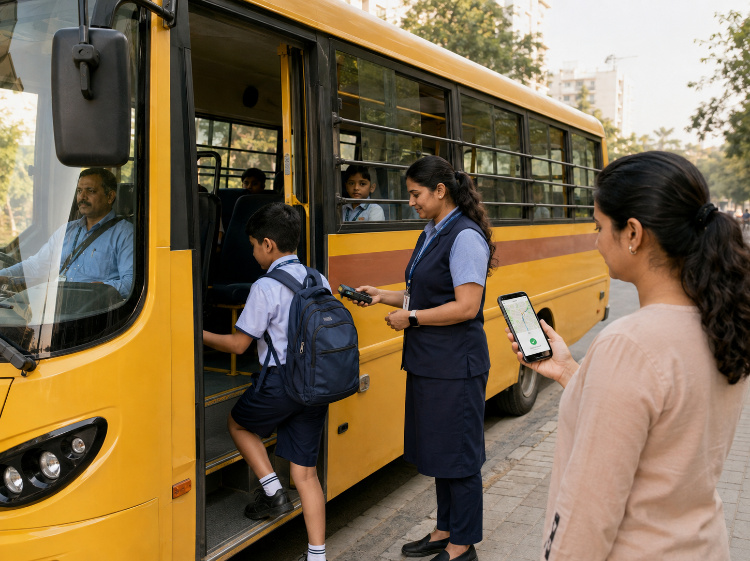
Understand the actual pickup and drop-off verification process — does the school or transport system confirm your specific child boarded and alighted at appropriate points, or does verification rely entirely on informal observation? Many genuinely safety-conscious systems now use app-based or SMS-based confirmation systems worth asking whether your school offers. Confirm the route itself, including approximate travel time and number of stops, giving you a reasonable baseline expectation against which unusual delays or route deviations would become noticeable and worth investigating. And understand the school's specific emergency protocol — what happens if a bus breaks down, faces a genuine emergency, or a child needs help mid-route — rather than assuming an ad hoc response would suffice.
What to actually do with this checklist practically
Rather than treating this as one-time due diligence, periodic re-confirmation (particularly at the start of each academic year, when buses, drivers, or routes sometimes change without extensive parent notification) helps maintain genuinely current understanding rather than relying on potentially outdated initial confirmation. Raising specific, concrete questions from this checklist directly with school transport administration, rather than vague general safety inquiries, tends to yield more useful, specific responses and also signals to the school that parents are genuinely attentive to these specifics, which can itself contribute to institutional accountability.
Age-appropriate safety education for your child directly
Beyond institutional verification, directly teaching your child specific safety behaviours — remaining seated with seatbelt engaged, understanding not to distract the driver, knowing basic emergency response (who to alert, what to do) appropriate to their age — provides a genuine additional safety layer independent of institutional systems, worth actively teaching rather than assuming a young child would know without explicit instruction.
When genuine concerns warrant escalation beyond your individual child's arrangement
If your specific checklist review reveals genuine, concerning gaps (missing safety equipment, unverified driver credentials, absent safety protocols), this warrants direct escalation to school leadership, and in cases of genuinely serious safety failures, potentially to relevant transport regulatory authorities — school bus safety is a genuine institutional responsibility, and parent advocacy, grounded in specific, concrete checklist findings rather than vague anxiety, represents a legitimate and often effective lever for institutional improvement.