
 Summer Camp
 Reading Writing
 Book Club
 Calligraphy
 Creative Writing
 English Speaking
 Handwriting
 Library
 Phonics
 Story Telling
 Art and Craft
 Clay Moulding
 Drawing
 Painting
 Pottery
 Sketching
 Drama Theatre
 Personality Development
 Public Speaking
 Languages
 Arabic
 Chinese
 French
 German
 Hindi
Hindi Italian
 Japanese
 Korean
 Persian
 Portuguese
 Russian
 Spanish
 Turkish
 Uzbek
Uzbek Sports and Fitness
 Aerobics
 Athletics
 Badminton
 Basket Ball
 Chess
Chess Cricket
 Football
 Golf
Golf Gymnastics
 Hulahoop
 Karate
 Martial Arts
 Pickleball
 Rugby
Rugby Skating
 Swimming
 Taekwondo
 Tennis
 Volleyball
 Yoga
Yoga Zumba
Zumba Tuition Classes
 Accounts
 Biology
 Business Studies
 CBSE
CBSE Chemistry
 Commerce
 Economics
 Homework Classes
 IB Board
 IGCSE
IGCSE Mathematics
 Physics
 Psychology
 Science
 Social Studies
 Vedic Maths
 Dance and Music
 Ballet
 Bhangra
 Bharatnatyam
 Bollywood Dance
 Casio
Casio Dandiya and Garba
 Drums
Drums Flute
Flute Guitar
 Harmonium
 Hip Hop
 Jazz
Jazz Kathak
 Keyboard
 Piano
Piano Salsa
Salsa Shlokas
 Sitar
Sitar Tabla
Tabla Ukulele
 Violin
 Vocal
Vocal Play School
 STEM
STEM
 Abacus
 App Development
 Artificial intelligence
 Basic Computer Courses
 Canva
Canva Coding
 Graphic Design
 Lego
Lego Python
 Robotics
 Rubiks Cube
 Scrabble
 Scratch
 Website Development
 Winter Camp
 Workshops
 Diwali Workshop
 Easter
 Ganesh Mahotsav
 Guru Nanak Jayanti Workshop
 Holi
Holi Independence day workshop
 Janmashtami Workshop
 Mothers day
 Navratri Workshops
 Raksha Bandhan workshop
 Ramayana Workshop
 Spring Camp
 Valentines Day Workshops
 Festive
 Daycare
 Cooking and Food
 Spring Camp
 Contests and Competitions
 Special abled
 Republic Day Workshops
 Mela
Mela
 Mela
Mela Cognitive Development
 Mother-Toddler Program
-Jul-03-2026-06-59-25-1926-AM.webp?width=30&height=30&name=Smart_20Skills_20(2)-Jul-03-2026-06-59-25-1926-AM.webp) Smart Skills
Smart Skills
 Financial Literacy
 Mental Wellbeing
 Meditation
 Reiki
Reiki




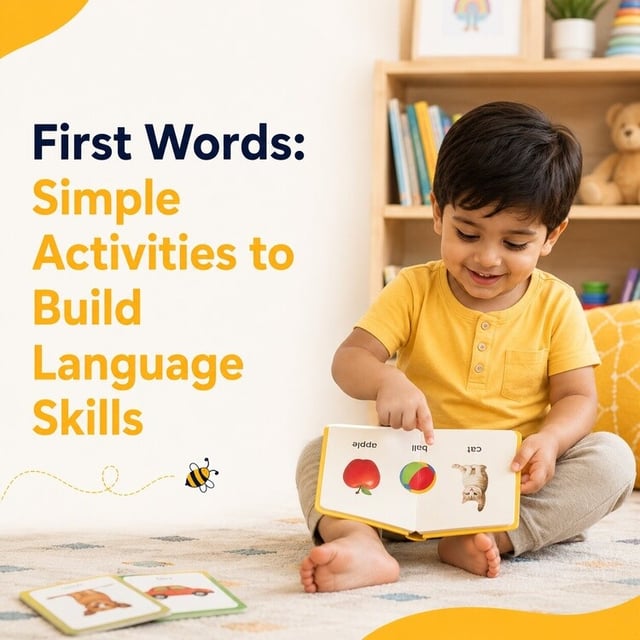
First words typically emerge around 12 months with wide normal variation, and the strongest driver of language development is responsive, everyday conversation — including in bilingual homes, where mixing languages is completely fine.
Few milestones carry as much emotional weight as first words — and few generate as much quiet comparison anxiety in parent WhatsApp groups. Here's what actually builds early language, and what the normal range really looks like.
The single most powerful technique: responsive narration
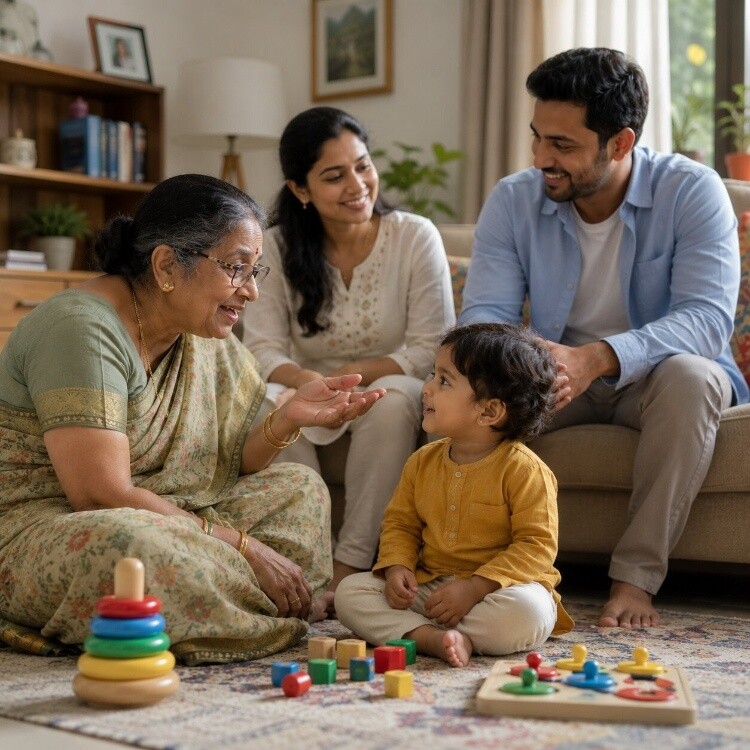
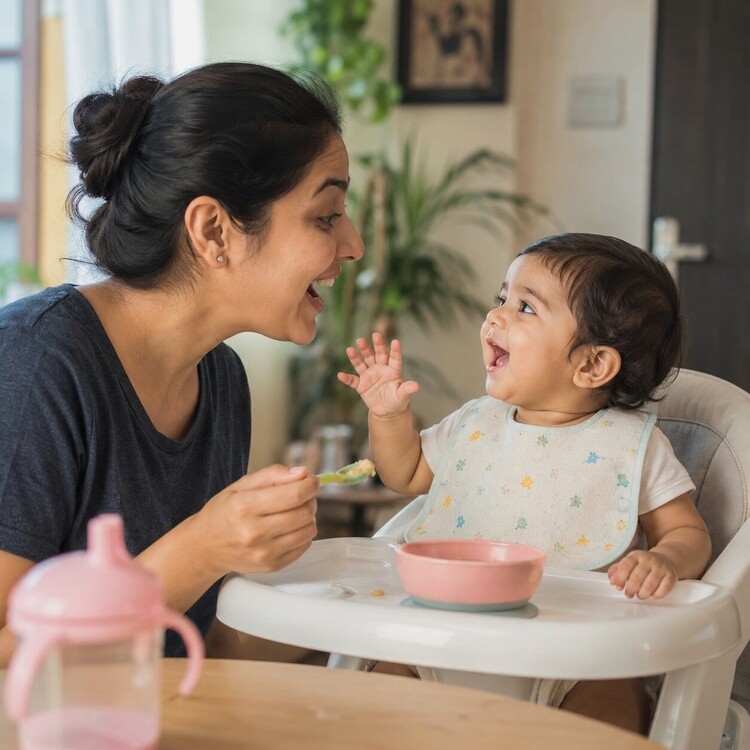
Talking to your child throughout the day — narrating routines, naming objects, responding to their babbles as if they were conversation — is the most research-supported language builder available. The "conversation" matters more than the vocabulary: when a baby babbles and you respond, pause, and respond again, you're teaching the rhythm of communication itself.
Specific activities that build early language
Follow their pointing. When your child points at something, name it and add one detail: "Bird! The bird is flying." Following the child's interest beats directing their attention.
Read the same board books repeatedly. Repetition that exhausts adults is exactly how toddler brains map words to meanings.
Sing rhymes with pauses. Once a rhyme is familiar, pause before the last word — many toddlers will fill it in before they "talk" in conversation.
Name body parts during bath and dressing. Daily routines are naturally repetitive, making them ideal vocabulary anchors.
Offer choices verbally. "Banana or apple?" — even pre-verbal children start responding to choice language with gestures.
Reduce background TV. Constant background television measurably reduces the amount of parent-child talk — the single easiest environmental fix available.
The bilingual home question, answered clearly
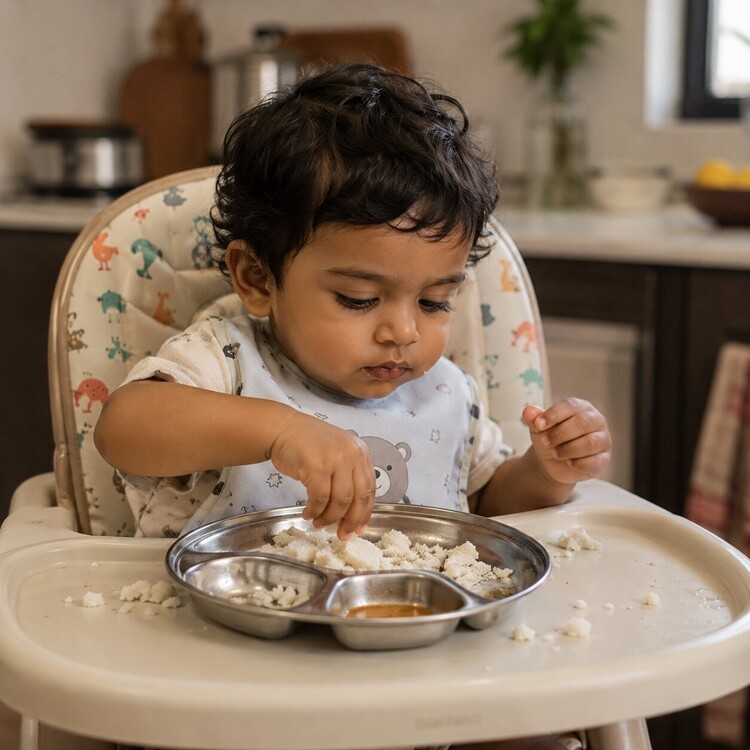
Most urban Indian children grow up hearing two or three languages — Hindi and English at minimum, often a regional language via grandparents. The research is reassuring and consistent: bilingual exposure does not cause language delay. Bilingual children may split early vocabulary across languages (fewer words in each, similar total), and mixing languages in one sentence is a normal feature of bilingual development, not confusion. Speak whichever languages are natural to your family; the worst outcome is reducing overall talk out of worry about "confusing" the child.
What the normal range actually looks like
First words: typically 10-14 months, with completely normal variation extending later. By 18 months: often 10-25+ words, but enormous variation. The more meaningful markers than word count: does the child understand simple instructions, point to communicate, and engage socially? Comprehension and communication intent matter more than spoken word tallies.
When to mention it to a paediatrician
No words by 16-18 months, no pointing or gesturing to communicate, apparent lack of understanding of simple familiar phrases, or loss of previously used words — these merit a conversation, not panic. Early speech support, when needed, is common, effective, and nothing to delay out of hope it resolves alone.