
 Summer Camp
 Reading Writing
 Book Club
 Calligraphy
 Creative Writing
 English Speaking
 Handwriting
 Library
 Phonics
 Story Telling
 Art and Craft
 Clay Moulding
 Drawing
 Painting
 Pottery
 Sketching
 Drama Theatre
 Personality Development
 Public Speaking
 Languages
 Arabic
 Chinese
 French
 German
 Hindi
Hindi Italian
 Japanese
 Korean
 Persian
 Portuguese
 Russian
 Spanish
 Turkish
 Uzbek
Uzbek Sports and Fitness
 Aerobics
 Athletics
 Badminton
 Basket Ball
 Chess
Chess Cricket
 Football
 Golf
Golf Gymnastics
 Hulahoop
 Karate
 Martial Arts
 Pickleball
 Rugby
Rugby Skating
 Swimming
 Taekwondo
 Tennis
 Volleyball
 Yoga
Yoga Zumba
Zumba Tuition Classes
 Accounts
 Biology
 Business Studies
 CBSE
CBSE Chemistry
 Commerce
 Economics
 Homework Classes
 IB Board
 IGCSE
IGCSE Mathematics
 Physics
 Psychology
 Science
 Social Studies
 Vedic Maths
 Dance and Music
 Ballet
 Bhangra
 Bharatnatyam
 Bollywood Dance
 Casio
Casio Dandiya and Garba
 Drums
Drums Flute
Flute Guitar
 Harmonium
 Hip Hop
 Jazz
Jazz Kathak
 Keyboard
 Piano
Piano Salsa
Salsa Shlokas
 Sitar
Sitar Tabla
Tabla Ukulele
 Violin
 Vocal
Vocal Play School
 STEM
STEM
 Abacus
 App Development
 Artificial intelligence
 Basic Computer Courses
 Canva
Canva Coding
 Graphic Design
 Lego
Lego Python
 Robotics
 Rubiks Cube
 Scrabble
 Scratch
 Website Development
 Winter Camp
 Workshops
 Diwali Workshop
 Easter
 Ganesh Mahotsav
 Guru Nanak Jayanti Workshop
 Holi
Holi Independence day workshop
 Janmashtami Workshop
 Mothers day
 Navratri Workshops
 Raksha Bandhan workshop
 Ramayana Workshop
 Spring Camp
 Valentines Day Workshops
 Festive
 Daycare
 Cooking and Food
 Spring Camp
 Contests and Competitions
 Special abled
 Republic Day Workshops
 Mela
Mela
 Mela
Mela Cognitive Development
 Mother-Toddler Program
-Jul-03-2026-06-59-25-1926-AM.webp?width=30&height=30&name=Smart_20Skills_20(2)-Jul-03-2026-06-59-25-1926-AM.webp) Smart Skills
Smart Skills
 Financial Literacy
 Mental Wellbeing
 Meditation
 Reiki
Reiki





Concentration struggles are often driven by sleep, diet, screen habits, or an overloaded schedule rather than an inherent attention problem. These 12 natural approaches address root causes before assuming something more serious is at play.
"He just can't focus" is one of the most common concerns parents raise about school-age children — and it's worth knowing that concentration difficulty has many possible root causes, most of which are addressable without any formal intervention.
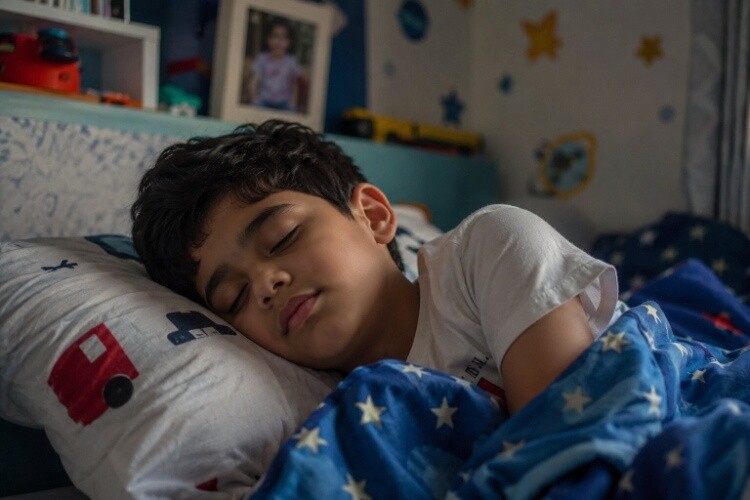
Prioritise consistent, adequate sleep
Insufficient sleep is one of the most under-recognised causes of concentration struggles in children — a child who seems distracted may simply be tired, especially with early school bus pickups.
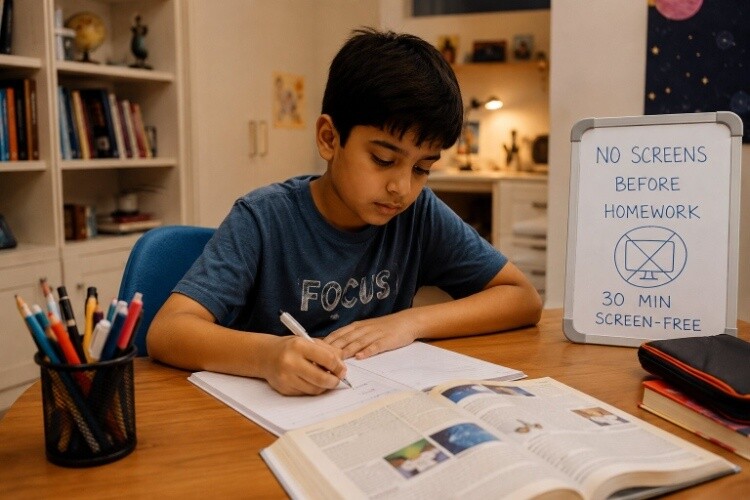
Reduce screen time before school and homework
Screens right before a task requiring sustained focus can make transitioning into that focus noticeably harder — even 30 minutes of screen-free time before homework can help.
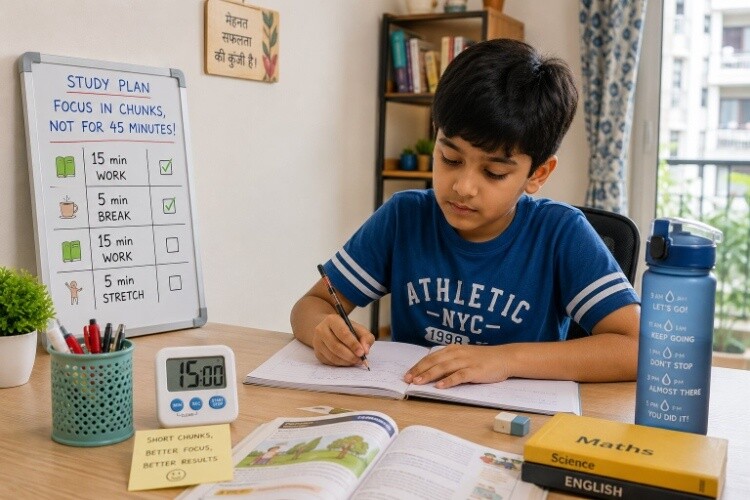
Break tasks into shorter chunks
Expecting sustained focus for 45 minutes straight is unrealistic for most primary-age children — 15-20 minute focused chunks with brief breaks work with, not against, natural attention spans.

Ensure adequate protein and reduce sugar spikes
A sugar-heavy breakfast or snack can cause an energy spike followed by a concentration-dampening crash — a protein-inclusive breakfast tends to support more stable focus through the morning.

Build in regular physical activity
Even 20-30 minutes of active outdoor play before homework time measurably improves subsequent focus for many children — movement isn't a distraction from concentration, it supports it.
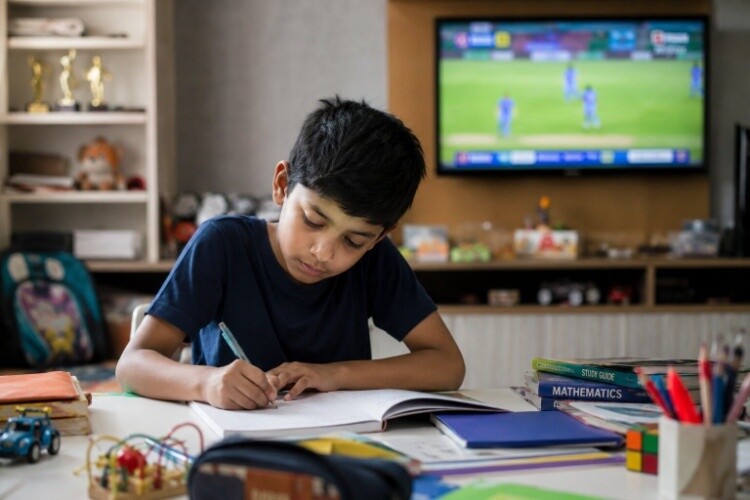
Minimise background noise and visual clutter during focused tasks
A homework space near a TV, or cluttered with toys, adds a constant low-level distraction that a developing attention system finds hard to filter out.
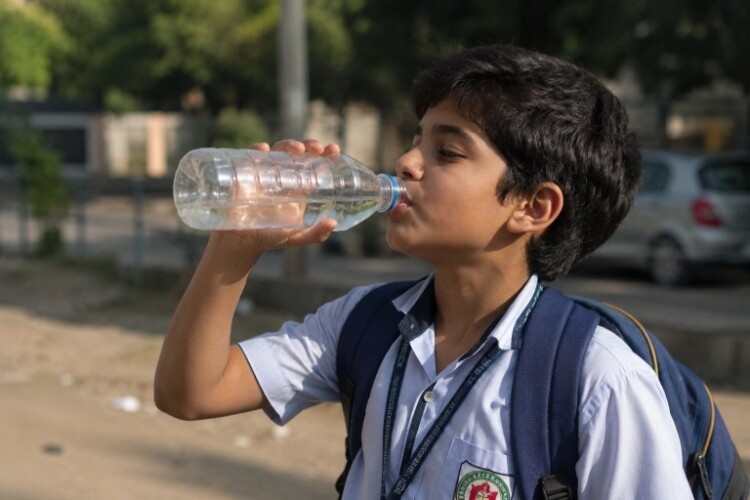
Check for adequate hydration
Mild dehydration measurably affects concentration and mood in children — a simple, easily overlooked factor, especially during Delhi's hot months.

Avoid overscheduling the week
A child cycling between school, multiple tuitions, and activities with barely any downtime often shows concentration struggles that are really signs of genuine fatigue and overload, not an attention deficit.
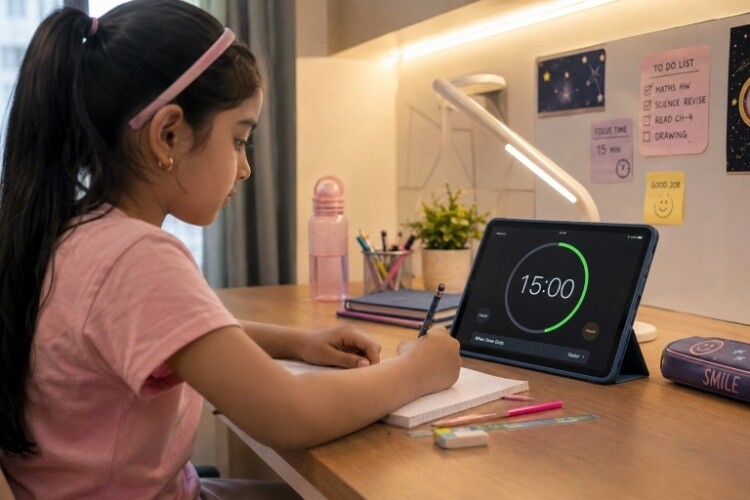
Use timers and visual countdowns for tasks
A visible timer helps some children (especially younger ones) understand and commit to a focused work period more concretely than an open-ended instruction to "concentrate."
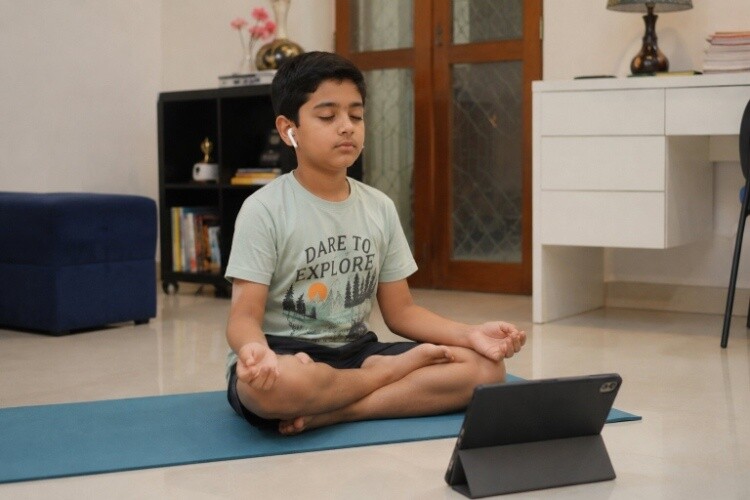
Practice mindfulness or simple breathing exercises
Even 3-5 minutes of guided breathing before a focus-heavy task can genuinely help settle a restless mind — several free, child-friendly guided audio options exist online.

Ensure eyesight and hearing haven't gone unchecked
An undiagnosed vision or hearing issue can look exactly like a concentration problem — a basic check, especially before age 8, rules this out.
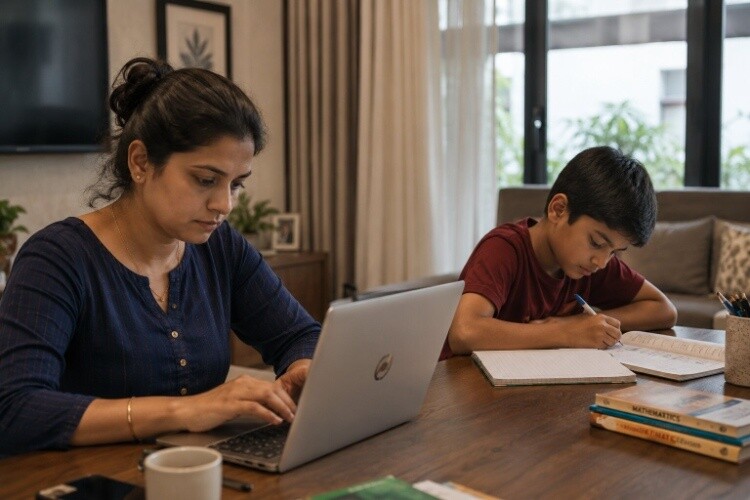
Model focused behaviour yourself, visibly
A household where phones are constantly present and checked mid-conversation subtly teaches that sustained attention isn't the norm — modelling focused, uninterrupted time (even during a shared activity) has a genuine, if gradual, effect.
When natural approaches aren't enough
If concentration difficulty is severe, persistent across multiple settings (home and school), and significantly impacting daily functioning despite addressing sleep, diet, and schedule, a conversation with a paediatrician about further assessment is reasonable — not because a diagnosis is the goal, but because appropriate support, if needed, genuinely helps.
A realistic expectation for primary-age children
Some restlessness and difficulty with sustained focus is developmentally completely normal well into the primary school years — the goal isn't to eliminate all distractibility, but to set up conditions (sleep, diet, schedule, environment) that support your child's natural capacity for focus as well as possible.