
 Summer Camp
 Reading Writing
 Book Club
 Calligraphy
 Creative Writing
 English Speaking
 Handwriting
 Library
 Phonics
 Story Telling
 Art and Craft
 Clay Moulding
 Drawing
 Painting
 Pottery
 Sketching
 Drama Theatre
 Personality Development
 Public Speaking
 Languages
 Arabic
 Chinese
 French
 German
 Hindi
Hindi Italian
 Japanese
 Korean
 Persian
 Portuguese
 Russian
 Spanish
 Turkish
 Uzbek
Uzbek Sports and Fitness
 Aerobics
 Athletics
 Badminton
 Basket Ball
 Chess
Chess Cricket
 Football
 Golf
Golf Gymnastics
 Hulahoop
 Karate
 Martial Arts
 Pickleball
 Rugby
Rugby Skating
 Swimming
 Taekwondo
 Tennis
 Volleyball
 Yoga
Yoga Zumba
Zumba Tuition Classes
 Accounts
 Biology
 Business Studies
 CBSE
CBSE Chemistry
 Commerce
 Economics
 Homework Classes
 IB Board
 IGCSE
IGCSE Mathematics
 Physics
 Psychology
 Science
 Social Studies
 Vedic Maths
 Dance and Music
 Ballet
 Bhangra
 Bharatnatyam
 Bollywood Dance
 Casio
Casio Dandiya and Garba
 Drums
Drums Flute
Flute Guitar
 Harmonium
 Hip Hop
 Jazz
Jazz Kathak
 Keyboard
 Piano
Piano Salsa
Salsa Shlokas
 Sitar
Sitar Tabla
Tabla Ukulele
 Violin
 Vocal
Vocal PlaySchools
 Preschool
 STEM
STEM
 Abacus
 App Development
 Artificial intelligence
 Basic Computer Courses
 Canva
Canva Coding
 Graphic Design
 Lego
Lego Python
 Robotics
 Rubiks Cube
 Scrabble
 Scratch
 Website Development
 Winter Camp
 Workshops
 Diwali Workshop
 Easter
 Ganesh Mahotsav
 Guru Nanak Jayanti Workshop
 Holi
Holi Independence day workshop
 Janmashtami Workshop
 Mothers day
 Navratri Workshops
 Raksha Bandhan workshop
 Ramayana Workshop
 Spring Camp
 Valentines Day Workshops
 Festive
 Daycare
 Cooking and Food
 Spring Camp
 Contests and Competitions
 Special abled
 Republic Day Workshops
 Mela
Mela
 Mela
Mela Cognitive Development
 Mother-Toddler Program
-Jul-03-2026-06-59-25-1926-AM.webp?width=30&height=30&name=Smart_20Skills_20(2)-Jul-03-2026-06-59-25-1926-AM.webp) Smart Skills
Smart Skills
 Financial Literacy



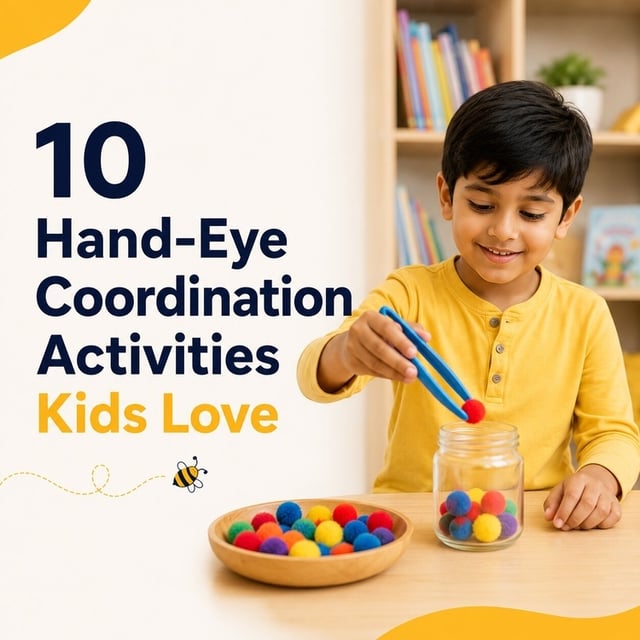
Hand-eye coordination underlies everything from handwriting to sports performance, and it develops through repeated, genuinely enjoyable practice — many of India's most popular kids' sports (cricket, badminton) are themselves excellent coordination builders.
Hand-eye coordination — the ability to process what the eyes see and translate it into precise hand movement — quietly underlies an enormous range of childhood activities, from catching a ball to forming letters neatly. It develops through repetition, and thankfully, that repetition can happen through activities kids genuinely enjoy.
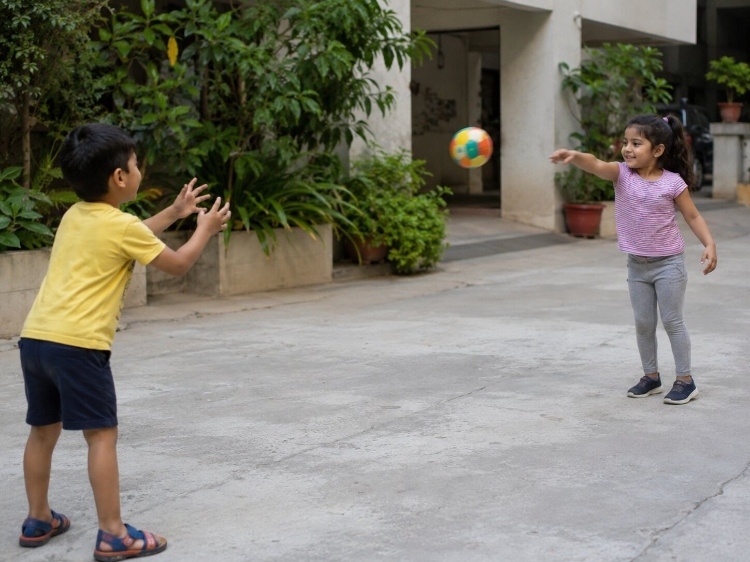
Catching and throwing a ball, gradually increasing distance
The most fundamental coordination-building activity, and one that's easily accessible in nearly any Indian residential setting.
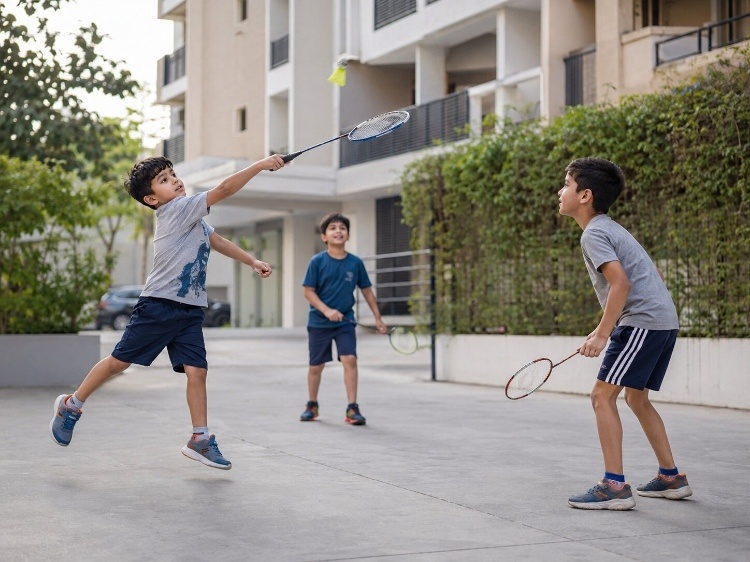
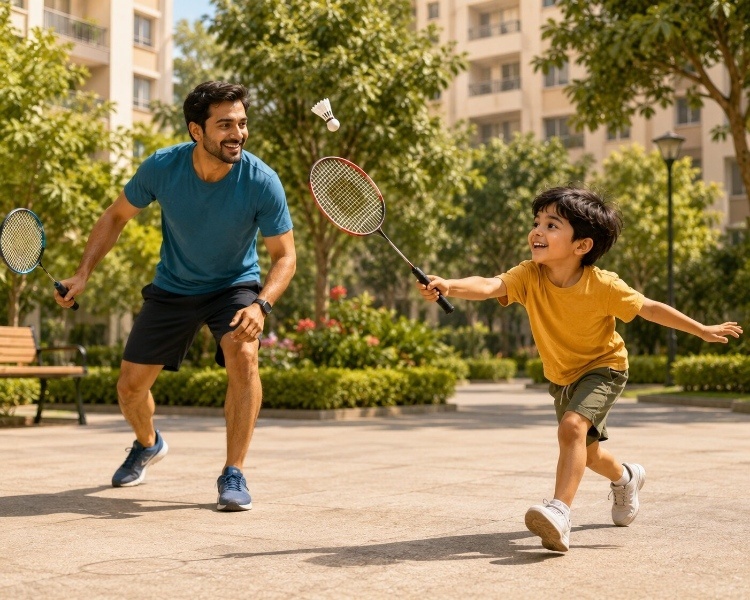
Badminton or shuttlecock play
Extremely popular and accessible across Indian households — the visual tracking and precise racket contact required build coordination effectively while being genuinely fun.
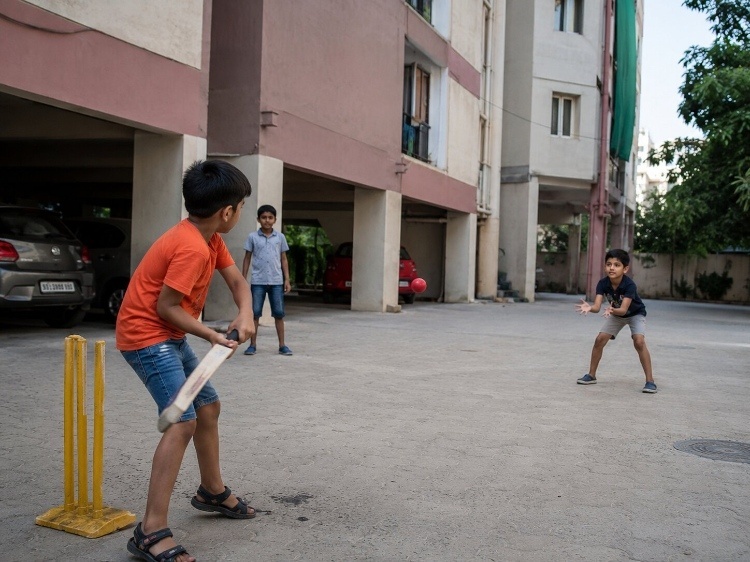
Cricket — batting and simple catching practice
India's most widely played sport happens to be an excellent coordination builder, combining visual tracking, timing, and precise motor response.
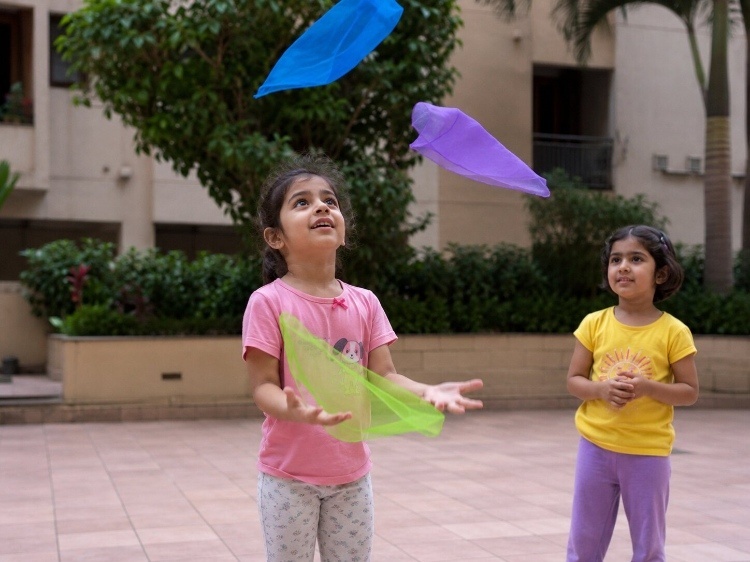
Simple juggling with scarves or soft balls
Starting with soft, slow-moving objects like scarves builds tracking and timing skills before progressing to actual balls.
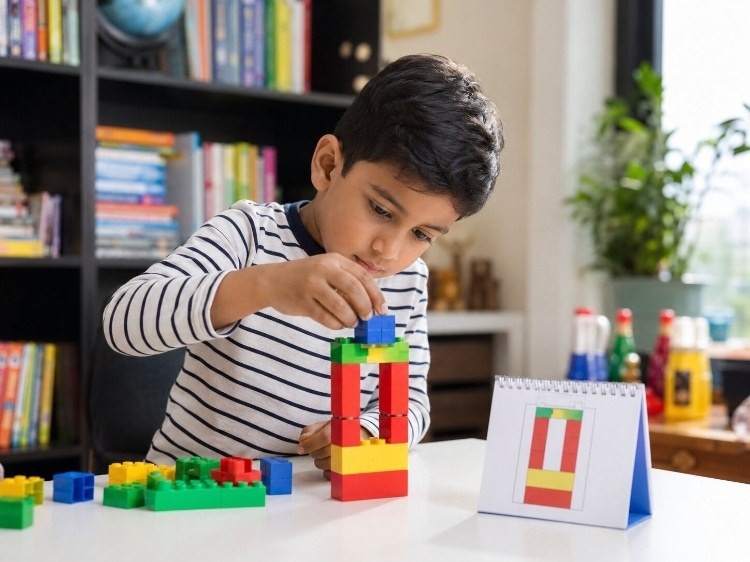
Building with blocks to a specific pattern
Copying a block pattern from a picture or example builds precise visual-motor coordination.
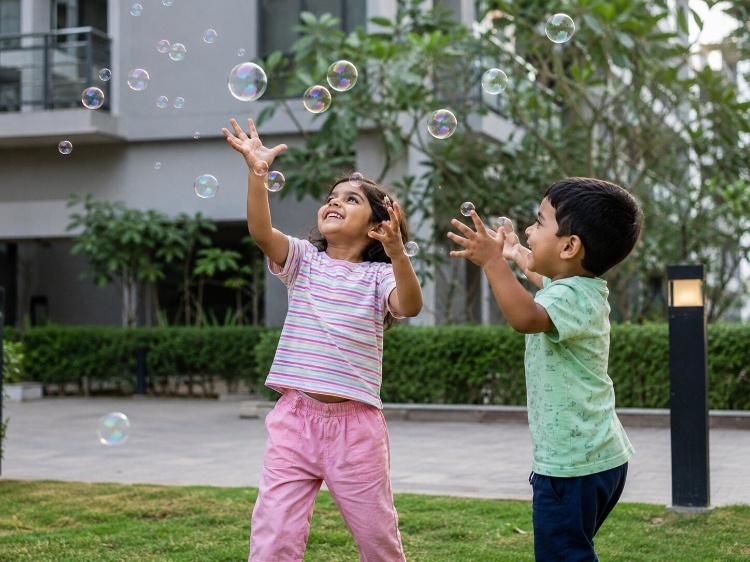
Bursting bubbles
A genuinely fun activity for younger children that builds visual tracking and precise hand-eye timing.
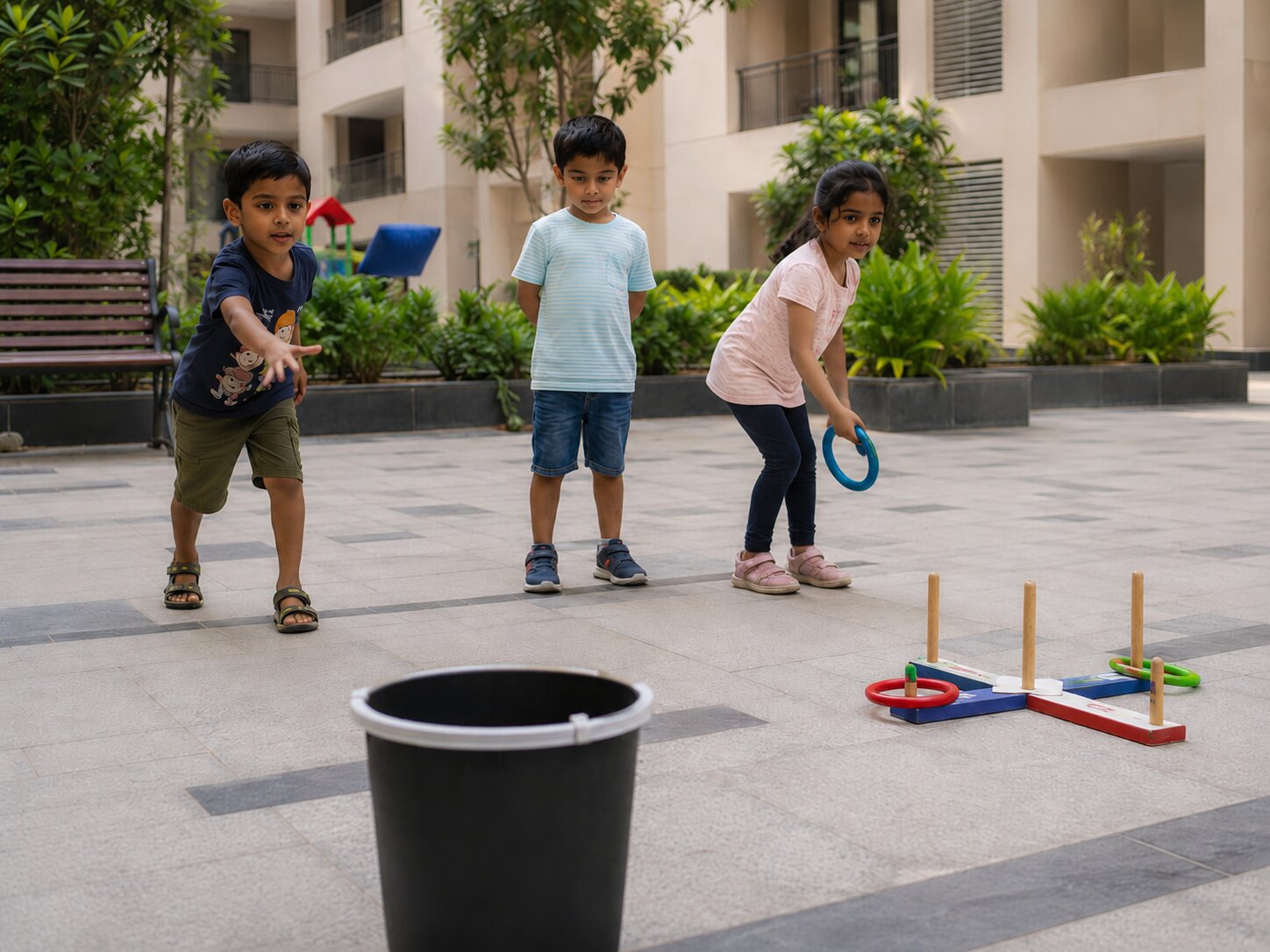
Simple target games — beanbag toss, ring toss
Aiming at a target builds precision coordination in a naturally motivating, game-like format.
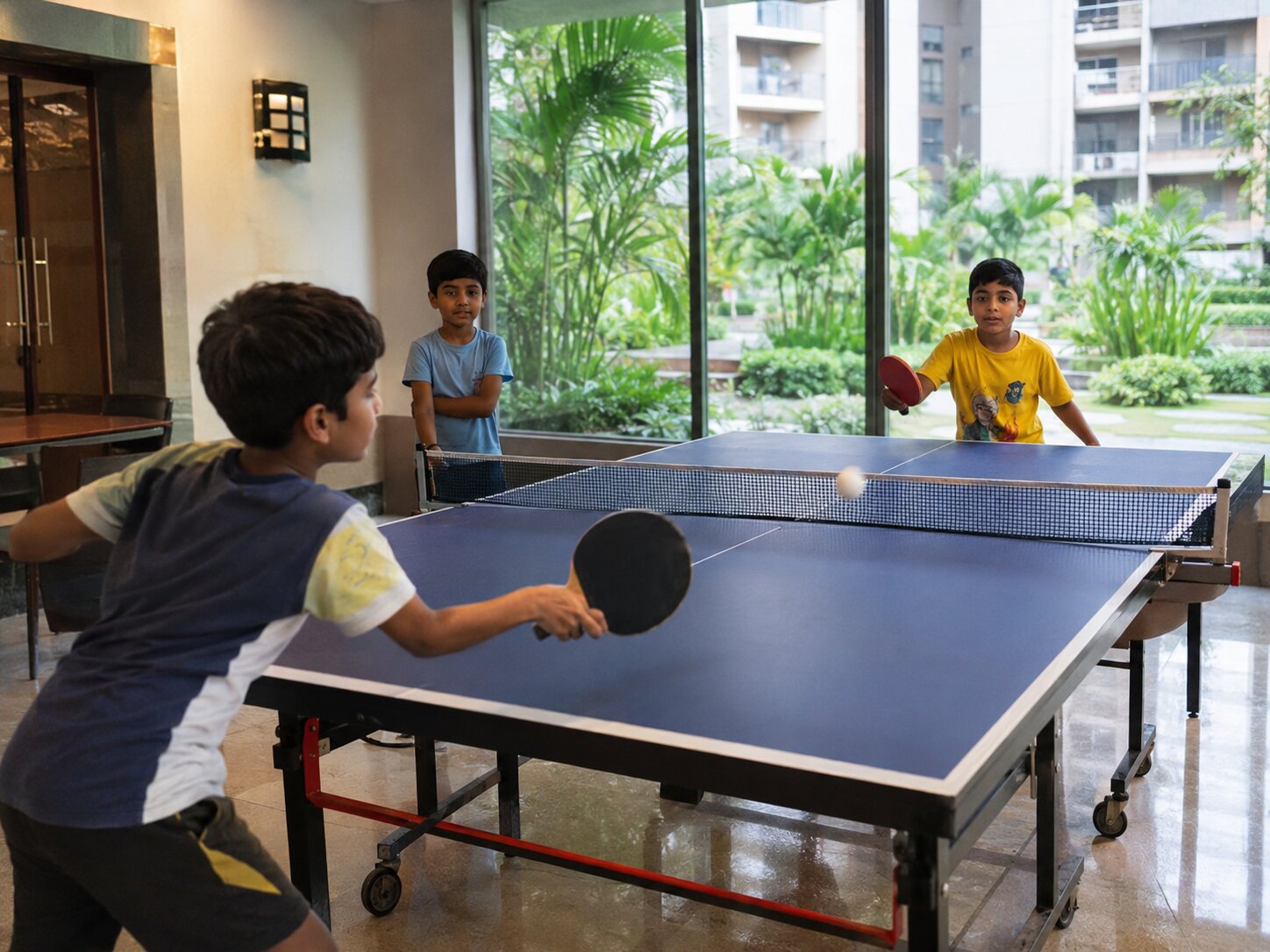
Table tennis, even informally
Increasingly accessible through society clubhouses, table tennis builds fast-reaction hand-eye coordination effectively.
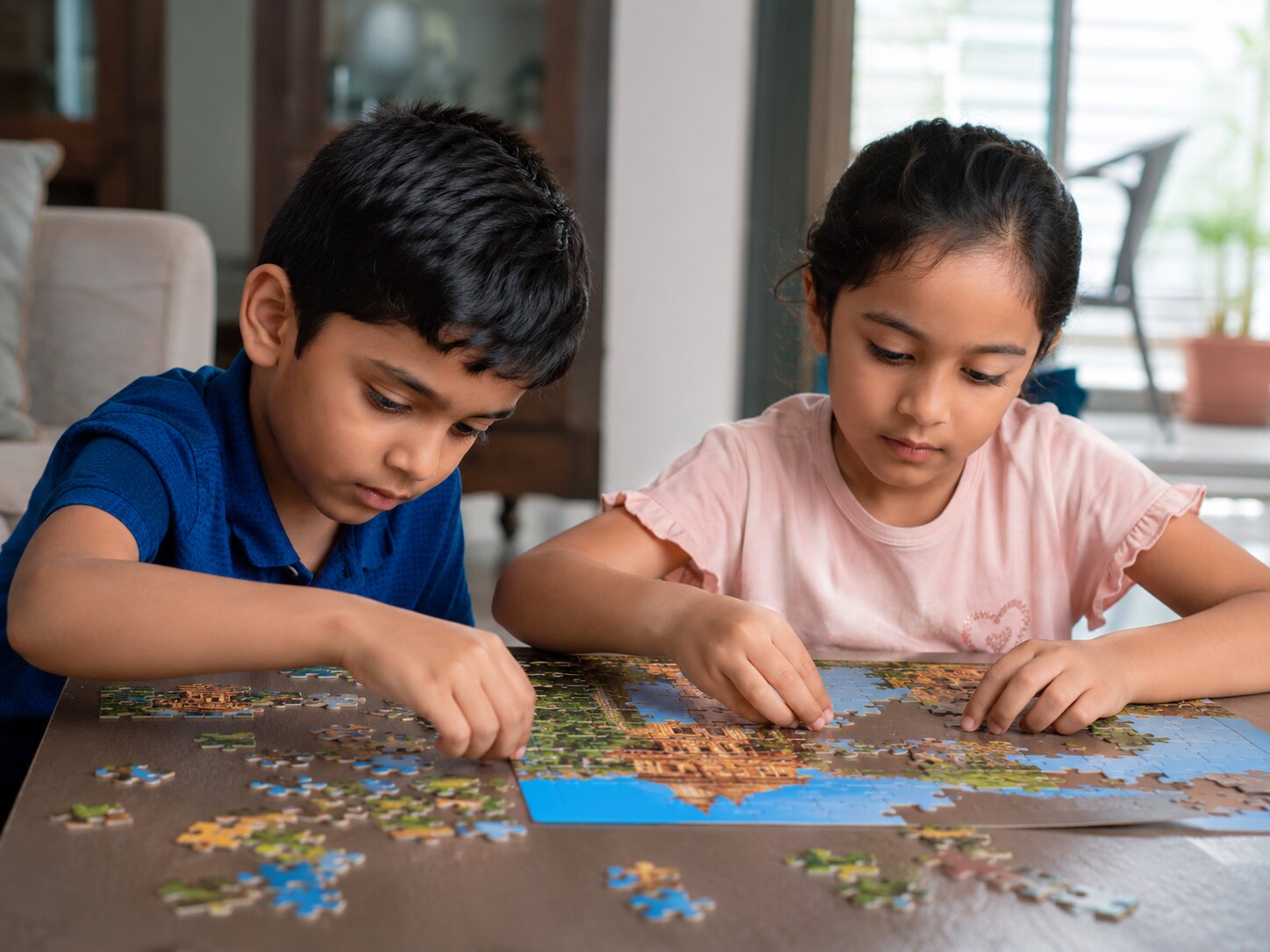
Puzzle assembly
Fitting puzzle pieces together, especially with increasing complexity as a child grows, builds precise visual-spatial coordination.
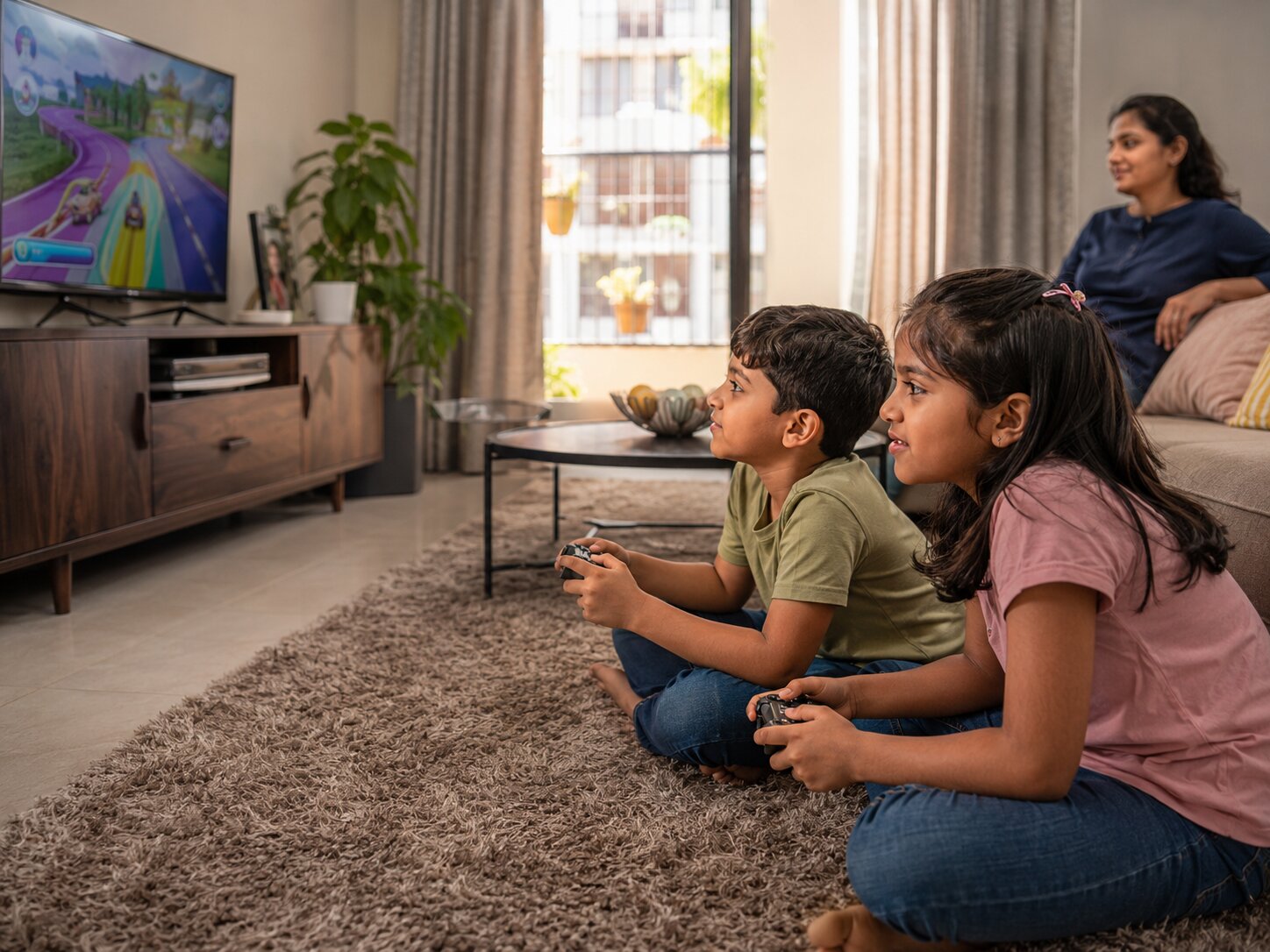
Video games in moderation, chosen thoughtfully
Certain age-appropriate video games genuinely do build hand-eye coordination and reaction time — worth acknowledging honestly, within reasonable time limits, rather than dismissing entirely.
Why sports-based coordination building offers a double benefit
Activities like cricket, badminton, and table tennis build hand-eye coordination while simultaneously introducing children to sports they may pursue more seriously later — a genuinely efficient way to build a foundational skill while also potentially discovering a lasting interest or hobby.
Coordination as a foundation for later specific skills
Strong general hand-eye coordination, built broadly through varied activities in early childhood, tends to transfer well into more specific skill development later — a child with strong general coordination typically picks up a new sport or the mechanics of handwriting somewhat more easily than one without that foundation.
A realistic approach for busy families
None of these activities require formal classes to begin building coordination — informal park time with a ball, badminton racket, or shuttlecock, even 20-30 minutes several times a week, builds meaningful coordination over months without needing structured lessons, though formal coaching becomes valuable once a specific sport interest develops.