
 Summer Camp
 Reading Writing
 Book Club
 Calligraphy
 Creative Writing
 English Speaking
 Handwriting
 Library
 Phonics
 Story Telling
 Art and Craft
 Clay Moulding
 Drawing
 Painting
 Pottery
 Sketching
 Drama Theatre
 Personality Development
 Public Speaking
 Languages
 Arabic
 Chinese
 French
 German
 Hindi
Hindi Italian
 Japanese
 Korean
 Persian
 Portuguese
 Russian
 Spanish
 Turkish
 Uzbek
Uzbek Sports and Fitness
 Aerobics
 Athletics
 Badminton
 Basket Ball
 Chess
Chess Cricket
 Football
 Golf
Golf Gymnastics
 Hulahoop
 Karate
 Martial Arts
 Pickleball
 Rugby
Rugby Skating
 Swimming
 Taekwondo
 Tennis
 Volleyball
 Yoga
Yoga Zumba
Zumba Tuition Classes
 Accounts
 Biology
 Business Studies
 CBSE
CBSE Chemistry
 Commerce
 Economics
 Homework Classes
 IB Board
 IGCSE
IGCSE Mathematics
 Physics
 Psychology
 Science
 Social Studies
 Vedic Maths
 Dance and Music
 Ballet
 Bhangra
 Bharatnatyam
 Bollywood Dance
 Casio
Casio Dandiya and Garba
 Drums
Drums Flute
Flute Guitar
 Harmonium
 Hip Hop
 Jazz
Jazz Kathak
 Keyboard
 Piano
Piano Salsa
Salsa Shlokas
 Sitar
Sitar Tabla
Tabla Ukulele
 Violin
 Vocal
Vocal PlaySchools
 Preschool
 STEM
STEM
 Abacus
 App Development
 Artificial intelligence
 Basic Computer Courses
 Canva
Canva Coding
 Graphic Design
 Lego
Lego Python
 Robotics
 Rubiks Cube
 Scrabble
 Scratch
 Website Development
 Winter Camp
 Workshops
 Diwali Workshop
 Easter
 Ganesh Mahotsav
 Guru Nanak Jayanti Workshop
 Holi
Holi Independence day workshop
 Janmashtami Workshop
 Mothers day
 Navratri Workshops
 Raksha Bandhan workshop
 Ramayana Workshop
 Spring Camp
 Valentines Day Workshops
 Festive
 Daycare
 Cooking and Food
 Spring Camp
 Contests and Competitions
 Special abled
 Republic Day Workshops
 Mela
Mela
 Mela
Mela Cognitive Development
 Mother-Toddler Program
-Jul-03-2026-06-59-25-1926-AM.webp?width=30&height=30&name=Smart_20Skills_20(2)-Jul-03-2026-06-59-25-1926-AM.webp) Smart Skills
Smart Skills
 Financial Literacy



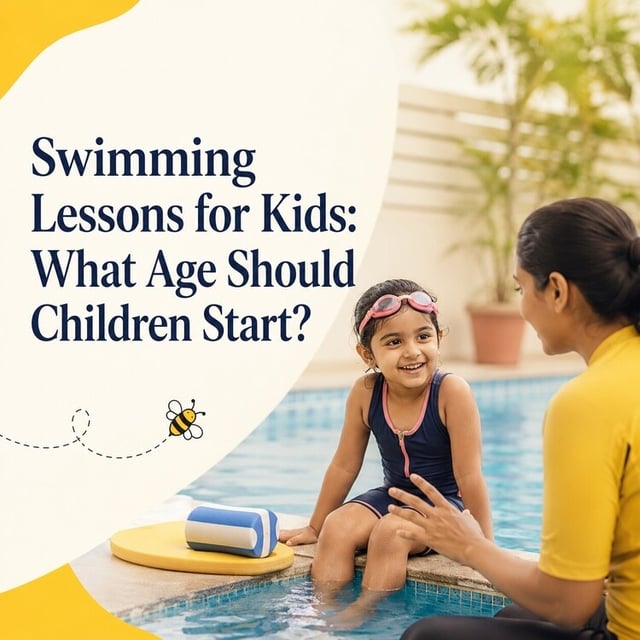
Most swimming experts recommend formal lessons starting around age 4, though water familiarisation can begin as early as 1. In Delhi NCR, society pools and public swimming academies both work well — the right choice depends on comfort, supervision, and hygiene standards more than brand name.
Swimming has become one of the most sought-after activities for kids in urban India — and for good reason. It's a genuine life skill, works nearly every muscle group, and unlike many other sports, it doesn't depend on height, build, or natural athleticism to enjoy or improve at.
When can a child actually start?
Water familiarisation classes — parent-and-child sessions focused on comfort in water, not technique — can start as early as 12-18 months. These aren't really "lessons" in the formal sense; they're about building comfort so fear doesn't become a barrier later.
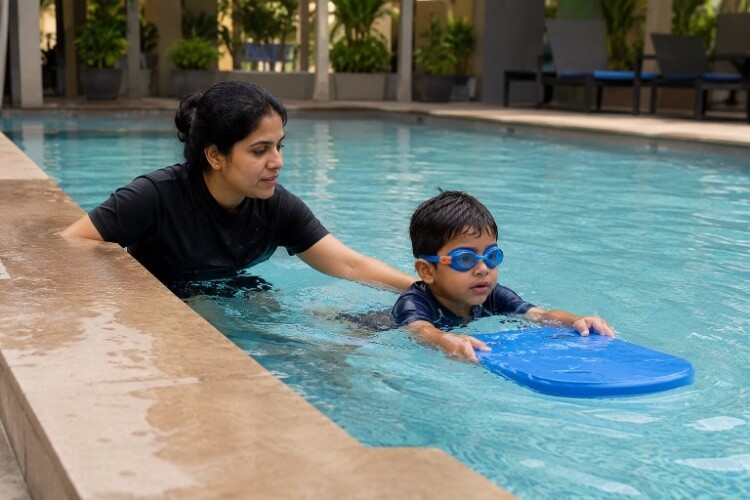
Formal swimming lessons with actual stroke technique typically start around age 4, when a child has the coordination and attention span to follow instruction. Some children are ready a little earlier, some a little later — it's genuinely fine either way.
Society pool vs public swimming academy
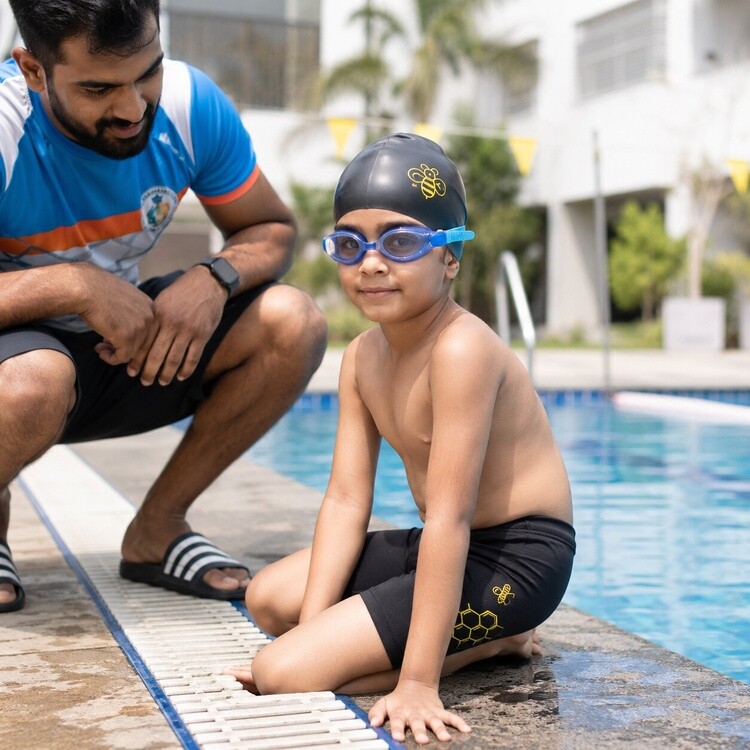
If you live in a gated society with a pool, this is often the easiest starting point — familiar environment, shorter commute, and usually a coach who visits for scheduled batches. The trade-off is that society pools sometimes have smaller batch sizes and less rigorous certification requirements for coaches, so it's worth asking directly about the instructor's qualifications.
Dedicated swimming academies (many well-established ones across Delhi NCR) typically offer more structured, level-based progression and better safety protocols, but involve a commute and often a summer-season rush for slots.
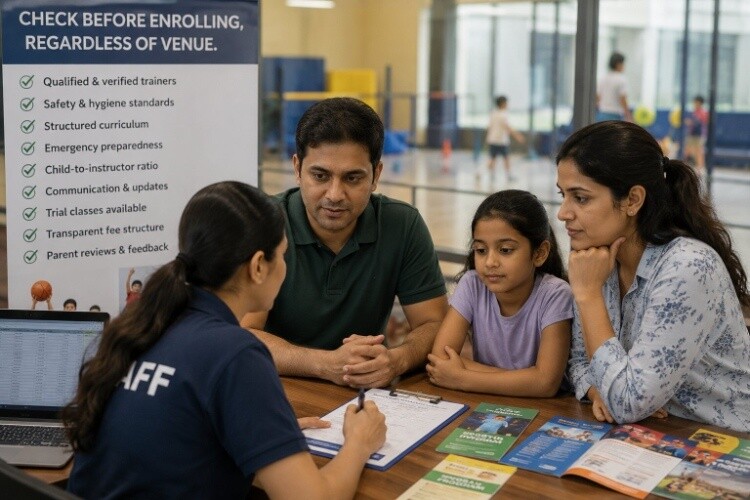
What to check before enrolling, regardless of venue
Water quality and chlorination — ask when the pool is cleaned and tested, not just told it's "maintained."
Coach-to-child ratio — for beginners, look for no more than 6-8 children per instructor; more than that makes it hard to catch a child in distress quickly.
Safety equipment on deck — a visible first-aid kit and someone trained in CPR, not just a lifeguard whistle.
Trial class before committing — nearly every reputable academy offers this, and it tells you more about fit than any brochure.
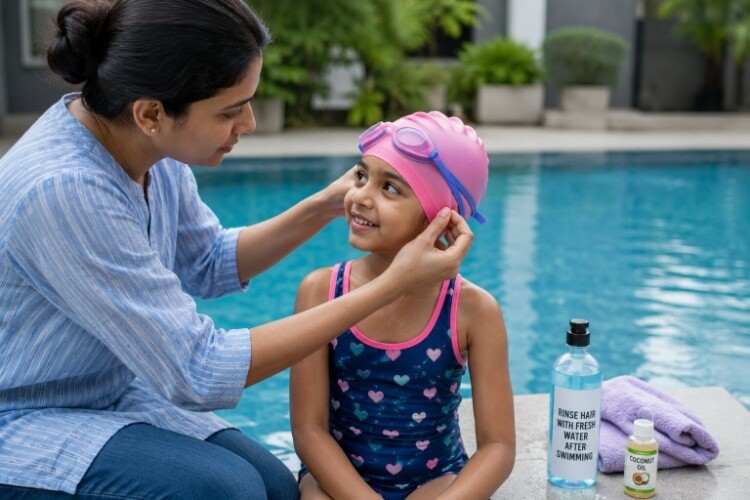
Addressing the common summer worry — chlorine, skin, and hair
Many Indian parents worry about chlorine damaging hair or skin, especially for girls with longer hair. A simple, well-fitting swim cap and rinsing hair immediately with fresh water after each session addresses most of this. A light oil application before swimming can also help reduce chlorine absorption into hair.
How long before a child can actually swim independently?
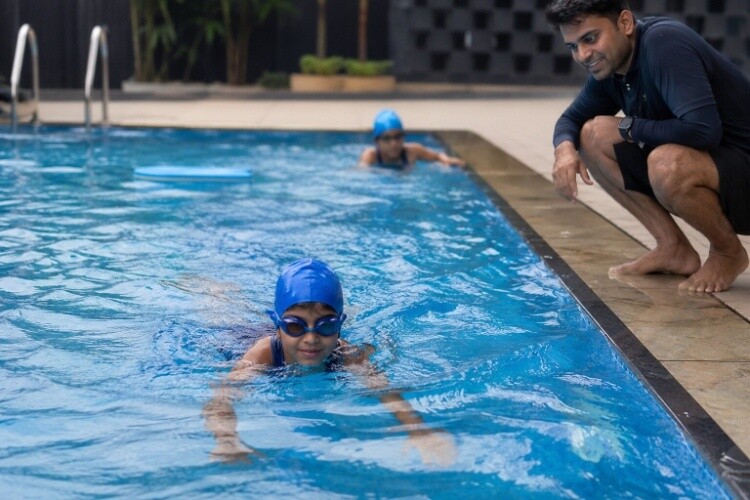
With consistent weekly lessons, most children develop basic independent swimming (comfortable floating, basic strokes, and confidence without floaties) within 3-6 months. Twice-weekly lessons speed this up meaningfully compared to once a week.
The bigger picture
Beyond the physical benefits, swimming is one of the few activities that directly addresses water safety — a genuinely important skill given how much time Indian families spend near pools, at resorts, or visiting relatives with access to water bodies. Starting early isn't just about the sport; it's about safety that lasts a lifetime.