
 Summer Camp
 Reading Writing
 Book Club
 Calligraphy
 Creative Writing
 English Speaking
 Handwriting
 Library
 Phonics
 Story Telling
 Art and Craft
 Clay Moulding
 Drawing
 Painting
 Pottery
 Sketching
 Drama Theatre
 Personality Development
 Public Speaking
 Languages
 Arabic
 Chinese
 French
 German
 Hindi
Hindi Italian
 Japanese
 Korean
 Persian
 Portuguese
 Russian
 Spanish
 Turkish
 Uzbek
Uzbek Sports and Fitness
 Aerobics
 Athletics
 Badminton
 Basket Ball
 Chess
Chess Cricket
 Football
 Golf
Golf Gymnastics
 Hulahoop
 Karate
 Martial Arts
 Pickleball
 Rugby
Rugby Skating
 Swimming
 Taekwondo
 Tennis
 Volleyball
 Yoga
Yoga Zumba
Zumba Tuition Classes
 Accounts
 Biology
 Business Studies
 CBSE
CBSE Chemistry
 Commerce
 Economics
 Homework Classes
 IB Board
 IGCSE
IGCSE Mathematics
 Physics
 Psychology
 Science
 Social Studies
 Vedic Maths
 Dance and Music
 Ballet
 Bhangra
 Bharatnatyam
 Bollywood Dance
 Casio
Casio Dandiya and Garba
 Drums
Drums Flute
Flute Guitar
 Harmonium
 Hip Hop
 Jazz
Jazz Kathak
 Keyboard
 Piano
Piano Salsa
Salsa Shlokas
 Sitar
Sitar Tabla
Tabla Ukulele
 Violin
 Vocal
Vocal Play School
 STEM
STEM
 Abacus
 App Development
 Artificial intelligence
 Basic Computer Courses
 Canva
Canva Coding
 Graphic Design
 Lego
Lego Python
 Robotics
 Rubiks Cube
 Scrabble
 Scratch
 Website Development
 Winter Camp
 Workshops
 Diwali Workshop
 Easter
 Ganesh Mahotsav
 Guru Nanak Jayanti Workshop
 Holi
Holi Independence day workshop
 Janmashtami Workshop
 Mothers day
 Navratri Workshops
 Raksha Bandhan workshop
 Ramayana Workshop
 Spring Camp
 Valentines Day Workshops
 Festive
 Daycare
 Cooking and Food
 Spring Camp
 Contests and Competitions
 Special abled
 Republic Day Workshops
 Mela
Mela
 Mela
Mela Cognitive Development
 Mother-Toddler Program
-Jul-03-2026-06-59-25-1926-AM.webp?width=30&height=30&name=Smart_20Skills_20(2)-Jul-03-2026-06-59-25-1926-AM.webp) Smart Skills
Smart Skills
 Financial Literacy
 Mental Wellbeing
 Meditation
 Reiki
Reiki




The screen-free pitch to 6-8+ year olds can't be nostalgia — it has to compete on actual fun. These games win on their merits: social energy, real stakes, strategy, and laughter.
Screen-free games survive contact with modern children only if they're genuinely good — and these are: tested by generations, powered by the things screens do worst (physical chaos, face-to-face bluffing, family-specific hilarity).
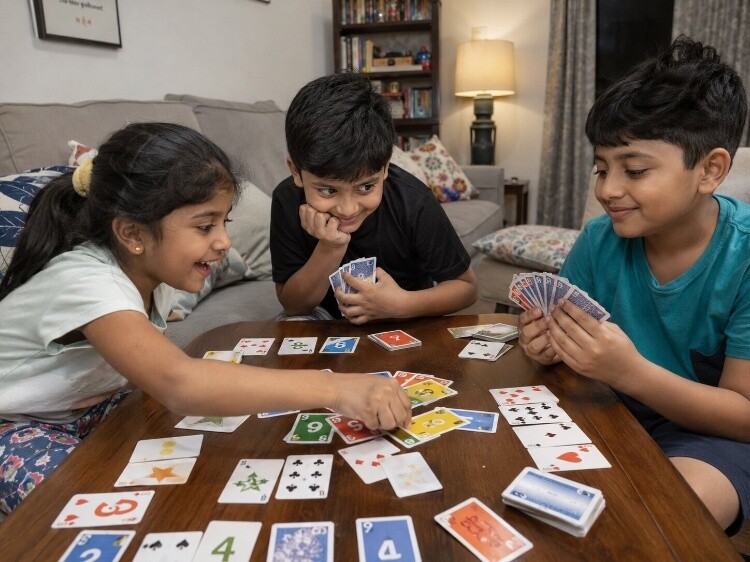
The card table
UNO and its endless house-rule variants; Bluff (the lying game — perpetually thrilling); rummy basics entering; SET and Spot-it-style pattern-race games; and the classic Indian satte-pe-satta family — cards as the densest fun-per-rupee equipment owned.
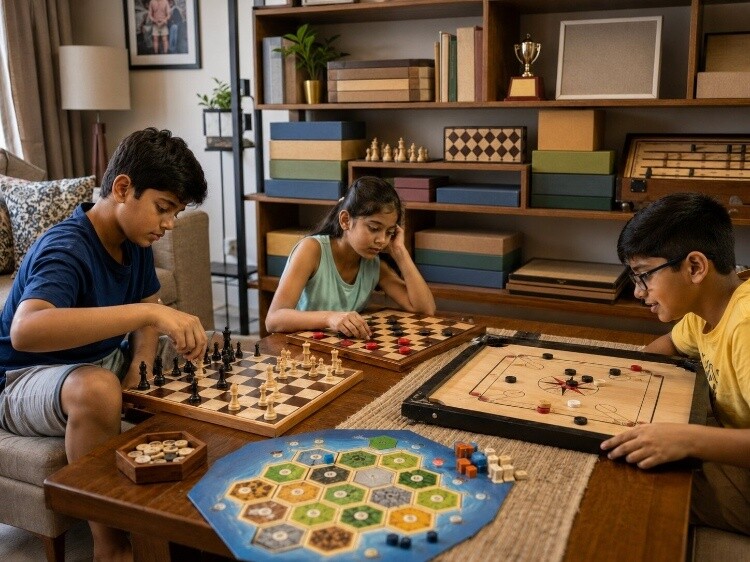
The board shelf, strategic era
Strategy entering properly: Catan-junior-style resource games, Ticket-to-Ride-style route builders, chess and checkers ladders, Carrom — the board as the family's standing tournament venue.
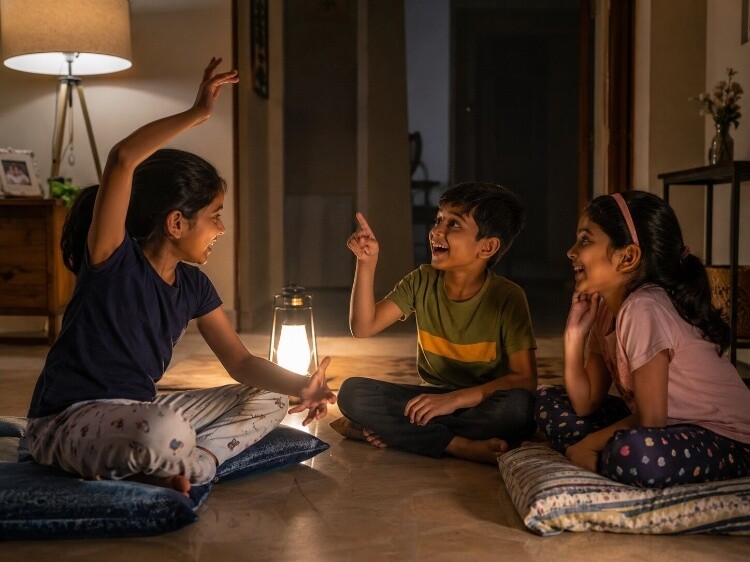
The word-and-wit circle
Antakshari (the eternal); Name-Place-Animal-Thing (the stationery classic); 20 Questions and its "I'm thinking of..." cousins; Dumb Charades graduating to movie names; word-chains and category races — the zero-equipment car-and-power-cut repertoire.
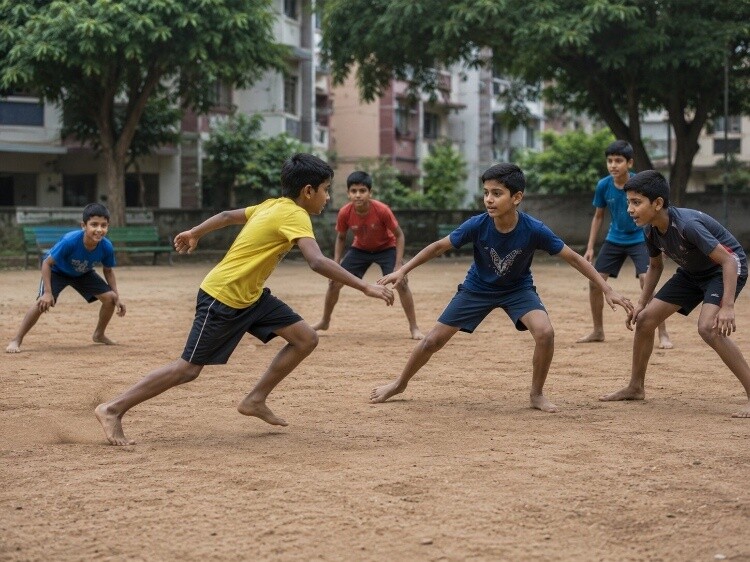
The physical repertoire
Hide-and-seek's older-kid variants (torch tag, sardines); pithoo/lagori (the seven-stones revival worth engineering); kho-kho and pakdam-pakdai at colony scale; badminton and gully cricket as the standing games; and stapoo (hopscotch) surviving all eras.
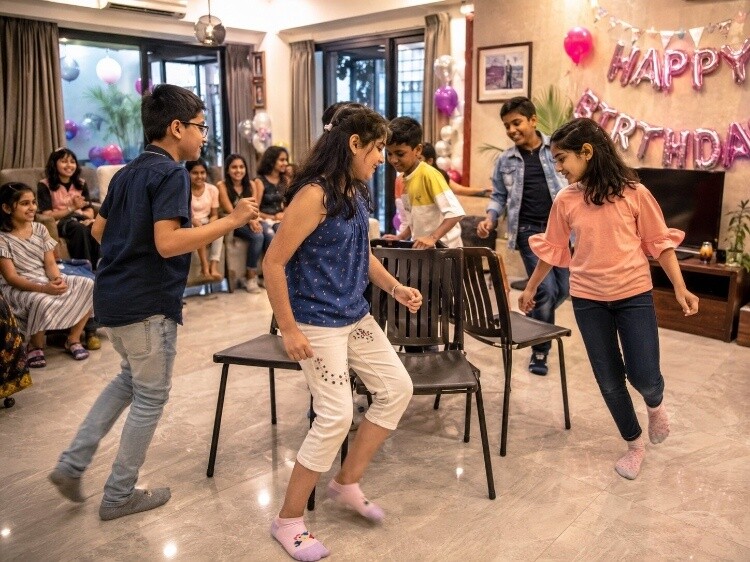
The party-game arsenal
Musical chairs and statues (still undefeated at gatherings); passing-the-parcel with forfeit theatre; treasure hunts at birthday scale; and the family-talent-show format for festival gatherings.
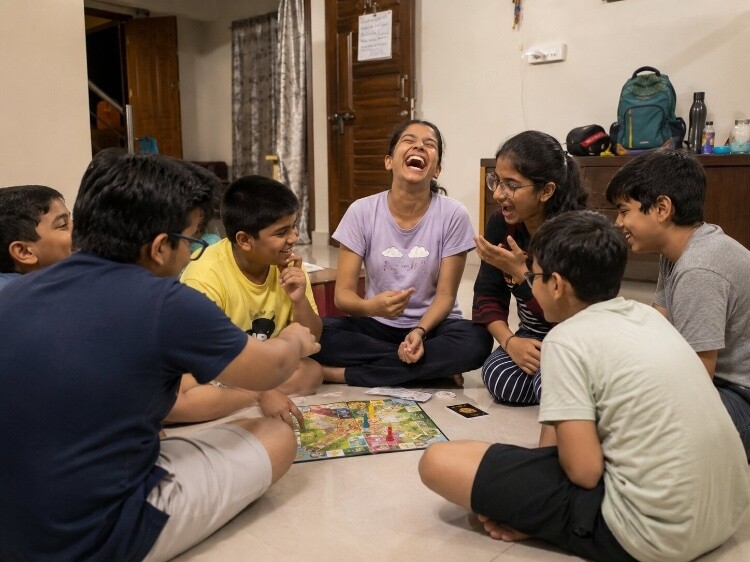
Why these hold against screens
The winning ingredients screens can't source: physical chaos (the sprint, the dive, the collapse of laughter), live bluffing and face-reading, family-specific running jokes and house rules, and stakes that are social rather than scored. Games that have these don't need defending; they need scheduling.
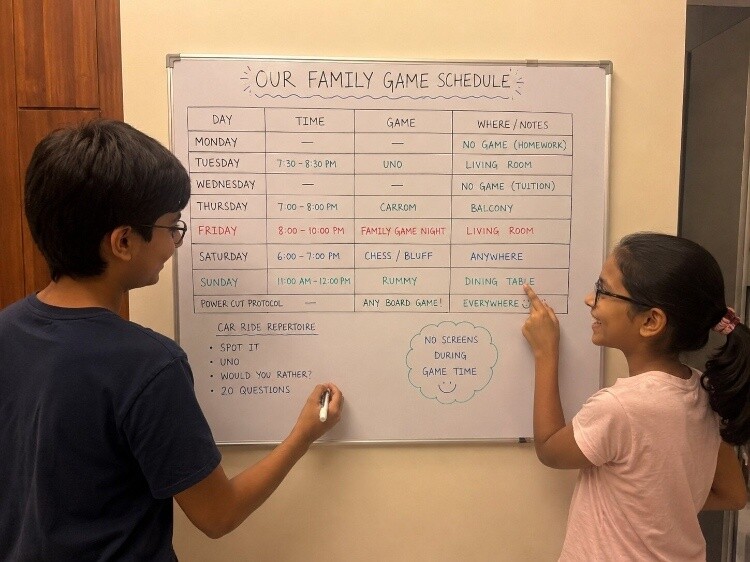
The scheduling insight
Screen-free games lose to screens in the moment-of-choice but win as standing fixtures — the Friday game night, the post-dinner carrom slot, the power-cut protocol, the car-ride repertoire. Ritualising removes the negotiation; the fixture becomes the default.
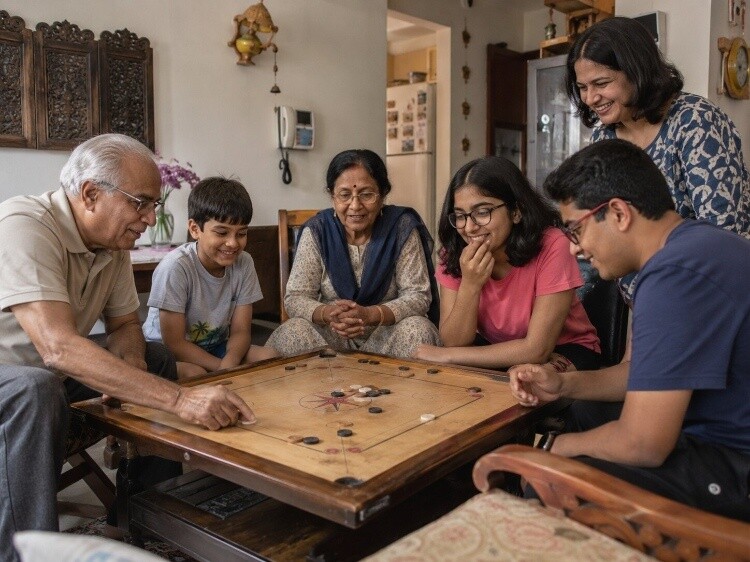
The multi-generation dividend
These games are also the grandparent interface — Antakshari, carrom, and cards being where three generations meet as equals, with the elders often holding rank. In joint-family and visiting-grandparent households, the game repertoire is connection infrastructure, worth maintaining for reasons beyond screen arithmetic.